

Keywords:
praat, prosody, refusal act
The refusal act is one of the essential speech acts in the linguistic realm. Refusal is not confined to verbal action; it also has physical properties, exhibited by its prosodic structure. The present study discusses the prosody of the refusal act in the Oosama no Resutoran drama and employs a qualitative descriptive method. The refusal act that was taken from the drama is used as the data. The Praat application is utilized in the analysis stage. The findings show that intonation and pitch are intertwined. A further discovery is that emotion influences the realization of the refusal act, which is manifested by the lingual markers.
INFO ARTIKEL
ABSTRAK
Kata kunci:
praat, prosodi, tuturan penolakan
Tuturan penolakan merupakan salah satu tuturan esensial yang berada di khazanah kebahasaan. Penolakan tidak hanya sebatas aksi verbal, melainkan juga mengandung nilai fisis yang ditampilkan pada struktur prosodinya. Penelitian ini mendiskusikan prosodi tuturan penolakan yang terdapat di dalam drama Oosama no Resutoran dan menerapkan metode deskriptif kualitatif. Data yang digunakan dalam penelitian ini berupa tuturan penolakan dari permintaan. Data dianalisis menggunakan aplikasi Praat. Hasil penelitian menunjukkan intonasi dan nada adalah dua hal yang berkelindan. Temuan lain adalah emosi juga memengaruhi realisasi tuturan penolakan yang termanifestasi melalui pemarkah lingual.
https://doi.org/10.5614/sostek.itbj.2023.22.3.5
Introduction
Language is a social phenomenon. Someone speaks because there are social phenomena that cannot be separated from the speech situation. In other words, the appearance of language is due to speech situations. In Japanese, the language is called go, and speech situations are called bamen. This is in accordance with the opinion of Saito (1990, p. 9) that gengo wa bamen de aru, 'language is the context of the speech situation'. By this definition, it can be seen that language as a communication tool, both transactional and interpersonal, is realized based on the speech situation. In spoken language, the speech situation plays a very important role in determining the meaning of an utterance. Speech consists of segmental and suprasegmental elements, which are important (Wang, 2022). Segmental elements consist of vowels and consonants, which function to form parts of speech at the speech level, and suprasegmental elements are additional speech elements attached to words. These elements include accent and intonation. Accents are at the word level, while intonation is at the sentence level.
Accent is a relative placement of pressure that is determined as a social habit (Saito, 1990, p. 107). Japanese accented tone, or koutei akusento, or pitch accent, is determined based on the high-low tone in a syllable or a word. Intonation is at the level of a sentence, which has two functions, namely a grammatical function and an emotional function (Halim, 1984, p. 79; Saito, 1990, p. 114). Each language community has its own intonation and accent characteristics. In broad terms, intonation shows the highlow relationship of the whole sentence but narrowly shows the high-low relationship at the end of the sentence (Saito, 1990, p. 114).
As in the neurological system or the delivery of sound waves, communication is the transfer of energy from one location to another (Wolman, 1973). Emotions cannot be isolated from speech events because they regulate the sound waves that are produced during the speech process. According to Sarlito (Cited in Yusuf, 2008, p. 115), emotion is any state in a person that is accompanied by an emotional color (particular feelings, such as happiness, surprise, etc.), both at a weak (superficial) level and at a broad or deep level. According to Coleman and Hammem (1974), emotions serve as energizers, messengers, information carriers, and suppliers of knowledge.
The intimacy of a person's condition as measured by social status, the intimacy of a friendship or brotherhood, situation, condition, age level, and position status causes variations in the language used in the communication process, and similarly, when expressing and delivering a refusal. In a high-level cultural language such as Japanese, without mastering the diversity of linguistic refusal utterances and non-linguistic factors to support the utterance, many problems arise that result in communication are not running smoothly.
The objector must consider the context of the speaking circumstance when carrying out the refusal communication process. Both contexts relate to linguistic and non-linguistic aspects. In order to examine this linguistic variation, drama as a literary genre that tells stories through conversation as an illustration of the use of everyday language can be used as a suitable language source. Dialogues in Japanese Drama (Jdorama) are an object that can be utilized as an actual example of the speaking life of the Japanese community in speech acts, including the speech act of refusal. Therefore, the data used in this research are the words of refusal found in Japanese drama videos.
To comprehend the words of refusal, merely grasping the linguistic features is insufficient; it is also necessary to understand non-linguistic factors, especially those related to social factors. By considering the aforementioned factors, it is crucial to recognize the significance of the intonation's structure and function as well as the speaker's emotional state because both serve as paralinguistic markers and are inextricably tied to the speaker's emotional state during speech events. In other words, we need to examine the prosody and the structure of the refusal. Prosody is a lingual term that refers to speech sounds that are put into groups (Zsiga, 2013, p. 79). One of the crucial components in regard to a prosodic structure is intonation (Féry, 2017, p. 6). In line with this, Firth (in Suhardi, 2005, p. 209) argues that prosody also forms a pause. Pause occurs at the word level, whereas intonation occurs at the sentence level. To comprehend sentences, situations are relatively unnecessary. However, understanding intonation requires a situation.
Thus, the current research is focused on the intonation of the utterances of refusing requests in the discourse of the drama dialogue entitled Ousama no Resutoran. The use of this drama as data for the current study is motivated by the fact that it depicted several variants of the refusal act. Additionally, we discovered relevant articles dealing with intonation in dramas, such as Tsybaneva et al., (2019) and Uzun and Uzun (2021), both of whose research deals with English drama. On the other hand, Moore (1997) focuses on a Japanese drama. These three articles used drama as a medium to teach intonation in a specific language but did not examine the intonation of drama itself. Similarly, Japanese linguist scholars tend to examine the Japanese intonation in educational settings, such as Minematsu et al., (2013), or in natural settings, such as Koori (2015, 2018b, 2018a), who focuses more on the intonation within specific lingual markers.
These studies imply that intonation has been discussed in both natural and educational settings. Although these studies have addressed the intonational aspects of the Japanese language to some extent, they remain unclear. For instance, does the intonation in a fictional medium, such as drama, rather than a natural medium demonstrate peculiar linguistic features within the utterance of the speaker? As a result, we found a research gap between the prior study and the present study. The aim of the present study is to analyze and provide an adequate explanation regarding the intonation of the refusal act that has been delivered in the drama.
Method
The method used in this research is the descriptive-qualitative method. The data in this study are in the form of refusal utterances from drama actors, which contain speech acts of refusal in drama videos entitled Ousama no Restoran, released in 2005. This research was carried out in several stages, precisely data collection, data analysis, and drawing conclusions (Miles and Huberman, 1984:20). This research is focused on the speech act of refusing requests based on gender and age that is realized in verbal forms. In the process of collecting data, the first step was to listen to the source of the data, namely the dialogue in the video drama segments. In this stage, the current study also considers the speaker's gender, whether male or female, as well as age. The age threshold is applied to the speaker, who is aged from 20 to 40 or 60 years old. The age threshold is determined by developmental psychology. The developmental psychologist argues that this age range is considered adulthood when it is capable of social communication (Jahja, 2011, p. 246).
This process was followed by documenting techniques by recording the time of the events of the refusal speech in the drama, resulting in fragments of the dialogue. Due to the fact that the video fragment data comprises numerous dialogs that support the fragments, the segmentation step is performed. In this context, segmentation is used to obtain utterances from speech events of request refusal. As a result, a refusal act that manifested itself in five dialogues from the drama was found. Subsequently, the result of the data collection stage is converted to a format that can be analyzed through the Praat application.
In the process of collecting data from the drama, various data acquisition devices were used, which consisted of hardware and software. The software used in this study was the Praat application version 4.2 of the Summer Institute of Linguistics. This program was used to obtain an intonation model from the sound signal intensity parameter resulting from a refusal utterance. Praat is an application that provides acoustic analysis of digitized audio files, such as intonation analysis, and displays the audio as a waveform (Féry, 2017, p. 30).
The next step is the analysis stage. When conducting the analysis stage, the authors annotated the audio file based on the mora structure of the refusal utterances. Mora is a timing unit of the given word in the Japanese language (Tsujimura, 2014, p. 67). Annotating the refusal by referring to the mora structure is motivated by the fact that the Japanese language employs this structure, which is opposed to the syllable structure used in other languages such as English and Indonesian. Then, pitch analysis began according to the mora structure. In order to collect the details in regard to pitch in a mora of the given refusal utterance, the authors utilized the pitch tab in the Praat application. For instance, the pitch mean value was obtained by the get-pitch feature. Afterward, the intonation of a given utterance was also visualized in the application. By doing so, the authors were able to analyze and interpret the refusal intonation while considering intonation dynamics, linguistic features, and pragmatic settings. Considering and identifying the speech context as well as the correlation between the dialogue utterances is essential because these demonstrate the macro aspect of the verbal action. The context within a given dialogue additionally relates to the physical and emotional qualities that both interlocutors and listeners possess (Waskita, 2014).
Data analysis in this study was carried out starting with structural analysis supported by functions. Structure is internally linguistically related to syntax. One of these factors forming discourse is the existence of language as a social phenomenon. Furthermore, the process of determining the form of speech based on Searle's theory (1997) is carried out by analyzing speech while we are listening to video dramas and listening to the emotions of the speakers.
Result and Discussion
The present study discovered eight refusal utterances found in five dialogues in the Oosama no Resutoran drama. Those five dialogues can be seen below.
1. Sengoku: kono chooshi de moo hitotsu funbari onegaishimasu
'For now, it's already okay. Please keep it working'
Harada: do iu koto?
'What do you mean'.
Sengoku: ajitsuke wa kanpeki desu. Soosu mo moushi bun nai. Shikashi ryoori toshite no pawaa
ga nai. Tsukutte hoshii no wa kono mise o daihyoo ryoori desu
'Both the taste and sauce are good, no problem. But this dish is lacking. I want you to make a dish that serves as the restaurant's signature dish'.
Shizuka: chotto matte yo. Iu no wa kantan yo
'Hold on. It's easier than done'.
2. Shizuka: nande watashi ga sonna koto shinakuccha ikenai no
'Why do I have to do that'.
Inage: Shizuka, soko made shite yaru hitsuyou wa nee zo
'Shizuka, you don't have to that'.
Tomiyama: toozen desu
'Exactly'
Kajiwara: tanomu yo
'I'm begging of you'.
Shizuka: dame ni kimatten deshoo
'Isn't obvious that I can't (do that)'.
3. Wada: kore de musuko san wa otoosan no koto wo isshoo ero jiji to omoitsudukeru wake desu
ne
'At this point, his son will dwell on the fact that his father is a perverted old man.'
Inage: dakara, hen na uso tsuku to koo iu koto ni narun da yo
'This would happen if you told a weird lie, though'.
Shizuka: gomennasai
'I'm sorry'
Harada: iya, Shizuka san no sei janai desu yo. Demo kono mama ja mazui desu yo. Nanto ka
shite kajiwara san no meiyo o kaufuku shinai to
'Well, it's not your fault, Shizuka. It's not good to keep going like this. We need to do
something with his reputation'.
Sengoku: shikashi kore ijoo mo yokei na koto shinai hoo ga ii yoo to omoimasu
'I think there's no need to do more than this'.
4. Oba: do iu koto desu ka
'What do you mean'.
Harada (30 years old): sengoku san ga hajimete kono mise ni kita toki no koto oboeteimasu yo ne.
iyamina kyaku o oiharatta
'Do you guys remember when Sengoku came here for the first time'.
Oba: ee
'I do'
Harada: are o saigen shitai no desu
'I want reappearance that scene'.
Oba: ha
'Huh'
Harada: kajiwara san ni sengoku san no yaku o yattemoraimasu
'Kajiwara takes the role as Sengoku'.
Oba: de, boku wa donna yaku o
'Then, what role am I going to play'.
Harada: iyami na kyaku wo yattemoraitain desu
'I wanto you take the weird guest role'.
Oba: kotowaru
'I decline'
Harada: kao ga bareteinai no wa oba san dake nan desu
'The only face he didn't recognize is Oba's'.
Sengoku: kajiwara san no oku san, wain o mada tanondeinai de, anata no kao o
mada shiranain desu
'Because Kajiwara's wife hasn't ordered wine yet, your face is still
unrecognizable.'
Oba: warui kedo kyooryoku dekinai na
'I am sorry, but I can't cooperate with you'.
Harada: onegaishimasu
'Please'
Oba: aitsu no tame ni dooshite soko made yatte yaranai to ikenai desu ka
'Why do you have to do that for that person?'
Harada: musuko san no tame nan desu
'For his son'
Oba: kotowaru, danjite kotowaru
'I decline, absolutely not'.
Refusal Act Prosody in Oosama... | Nani, Ekaning, Fahri
5. Debt collector: anta karita 50 man sengetsu de hensai kigen ga kireten da
'Hey, you. For the five hundred yen that you borrowed, the repayment
period is already due from last month'.
Kajiwara: shooshoo omachikudasai. Asu no kaiten wa goji kara de gozaimasu. Mise
ga hiraku mae ni aratamete okoshikudasai
'Please wait a moment. The restaurant will open tomorrow at five. Please
come again before the restaurant opens'.
Debt collector: soo wa ikanai
'I can't let you do that'.
Kajiwara: kyoo wa okaerikudasai
'Please go home'.
Debt collector: kaerenai
'I can't go home'.
Kajiwara: koko wa okyakusama ga oshokuji o tanoshimu basho de gozaimasu
'This is where our guest enjoys their meals'.
Debt collector: kane o morau made wa kaerenai te itten daro
'I told you I can't go home until I got the money'.
From those five dialogues, we found eight refusal utterances. Each utterance represents its prosody characteristics as well as its intonation contour. Table I displays the refusal utterances from the drama, completed with phonetic properties from the Praat application.
Table I Refusal Utterances in Osama Resutoran Drama
| No | Utterances | Duration (ms) | Pitch Mean (Hz) | Maximum Pitch (Hz) | Minimum Pitch (Hz) |
|---|---|---|---|---|---|
| 1 | Chotto matte yo. Iu no wa kantan yo 'Hold on. It's easier said than done' | 2.145 | 207.54 | 328.45 | 142.28 |
| 2 | Dame ni kimatten deshoo 'Isn't it obvious that I can't (do that)?' | 1.199 | 300.23 | 499.41 | 193.81 |
| 3 | Shikashi, kore ijoo mo yokei na koto shinai hoo ga ii yoo to omoimasu 'However, I think there's no need to do more than this' | 2.598 | 138.12 | 252.50 | 79.70 |
| 4 | Kotowaru 'I decline' | 0.502 | 137.83 | 145.47 | 123.16 |
| 5 | Warui kedo, kyooryoku dekinai na 'I am sorry, but I can't cooperate with you' | 1.740 | 131.04 | 175.38 | 86.85 |
| 6 | Kotowaru, danjite kotowaru 'I decline, absolutely not' | 2.503 | 163.74 | 470.38 | 92.93 |
| 7 | Kaerenai 'I can't go home' | 0.562 | 143.09 | 177.35 | 78.85 |
| 8 | Kane o morau made wa kaerenai te itten daro 'I told you I couldn't go home until I got the money' | 2.848 | 185.04 | 380.17 | 87.63 |
In terms of phonetic properties, female speakers produced data (1) and (2), while male speakers produced data (3), (4), (5), (6), (7), and (8). According to Hart et al. (2006, p. 12), a female speaker has a pitch range of 180–400 Hz. On the other hand, a male speaker has a pitch range of 80–200 Hz. In response to that argument, the current study found a link between the pitch value of the speakers and the argument of Hart et al. (2006). However, the present study also discovered that speakers, both male and female, can exceed the pitch range. In this instance, the speaker's situation and intentions are significant in producing the vocal pitch. Furthermore, Imaida (2006, p. 17) states that the Japanese female has a pitch range between 201.95 Hz and 261.13 Hz. This signifies that the range of vocal pitch has been exceeded in the production of speech in fictitious products, particularly the Oosama no Resutoran drama.
The linguistic explanation of each refusal utterance is provided and further discussed.
(1) Chotto matte yo. Iu no wa kantan yo 'Hold on. It's easier said than done'.
Excerpt (1) takes place in a restaurant kitchen. Shizuka, a 30-year-old female chef, was attempting to create a best-selling dish at the time. Even though the dish was exquisite, the 47-year-old male head chef, Sengoku, claims there was something missing in the dish. As a result, he suggested that Shizuka change the recipe and re-cook the dish. Shizuka refused the request, considering the conversation took place late at night. The refusal act is signified by the phrase iu no wa kantan yo, 'it's easier said than done'. This phrase implies that the dish that was just served was not a simple one to prepare. Furthermore, she would be home very late at night if she agreed with the request of the head chef.
The intonation of the refusal utterance in excerpt (1) is displayed in Figure 1.
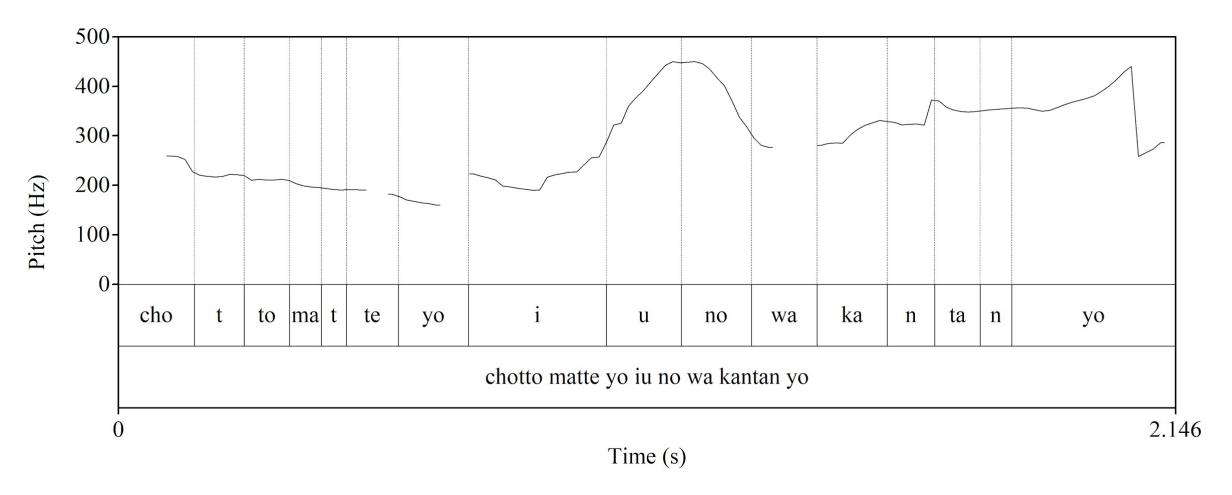
Figure 1 Intonation contour of Data (1) Source: Praat Application, 2023
According to Figure 1, data refusal utterance (1) displays duration and intonation dynamics. Intonation occurs in 2.146 milliseconds and presents rising-falling dynamics as well as the peak point. Mora cho is produced in a pitch range between 200 and 300 Hz at the beginning of the utterance and eventually falls. The intonation then climbs significantly from mora i to mora u. In Mora Yo, intonation is once again falling and quickly rising. Mora Yo's rapid rise in pitch matches one of the linguistic features, sentence-final particles. Sentence-final particles (SFP) are linguistic attributes distinguished by the presence of linguistic particles at the end of an utterance (Hasegawa, 2014, p. 293). SFP yo is mainly used when a speaker wants to exclaim his utterance (Irwin & Zisk, 2019, p. 87). Shizuka, the speaker in this context, used the SFP yo to stress her refusal in her utterances. Similarly, the rising intonation in SFP yo is linked to pragmatic circumstances. According to Koori (2018, p. 16), rising intonation in SFP yo expresses a speaker's desire to be understood by the interlocutor. As a result, Shizuka wanted the head chef to understand the reasons why the request was turned down.
The phonetic properties of the utterances of data (1) can be seen in Table II.
Table II Phonetic Properties of Chotto Matte Yo Iu No Wa Kantan Yo
| No | Mora | Duration (ms) | Pitch Mean (Hz) | Maximum Pitch (Hz) | Minimum Pitch (Hz) |
|---|---|---|---|---|---|
| 1 | cho | 0.154 | 250.17 | 259.56 | 224.65 |
| 2 | t | 0.101 | 219.55 | 224.65 | 216.63 |
| 3 | to | 0.902 | 211.37 | 217.05 | 209.02 |
| 4 | та | 0.064 | 197.70 | 203.10 | 195.21 |
| 5 | t | 0.051 | 190.87 | 191.83 | 190.39 |
| 6 | te | 0.105 | 186.63 | 190.57 | 178.17 |
| 7 | yo | 0.142 | 170.74 | 241.66 | 162.94 |
| 8 | i | 0.280 | 219.55 | 287.02 | 189.07 |
| 9 | и | 0.151 | 389.13 | 450.97 | 290.81 |
| 10 | no | 0.142 | 401.57 | 450.73 | 299.14 |
| 11 | wa | 0.133 | 283.38 | 299.14 | 276.79 |
| 12 | ka | 0.142 | 304.62 | 331.87 | 277.93 |
| 13 | n | 0.096 | 326.44 | 378.01 | 319.03 |
| 14 | ta | 0.091 | 357.11 | 397.43 | 348 |
| 15 | n | 0.064 | 353.42 | 355.78 | 350.31 |
| 16 | yo | 0.117 | 359.84 | 479.99 | 234.95 |
Table II contains the phonetic properties of the utterance, including duration, pitch mean, pitch maximum, and minimum. The duration differs for each mora. Each mora has a different duration. Mora yo has the longest duration, whereas mora t has the shortest. In a comparable manner, pitch also varies for each mora, either as a mean, maximum, or minimum value. Mora yo has the highest pitch throughout the entire utterance. In accordance with this, mora yo has 479.99 Hz in the maximum pitch category and serves as peak intonation.
(2) だめに決まってんでしょう。
Dame ni kimatten deshoo
'Isn't obvious that I can't (do that)'.
Suzuka and a friend of hers, Inage, Tomiyama, and Kajiwara, were having a talk in a restaurant when utterances in data (2) took place. At that moment, her friend asked her to play the role of a fake girlfriend so that he could show it to his ex-wife, who was about to remarry with another man. One of her friends, Kajiwara, a 50-year-old male, was begging her to take on the role. Suzuka's refusal towards her friend is marked by the phrase dame ni kimatten deshoo, 'Isn't it obvious that I can't do that'. Precisely, her refusal act is expressed by Dame ni kimatten. Dame ni kimatten is derived from the sentence pattern of ~ni kimatteiru. This pattern shows strong judgement about a phenomenon by the speaker (Okamoto & Ujihara, 2018, p. 224). Consequently, Shizuka firmly turned down her friend's request.
For illustration, Figure 2 below represents the intonation contour of data (2).
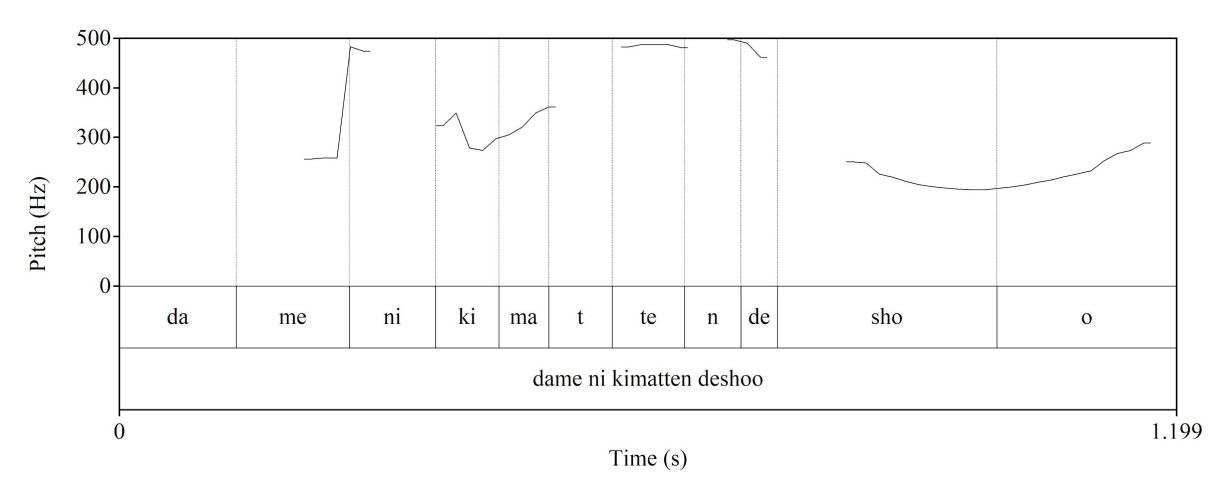
Figure 2 Intonation contour of Data (2) Source: Praat Application, 2023
Figure 2 illustrates the intonation contour of data (2). It can be noticed that some areas of the contour are visible while others are not. The authors recognized an immediate rise in tone of the speech, and Mora n's intonation almost touched the pitch roof. Table III depicts the phonetic properties of data (2).
| No | Mora | Duration (ms) | Pitch Mean (Hz) | Maximum Pitch (Hz) | Minimum Pitch (Hz) | |
|---|---|---|---|---|---|---|
| 1 | da | 0.132 | Undefined | Undefined | Undefined | |
| 2 | me | 0.063 | 321.44 | 490 | 255.07 | |
| 3 | ni | 0.097 | 478.33 | 485.51 | 473.88 | |
| 4 | ki | 0.071 | 302.98 | 358.90 | 270.50 | |
| 5 | ma | 0.056 | 328.08 | 363.23 | 295.51 | |
| 6 | t | 0.071 | 363.23 | 363.23 | 363.23 | |
| 7 | te | 0.082 | 485.68 | 490.35 | 480.39 | |
| 8 | n | 0.063 | 497.68 | 499.41 | 493.89 | |
| 9 | de | 0.041 | 475.78 | 493.89 | 460.36 | |
| 10 | sho | 0.249 | 212.55 | 251.53 | 193.81 | |
| 11 | o | 0.203 | 236.88 | 295.85 | 197.03 | |
Table III Phonetic Properties of Dame Ni Kimatten Deshoo
The 'undefined' status in the pitch category represents the reason for intonation invisibility in mora da. If the sound is significantly too low to detect, the Praat application cannot draw an intonation contour, resulting in an undefined pitch status. The peak intonation is served in mora n, and this phenomenon is inextricably related to the figure since the intonation almost reached the pitch roof.
(3)
Shikashi, kore ijoo mo yokei na koto shinai hoo ga ii yoo to omoimasu
'However, I think there's no need to do more than this'.
The situation in excerpt (3) happened when a restaurant owner, Harada, a 30-year-old man, asked his employees to assist in restoring the good name of Kajiwara, one of his employees who had been found lying to his ex-wife and child about having a girlfriend called Shizuka, a coworker who was about to marry. However, one of his employees, Sengoku, could not accept it. This refusal is motivated by resentment toward the request. However, this direct refusal was realized in the form of advice. Therefore, this utterance is an embodiment of the speaker's refusal and advice. In addition, this advice implies that the restaurant owner should restrain himself and reconsider his request because his request is a private matter rather than a professional issue.
The utterance of data (3) can be seen in Figure 3 below.
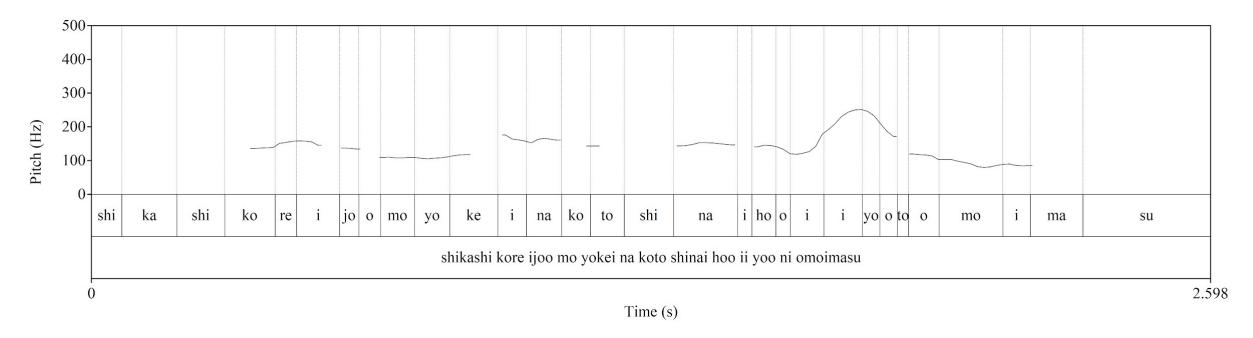
Figure 3 Intonation contour of Data (3) Source: Praat Application, 2023
Similar to the previous data, data (3) shows visible and invisible parts in the body of utterance intonation as well. The peak intonation is located in mora i with a pitch value of 252.66 Hz, and the lowest part is in mora mo with a pitch value of 79.04 Hz. Alongside the mora components of the utterance, each mora demonstrates phonetic properties in detail in Table IV.
Table IV Phonetic Properties of Shikashi Kore Ijoo Mo Yokei Na Koto Shinai Hoo Ga Ii Yoo To Omoimasu
| No | Mora | Duration (ms) | Pitch Mean (Hz) | Maximum Pitch (Hz) | Minimum Pitch (Hz) |
|---|---|---|---|---|---|
| 1 | shi | 0.704 | Undefined | Undefined | Undefined |
| 2 | ka | 0.127 | Undefined | Undefined | Undefined |
| 3 | shi | 0.111 | Undefined | Undefined | Undefined |
| 4 | ko | 0.116 | 137.49 | 141.17 | 135.85 |
| 5 | re | 0.050 | 153.12 | 158.40 | 141.17 |
| 6 | i | 0.100 | 151.85 | 158.62 | 135.25 |
| 7 | jo | 0.045 | 136.67 | 136.81 | 131.78 |
| 8 | o | 0.050 | 117.13 | 131.78 | 108.81 |
| 9 | mo | 0.078 | 109.24 | 110.90 | 107.52 |
| 10 | yo | 0.081 | 107.64 | 112.74 | 104.77 |
| 11 | ke | 0.111 | 116.44 | 118.08 | 112.74 |
| 12 | i | 0.066 | 164.29 | 176.37 | 154.81 |
| 13 | na | 0.081 | 160.29 | 166.53 | 150.89 |
| 14 | ko | 0.066 | 141.05 | 143.14 | 139.27 |
| 15 | to | 0.077 | 143.33 | 143.40 | 143.14 |
| 16 | shi | 0.110 | Undefined | Undefined | Undefined |
| 17 | na | 0.134 | 145.32 | 153.81 | 116.46 |
| 18 | i | 0.033 | 121.28 | 121.46 | 120.81 |
| 19 | ho | 0.055 | 143.64 | 146.85 | 138.75 |
| 20 | o | 0.033 | 131.12 | 142.12 | 120.51 |
| 21 | i | 0.077 | 135.41 | 183.19 | 117.83 |
| 22 | i | 0.089 | 227.37 | 252.66 | 183.19 |
| 23 | yo | 0.040 | 235.42 | 251.22 | 208.27 |
| 24 | 0 | 0.040 | 183.14 | 208.27 | 153.57 |
| 25 | to | 0.026 | 138.14 | 145.85 | 124.05 |
| 26 | 0 | 0.070 | 115.39 | 124.05 | 103.81 |
| 27 | то | 0.148 | 90.80 | 103.88 | 79.04 |
| 28 | i | 0.063 | 86.44 | 91.16 | 81.21 |
| 29 | ma | 0.122 | 110.15 | 117.36 | 87.34 |
| 30 | su | 0.296 | Undefined | Undefined | Undefined |
(4) 断る Kotowaru'I decline'
The refusal act in data (4) occurred in a wine-selling place. At that moment, Harada asked Oba, a 36-year-old man, to play the role of an annoying customer due to reconstructing a guest eviction event that took place in the past. The current data is categorized as a direct refusal act because the speaker directly declined the interlocutor's demand. Also, refusal speech is articulated in relatively stable intonation. Figure 4 below displays the intonation contour of the current data.
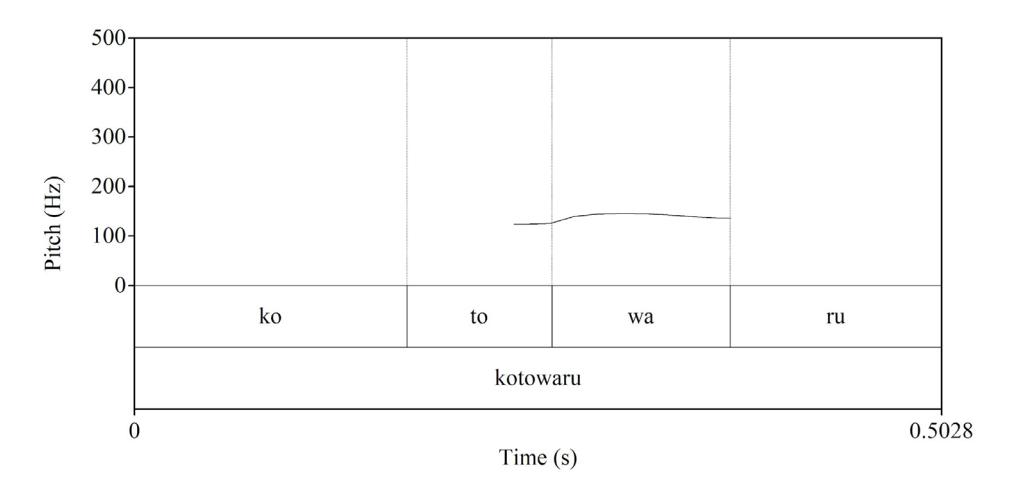
Figure 4 Intonation contour of Data (4) Source: Praat Application, 2023
The absence of a visible contour at the beginning and end of the refusal speech led to the emergence of an undefined status in the pitch of the speech. Praat only drew the intonation contour in the medial position of the speech. Therefore, the intonation of the refusal speech can only be seen in the center position. In Table 5, the properties of kotowaru are displayed.
Table V Phonetic Properties of Kotowaru
| No | Mora | Duration (ms) | Pitch Mean (Hz) | Maximum Pitch (Hz) | Minimum Pitch (Hz) |
|---|---|---|---|---|---|
| 1 | ko | 0.169 | Undefined | Undefined | Undefined |
| 2 | to | 0.090 | 124.43 | 127.19 | 123.16 |
| 3 | wa | 0.110 | 140.83 | 145.47 | 127.19 |
| 4 | ru | 0.131 | Undefined | Undefined | Undefined |
Closely related to the preceding data, data (5) is a continuation of refusal speech in the same situation. Harada persistently kept convincing Oba to take on the role of an annoying customer. Nevertheless, Oba made up his mind and refused the demand with an utterance in the following data:
(5)
Warui kedo, kyooryoku dekinai na 'I'm sorry but I can't cooperate with you'.
In this context, Oba was irritated since Harada insisted, he should take the role. Although he turned down the demand, his refusal speech began with an apology marked by the warui kedo 'I'm sorry' phrase. The uses of this phrase are motivated by the situation and social relationships. Specifically, this phrase is articulated in informal situations where the speaker-interlocutor is socially close. It can be observed that the situation and social relationships can potentially become factors behind the style of refusal speech.
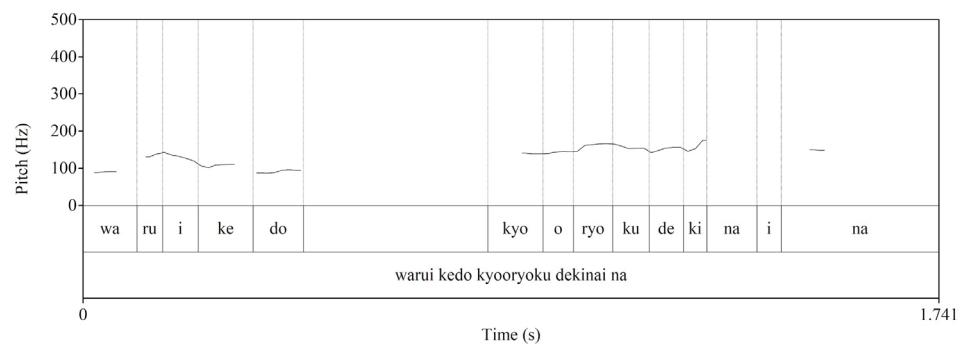
Figure 5 Intonation contour of Data (5) Source: Praat Application, 2023
Figure 5 displays that there is no significant sudden rise or fall in intonation. Even so, the authors identified an undefined case in the current data. From this point, it can be inferred that the speaker still manages his emotions, even though he feels irritated. His uttered speech can be divided into parts according to the mora components of the speech. Each mora possesses the phonetic properties displayed
| identified an undefined case in the current data. From this point, it can be inferred that the speaker | |
|---|---|
| still manages his emotions, even though he feels irritated. His uttered speech can be divided into parts | |
| according to the mora components of the speech. Each mora possesses the phonetic properties displayed | |
| in Table VI. | |
| No | Mora | Duration (ms) | Pitch Mean (Hz) | Maximum Pitch (Hz) | Minimum Pitch (Hz) | ||
|---|---|---|---|---|---|---|---|
| 1 | wa | 0.109 | 89.68 | 91.38 | 88.07 | ||
| 2 | ru | 0.052 | 135.16 | 143.31 | 130.12 | ||
| 3 | i | 0.072 | 130.25 | 142.91 | 107.95 | ||
| 4 | ke | 0.111 | 106.39 | 111.55 | 91.12 | ||
| 5 | do | 0.101 | 91.76 | 95.80 | 86.83 | ||
| 6 | kyo | 0.111 | 140.13 | 143.32 | 138.46 | ||
| 7. | o | 0.062 | 143.16 | 145.86 | 139.05 | ||
| 8 | ryo | 0.079 | 160.02 | 166.85 | 143.76 | ||
| 9 | ku | 0.074 | 153.12 | 164.60 | 144.96 | ||
| 10 | de | 0.069 | 151.55 | 156.73 | 139.87 | ||
| 11 | ki | 0.047 | 157.61 | 175.41 | 141.73 | ||
| 12 | na | 0.101 | Undefined | Undefined | Undefined | ||
| 13 | i | 0.049 | 111.15 | 113.75 | 109.21 | ||
| 14 | na | 0.167 | 146.38 | 150.64 | 111.68 | ||
Table VI Phonetic Properties of Warui Kedo Kyooryoku Dekinai Na
Continuing those two preceding excerpts, data (6) is closely related to the previous context. The current excerpt shows the speaker was very annoyed with the interlocutor, who insisted on role-playing and asked him repeatedly. Hence, the speaker decidedly declined the demand through his utterance, which can be seen below.
(6)
Kotowaru, danjite kotowaru
'I decline, absolutely not'.
The speaker's resentment is noticed by the recurrence of the kotowaru verb. Kotowaru is a Japanese verb with the lexical meaning 'to refuse something' (Kindaichi et al., 1974, p. 355). The use of the kotowaru verb that is repeated and followed by the danjite adverb 'absolutely' implies that the speaker undoubtedly refused the request and that his decision is final. Besides, this refusal is directly delivered by the speaker.
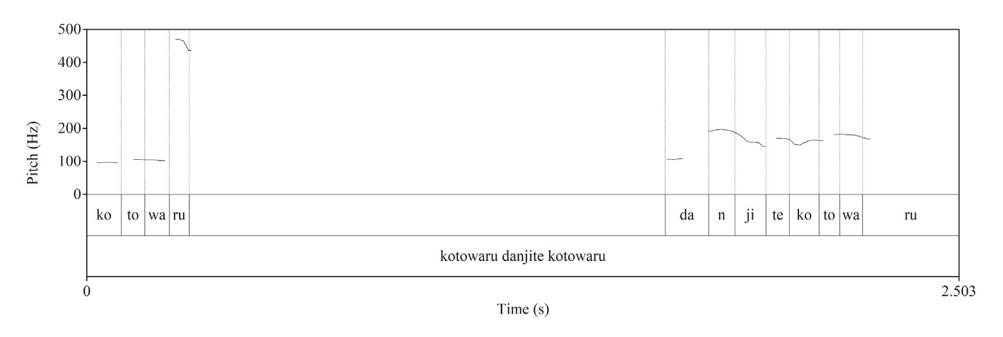
Figure 6 Intonation contour of Data (6) Source: Praat Application, 2023
According to Figure 6, the authors identified a sudden rise in mora ru. At the same time, the highest pitch of the entire utterance is located in mora ru with a pitch value of 470.78 Hz. Between kotowaru 'I decline' and danjite kotowaru 'absolutely not', there was a pause. The pause was realized with a duration of 1.36 milliseconds. This pause serves a function in the spoken discourse, particularly to halt his speech to produce more speech. In linguistics, this type of pause is known as a silent pause, and it occurs when a person wants to take a break of halt their speech temporarily (Thomas, 2011, p. 185).
If we look at the entire body of the utterance, the refusal speech is relatively delivered in a lower manner. Although the speaker opted to communicate in a lower manner, from the perspective of linguistics, this utterance shows the anger of the speaker. The phonetic properties of data (6) are displayed in Table VII.
| Mora | Duration (ms) | Pitch Mean (Hz) | Maximum Pitch (Hz) | Minimum Pitch (Hz) | |||
|---|---|---|---|---|---|---|---|
| ko | 0.098 | 101.08 | 123.92 | 93 | |||
| to | 0.067 | 105.17 | 105.60 | 104.66 | |||
| wa | 0.070 | 103.32 | 104.83 | 99 | |||
| ru | 0.057 | 460.61 | 470.78 | 437.76 | |||
| da | 0.125 | 135.29 | 186.85 | 103.66 | |||
| n | 0.074 | 194.14 | 198.64 | 186.85 | |||
| ji | 0.089 | 161.54 | 187.48 | 135.43 | |||
| te | 0.067 | 166.24 | 169.75 | 135.43 | |||
| ko | 0.084 | 157 | 166.27 | 141.63 | |||
Table VII Phonetic Properties of Kotowaru Danjite Kotowaru
| 10 | to | 0.059 | 177.55 | 182.32 | 162.80 |
|---|---|---|---|---|---|
| 11 | wa | 0.065 | 179.10 | 182.35 | 170.77 |
| 12 | ru | 0.276 | 167.18 | 171.13 | 163.81 |
(7)
Kaerenai
'I can't go home'.
Data (7) was an utterance from the speaker, Kajiwara. In the past, Kajiwara borrowed money and promised to return it after a certain period. At present, a debt collector has arrived at Kajiwara's workplace since Kajiwara broke his promise to pay. At that moment, Kajiwara asked the debt collector to go home, but the debt collector would not go home until he had the money back.
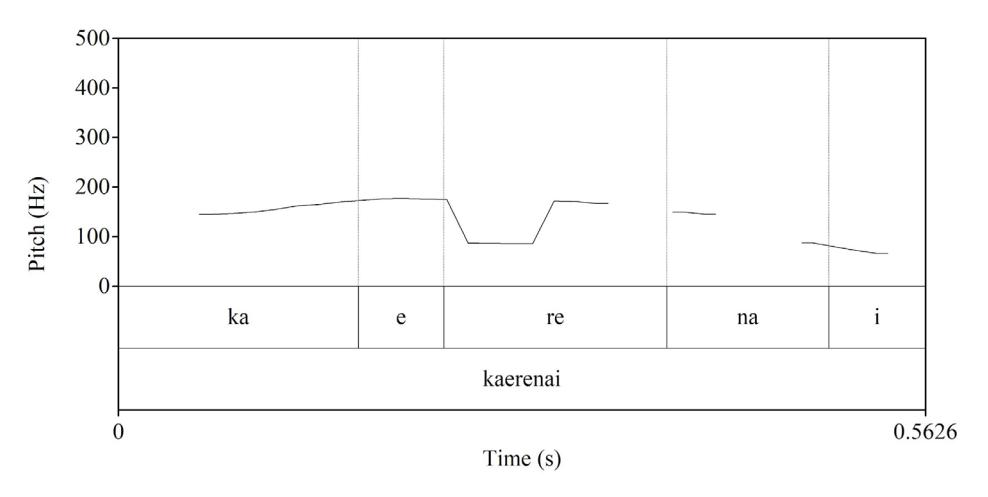
Figure 7 Intonation contour of Data (7) Source: Praat Application, 2023
Data (7) has been uttered in a rising-falling intonation, as shown in Figure 7. The rising pattern appeared within the mora re, while the falling pattern formed during the transition from mora e to re, as well as near the end of the utterance. Table VIII depicts the phonetic properties of kaerenai in data (7).
| No | Mora | Duration (ms) | Pitch Mean (Hz) | Maximum Pitch (Hz) | Minimum Pitch (Hz) | ||
|---|---|---|---|---|---|---|---|
| 1 | ka | 0.167 | 154.86 | 172.95 | 137.67 | ||
| 2 | e | 0.060 | 175.96 | 177.35 | 172.95 | ||
| 3 | re | 0.155 | 138.85 | 175.15 | 85.75 | ||
| 4 | na | 0.112 | 123.14 | 150.74 | 84.96 | ||
| 5 | i | 0.067 | 80.67 | 84.96 | 66.03 | ||
Table VIII Phonetic Properties of Kaerenai
(8)
Kane o morau made wa kaerenai te itten daro
'I told you I couldn't go home until I got the money'.
The utterance in data (8) was uttered within the same context and situation as the previous data. Kajiwara was attempting to persuade the debt collector to return home in this situation. However, the debt collector straight away declined the request. Instead of repaying the loan, Kajiwara persuaded the debt collector once more. This time, however, the debt collector was unmoved. As a result, the debt collector refused to leave until he received the money.
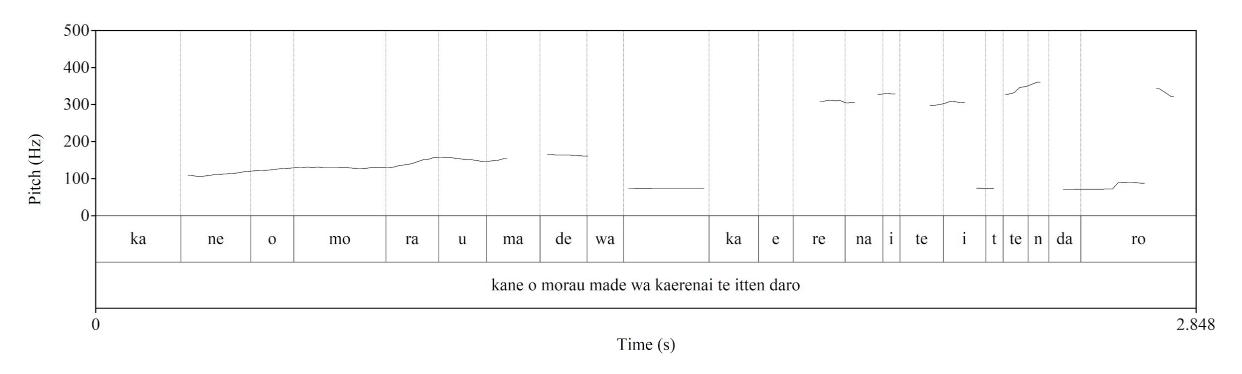
Figure 8 Intonation contour of Data (8) Source: Praat Application, 2023
In the phrase kaerenai te itten daro 'I told you I couldn't go home', the speaker said, raising his intonation as seen in Figure 8. Raising the intonation in this section represents his furious demeanor. The reason for this is because the interlocutor, Kajiwara, insisted on him returning home without repaying the loan, even though he had already missed the deadline. As a result, the speaker's refusal is the final decision. The phonetic properties of data (8) are shown in Table IX.
Table IX Phonetic Properties of Kane O Morau Made Wa Kaerenai Te Itten Daro
| No | Mora | Duration (ms) | Pitch Mean (Hz) | Maximum Pitch (Hz) | Minimum Pitch (Hz) |
|---|---|---|---|---|---|
| 1 | ka | 0.220 | Undefined | Undefined | Undefined |
| 2 | ne | 0.180 | 111.93 | 120.68 | 106.46 |
| 3 | 0 | 0.111 | 125.03 | 129.71 | 120.68 |
| 4 | то | 0.238 | 129.86 | 132.28 | 127.16 |
| 5 | ra | 0.136 | 142.94 | 158.16 | 129.55 |
| 6 | и | 0.124 | 153.08 | 158.11 | 146.67 |
| 7 | та | 0.138 | 151.23 | 157.53 | 146.78 |
| 8 | de | 0.122 | 163.34 | 164.78 | 160.64 |
| 9 | wa | 0.093 | 154.44 | 160.64 | 147.80 |
| 10 | ka | 0.128 | Undefined | Undefined | Undefined |
| 11 | е | 0.089 | Undefined | Undefined | Undefined |
| 12 | re | 0.134 | 306.52 | 313.28 | 292.80 |
| 13 | na | 0,097 | 313.39 | 328.73 | 304.72 |
| 14 | i | 0.045 | 330.06 | 331.57 | 328.73 |
| 15 | te | 0.111 | 299.30 | 302.76 | 296.66 |
| 16 | i | 0.109 | 254.56 | 309.92 | 124.31 |
| 17 | t | 0.045 | 124.22 | 124.36 | 124.07 |
| 18 | te | 0.065 | 338.52 | 352.11 | 326.32 |
| 19 | n | 0.053 | 360.62 | 368.22 | 352.11 |
| 20 | da | 0.083 | 376.27 | 380.22 | 371.43 |
| 21 | ro | 0.298 | 165.79 | 347.89 | 79.43 |
Conclusion
We discovered that the intonation and the pitch are two components that complement each other. If the intonation rises, so does the pitch. These are motivated by the fact that the pitch is a physical manifestation of the intonation and depicts the physical value of a given intonation. We also recognized that emotion unnecessarily harmonizes with intonation. In some cases, the refusal act could be articulated in plain intonation, even if the speaker exhibits a certain feeling from the standpoint of pragmatics. As a result, the linguistic markers convey the speaker's emotion. Furthermore, the Japanese language is a language that is inextricably tied to situational, intentional, and emotional aspects. In terms of intonation, our suggestion is to carry out a comparison study in the future to investigate the differences and similarities between natural and fictional language usage in Japanese.
References
Coleman, J. C., & Hammem, C. L. (1974). Contemporary Psychology and Effective Behavior. Scott Foresman.
Féry, C. (2017). Intonation and Prosodic Structure. Cambridge University Press.
Halim, A. (1984). Intonasi dalam hubungannya dengan sintaksis bahasa Indonesia. Djambatan.
Hart, J. 't, Collier, R., & Cohen, A. (2006). A perceptual study of intonation: An experimental-phonetic approach to speech melody (1st Ed). Cambridge University Press.
Hasegawa, Y. (2014). Japanese: A Linguistic Introduction. Cambridge University Press.
Imaida, A. (2006). Wakai Nihonjin Josei no Picchi Henka ni Miru Bunkateki Kihan no Eikyou. Gengo Bunka Ronshuu, 27(2), 13–26. https://doi.org/10.18999/stulc.27.2.13
Irwin, M., & Zisk, M. (2019). Japanese Linguistics. Asakura Publishing.
Jahja, Y. (2011). Psikologi Perkembangan. Kencana Prenada Media Group.
Kindaichi, K., Kindaichi, H., Shibata, T., Yamada, T., & Kenbo, H. (1974). Sanseidou Kokugo Jiten (2nd ed). Sanseido.
Koori, S. (2015). Shuujoshi [ne] no Intoneeshon. , 61–76. https://doi. org/10.18910/57286
Koori, S. (2018a). Kandoshi no Takasa no Hataraki kara Miru Nihongo no Kaiwa Hyogen no Intoneeshon no Tokucho. Osaka Daigaku Gengo Bunkagaku, 27, 69–81.
Koori, S. (2018b). Shuujoshirui no Akusento to Intoneeshon: tobibane chouon no . Gengo Bunka Kyoodoo Kenkyuu Purojekuto, 61–76. https://doi. org/10.18910/69989
Minematsu, N., Nakamura, I., Suzuki, M., Hirano, H., Nakagawa, C., Nakamura, N., Tagawa, Y., Hirose, K., & Hashimoto, H. (2013). Development and Evaluation of Online Infrastructure to Support Teaching and Learning of Japanese Accent and Intonation. Denshi Joohoo Tsuushin Gakkai Ronbunshi, J96-D(10), 2496–2508.
Moore, H. (1997). Learning Pronunciation and Intonation of Japanese through Drama by Beginning Language Students: A Case for Reflective journals. JALT Journal, 19(2), 235–259.
Okamoto, M., & Ujihara, Y. (2018). A Guide to Useful Japanese Sentence Patterns: Comparing and Understanding the Differences. J Risaachi.
Saito, Y. (1990). Nihongo Onsei Hyogenhou. Oubunsha.
Searle, J. (1997). Speech Act. Cambridge University Press.
Suhardi. (2005). Pesona Bahasa. Gramedia Pustaka Utama.
Thomas, E. R. (2011). Sociophonetics: An Introduction. Palgrave Macmillan.
Tsujimura, N. (2014). An introduction to Japanese Linguistics (3rd Ed). Wiley-Blackwell.
Tsybaneva, V., Seredintseva, A., & Maletina, O. (2019). Using Drama in Teaching Intonation. Proceedings of the 1st International Scientific Practical Conference "The Individual and Society in the Modern Geopolitical Environment" (ISMGE 2019), 677–682. https://doi.org/10.2991/ismge-19.2019.128
- Uzun, T., & Uzun, E. C. (2021). Using Glottodrama for Teaching Final Intonation in English. Proceedings of the 12th Pronunciation in Second Language Learning and Teaching Conference, 1–6. https:// doi.org/10.31274/psllt.13364
- Wang, X. (2022). Segmental versus suprasegmental: Which one is more important to teach? RELC Journal, 53(1), 194-202.
- Waskita, D. (2014). Transitivity in Telephone Conversation in a Bribery Case in Indonesia: A Forensic Linguistic Study. Jurnal Sosioteknologi, 13(2), 91–100. https://doi.org/https://doi.org/10.5614/ sostek.itbj.2014.13.2.3
- Wolman, B. B. (1973). Dictionary of Behavioral Science. Van Nostrand Reinhold Co.
- Yusuf, S. (2008). Psikologi Perkembangan Anak dan Remaja. Rosda.
- Zsiga, E. C. (2013). The Sounds of Language: An Introduction to Phonetics dan Phonology (1st Ed). Wiley-Blackwell.