

INFO ARTIKEL
Kata kunci:
transformasi digital, pelayanan publik, Kota Banda Aceh, Kota Jambi
ABSTRAK
Penelitian ini bertujuan untuk membuktikan hipotesis mengenai faktor yang memengaruhi transformasi digital pelayanan publik di Kota Banda Aceh dan Kota Jambi dengan menggunakan framework TAM dengan variabel usefulness, attitude toward, ease of use, social influence. Penelitian ini menggunakan metode deskriptif kuantitatif dengan sumber data berupa kuesioner yang dibagikan melalui google form kepada 200 responden. Pengolahan data dilakukan menggunakan perangkat lunak SMART PLS3. Hasil penelitian menunjukkan nilai R-square sebesar 0,671, sehingga dapat disimpulkan interpretasi tingkat kepuasan pengguna di Kota Banda Aceh dan Kota Jambi terhadap transformasi digital sebesar 67,1%, r-square teridentifikasi dalam kategori kuat. Beberapa variable TAM yang berpengaruh signifikan terhadap perkembangan transformasi digital di Kota Banda Aceh dan Kota Jambi adalah variabel ease of use dan social influence dengan nilai P Values 0,004 dan 0,000, sedangkan variabel yang tidak berpengaruh signifikan adalah usefulness dan attitude towards dengan P Values sebesar 0,511 dan 0,056.
Introduction
The dynamics of the development of modern society in welcoming digital transformation have become the center of attention as an answer to various challenges and opportunities faced by the government in providing public services (Rahmaini, 2021). The application of digital technology in public services has become a global phenomenon that influences various aspects of people's lives, from the way we interact with government to how public services are delivered and accessed by citizens. Amid the ongoing digital revolution, there is an urgent need for governments to understand and respond quickly to these changes (Androutsopoulou et al., 2019). In Indonesia, the digital transformation of public services has become an integral part of the government's efforts to increase efficiency, transparency, and responsiveness in the delivery of public services (Hadi et al., 2020). Various initiatives have been taken at the central and regional levels to accelerate the adoption of digital technology in various public service sectors, from health services to education, from business licensing to administration. The Indonesian government has issued various policies and initiatives to accelerate the digitalization of public services, including the Indonesia Digitalization 2025 Program, which aims to create inclusive digital infrastructure and provide better public services (Muliawaty & Hendryawan, 2020).
However, on the other hand, there are still many challenges faced on the journey towards the digital transformation of public services in Indonesia (Kurniawan et al., 2021). Provinces on the island of Sumatra, including North Sumatra, West Sumatra, Jambi, and Aceh, have unique challenges and potential for adopting digital technology in public services (Hasiholan et al., 2020). Provinces on the island of Sumatra, including North Sumatra, West Sumatra, Jambi, and Aceh, have unique challenges and potential for adopting digital technology in public services (Prakoso, 2020).
This research focuses on investigations in two cities on the island of Sumatra, namely Banda Aceh City and Jambi City. Banda Aceh has a unique history and culture, especially as the center of Islamic culture and religion in Indonesia. Against this background, understanding digital transformation in the context of Islamic culture and values can provide invaluable insights. It also allows identification of ways in which local and Islamic values influence technology adoption. Banda Aceh is one of the cities that was heavily affected by the 2004 tsunami (Sinulingga et al., 2020). It can explore how digital transformation is used to rebuild and increase resilience to disasters in areas that have been affected by major disasters. Furthermore, Aceh has special autonomy status; seeing how this special autonomy influences digital transformation policies and public services provides an insight into policy implementation at the local level that is different from other regions in Indonesia (Siddiqi, 2018).
Jambi is known as a province with abundant natural resources, especially oil palm and mining. Digital transformation can be linked to key economic sectors, and studies in Jambi can provide an understanding of how technology supports or changes key economic sectors. Jambi has significant ethnic diversity; digital transformation needs to consider cultural and ethnic diversity in developing public service strategies (Sofyan, 2019). This study can explore how digital transformation is being adapted to encompass ethnic diversity. Jambi is experiencing rapid infrastructure development, so it can focus on how infrastructure development supports or challenges digital transformation, especially in providing connectivity and technological accessibility. Through this approach, research can understand digital transformation in the context of the unique background and characteristics of each city (Herawaty & Hernando, 2021). This helps to identify factors influencing technology adoption and public service delivery in both regions.
This research uses the TAM (technology acceptance model) theoretical framework. This theory, developed by Davis in 1989, provides a powerful guide to understanding how individuals accept and adopt new technologies. In the context of this research, it focuses on how citizens, government institutions, and other key stakeholders in Banda Aceh and Jambi accept and respond to digital transformation in the delivery of public services. TAM has variables, namely, ease of use, social influence, attitude toward, and usefulness (Ilmi et al., 2020). TAM emphasizes that user behavior towards technology is influenced by their perception of the usefulness and ease of use of the technology. By viewing digital transformation as innovation, consideration of how local communities perceive the usefulness and level of ease of use of updated public services becomes a very important issue. Therefore, we will trace these TAM factors in each step of data analysis and interpretation to provide in-depth enlightenment about technology acceptance in these two cities (Ajibade et al., 2017).
In a broader context, the digital transformation of public services on the island of Sumatra, specifically Banda Aceh City and Jambi City, has significant implications for national development. As one of the islands that is an important part of Indonesia, the digitalization of public services on the island of Sumatra can influence the direction of the country's development as a whole. Therefore, an in-depth study of digital transformation in public services on the island of Sumatra is important in understanding the impacts, challenges, and opportunities associated with this change in local and national government administration (Prakoso, 2020).
Method
This type of research is descriptive-quantitative to describe various situations or various variables, research objects in society. This study uses a random sampling of respondents to determine the effect of digital transformation on public services on the island of Sumatera in Banda Aceh City and Jambi City. The number of samples in this study was 200, namely 100 respondents from Banda Aceh City and 100 respondents from Jambi City. The participants were specifically selected from the demographic of digital technology users engaged in public services within the respective locales of Banda Aceh City and Jambi City. The research instrument is a questionnaire that explores digital transformation in public services on the island of Sumatra. This questionnaire was created based on the four focus analyses of the TAM framework. The model is useful in answering why many information technology systems are not successfully implemented because users have no intention of using them. There are few models of implementing information technology systems that include psychological or behavioral aspects in the model, and TAM takes this into account (Weng et al., 2018). This framework is one of the models built to analyze and understand the factors that influence the acceptance of the use of computer technology. The research was analyzed using SmartPLS software.
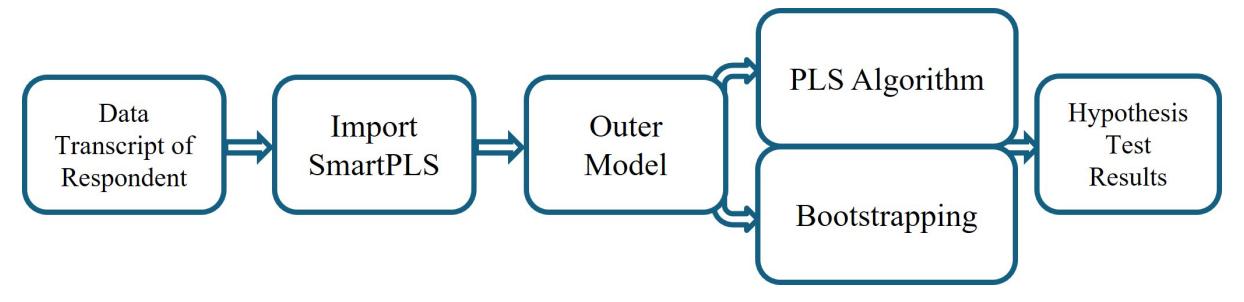
Figure 1. Analysis Scheme Model in SmartPLS
TAM Framework
The TAM (technology acceptance model) framework is a framework developed to understand and explain individual acceptance and adoption of technology. This model helps in predicting the user's intention to use the technology and the level of acceptance of the technology based on their perception of usability and ease of use. TAM was developed by Fred Davis in 1989 and has become one of the most widely used frameworks in technology acceptance research.
1. Perceived usefulness
Concepts in technology acceptance theory (technology acceptance model/TAM) refer to individual perceptions of the extent to which a technology is deemed useful in achieving goals or meeting
certain needs. It reflects an individual's assessment of the extent to which the use of technology will improve performance, productivity, effectiveness, or efficiency in the relevant context.
2. Perceived ease of use
The concept in TAM refers to an individual's perception of the extent to which a technology is considered easy to use. This concept reflects an individual's assessment of their level of ease in understanding, learning, and using technology.
3. Attitude towards
A concept that refers to an individual's tendency to adopt and use technology. This intention reflects an individual's belief and desire to actively utilize technology in relevant contexts.
4. Social influence
The concept refers to the influence of individuals or social groups on the attitudes, beliefs, and behavior of other individuals. In the context of technology acceptance, social influences can affect individual intentions and decisions to adopt and use technology.
By considering these factors, this study aims to provide a comprehensive understanding of the factors that influence digital transformation in public services in Banda Aceh City and Jambi City on the island of Sumatra. With this understanding, local governments can direct their efforts to enhance digital transformation in public services, overcome existing obstacles, and take advantage of existing opportunities to create better and more efficient public services for the community.
| NO. | TAM Framework | Indicators | Number of Questions |
|---|---|---|---|
| 1 | Perceived usefulness | • Effectiveness of public services | 1 |
| • Benefits of using technology | 1 | ||
| 2 | Perceived ease of use | • Ease of use | 1 |
| • Technical support | 1 | ||
| • Perception of clarity | 1 | ||
| 3 | Attitude towards | • Intention to use technology | 1 |
| • User trusted | 1 | ||
| 4 | Social influence | • Social norms | 1 |
| • Social pressure | 1 |
Table I TAM Framework Instruments
Data Collection Techniques
Data collection techniques in this research was carried out by distributing Google Form questionnaires randomly to residents of Banda Aceh City and Jambi City (random sampling) and printed questionnaires, which were filled in by respondents until the required data was met.
Measurement Model Test (Outer Model)
Measurement model test (outer model). The outer reflecting model, which shows how the manifest or observed variable represents the latent construct to be assessed, is often measured by testing the validity and reality of the indicators forming the latent construct through confirmatory factor analysis (Syahbani & Nuraini, 2018).
Figure 2 Theoretical Framework
Hypothesis
H1: Usefulness
Perceived usefulness positively influences users' intentions to adopt digital transformation in public services in Banda Aceh City and Jambi City. This hypothesis implies that the greater the perceived usefulness felt by individuals towards digital transformation in public services, the higher their intention to adopt and use the technology.
H2: Ease of use
Perceived ease of use positively influences user intentions to adopt digital transformation in public services in Banda Aceh City and Jambi City. This hypothesis assumes that the higher the perceived ease of use of technology felt by individuals, the higher their intention to adopt and use the technology in the context of public services.
H3: Attitude toward the use
Attitudes towards use positively influence users' intentions to adopt digital transformation in public services in Banda Aceh City and Jambi City. This hypothesis argues that the more positive an individual's attitude towards the use of digital technology in public services, the higher their intention to adopt the technology.
H4: Social influence
Social influence positively influences user intentions to adopt digital transformation in public services in Banda Aceh City and Jambi City.
Results and Discussion
The demographic profile of the respondents (n = 200) The demographic profile of the respondents in this study was the people of Banda Aceh City, as many as 100 respondents, and Jambi City, as many as 100 respondents, both male and female, aged between 18 and 50 years, from various types of educational backgrounds, namely, junior high school level up to master level, and the employment status of respondents, including students, graduates, state civil servants, and entrepreneurs.
Table II Demographic Profile of Banda Aceh City
| Characteristics | Freq | |
|---|---|---|
| Male | 66 | |
| Female | 34 | |
| Age | ||
| 18-25 years | 19 | |
| 26-33 years | 28 | |
| 34-41 years | 32 | |
| 42-50 years | 21 | |
| Education Level | ||
| Senior High School | 12 | |
| Bachelor's Degree/Associates Degree | 65 | |
| Postgraduate | 23 | |
| Status | ||
| Students/Undergraduate | 30 | |
| State Civil Apparatus | 23 | |
| Private Sector Employee | 47 |
Source: Google form respondent data collection (2023)
Table III. Demographic Profile of Jambi City
| Characteristics | Freq | |
|---|---|---|
| Male | 62 | |
| Female | 48 | |
| Age | ||
| 18-25 years | 12 | |
| 26-33 years | 26 | |
| 34-41 years | 30 | |
| 42-50 years | 32 | |
| Education Level | ||
| Senior High School | 14 | |
| Bachelor's Degree/Associates Degree | 62 | |
| Postgraduate | 24 | |
| Status | ||
| Students/Undergraduate | 34 | |
| State Civil Apparatus | 25 | |
| Private Sector Employee | 41 |
Source: Google form respondent data collection (2023)
Outer Model: PLS Algorithm
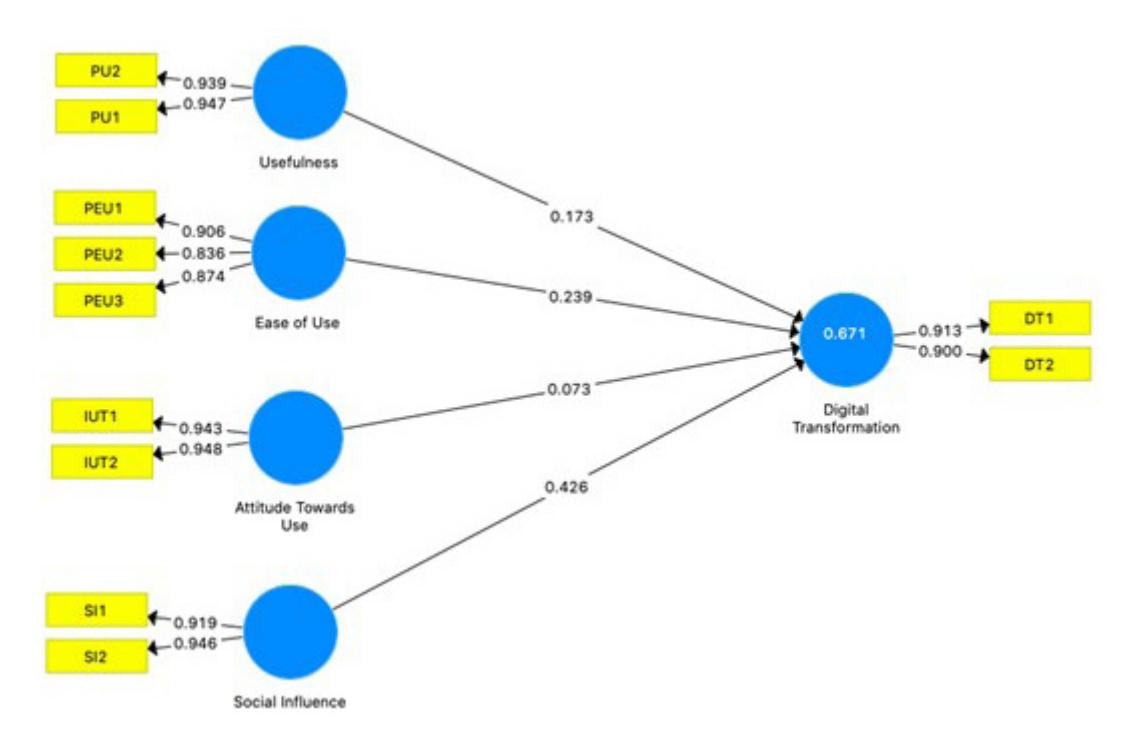
Source: Processed with SmartPLS 3 (2023)
Construct Reliability and Validity
Table IV. Construct Reliability and Validity
| Construction | Cronbach's Alpha | Rho_A | Composite Reliability | Average Variances |
|---|---|---|---|---|
| Attitude towards | 0.882 | 0.883 | 0.944 | 0.894 |
| Digital transformation | 0.783 | 0.785 | 0.902 | 0.821 |
| Ease of use | 0.842 | 0.848 | 0.905 | 0.761 |
| Social influence | 0.851 | 0.874 | 0.930 | 0.870 |
| Usefulness | 0.876 | 0.879 | 0.941 | 0.889 |
Source: Processed with SmartPLS 3 (2023)
These results indicate that the "attitude towards" construct has a good level of reliability, with Cronbach's alpha of 0.882 and rho_A of 0.883. A composite reliability value of 0.944 indicates that this construction has high reliability. An average variance of 0.894 indicates that this construction has sufficient validity. The results of the "ease of use" construction have a good level of reliability, with Cronbach's alpha of 0.842 and rho_A of 0.848. A composite reliability value of 0.905 indicates that this construction has high reliability. An average variance of 0.761 indicates that this construction has sufficient validity.
Table V Discriminant Validity: Fornell-Larcker Criterion
| Attitude Toward | Digital Transformation | Ease of Use | Social Influence | Usefulness | |
|---|---|---|---|---|---|
| Attitude Toward | 0.946 | ||||
| Digital Transformation | 0.694 | 0.906 | |||
| Ease of Use | 0.652 | 0.712 | 0.872 | ||
| Social Influence | 0.788 | 0.775 | 0.710 | 0.932 | |
| Usefulness | 0.748 | 0.697 | 0.713 | 0.703 | 0.943 |
The table above shows that each construct has a higher correlation coefficient with itself than with other constructs, indicating good discriminant validity. These results meet the Fornell-Larcker criterion, which indicates that the constructs measured in this study are substantially different from each other. Strong discriminant validity is important to ensure that the constructs being measured truly separate the concepts represented by each variable in the study.
Attitude Toward:
The correlation value between attitude towards and other constructs is quite low, indicating that attitude towards has a good separation from other constructs in this research. A high AVE (0.946) also indicates that attitude has a significant variance, as explained by the indicators themselves.
Digital Transformation:
The correlation values between digital transformation and other constructs are quite low, indicating good separation. A high AVE (0.906) indicates that digital transformation has a fairly large variance, which is explained by the indicators themselves.
Ease of Use:
The correlation values between ease of use and other constructs are quite low, indicating good separation. A high AVE (0.872) indicates that ease of use has a fairly large variance, which is explained by the indicators themselves.
Social Influence:
The correlation values between social influence and other constructs are quite low, indicating good separation. A high AVE (0.932) indicates that social influence has a fairly large variance, which is explained by the indicators themselves.
Usefulness:
The correlation value between usability and other constructs is quite low, indicating good separation. A high AVE (0.943) indicates that usability has a fairly large variance, which is explained by the indicators themselves.
Overall, the results of the Fornell-Larcker criterion analysis show that the constructs in this study have good separation from each other, which supports discriminant validity. This indicates that these constructs measure different concepts in this research.
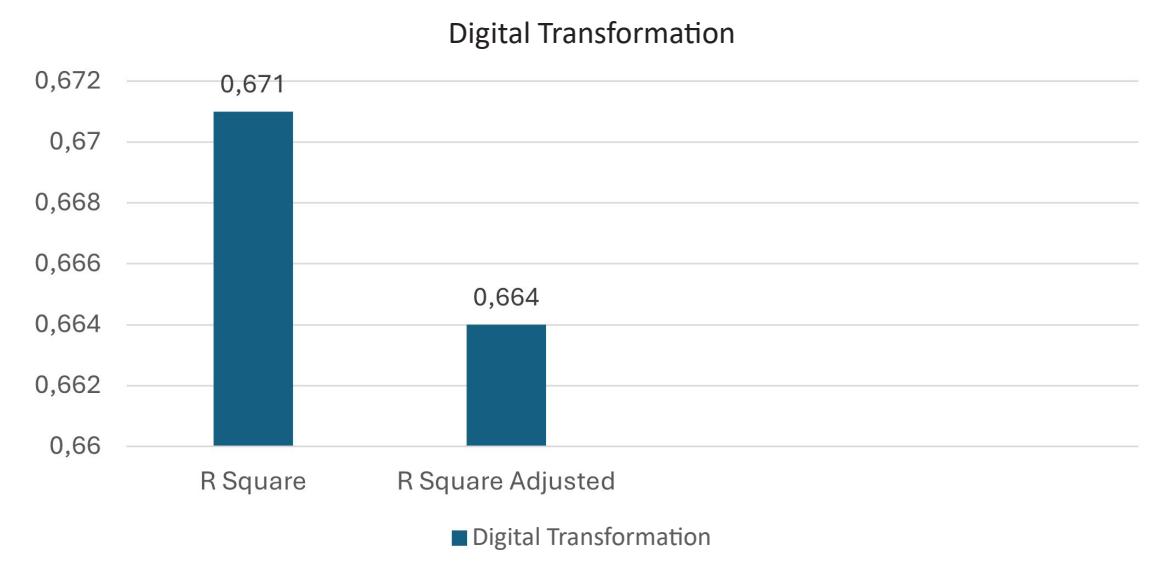
Figure 3 PLS Algorithm R-Square and R-Square Adjusted Source: Processed with Smart PLS3; PLS Algorithm (2023)
Figure 3 above is the R square output diagram of digital transformation, explaining usability, ease of use, intention to use technology, and social influence. The number 0.671 means that the use of technology for digital transformation is 67.1%, where the R square structural model indicates there are 3 scales, namely 19%-33% (weak/moderate), 33-67% (moderate), and > 67% (strong/good/substantial). Judging from the interpretation of the results of the regression and R-square on the digital transformation utility variable, it is evident that the scale is in the strong category. Therefore, this regression test concludes that the independent variable has a fairly direct influence on the dependent variable.
Outer Model: Bootstrapping
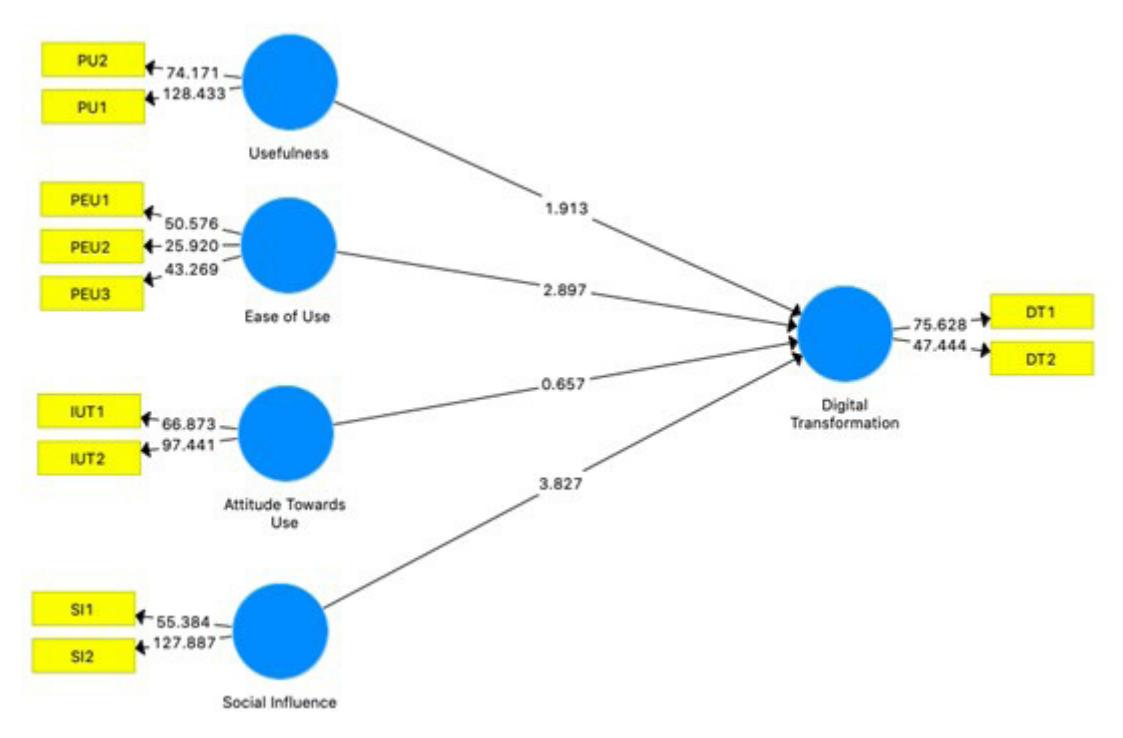
Source: Processed with SmartPLS 3 (2023)
Table VI Bootstrapping: Path Coefficients
| Variables | Original samples © | Sample mean (M) | Standard deviation | T Statistics (IO/ST) | P Values | Hypothesis |
|---|---|---|---|---|---|---|
| Attitude toward | 0.073 | 0.074 | 0.111 | 0.657 | 0.511 | Rejected |
| Ease of use | 0.239 | 0.252 | 0.082 | 2,897 | 0.004 | Supported |
| Social influence | 0.426 | 0.417 | 0.111 | 3.827 | 0.000 | Supported |
| Usefulness | 0.173 | 0.167 | 0.090 | 1.913 | 0.056 | Rejected |
Source: Processed with SmartPLS 3 (2023)
The Bootstrapping: Path Coefficients table above is used to evaluate the significance of the path coefficients between the variables in the research model. The following is an explanation for each variable in the table:
1. Attitude toward use:
The low T statistic value (0.657) and high P value (0.511) indicate that the path between attitude towards and related variables is not statistically significant. Therefore, the related hypothesis is rejected, indicating that there is no significant relationship between attitude and related variables.
2. Ease of use:
The high T statistic value (2.897) and low P value (0.004) indicate that the path between ease of use and the related variables is statistically significant. Therefore, the related hypothesis is supported, indicating that there is a significant relationship between ease of use and the related variables.
3. Social influence:
The high T-statistic value (3.827) and very low P value (0.000) indicate that the path between social influence and the related variables is statistically significant. Therefore, the related hypothesis is supported, indicating that there is a significant relationship between social influence and the related variables.
4. Usefulness (Usability):
Moderate T-statistic values (1.913) and P values that are slightly above the significance limit (0.056) indicate that the path between usefulness and the related variables is not statistically significant. Therefore, the related hypothesis is rejected, indicating that there is no significant relationship between usability and the related variables.
From these results, it can be concluded that there are significant differences in the "ease of use" and "social influence" variables on user intentions to adopt digital transformation in public services, while the "attitude toward" and "usefulness" variables do not show significant differences.
Discussion
The results of hypothesis testing in this research found that the ease of use variable has a high T statistic value (2.897) and low P values (0.004), indicating that the path between ease of use and the related variables is statistically significant.
Ease of Use Affects Digital Transformation in Public Services
The related hypothesis is supported, indicating that there is a significant relationship between ease of use and the related variables. This hypothesis is in line with research results (Wang & Ma, 2022), which state that when digital public services are easy to use, this will increase accessibility for various levels of society, including those who may have technological limitations or lack expertise in using digital devices. Digital public services that are easy to use include aspects of an intuitive user interface, simple navigation, and clear guidance. Thus, digital transformation can create greater inclusivity in society, where every individual has the same ability to access public services. (Sarwar et al., 2023) These findings also confirm the results of research from Zubir and Abdul Latip (2023), which state that high ease of use indicators can increase the level of use and acceptance by the community. This is important in the context of digital transformation because successful implementation depends on the level of widespread adoption by society. According to Ivanová and Grmanová (2023), with increased use, governments can achieve greater efficiency in the provision of public services and optimize available resources.
This research hypothesis finds ease of use affects digital transformation in public. This occurs because of the Koto Jambi government's efforts to build digital literacy substantially, which can have a significant impact on advancing the digital transformation of public services. Ensuring ease of use of digital public services will increase accessibility for people in Aceh, especially those who live in remote or hard-to-reach areas. With intuitive interfaces and clear guidance, digital public services can become more accessible to all levels of society, regardless of education level or technology expertise.
Social Influence Affects Digital Transformation in Public Services
The results of hypothesis testing in this research found that the social influence variable has a high T statistic value (3.827) and very low P values (0.000), which indicate that the path between social influence and the related variables is statistically significant. Therefore, the related hypothesis is supported, indicating that there is a significant relationship between social influence and the related variables. Social influence indicators are important factors that influence technology adoption by society. This confirms the results of research (Omar & Elhaddadeh, 2016), which states that social influence has an important influence on increasing technology adoption by society in the context of digital transformation, which utilizes the influence of reference groups, supports opinion leaders who support digital transformation, and creates social norms positively related to the use of digital public services. This is also in line with the results of the research. Al-Hujran et al., (2015) state that demonstration and imitation effects can be an important factor in increasing technology adoption in society. As confirmed by a statement by Indrák and Pokorná (2021), individuals observe others in their environment using digital technology in interactions with the government.
Based on the hypothesis in this research, it was found that social influence affects digital transformation in public services in Banda Aceh City and Jambi City. This occurs because socio-cultural dynamics play an important role in shaping individual perceptions and behaviors towards technology adoption in Banda Aceh City. In contrast to some urban settings where digital transformation may be driven more by economic factors or government initiatives, in Banda Aceh, the community is close-knit, and strong social ties exert a profound influence on the decision-making process.
Likewise, in the city of Jambi, interpersonal relationships and collective decision-making processes significantly influence individual attitudes towards adopting digital technology in public services. The people of Jambi City tend to adopt innovations more quickly when they see other people in their social circle adopting these changes. Social influence is emerging as a powerful catalyst to drive digital transformation in public services in these two cities.
Attitude Toward Digital Transformation Does Not Have a Significant Effect on Digital Transformation In Public Services
Based on the hypothesis, the results of the attitude towards the variable have a low T statistic value (0.657) and high P value (0.511), indicating that the path between attitude towards and related variables is not statistically significant. Therefore, the related hypothesis is rejected, indicating that there is no significant relationship between attitude and related variables. This finding is in line with research results
(Zhang, 2023) that the adoption of technology in public services is often hampered by structural and institutional obstacles such as rigid policies, bureaucracy that remains slow and inefficient, or the system's inability to adapt to change. Even if someone has a positive attitude toward technology, these barriers can hinder their ability to use it effectively. In this case, attitude towards technology does not have a significant influence due to structural factors that hinder technology adoption. These results are then in line with research findings by Ardıç et al. (2018), which state that previous experience with technology and digital public services can also influence user behavior. If individuals have had poor or unsatisfactory experiences with technology in public services, they may be less motivated to adopt new technology, even if they have positive attitudes toward technology in general (Ajibade et al., 2017).
Based on the hypothesis in this research, it was found that attitude towards had no significant effect on digital transformation in public services in Banda Aceh City and Jambi City. People in these two cities experienced unsatisfactory experiences when using technology in various public services, for example, administration and SP4N complaint services. Report that the application is less intuitive or that the service is not responsive to user needs. As a result, this disappointment results in an attitude of not wanting to reuse the technology. According to Bonomi Savignon (2023), it is important to continue evaluating digital public services, both in terms of the quality of the user experience and its impact on digital transformation.
Usefulness Does Not Have A Significant Effect on Digital Transformation in Public Services
Based on the hypothesis, the results of the usefulness variable have moderate T statistic values (1.913) and a P value that is slightly above the significance limit (0.056), indicating that the path between usefulness and the related variables is not statistically significant. Therefore, the related hypothesis is rejected, indicating that there is no significant relationship between usability and the related variables. Technology adoption in public services is a perception of functional needs. (Kuhlmann & Heuberger, 2023) This is in line with research findings (Mariani & Bianchi, 2023) that state that although technology is considered useful in general, individuals or organizations feel that the technology does not meet their needs. specific or do not provide effective enough solutions to the problems they face in the context of public services. And it is also in line with research findings (Wang & Ma, 2022), which state that several government institutions still face limited capacity in terms of human resources, project management, or supervision. This lack of capacity can make it difficult to implement a successful technology transformation. By considering these various factors, it is important to realize that the technological transformation of public services is a complex process that involves many variables. According to Palos-Sánchez (2023), to achieve success in adopting new technology, a holistic and coordinated approach is needed that takes into account the various challenges that may arise.
This research hypothesis finds that the usefulness variable does not have a significant effect on digital transformation in public services. This happens because so far the government has only provided useful digital tools, but this is not enough if the implementation process is complicated or if users lack the skills needed to use them effectively. These findings have significant implications for policy development in Banda Aceh City and Jambi City. Suryanto et al. (2023) stated that it is important for the government and related institutions to not only focus on the technical aspects of digital transformation but also pay attention to the overall user experience. Improving the quality and reliability of technology applied in public services is a necessity to increase the usefulness of technology adoption.
Conclusion
The purpose of this study is to prove the research hypothesis regarding digital transformation analysis in Banda Aceh City and Jambi City using the TAM framework. The results of this study indicate an R square value of 0.671. Thus, it can be concluded that the interpretation of the level of digital transformation in Banda Aceh City and Jambi City is 67.1%. R square identifies quality in the form of strong categories.
several TAM variables that have a significant effect on digital transformation in Banda Aceh City and Jambi City, namely the ease of use and social influence variables with P values of 0.004 and 0.000, while the variable's attitude towards and usefulness with P values of 0.511 and 0.056 have no significant effect on digital transformation in Banda Aceh City and Jambi City.
The results of this research reveal that there are four variables in TAM that experience acceptance or rejection, bringing a deeper understanding regarding the key factors in technology acceptance. The findings confirm that ease of use has a significant impact on digital transformation. Easy-to-use digital public services increase accessibility, especially for those who may have technological limitations or lack skills in using digital devices. Insightful interfaces, simple navigation, and clear guidance all encompass greater community inclusivity. Therefore, to achieve successful digital transformation, emphasis needs to be placed on developing services that are user-friendly and accessible to all levels of society.
Social influence also plays a crucial role in driving digital transformation. Support from reference groups, the role of opinion leaders in supporting digital transformation, and the creation of positive social norms regarding the use of digital public services are all important factors. These findings suggest that social incentive strategies, such as support campaigns and the establishment of positive social norms, can be effective catalysts for encouraging technology adoption in society.
However, the findings show that attitudes towards technology and perceptions of usability (usefulness) do not have a significant impact on digital transformation. This is caused by structural and institutional obstacles, such as rigid policies, slow bureaucracy, and the system's inability to adapt to change. In this case, even if individuals have positive attitudes and find technology useful, these structural barriers may hinder their ability to adopt the technology effectively.
With these findings, this research provides a deeper understanding of the factors that influence digital transformation in public services. Implications include the need to focus on developing easy-touse services and effective social influence strategies, as well as addressing structural barriers that may hinder technology adoption. As a step towards more effective and inclusive public services, this research provides valuable insights for policymakers, practitioners, and academics.
References
- Ajibade, O., Ibietan, J., & Ayelabola, O. (2017). E-governance implementation and public service delivery in Nigeria: the technology acceptance model (TAM) application. Journal of Public Administration and Governance, 7(4). https://doi.org/10.5296/jpag.v7i4.11475
- Al-Hujran, O., Al-Debei, M. M., Chatfield, A., & Migdadi, M. (2015). The imperative of influencing citizen attitude toward e-government adoption and use. Computers in Human Behavior, 53, 189– 203. https://doi.org/10.1016/j.chb.2015.06.025
- Androutsopoulou, A., Karacapilidis, N., Loukis, E., & Charalabidis, Y. (2019). Transforming the communication between citizens and government through AI-guided chatbots. Government Information Quarterly, 36(2), 358–367. https://doi.org/10.1016/j.giq.2018.10.001
- Ardıç, Ö., Annema, J. A., Molin, E., & van Wee, B. (2018). The association between news and attitudes towards a Dutch road pricing proposal. Transportation, 45(3), 827–848. https://doi.org/10.1007/ s11116-016-9752-0
- Bonomi Savignon, A., Zecchinelli, R., Costumato, L., & Scalabrini, F. (2023). Automation in public sector jobs and services: A framework to analyze public digital transformation's impact in a dataconstrained environment. Transforming Government: People, Process and Policy, 18(1), 49–70. https://doi.org/10.1108/TG-04-2023-0044
- Hadi, K., Asworo, L., & Taqwa, I. (2020). Inovasi dialogis: Menuju transformasi pelayanan publik yang partisipatif (kajian sistem pelayanan malang online). Journal of Government and Civil Society, 4(1), 115. https://doi.org/10.31000/jgcs.v4i1.2438
- Hasiholan, P., Jeddawi, M & Sartika, I (2020). Implementasi mal pelayanan publik di kota Bekasi provinsi Jawa Barat. VISIONER : Jurnal Pemerintahan Daerah Di Indonesia, 12(2), 405–422. https://doi. org/10.54783/jv.v12i2.286
- Herawaty, N., & Hernando, R. (2021). Analysis of internal control of good corporate governance and fraud prevention (study at the regional government of Jambi City). Sriwijaya International Journal of Dynamic Economics and Business, 4(2), 103–118. https://doi.org/10.29259/sijdeb.v4i2.103-118
- Ilmi, M., Setyo Liyundira, F., Rachmawati, A., Juliasari, D., & Habsari, P. (2020). Perkembangan dan penerapan theory of acceptance model (TAM) di Indonesia. Relasi : Jurnal Ekonomi, 16(2), 436– 458. https://doi.org/10.31967/relasi.v16i2.371
- Indrák, M., & Pokorná, L. (2021). Analysis of digital transformation of services in a research library. Global Knowledge, Memory and Communication, 70(1–2), 154–172. https://doi.org/10.1108/ GKMC-09-2019-0118
- Ivanová, E., & Grmanová, E. (2023). Digital transformation and ICT sector performance in EU countries. Problems and Perspectives in Management, 21(1), 48–58. https://doi.org/10.21511/ ppm.21(1).2023.05
- Kominfo Indonesia (2020, January 29). Status literasi digital Indonesia 2020. Retrieved from https:// databoks.katadata.co.id/publikasi/2021/January/1%27%22/status-literasi-digital-indonesia-2020
- Kuhlmann, S., & Heuberger, M. (2023). Digital transformation going local: implementation, impacts and constraints from a German perspective. Public Money and Management, 43(2), 147–155. https:// doi.org/10.1080/09540962.2021.1939584
- Kurniawan, M. A., Badaruddin, B., & Humaizi, H. (2021). Partisipasi masyarakat tionghoa dalam pelaksanaan musrenbang pada kelurahan sukadamai. Perspektif, 10(1), 218–229. https://doi. org/10.31289/perspektif.v10i1.4300
- Mariani, I., & Bianchi, I. (2023). Conceptualizing digital transformation in cities: A multi-dimensional framework for the analysis of public sector innovation. Sustainability (Switzerland), 15(11). https:// doi.org/10.3390/su15118741
- Omar, A., & Elhaddadeh, R. (2016). Structuring institutionalization of digitally-enabled service transformation in public sector: Does actor or structure matters? AMCIS 2016: Surfing the IT Innovation Wave - 22nd Americas Conference on Information Systems, 1–7.
- Palos-Sánchez, P. R., Baena-Luna, P., García-Ordaz, M., & Martínez-López, F. J. (2023). Digital transformation and local government response to the COVID-19 pandemic: An assessment of its impact on the sustainable development goals. SAGE Open, 13(2), 1–12. https://doi. org/10.1177/21582440231167343
- Prakoso, C. T. (2020). Inovasi layanan publik di Dinas Kependudukan dan Catatan Sipil Kabupaten Kutai Kartanegara dalam perspektif digital government. Jurnal Paradigma, 9(2), 131–146.
- Rahmaini, P. (2021). Penerapan prinsip e-government sebagai wujud inovasi pelayanan publik di era modern tahun 2021. KomunikasiMu Journal of Social Science and Humanities Studies, 1(1), 46–51.
- Sarwar, M. I., Abbas, Q., Alyas, T., Alzahrani, A., Alghamdi, T., & Alsaawy, Y. (2023). Digital transformation of public sector governance with IT service management—A pilot study. IEEE Access, 11(January), 6490–6512. https://doi.org/10.1109/ACCESS.2023.3237550
- Siddiqi, A. (2018). Disasters in conflict areas: finding the politics. Disasters, 42, S161–S172. https://doi. org/10.1111/disa.12302
- Sinulingga, A. A., Halim, A., & Nasir, P. E. (2020). Bencana dan konflik: pelajaran dari Aceh dan Sri Lanka. Andalas Journal of International Studies (AJIS), 9(2), 203. https://doi.org/10.25077/ ajis.9.1.203-217.2020
- Sofyan, H. (2019). Development of e-modules based on local wisdom in central learning model at kindergartens in Jambi City. European Journal of Educational Research, 8(4), 1137–1143. https:// doi.org/10.12973/eu-jer.8.4.1137
- Suryanto, A., Nurdin, N., Irawati, E., & Andriansyah. (2023). Digital transformation in enhancing knowledge acquisition of public sector employees. International Journal of Data and Network Science, 7(1), 117–124. https://doi.org/10.5267/j.ijdns.2022.11.011
- Syahbani, A. N., & Nuraini, S. (2018). Efektivitas aplikasi ogan opian terhadap pelayanan publik di Kabupaten Purwakarta. Governance, 8(1), 70–81. http://jurnal.unismabekasi.ac.id/index.php/ governance/article/view/2313
- Wang, C., & Ma, L. (2022). Digital transformation of citizens' evaluations of public service delivery: evidence from China. Global Public Policy and Governance, 2(4), 477–497. https://doi.org/10.1007/ s43508-022-00054-x
- Weng, F., Yang, R. J., Ho, H. J., & Su, H. M. (2018). A tam-based study of the attitude towards use intention of multimedia among school teachers. Applied System Innovation, 1(3), 1–9. https://doi. org/10.3390/asi1030036
- Zhang, Y. (2023). Citizens' trust and digital attitudes: evidence from city digital transformation in Shanghai, China. Public Administration and Policy, 26(3), 258–271. https://doi.org/10.1108/PAP-01-2023-0014
- Zubir, M. H. H., & Abdul Latip, M. S. (2023). Factors affecting citizens' intention to use e-government services: assessing the mediating effect of perceived usefulness and ease of use. Transforming Government: People, Process and Policy. https://doi.org/10.1108/TG-04-2023-0040