

INFO ARTIKEL
Kata kunci:
lanskap digital, Internet, computer-mediated discourse analisis, Indonesia
ABSTRAK
Artikel ini membahas dampak internet terhadap perkembangan bahasa dan linguistik digital di Indonesia. Penelitian ini mengeksplorasi frekuensi pencarian dan tren keakraban kata-kata dan frasa bahasa Indonesia, memeriksa hubungan mereka dengan perubahan sosial dan identitas. Studi ini memanfaatkan platform Google Trend untuk mengumpulkan data dari 2018 hingga 2023 dan menangkap prevalensi bahasa Indonesia dalam pencarian Google. Penelitian ini menggabungkan analisis komparatif data online dari media sosial, menggabungkan wawancara etnografi dengan 30 peserta, dan melakukan survei leksikon yang komprehensif. Sebanyak 77 kata dan frasa bahasa Indonesia dikumpulkan dan dianalisis, kemudian memberikan wawasan tentang pola keakraban. Selain itu, wawancara dan survei dilakukan terhadap mahasiswa Indonesia untuk memahami sikap mereka terhadap bahasa, perannya dalam membentuk identitas, penggunaan internet, dan norma-norma sosial. Analisis ini berfokus pada 40 kata yang dipilih, menyelidiki korelasinya dengan pola bahasa, pembentukan identitas, emosi, dan konvensi sosial. Temuan ini mengungkapkan bagaimana neologisme dalam lanskap linguistik digital Indonesia mencerminkan pergeseran sosial, termasuk peristiwa kontemporer, tren media sosial, dan tekanan sosial. Proliferasi kata-kata tren yang selaras dengan tema identitas, norma sosial, dan kesejahteraan emosional menyoroti pengaruh media sosial dan internet pada penyebaran bahasa. Perubahan ini tertanam dalam lingkungan linguistik digital Indonesia dan dijelaskan lebih lanjut melalui wawancara yang menawarkan wawasan tentang praktik linguistik pengguna internet. Studi ini menekankan pentingnya melacak bahasa dan tren sosial untuk ekspresi diri dan integrasi ke dalam komunitas yang beragam. Hal ini pun menyoroti hubungan timbal balik antara identitas diri dan pengaruh komunal pada perkembangan bahasa. Penelitian ini berkontribusi untuk memahami dinamika bahasa dan identitas digital dalam konteks Indonesia dan mengungkapkan interaksi yang kompleks antara bahasa, masyarakat, dan perspektif individu.
https://doi.org/10.5614/sostek.itbj.2024.23.1.8
Submitted: July 26, 2023 Accepted: March 18, 2024 Published: March 30, 2024
Introduction
In contemporary society, the Internet has emerged as an all-encompassing and indispensable medium, serving as a conduit for information exchange, communication, and creative expression (Aggarwal et al., 2020; Choudhury et al., 2022; Kim et al., 2021; Oh & Lim, 2021; Wei et al., 2022). With its distinct role in the digital realm, the Internet has propelled the advancement of a unique form of communication known as Internet language, commonly referred to as "netspeak" or "computer-mediated communication" (CMC) (Bakry et al., 2022; J. Chen et al., 2020; M. Chen et al., 2022; Heuman, 2021; Sun & Liu, 2022). This linguistic phenomenon extends beyond cyberspace and finds relevance in various domains. The language employed within a community is intricately intertwined with the process of self-expression and the formation of identity (Ashokkumar & Pennebaker, 2022; Thompson & McNamara, 2022). In the case of the Indonesian digital landscape, the lexicon of Internet language is closely intertwined with the technological advancements and prevalent ideologies within a specific society. The evolution of language reflects an identity encompassing fragments of historical, social, cultural, and ideological events that resonate with a distinct group of individuals.
The surge of interest in the study of Internet language emerged in the early 21st century, catalyzed by the seminal work of David Crystal (Androutsopoulos & Busch, 2021; Herring, 2022). This burgeoning field of research encompasses diverse linguistic and social dimensions of language and technology (Monti et al., 2022). Notably, scholars have directed their attention to investigating the multifaceted styles and forms of Internet slang prevalent in online communities and interactions (Davis et al., 2020; Griffith & Stein, 2021; S. Liu et al., 2022; Peeters et al., 2021; Tang et al., 2020, 2021; Voronin et al., 2019). As the field of Internet language studies continues to expand, it has increasingly incorporated an examination of the Indonesian context. Linguists have undertaken analyses of social and linguistic practices within social media and microblogging platforms (Anobi Asare et al., 2022; F. Chen et al., 2022; Jia et al., 2019; Jialin, 2022; Lucy & Bamman, 2021; Monderin & Go, 2021; Sabol & Horák, 2022; Shi et al., 2021; Zhang, 2021; Zhang & Ren, 2022). Nevertheless, there has been a lack of focus on analyzing trends and patterns in the usage of the Indonesian Internet vocabulary and its impact on the development of user identities. This study aims to address this gap by delving into several facets, thereby presenting a comprehensive exploration of Indonesian Internet users' social media habits and language practices. Central to this investigation is the analysis of lexical meaning, focusing on discerning patterns about the emergence and popularity of Indonesian words and phrases facilitated by the Internet. Language surveys and interviews were conducted to illuminate the processes through which these neologisms are coined and subsequently gain traction, as well as their integration into everyday conversations among users. The ultimate goal was to foster a profound and holistic understanding of participants' attitudes toward language and societal social transformations.
This study investigates the correlation between the semantic aspects and familiarity of the Indonesian Internet language and the construction of personal-community identities and cultural ideologies. The evolution of new languages is often prompted by the necessity to articulate novel expressions, events, and emerging social and cultural phenomena. This research explores how a specific cohort of Internet users, namely Indonesian students enrolled in various universities across Indonesia, employ the Internet and Internet language as vehicles for self-expression and identity formation. In the case of Indonesian students pursuing higher education, their language practices and adherence to social norms are profoundly influenced by the external environment. Notably, the Internet facilitates convenient access to a vast array of global information, enabling these students to remain connected to the 'Indonesian Internet' community through accessible electronic devices. This study demonstrates how individuals utilize social media platforms and Internet language to cultivate varied group connections through the use of individual interviews and meticulous observations of language usage.
Prior scholarly investigations have delved into the profound influence of the Internet as a medium of communication, facilitating the rapid exchange of discourse and language among its users (Bini & Robutti, 2019; Derecka, 2019; Filatova & Volkovskii, 2020; Gelen & Tozluoglu, 2021; Kanellopoulou & Giannakoulopoulos, 2021; Manchaiah et al., 2019; Miftakhova et al., 2020; Rienties & Rets, 2022). Furthermore, the advent of social media has introduced novel and increasingly innovative platforms for online interaction, enabling individuals to engage with a wide array of individuals. This research aims to delve into the ramifications of these factors on the Indonesian language lexicon and users' social practices. The Indonesian Internet lexicon is undergoing swift and dynamic expansion, aligning itself with prevailing trends and establishing its conventions and standards as a novel manifestation or extension of the codified Indonesian language. The language employed within the Internet amalgamates spoken and written elements, thus endowing the Internet language with a distinctive role in shaping users' online and offline identities and influencing the ever-evolving societal landscape. The analysis conducted in this study centers around a specific group of words categorized according to facets of identity, mentalemotional dimensions, and broader societal conventions. In order to identify patterns and gain insights, the keyword search trends on Google Trend were carefully examined. This enabled a comparative examination of the internet data with the survey responses provided by the participants. Through the information garnered from interviews, the researcher investigates how participants, specifically Internet users, employ and respond to these words, elucidating how the language of the Internet serves as a vehicle for self-expression and identity articulation.
This research delves into using Internet language as a medium of expression within social media platforms. The interplay between the individual, the audience, and the chosen platform shapes online expression. Individuals curate self-images and modify content based on their expectations while catering to a diverse audience of familiar and unfamiliar users who receive and respond to their posts. As individuals become increasingly conscious of their social presence within the larger online community, they strive to achieve "trending" status, akin to emerging, accepting, and using new languages, contingent upon their relevance, recognition, and acceptance. Through interviews, the study investigates the expansion of particular Indonesian Internet lexicons, encompassing shared social pressures, societal developments, current global events, popular culture, and entertainment, among other factors. Consequently, keywords and their popularity are crucial to representations of public needs, interests, and identities.
This study tackles several thought-provoking questions: What are the implications of language evolution for societal transformations? How does the Internet, as a medium, shape changes in linguistic practices within the realm of cyberspace? To what extent does the language utilized on the Internet and social media platforms contribute to constructing individual and communal identities? Conversely, how do these identities and communities exert influence on the development of language? Moreover, this research sheds light on how language serves as a lens for understanding social trends and identities. This study employs an ethnography approach, which includes personal interviews and a survey, to investigate the usage of the Indonesian Internet language. The aim is to clarify the complex connection between social media usage, Internet language, and the creation of identity. The primary aim is to explore the role of the Internet as a creative medium, fostering linguistic innovation and social engagement. Through an analysis that encompasses identity from an individual and collective perspective, examining Internet usage in Indonesia reveals the interplay between digital technology and language and their contributions to self-expression and identity construction. This study attempts to demonstrate the fundamental framework of identity manifested through Internet language trends within Indonesian society. It is pivotal to comprehend how social media and language enable individuals to adapt and integrate into their communities. Consequently, this research explores the dynamic inter-relationship between the Indonesian Internet language and social change.
Method
The dataset employed in this study encompasses a comprehensive survey investigating language usage within Indonesian-language social media platforms, accompanied by semi-structured interviews conducted with millennial individuals residing in Indonesia. In conjunction with the ethnography approach, online data, including statistical information on trending keywords, was utilized in the survey and subsequent data analysis. The online data served as a foundation for obtaining a broad comprehension, which facilitated comparison with the findings derived from the survey. Conversely, the interviews were instrumental in garnering a more nuanced and comprehensive understanding of how active internet users employ trending words to shape their identities and articulate themselves. Moreover, the interviews offered diverse perspectives on social issues and societal developments, further enriching the analysis undertaken in this research.
Research Materials
In this investigation, the challenges inherent in studying the Internet within the context of Indonesia, such as online censorship, enigmatic online search motives, and the veil of anonymity, were overcome by employing a synergistic blend of online data and an ethnographic approach. The study recognized the importance of examining the interplay between language and individual identities by closely observing individuals' daily routines and linguistic practices, given the perpetual evolution of language. Online data served as the groundwork for constructing interviews and surveys, implemented through direct faceto-face interactions with participants facilitated by digital platforms. Before the ethnographic research, Google Trend findings provided primary data on trending keywords and phrases in the online domain. By examining the trends in the frequency of keyword searches between 2018 and 2023, it was possible to discern social changes and cultural events that influenced the level of interest in certain phrases.
Moreover, Google Trend offered valuable insights into the characteristics of internet users conducting these searches, including geographical location and age groups. In conjunction with participant interviews, a familiarity survey focused on the Indonesian Internet was used to gain a comprehensive understanding of prevailing language and lexicon patterns, the evolving trends within Indonesian society, and the involvement of the Indonesian student community. By employing a multifaceted approach, this research aimed to explore the utilization of Internet language and its interconnectedness with social interactions within a broader contextual framework.
Survey
A survey was conducted to gauge individuals' familiarity levels with a compilation of Indonesian terms derived from prevailing trends and popularity on the Internet. Initially comprising 77 items, the list was subsequently refined to 40 items for further investigation. The list arrangement followed a hierarchy of familiarity, organized in alphabetical order. The initial selection of 50 items was collated from multiple iterations of Google Trends and social media sources that featured catalogs of prevalent slang and Internet terminologies commonly employed in Indonesia. The final iteration of the list was determined based on discernible patterns in the lexical meaning and subsequently categorized into three primary domains: generational references, political discourse, and social attitudes. Within each category, the terms were further arranged alphabetically. The insights gleaned from this survey form a foundation for comprehending the prevailing trend words utilized by the participants. Moreover, this information served as a benchmark for comparing the word list's popularity against online data extracted from Google Trends and ethnographic data sourced from the participant cohorts.
Interview
The interview phase encompassed a carefully devised set of inquiries that targeted the utilization of social media, Internet language, and facets of individual identity. The primary objective of these questions was to assess the degree of participants' engagement with the Internet and social media platforms and the consequential role played by these digital domains in their day-to-day activities. Participants were probed regarding their preferred sources for acquiring new Indonesian vocabulary via the Internet and their methods for tracking language developments within Indonesia. Within the broader framework of the interplay between the Internet and language, individuals were prompted to evaluate the impact of diverse factors and perspectives, including societal expectations and self-perceptions, on their identities. Furthermore, the significance of Internet language as a reflection of identity-oriented attributes was also deliberated upon. In a concerted effort to comprehend the participants' interactions with digital technologies, the researcher delved into the applications employed for information retrieval and exchange and the assimilation of new terminologies into their daily conversational repertoire. This investigative process explored the intricate dynamics of individual and generational identity formation through language practices and self-expression.
Participants and Location
The research focused on a cohort of Indonesian students, comprising individuals currently pursuing or recently completing their university studies. A purposive sampling technique was employed to select thirty active Internet users born between 1990 and 2000 as participants for the study. The limited sample size facilitated a thorough analysis of their social media and Internet usage patterns, their knowledge of common online terms, and the unique characteristics of their identities. All interview sessions were conducted virtually using online communication platforms to facilitate data collection, ensuring realtime interaction between the interviewer and the participants. The interviews were meticulously recorded to capture qualitative data, with each session lasting approximately 15 to 20 minutes, adjusted based on the interviewees' depth of responses and active participation.
Procedure
This comprehensive study employs a multifaceted approach, combining statistical data from Google Trends, interview responses, and ethnographic surveys to gain insights into the subject matter. By integrating these sources, the study compares online search perspectives with personal experiences, validating trends within the participant group and exploring words that reflect their unique community identity. The interviews provide a comprehensive understanding of personal identities and societal
interpretations, while the word familiarity survey refines a selection of relevant words based on participants' preferences. The study also incorporates scholarly literature to deepen understanding and compare prevalent perspectives. This multifaceted approach enhances the comprehensiveness and depth of the study, shedding light on the interplay between language, expression, and social transformation within the context of the research participants.
Result and Discussion
As a manifestation of linguistic diversity, Internet language emerges from communal interactions within specific social groups. The Internet language plays a significant role in shaping group identity among young Indonesians due to its distinctive characteristics. Primarily, it serves as a medium for expressing creativity and adapting to social dynamics. The youth employ internet language to articulate their thoughts, emotions, and individuality in a unique and discernible manner. They can distinguish themselves from other groups by utilizing specific linguistic styles and features while reinforcing social bonds within their community.
Language and identity formation
Internet language significantly shapes the youth's identity in Indonesia by establishing distinctive vocabulary, phrases, and linguistic styles. These linguistic features serve as markers of group identity within the social context of young individuals, signifying their membership and reflecting their social affiliations. Additionally, the internet language functions as a means to foster solidarity among group members. Social bonds are strengthened through the shared use of this language, and a sense of mutual understanding is cultivated. By employing a unique internet language, individuals feel connected with their peers, experiencing a sense of recognition and belonging within a community of like-minded individuals. The identity-related words associated with Indonesian millennials are provided in Table I below.
Table I Identity Formation and Indonesian Words or Phrases
| Slang Words | Definition | Search Frequency Record in Google Trend | Participant Familiarity Ratio |
|---|---|---|---|
| Kepo | Acronym for 'Knowing Every Particular Object', meaning a person who wants always to know. | The number of conversations about the word "kepo" fluctuates but generally shows a stable trend, with an average of around 60 searches and variations around that number. | 4.13 |
| Alay | Stands for kite boy, tacky, exaggeration, and hyperbole | The talk rate of the word "alay" has an unstable fluctuation pattern, with the highest daily search reaching 100 and the lowest number at 39. | 4.00 |
| Caper | A person performs Actions or behaviors to seek attention or get attention from others, especially in a social environment or social media. | There are variations in the popularity of the word "caper" in Indonesia, with the highest number of searches reaching 100 and the lowest reaching 10. | 4.03 |
| Baper | The attitude of someone who feels emotionally touched or affected by a matter or event, especially concerning interpersonal relationships or messages received through social media. | The familiarity with the term 'baper' in Indonesia fluctuates during the observation period and has decreased consistently since the beginning of 2022. | 4.03 |
| Pansos | The behavior of a person who seeks social advancement or attention, recognition, or popularity by leveraging relationships or joining certain social groups. | The familiarity with "pansos" in Indonesia has been stable, with small fluctuations over the past 5 years. | 3.00 |
| Songong | The attitude or behavior of a person who is arrogant, conceited, or haughty | The familiarity level of 'songong' in Indonesia tends to fluctuate, with some peaks showing higher levels of popularity, but overall it remains recognized by the general public. | 4.00 |
|---|---|---|---|
| Ababil | Adolescents or young people have attitudes or behaviors that are unstable, unpredictable, or easily influenced by changes in mood, environment, or opinions of others. | The " ababil " familiarity level in Indonesia varies from 10 to 100, with irregular increases and decreases over time. | 2.93 |
| Kuper | A person with limitations or lack of experience socializing or interacting with others. | The level of kuper familiarity in Indonesia over this period varies, with some weeks having a high level of familiarity while other weeks have a low or even zero level of familiarity. | 4.10 |
| Bucin | A person who is deeply infatuated or emotionally attached to their partner or loved one | The level of familiarity with "pimping" in Indonesia tends to fluctuate over time, but generally, the level remains low, with a tendency to increase in certain periods. | 2.57 |
| Woles | the attitude or state of someone calm, relaxed, or not too worried in the face of a situation or problem. | The familiarity level of 'woles' tended to increase over time from 10 June 2018 to 28 May 2023, with some fluctuations in some specific periods | 3.77 |
| Santuy | The attitude or state of a person who remains calm, relaxed, or not overly affected by pressure or anxiety in the face of a situation or problem. | The familiarity of "santuy" has increased over time, but it is still relatively low until 28 May 2023. | 3.70 |
Overall, the data analysis in the table above indicates the familiarity and popularity of each slang word in Indonesia. Some slang words such as "kepo," "alay," "caper," "pansos," "songong," and "kuper" tend to be known and familiar to the general public. Meanwhile, slang words such as "baper," "ababil," "bucin," "woles," and "santuy" have varying degrees of familiarity, and their use may be more limited in more specialized contexts.
Slang words often emerge and are used by certain social groups to convey messages, express identity, or strengthen bonds between group members. In this context, the use of slang words reflects the group's identity and becomes a distinctive feature that distinguishes them from other groups. The use of these slang words helps speakers feel included and connected to their group, thus forming a solid group identity. An example of identity formation among speakers is the word "pussycat.," "Bucin" refers to someone who is infatuated with or emotionally attached to their partner or loved one. The word began to appear around the end of 2017, increased in the 2020 period, and peaked in 2022 (see Figure 1 below).
Regarding statistical data from Google Trends, in the last five years, the word "bucin" began to experience an increasing graph in 2020. Based on this, the word "pussycat" was finally considered to be included as an entry in the Indonesian dictionary, KBBI (see Figure 2). Using the word "bucin" can help a person identify as part of a group of people with a high and intense level of love for their partner, which is generally common among young people who, by generational characteristics, are used to an open and accessible information environment. In this context, using the word "bucin" can reflect one's identity as a person deeply in love with and attached to their partner. Through the use of this term, individuals showcase their comprehension and familiarity with romantic connections while also positioning themselves as members of a group that possesses similar attributes.
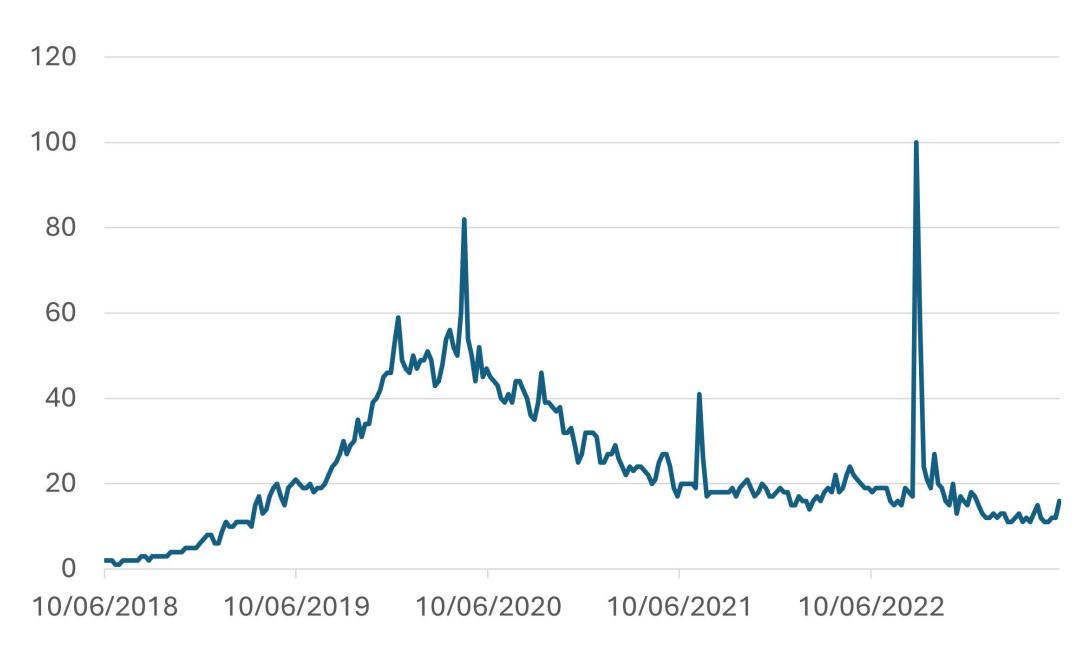
Figure 1. Statistics of "Bucin" Conversations in the Last Five Year
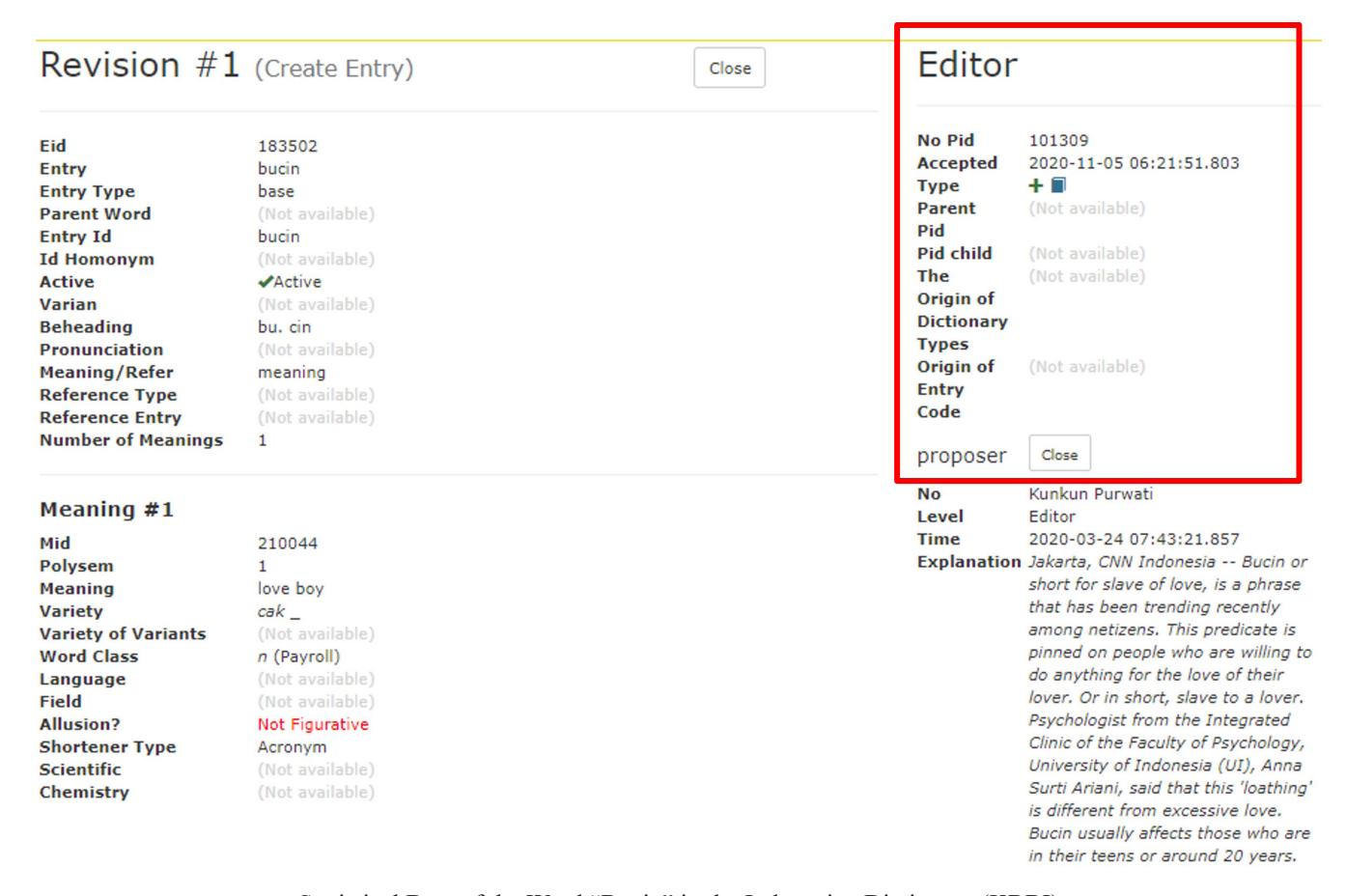
Statistical Data of the Word "Bucin" in the Indonesian Dictionary (KBBI)
Furthermore, slang words often emerge through the speakers' creativity and language innovation. They create or change existing words into new expressions that describe their experiences and realities. In this case, using slang is a form of expression and creativity of individuals or groups in formulating their own identity. An example of the phenomenon of language creativity and innovation among speakers can be seen in the use of the word "woles" as opposed to the form of "selow" or "slow" in English. The word "selow" or "slow" in English has a similar meaning to "woles," namely a calm and relaxed attitude or state. However, using "woles" as a language innovation, the word shows adaptation and creativity in expressing the same concept using different words. Using the word "woles" as a form of creativity and language innovation among speakers offers adaptation, merging, and changing words in Indonesian. It reflects the speakers' language creativity in creating expressions that suit their own experiences and realities, as well as considering the cultural context and local experiences. Thus, the use of the word "woles" as opposed to "selow" or "slow" in English is an example of how speakers can develop their language through innovation and creativity.
In the context of the internet language presented in Table I above, some words are often related to the identity of a particular generation or age. For example, the words "alay" or "bucin" are often used by the younger generation. These slang words reflect the experiences, lives, and values unique to that generation. In this case, slang words help form a generation- or age-specific identity and strengthen a sense of solidarity between members of that generation.
Language and Community Standards
In describing individuals considered 'ideal' or 'attractive', people often consider several qualities, such as appearance, education, and finances. Although there are more properties that are relevant, they are often observed in fashionable and often used words, both online and offline. There are phrases related to physical appearance, shopping habits, individual behavior, and certain standards of quality, all of which are examples of social standards accepted by the general public and the communities that use these words.
Table II Social Standard Indonesian Words or Phrases Related to Society
| Slang Words or Phrases | Definition | Search Frequency Record in Google Trend | Participant Familiarity Ratio |
|---|---|---|---|
| keluarga cemara | Harmonious family A family that is loving, respectful, and shares in joys and sorrows. | Conversations about the slang phrase "keluarga cemara" experienced a significant increase from late 2018 to early 2019, with the number of conversations peaking on 6 January 2019 at 100. After that, the overall talk level tended to decrease but remained at a significant level of familiarity. | 3.87 |
| keluarga cemamod | The fir family suits the mood a term coined by combining the words "fir" and "mood". The term reflects the concept of a family that adapts to the changing moods of family members. | The conversation rate of the phrase "cemamod family" is inconsistent and tends to be low; it is still rarely discussed and not widely familiar in society. | 1.83 |
| komuk | face control. A term derived from social dramaturgy theory refers to individuals' attempts to control how they are seen by others or the image they project in front of others. | The Familiarity Level of the Topic "Komuk" experienced considerable fluctuations over time, ranging from low levels in week 29 of 2018 (34) and week 5 of 2019 (16) to reach very high levels in week 20 of 2019 (100) and week 24 of 2022 (100). However, it still tends to be in the medium to high range overall. | 1.97 |
The slang phrase "Keluarga Cemara" describes a harmonious, respectful family that shares each other's joys and sorrows. In the community, this phrase had a significant level of talk from late 2018 to early 2019, reaching a peak on January 6, 2019. After that, the overall level of talk tended to decrease but remained at a significant level of familiarity for a period of time. This shows that the concept of a harmonious family was once an essential conversation in society during this period. The slang phrase "keluarga cemara" reflects the concept of a harmonious family that is loving, respectful, and shares in both joy and sorrow. The significant talk level during a particular period indicates that the community paid attention to such harmonious family values. The language used to describe this concept can shape the standard of living among its speakers by encouraging the importance of building harmonious and supportive family relationships.
The slang phrase "keluarga cemamod" refers to a family that can adapt to the changing moods of family members. While this phrase reflects an exciting concept, its conversation rate is inconsistent and tends to be low. This phrase is still rarely discussed and is not widely familiar in the community. This shows that the phrase "keluarga cemamod" has not yet become a significant concern in daily conversation. The slang phrase "keluarga cemamod" illustrates the concept of a family that is adaptive to the changing moods of family members. However, the low level of conversation and lack of familiarity within the community suggest that this concept has not yet influenced the living standard. The language used to describe this concept has not been strong enough to shape the standard of living among its speakers.
"Komuk" is a slang term derived from social dramaturgy theory that refers to individuals' attempts to control how they are seen by others or the image they project in front of others. The level of familiarity with the topic "komuk" experienced considerable fluctuations over time. In some weeks, the level of familiarity is low, while in other weeks, the level of familiarity is very high. Overall, the familiarity level of the topic "komuk" tends to be in the medium to high range within the community. This shows that self-image and face control are still concerns in social conversations. The concept of "komuk," which refers to individuals' efforts to control how they are seen by others or the image they project in front of others, has a fluctuating level of familiarity in society. Although the level of familiarity is inconsistent, the changes and high level of familiarity sometimes indicate that the language used in this context can influence the standard of living among the speakers. These understandings and conversations about selfimage control can shape the standards of how individuals should behave and strategize when interacting with others.
Thus, the results of these analyses illustrate that the language used in slang phrases can influence or shape the standard of living among the community of speakers. Concepts that receive significant attention and high familiarity in society have the potential to shape the norms and values adopted by society at large. Conversely, concepts that are rarely discussed and less familiar tend to have less influence in shaping living standards.
Language and Mental-Emotional
The Internet language can help build connections and emotional intimacy between speakers. Through emoticons, stickers, or specialized writing styles, speakers can convey stronger and deeper expressions of emotion in online communication. This can help create a sense of mutual understanding, support, and a closer relationship between speakers.
The Internet language can also help speakers express complex or difficult emotions in formal spoken or written language. Using internet-specific phrases, abbreviations, or language styles, speakers can express feelings such as frustration, annoyance, surprise, or disappointment more precisely and effectively.
Furthermore, the internet languages can have a significant social impact on speakers and influence feelings of inclusion in online communities. Speakers who master the internet languages can feel more connected to their peer group, feel included, and get emotional support from their community members. This can shape speakers' feelings of happiness, fulfilment, and self-confidence.
Table III Indonesian Words or Phrases Related to Mental-Emotional
| Slang Words or Phrases | Definition | Search Frequency Record in Google Trend | Participant Familiarity Ratio |
|---|---|---|---|
| Galau | mixed feelings that are often characterized by confusion, anxiety, and emotional uncertainty | The word "galau" in Indonesia is relatively well-known or familiar to most of the population, as seen from the fluctuating level of familiarity over the observed period. | 4.10 |
| Sambat | Sambat is widely used on social media. Sambat slang comes from the Javanese language and means to complain. | Talk of the word "sambat" fluctuates over a while but generally has a relatively low level of familiarity. | 1.77 |
| Ajib | An expression of strong admiration, astonishment, or awe for something | The word "ajib" has a varying level of familiarity over time, with certain periods where the level of familiarity increases significantly. However, there are also periods where the level of familiarity is low, or no data is available. | 3.90 |
| Halu | the condition of a person who experiences hallucinations or has unreal or irrational perceptions | The level of topic familiarity fluctuates over a period. Generally, it remains at a moderate level, reflecting the level of knowledge of the public, who tend to be quite familiar with the topic. | 3.37 |
| Anjir | Strong expression of surprise, shock, or astonishment | The familiarity level of the topic "anjir" in Indonesia varies over time, but in general, it tends to stabilize at a fairly high level | 3.90 |
| Bete | feelings of anger, upset, or frustration | Familiarity with this topic tends to be stable with small fluctuations but has increased in general and reached a fairly high level of familiarity | 4.07 |
| Sekut | fear, dismay, confusion, or panic. | The word "sekut" was unfamiliar at the beginning of the emergence period but gradually became more recognizable over time and reached a peak level of familiarity in certain weeks before fluctuating and falling in familiarity again. | 1.80 |
| Jijay | This word is a pun on the word disgust. | The word "jijay" was not familiar at the beginning of the emergence period but experienced a gradual increase in familiarity until it peaked on 4 June 2023. | 3.90 |
| Ambyar | feelings of deep sadness, devastation, or hopelessness | The familiarity level of the word "ambyar" in Indonesia has significantly increased since its introduction in June 2018, with a peak in popularity in March 2020. It has since remained stable at a relatively high level. | 3.87 |
| Istimiwir | This word is a pun on the word "istimewa" (special) | The word "istimiwir" has a low level of familiarity in general, with an increase occurring in some specific periods. | 2.13 |
The data shows variations in familiarity with slang words or phrases from low to high. This reflects the knowledge and acceptance of slang words/phrases. Words or phrases such as "galau," "bete," "anjir," and "ambyar" have a high level of familiarity, indicating wide popularity and understanding among the community. On the other hand, words or phrases such as "sambat," "sekut," and "istimiwir" have a low level of familiarity, indicating a more limited level of understanding or less common usage.
Each slang word or phrase is closely associated with specific emotions and feelings. For example, "galau" describes mixed feelings of confusion, anxiety, and emotional uncertainty. On the other hand, "bete" expresses feelings of anger, annoyance, or frustration. "Anjir" and "ajib" are used to express strong admiration or amazement. "Ambyar" describes feelings of deep sadness, devastation, or despair. Each slang word or phrase provides a rich dimension to the emotional experiences that people can express.
The data shows that familiarity with slang words or phrases can change and fluctuate over time. At times, familiarity levels increase significantly, such as with the word "jijay," which reached peak familiarity on June 4, 2023. These changes may reflect new trends, the influence of social media, or the use of slang words or phrases in a broader context. These fluctuations show that language and mental-emotional behavior in Indonesian society are also constantly evolving and changing over time.
Some slang words or phrases in the table show their origin or influence on social media. For example, "sambat" comes from the Javanese language and is often used on social media with the meaning of complaining. This term shows that social media plays an essential role in the spread and popularity of slang words or phrases and their influence on language and people's mental and emotional states.
This analysis illustrates the complexity of Indonesian society's linguistic and mental-emotional use of slang words or phrases. Variations in familiarity levels, associations with emotions and feelings, changing trends, and the influence of social media are important factors that influence how slang words or phrases are used and accepted in cultural and social contexts.
Discussion
Keeping up with Internet Users: Social Media and Offline
Internet language emerges due to advancements in digital media, technological constraints, and the evolution of Internet culture, which collectively shape the implicit conventions of online communication (Ishida et al., 2018; Ribeiro, 2018; Saodin et al., 2019). In the interviews, participants elucidated the significant influence of the Internet and social media on their social connections within their social circles. They also highlighted the Internet as a valuable resource for acquiring knowledge of new Indonesian slang words. Staying abreast of these linguistic innovations serves as a means to maintain a sense of belonging and connectivity within the online community. The Internet facilitates prompt access to language, social, and cultural trends through diverse media platforms. Leveraging the remarkable capabilities of the Internet, this wealth of information facilitates instantaneous global exchange. Furthermore, generating novel lexicons in the online realm serves as a mechanism for communities to visually depict the everevolving landscape of online communication and linguistic practices. This section elucidates the distinct advantages of the Internet and explores how and why participants harness its potential for online expression, social engagement, and language utilization.
Internet Users: Social Media Use and Linguistic Practices
The proliferation of mobile and computer technologies has led to a surge in mobile applications with diverse functionalities. Social media applications are particularly significant, enabling interactions among various social networks and allowing users to access and generate content aligned with their interests. Smartphones serve as conduits for extensive information exchange and shape users' online presence and self-expression within a digital "reality." Online identities are rooted in real-life experiences and influenced by users, their connections, and the virtual audience they engage with. Social media platforms play a vital role in shaping self-presentation and sustaining relationships (Fardouly et al., 2018; Z. Liu et al., 2022; Silverstone, 2019), impacting individuals' perceptions of their identities (Farr, 2018; Sajjad et al., 2018; Voronin et al., 2019; Zeller, 2022). The pursuit of conformity and belonging drives individuals to emulate socially acceptable behaviors and stay updated with the latest trends within their chosen communities.
With the proliferation of diverse mobile applications, popular social media platforms like Instagram, Facebook, and Twitter have gained widespread popularity in Indonesia for content sharing, mainly photos. These platforms face competition from their international counterparts. Instagram, in particular, serves as a medium for individuals to present themselves to the world, enabling user engagement with celebrities and others. Individual needs and societal pressures influence the preference for certain apps, as users tend to download apps aligned with their social circle's choices, creating a "circle" effect. Participants' experiences reflect this trend, with app downloads driven by the desire to connect with specific communities or access content from overseas. Social media apps play a central role in constructing identities, facilitating social network participation, and providing convenient access to friends' activities. However, it is important to note that online information depends on users' uploaded content, which may present a curated representation of their identity.
The accessibility of online information places a social responsibility on individuals to stay active on social media platforms, resulting in pressure to constantly update their life events (Filatova & Volkovskii, 2020; Nepomniashchikh & Volkova, 2021; Soukup, 2018). Interview participants estimated spending 6-7 hours daily on these applications, relying heavily on information from their social circles and virtual communities. While curating online profiles and personas, participants strive for alignment with their offline interactions, acknowledging some minor variations. Online content highlights positive aspects of their lives, such as travel experiences or significant events, while negative aspects are less emphasized.
Participant 7 in the study uses social media to share details about films and design-related content, providing insight into her life for her social circle. The frequency of sharing such content varies based on individual preferences and life events. Participant 2 expresses that online messaging allows for more extensive self-expression and engagement in complex discussions compared to face-to-face interactions, highlighting the advantages of online communication in alleviating discomfort and reducing conversational pressures. The contemporary generation establishes connections through public social media profiles, with Participant 11 transitioning between messaging apps based on the choices of their friends. Online communication is shaped by users' needs and interests, with individuals imitating or sharing trending topics to enhance their online persona's credibility. While there may be unity between online and offline identities, the content shared online is selectively chosen, often emphasizing positive tones. Participants are aware of their audience and societal expectations, tailoring their expressions accordingly.
Social circles and platforms profoundly impact language, particularly in digital media, where colloquial language thrives in messaging applications (Lubis et al., 2021; Yiyun, 2022; Yulia et al., 2023). Computer-mediated communication combines features of spoken and written language but lacks the bodily cues of face-to-face interaction (Aldunate & González-Ibáñez, 2017; Lew et al., 2018; Park & El Mimouni, 2020; Soukup, 2018). Internet languages have adapted by incorporating visual cues like emoticons, memes, and nuanced connotations. Digital devices and online media enable creativity and convenience, leading to a rich array of internet slang, abbreviations, acronyms, and memes that shape online discourse. Stickers and gifs enhance online communication by incorporating famous slang words and relevant imagery. Internet language profoundly influences expression and communication online, while social media, as an evolving institution, shapes social identities and relationships. These institutions are omnipresent across digital devices, providing convenience to users. Interactions in cyberspace introduce anonymous creators and a broad spectrum of content accessibility, expanding online communication and information dissemination.
The motivation to remain socially significant prompts regular interaction with social media platforms, even in the absence of notable updates. Participants expressed the importance of remaining connected to feel a sense of belonging. Brief absences from social media can lead to a disconnection from prevailing topics and trends as information quickly becomes obsolete. The internet language evolves rapidly, with trending terms fluctuating in popularity. Familiarity with community-specific languages, like slang, is crucial for understanding discussions and feeling included. Social conformity and integration significantly shape individuals' understanding of their social standing. The Internet serves as a medium that bridges physical distances, ensuring Indonesian millennials stay informed about new terminologies, trends, and popular events, thus preventing them from feeling left behind by their community.
Community and Identity Building Through Language
Yuan introduces Tracy and Robbles' "identity work" concept to explore the relationship between language and identity construction (Al-Mnaseer & AlaaJasim, 2021). The participants, Indonesian students, have
identities influenced by cultural, environmental, and social factors, and they examine how language shapes their communities. The audience significantly impacts communicative patterns, leading individuals to modify their speech in different contexts. Online self-expression differs from face-to-face interactions, as the Internet enables conversations with diverse audiences and blurs the line between the public and private spheres. Adding friends on social media is a customary practice to establish connections, and the interviews confirm the influence of the environment and social media on speech patterns.
The reciprocal relationship between identity and language is significant, as language is crucial for expressing one's identity (Field, 2012; Voronin et al., 2019). Online communication has given rise to innovative internet languages and new forms of expression, expanding the linguistic repertoire with emoticons, stickers, gifs, and memes. Language and social change influence each other, indicating community affiliation and adaptability. Participant 14 highlighted the benefits of enhanced education, advanced technology, and a progressive society fostering creativity in various aspects of life for her generation.
Students easily access up-to-date information through social media and online channels in an era of globalized technology. The Internet enables participants to stay connected to current events and linguistic developments, fostering cultural convergence and breaking communication barriers. Within universities, subgroups based on age and academic programs influence the formation of community identities as individuals connect with like-minded peers. These interactions create opportunities for social connections and intermingling among members with similar interests, cultural backgrounds, or fields of study.
According to Lu and Chen's assertion that "culture is moulded and transmitted through language," it becomes evident how constant transformations create novel lexicons that serve as vehicles for cultural expressions. They attribute lexical shifts to cultural changes, drawing from Trudgill's observation of three pivotal factors _the physical environment, the social environment, and people's values _ that shape the lexicon. The participants' responses in this study indicate that these aspects of identity influence their language usage and comprehension. Social media platforms, messaging applications, and video calling have become the primary communication and information exchange modes. The online content mirrors "society's values," manifested through trending topics, shared interests, and the desire to remain attuned to others' lives. The Internet has evolved into an integral facet of daily existence and societal functioning, thus profoundly impacting the language employed to articulate these events.
Conclusion
The study reveals that the Indonesian Internet language evolves in response to pressures from a dynamic society. It explores participants' self-perceptions, community affiliations, and generational norms, highlighting the generation of novel vocabulary as a response to technological advancements and social and cultural shifts. Language proficiency assessment and ethnographic interviews demonstrate language's role in shaping communal and individual outlooks, influencing identity transformation, and societal reception of topical issues.
The data reflects language's reflection of shifts in family dynamics, intergenerational disparities, and societal norms. The influence of the one-child policy is evident in altered parenting practices and socioeconomic expectations. Changes in gender-specific terminology and societal attitudes indicate evolving gender expectations and shifting achievement benchmarks. Language serves as a reflection of social change, and future investigations could explore etymology, conduct intergenerational comparisons, and consider socio-cultural perspectives to deepen understanding.
Participant familiarity with terms may vary based on age, family background, gender, and social context. However, the dynamic lexicon is closely tied to societal transformations. Further research could investigate the instigation of Internet terms, conduct long-term or intergenerational studies, and incorporate larger sample sizes and diverse age groups to explore pivotal moments in language and societal transformations.
References
- Aggarwal, B., Xiong, Q., & Schroeder-Butterfill, E. (2020). Impact of the use of the internet on quality of life in older adults: Review of literature. Primary Health Care Research and Development, 21(55), 1–66. https://doi.org/10.1017/S1463423620000584
- Al-Mnaseer, F. A.-J., & AlaaJasim, S. (2021). Identity Tracing in Multimodal-Texts (Verbally and Nonverbally). Surra Man Ra'a, 17(67). https://www.iasj.net/iasj/article/209222
- Aldunate, N., & González-Ibáñez, R. (2017). An integrated review of emoticons in computer-mediated communication. In Frontiers in Psychology (Vol. 7, Issue JAN, p. 2061). Frontiers Media S.A. https://doi.org/10.3389/fpsyg.2016.02061
- Androutsopoulos, J., & Busch, F. (2021). Digital punctuation as an interactional resource: the messagefinal period among German adolescents. Linguistics and Education, 62(4), 1–9. https://doi. org/10.1016/j.linged.2020.100871
- Anobi Asare, I., Dotse Komla Plahar, J., Pantah, A., & Emefa Adansi, J. (2022). Effects of Social Media on Students' Writing: The Case Study of Mount Mary College of Education. International Journal of Social Science, Education, Communication and Economics (SINOMICS JOURNAL), 1(2), 45– 74. https://doi.org/10.54443/sj.v1i2.7
- Ashokkumar, A., & Pennebaker, J. W. (2022). Tracking group identity through natural language within groups. PNAS Nexus, 1(2), 1–9. https://doi.org/10.1093/pnasnexus/pgac022
- Bakry, G. N., Nasrullah, R., & Shabana, A. (2022). Netspeak virtual ethnography as culture in the Kaskus virtual community. Plaridel, 19(1), 171–195. https://doi.org/10.52518/2022.19.1-05banash
- Bini, G., & Robutti, O. (2019). Meanings in Mathematics: using Internet Memes and Augmented Reality to promote mathematical discourse. Eleventh Congress of the European Society for Research in Mathematics Education, TWG16(4), 1–10. https://hal.science/hal-02422152
- Chen, F., Li, Q., & Yao, H. (2022). Understanding and Studying Internet Culture by the Tool of Internet Language. Proceedings of the 2021 International Conference on Education, Language and Art (ICELA 2021), 637, 1045–1049. https://doi.org/10.2991/assehr.k.220131.189
- Chen, J., Huang, S., & Luo, R. (2020). Does Net-Speak Experience Interfere With the Processing of Standard Words? Evidence From Net-Speak Word Recognition and Semantic Decisions. Frontiers in Psychology, 11(1932), 1–11. https://doi.org/10.3389/fpsyg.2020.01932
- Chen, M., Liu, S., & Zhang, S. (2022). Internet Language Study in China. In The Palgrave Handbook of Chinese Language Studies (pp. 275–296). Springer Nature Singapore. https://doi.org/10.1007/978- 981-16-0924-4_17
- Choudhury, A., Asan, O., & Alelyani, T. (2022). Exploring the Role of the Internet, Care Quality and Communication in Shaping Mental Health: Analysis of the Health Information National Trends Survey. IEEE Journal of Biomedical and Health Informatics, 26(1), 468–477. https://doi. org/10.1109/JBHI.2021.3087083
- Davis, B. D., McKnight, D. E., Teodorescu, D., Quan-Haase, A., Chunara, R., Fyshe, A., & Lizotte, D. J. (2020). Quantifying depression-related language on social media during the COVID-19 pandemic. International Journal of Population Data Science, 5(4), 1–15. https://doi.org/10.23889/IJPDS. V5I4.1716
- Derecka, M. (2019). Manifestations of transphobia in computer-mediated communication. A case study of language discrimination in english and polish internet-mediated discourse. Studies in Polish Linguistics, 14(3), 101–123. https://doi.org/10.4467/23005920SPL.19.016.11081
- Fardouly, J., Willburger, B. K., & Vartanian, L. R. (2018). Instagram use and young women's body image concerns and self-objectification: Testing mediational pathways. New Media and Society, 20(4), 1380–1395. https://doi.org/10.1177/1461444817694499
- Farr, J. (2018). "It's My Language, My Culture, and it's Personal!" Migrant Mothers' Experience of Language Use and Identity Change in Their Relationship With Their Children: An Interpretative Phenomenological Analysis. Journal of Family Issues, 39(11), 3029–3054. https://doi. org/10.1177/0192513X18764542
- Field, M. (2012). Kumeyaay language variation, group identity, and the land. International Journal of American Linguistics, 78(4), 557–573. https://doi.org/10.1086/667451
- Filatova, O., & Volkovskii, D. (2020). Key Parameters of Internet Discussions: Testing the Methodology of Discourse Analysis. Communications in Computer and Information Science, 1242, 32–46. https://doi.org/10.1007/978-3-030-65218-0_3
- Gelen, İ., & Tozluoglu, E. (2021). Evaluation of Online Language Exchange Platforms: The Example of "Free4Talk." International Journal of Progressive Education, 17(2), 352–368. https://doi. org/10.29329/ijpe.2021.332.22
- Griffith, F. J., & Stein, C. H. (2021). Behind the Hashtag: Online Disclosure of Mental Illness and Community Response on Tumblr. American Journal of Community Psychology, 67(3–4), 419–432. https://doi.org/10.1002/ajcp.12483
- Herring, S. C. (2022). Grammar and Electronic Communication. In The Encyclopedia of Applied Linguistics (pp. 1–9). Wiley. https://doi.org/10.1002/9781405198431.wbeal0466.pub2
- Heuman, A. (2021). Acceptable Language Online: Negotiating the Impact of Digital Affordances. In Analyzing Digital Discourses (pp. 163–187). Springer International Publishing. https://doi. org/10.1007/978-3-030-84602-2_7
- Ishida, T., Murakami, Y., Lin, D., Nakaguchi, T., & Otani, M. (2018). Language service infrastructure on the web: The language grid. Computer, 51(6), 72–81. https://doi.org/10.1109/MC.2018.2701643
- Jia, Y. F., Li, S., & Wu, R. (2019). Incorporating background checks with sentiment analysis to identify violence risky Chinese microblogs. Future Internet, 11(9), 200. https://doi.org/10.3390/fi11090200
- Jialin, T. (2022). The Study of Internet Language Functions from the Perspective of Language Variation and Change: Case Study of 2020-2021 Buzz Words. Transactions on Comparative Education, 4(1), 22–29. https://doi.org/10.23977/TRANCE.2022.040103
- Kanellopoulou, C., & Giannakoulopoulos, A. (2021). Internet-Assisted Language Teaching: The Internet as a Tool for Personalised Language Exploration. Creative Education, 12(03), 625–646. https://doi. org/10.4236/ce.2021.123043
- Kim, H., Mahmood, A., Goldsmith, J. V., Chang, H. J., Kedia, S., & Chang, C. F. (2021). Access to Broadband Internet and its Utilization for Health Information Seeking and Health Communication among Informal Caregivers in the United States. Journal of Medical Systems, 45(2). https://doi. org/10.1007/s10916-021-01708-9
- Lew, Z., Walther, J. B., Pang, A., & Shin, W. (2018). Interactivity in online chat: Conversational contingency and response latency in computer-mediated communication. Journal of Computer-Mediated Communication, 23(4), 201–221. https://doi.org/10.1093/jcmc/zmy009
- Liu, S., Wu, Y., & Gong, W. (2022). Measuring Internet Slang Style in the Marketing Context: Scale Development and Validation. Frontiers in Psychology, 12(1), 1–11. https://doi.org/10.3389/ fpsyg.2021.751806
- Liu, Z., Yu, S., Cheng, F., & Waheed, R. (2022). Assessing the Influencing Factors of Electronic Word-of-Mouth on CSR Issues. A Case of Hospotality Service Industry of China. Frontiers in Psychology, 13(6), 1–13. https://doi.org/10.3389/fpsyg.2022.924779
- Lubis, B. N. A., Daulay, I. K., & Husda, A. (2021). Gender Toxicity in Language Communication. Randwick International of Education and Linguistics Science Journal, 2(4), 619–624. https://doi. org/10.47175/rielsj.v2i4.354
- Lucy, L., & Bamman, D. (2021). Characterizing English variation across social media communities with bert. Transactions of the Association for Computational Linguistics, 9, 538–556. https://doi. org/10.1162/tacl_a_00383
- Manchaiah, V., Dockens, A. L., Flagge, A., Bellon-Harn, M., Azios, J. H., Kelly-Campbell, R. J., & Andersson, G. (2019). Quality and readability of english-language internet information for tinnitus. Journal of the American Academy of Audiology, 30(1), 31–40. https://doi.org/10.3766/jaaa.17070
- Miftakhova, A. N., Bochina, T. G., & Malikov, A. Z. (2020). Woman vs. Baba in Russian culture and internet language. International Journal of Society, Culture and Language, 8(3), 54–62. https:// www.ijscl.net/article_242610.html
- Monderin, C., & Go, M. B. (2021). Emerging Netspeak Word Choices in Social Media on Filipino Pop Culture. International Journal of Linguistics, Literature and Translation, 4(6), 49–61. https://doi. org/10.32996/ijllt.2021.4.6.7
- Monti, C., Aiello, L. M., De Francisci Morales, G., & Bonchi, F. (2022). The language of opinion change on social media under the lens of communicative action. Scientific Reports, 12(1), 1–11. https://doi. org/10.1038/s41598-022-21720-4
- Nepomniashchikh, N. M., & Volkova, Y. A. (2021). Computer-Mediated Discourse and the Process of Lexical Meaning Transformation in Modern English. KnE Social Sciences, 78–85–78–85. https:// doi.org/10.18502/kss.v5i2.8336
- Oh, Y. S., & Lim, J. (2021). Patient-Provider Communication and Online Health Information Seeking among a Sample of US Older Adults. Journal of Health Communication, 26(10), 708–716. https:// doi.org/10.1080/10810730.2021.1998846
- Park, J. R., & El Mimouni, H. (2020). Emoticons and non-verbal communications across Arabic, English, and Korean Tweets. Global Knowledge, Memory and Communication, 69(8–9), 579–595. https:// doi.org/10.1108/GKMC-02-2020-0021
- Peeters, S., Tuters, M., Willaert, T., & de Zeeuw, D. (2021). On the Vernacular Language Games of an Antagonistic Online Subculture. Frontiers in Big Data, 4(8), 1–15. https://doi.org/10.3389/ fdata.2021.718368
- Ribeiro, G. L. (2018). Cybercultural Politics: Political Activism at a Distance in a Transnational World. In Cultures of Politics Politics of Cultures (pp. 325–352). Routledge. https://doi. org/10.4324/9780429501135-16
- Rienties, B., & Rets, I. (2022). The impact of virtual exchange on East–West social relations: lessons from a China-Portugal foreign language exchange. Journal of China Computer-Assisted Language Learning, 2(1), 1–19. https://doi.org/10.1515/jccall-2021-0003
- Sabol, R., & Horák, A. (2022). New Language Identification and Sentiment Analysis Modules for Social Media Communication. Lecture Notes in Computer Science (Including Subseries Lecture Notes in Artificial Intelligence and Lecture Notes in Bioinformatics), 13502, 89–101. https://doi. org/10.1007/978-3-031-16270-1_8
- Sajjad, F., Malghnai, M., & Khosa, D. (2018). Language, Social Media and Political Identity (Re) presentation: A New Theoretical Framework for the Analysis of Social Media Political Discourse. International Journal of English Linguistics, 8(2), 199–206. https://doi.org/10.5539/ijel.v8n2p199
- Saodin, Suharyono, Arifin, Z., & Sunarti. (2019). The Influence of E-Service Quality Toward E-Satisfaction, E-Trust, E-Word of Mouth and Online Repurchase Intention: A Study on the Consumers of The Three-Star Hotels in Lampung. Russian Journal of Agricultural and Socio-Economic Sciences, 93(9), 27–38. https://doi.org/10.18551/rjoas.2019-09.03
- Shi, X., Yu, C., & Wu, D. (2021). Influence of Internet Language Violence on Young Students' Mental Health and Intervention Countermeasures. In Journal of Healthcare Engineering (Vol. 2021). Hindawi Limited. https://doi.org/10.1155/2021/1603117
- Silverstone, R. (2019). From Audiences to Consumers: The Household and the Consumption of Communication and Information Technologies. In The Audience and Its Landscape (pp. 281–296). Routledge. https://doi.org/10.4324/9780429496813-23
- Soukup, P. A. (2018). Facebook: Changing the Face of Communication Research. Communication Research Trends, 37(1), 3–42. https://scholarcommons.scu.edu/comm/107
- Sun, X., & Liu, L. (2022). Understanding the multi-modal affective expression of net language in computermediated communication. Cognitive Processing, 24(2), 275–288. https://doi.org/10.1007/s10339- 022-01115-z
- Tang, J., Yao, X., & Yu, G. (2021). Exploring the online behavior of users of online depression-focused communities: Comparing communities with different management types. Psychology Research and Behavior Management, 14, 1707–1724. https://doi.org/10.2147/PRBM.S323027
- Tang, J., Yu, G., & Yao, X. (2020). A comparative study of online depression communities in china. International Journal of Environmental Research and Public Health, 17(14), 1–13. https://doi. org/10.3390/ijerph17145023
- Thompson, W., & McNamara, M. (2022). Revealing how language builds the identity of the advanced nurse practitioner. Journal of Clinical Nursing, 31(15–16), 2344–2353. https://doi.org/10.1111/ jocn.16054
- Voronin, A. N., Grebenschikova, T. A., Kubrak, T. A., Nestik, T. A., & Pavlova, N. D. (2019). The study of network community capacity to be a subject: Digital discursive footprints. Behavioral Sciences, 9(12), 1–10. https://doi.org/10.3390/bs9120119
- Wei, H., Chen, J., Gan, X., & Liang, Z. (2022). Eight-Element Communication Model for Internet Health Rumors: A New Exploration of Lasswell's "5W Communication Model." Healthcare (Switzerland), 10(12). https://doi.org/10.3390/healthcare10122507
- Yiyun, Z. (2022). The Dual Construction of Social Circle Layer and Social Discourse-On the 12th Horse Awards Winning Short Stories. Journal of Chuxiong Normal University, 37(1), 63. http://cxtc. magtechjournal.com/EN/
- Yulia, A., Joshi, R. M., Husin, N. A., & Rahim, S. A. (2023). Enhancing English Proficiency through Social Circle and Vocabulary among Malaysian Adult Learners. Studies in English Language and Education, 10(1), 322–336. https://doi.org/10.24815/siele.v10i1.25740
- Zeller, J. P. (2022). Attitudes on Languages, Identities and Politics at the Ukrainian Black Sea Coast in 2020/21. Russian Linguistics, 1–21. https://doi.org/10.1007/s11185-022-09264-7
- Zhang, Y. (2021). English as a linguistic resource. English Today, 37(1), 34–41. https://doi.org/10.1017/ S0266078419000324
- Zhang, Y., & Ren, W. (2022). 'This is so skrrrrr'–creative translanguaging by Chinese micro-blogging users. International Journal of Multilingualism, 19(3), 289–304. https://doi.org/10.1080/1479071 8.2020.1753746