

INFO ARTIKEL
Kata kunci:
teori jaringan aktor, pasar global, kampung sepatu Cibaduyut, merek sepatu lokal, relasi pengetahuan,
ABSTRAK
Kampung sepatu Cibaduyut di Bandung dikenal sebagai permukiman dengan aktivitas industri sepatu yang dominan. Pengetahuan tentang pembuatan sepatu dipertahankan secara turun temurun di kampung ini. Di kampung Cibaduyut terjadi relasi bisnis dengan pengusaha sepatu bermerek, termasuk jenama sepatu ekspor di Bandung seperti Tegep Boots dan Exodos57. Melalui relasi tersebut, jaringan pengetahuan dasar kampung sepatu Cibaduyut dapat berkembang hingga mencapai pasar global. Penelitian ini bertujuan untuk menelusuri ruang-ruang arsitektur (artefak) dan aktor manusia yang berperan penting dalam membawa pengetahuan lokal di Cibaduyut hingga dapat digunakan oleh konsumen luar negeri dengan menggunakan metode Actor-Network Theory (ANT). Hasil penelitian menunjukan ruang-ruang produksi berupa bengkel dan home industry di kampung sepatu Cibaduyut adalah tempat pengetahuan ditransfer melalui merek sepatu ekspor hingga ke mancanegara.
Introduction
Shoe industries are one of the creative industries that have become the identity of Bandung City as a creative city, as crowned by the UNESCO Creative City Network (UCCN) in 2005 (Miftah, 2016). This city has a shoe village called kampung Cibaduyut, which is estimated to have begun developing in the 1920s, when the majority of the population were shoe factory workers (Ramadhanty, 2022). They then transferred the knowledge of shoemaking from generation to generation, thus forming their specialty because of the dominance of the home-based shoe industry. However, the development of shoe production in kampung Cibaduyut Shoe Crafts experienced a decline from 2008 to 2012 due to a lack of competitiveness (Lestari et al., 2016). When the survey for this study was conducted in 2022, the impact of this decline in production was still very pronounced.
Apart from that, in Bandung, there was a phenomenon in the shoe industry that seemed to bring progress, innovation, and success in penetrating the international market. Several Bandung shoe brands, in this case, Tegep Boots and Exodos57, can be accepted by the international market because they have character, classy quality, and valuable handmade products. According to Asosiasi Persepatuan Indonesia (Asprisindo), this creative activity also contributes to the country's export activities, making Indonesia the sixth-largest shoe exporter in the world (Kemendag, 2023), when Indonesia ever reached the top 4 (four) largest global producers in 2020 (BPIPI Kemenperin, 2021). Both of them are two of several local shoe brands that reach the export market and are related to kampung Cibaduyut. In the initial survey, it was found that there was a relationship between the two brands (Tegep Boots and Exodos57) and the existence of shoe craftsmen in Cibaduyut. Although shoe production in Cibaduyut has generally decreased, several craftsmen are still able to develop relationships with other brands to produce more innovative shoes by partnering with these two local brands. Therefore, some questions arise, such as: what is the relationship between kampung sepatu Cibaduyut as a traditional shoe production village and local shoe brands in Bandung City that have an export market share? What architectural space then represents this relationship? Hence, this study is intended to examine the relationship formed between kampung sepatu Cibaduyut and two local shoe brands (Tegep Boots and Exodos57), especially the relationship between knowledge and representation in architectural spaces.
This study is a continuation of how the social construction of a space, place, or architectural artifact may be described in detail, such as research on community-based "places" for learning spaces (Ekomadyo et al., 2019), the construction of architectural spaces in villages due to creative activities (Ekomadyo & Riyadi, 2020) and art activities (Prasetyo & Ekomadyo, 2021), and social relationships in the design of architectural objects such as community observatories (Fitrianto & Ekomadyo, 2021) and Co-Working Space in Bandung (Agirachman & Ekomadyo, 2017). The results of this study are expected to contribute to the development of kampung sepatu Cibaduyut through the observation of its relationship with the international market, including the role of architectural space in increasing shoe production and innovation in this village.
Method
The study used the actor network theory (ANT) approach because it aims to observe the relation between knowledge and the representation of architectural spaces from a social construction perspective. According to ANT, a social phenomenon is composed of various human and non-human relationships (Couto, 2013; Fallan, 2008); therefore, ANT could analyze a phenomenon in a heterogeneous network formed by different actors, including human agents (actors) and non-human agents (artifacts) (Akrich, 1992; Law, 1992; Yuliar, 2015). ANT could be used to describe actions, hybrid agents, heterogeneous networks, and the process of maintaining network integrity in sociotechnical entities (Callon, 2001).
As with the ANT method in general, qualitative data was the main source of this study. The data were obtained through interviews with shoe entrepreneurs from Tegep Boots, Exodos57, and one of the shoe home industries in Cibaduyut. The results of the interviews were used to analyze the relationship
between creative activity and human agents (actors) and non-human agents (artifacts) in kampung sepatu Cibaduyut and both shoe brands. The results of these observations were used to determine the role of architectural spaces related to shoemaking activities, such as showrooms, workshops, and warehouses.
The fundamental ANT in this study was the conception of networks, human actors, non-human actors, translations, mediators, and delegations. These terms were ANT neologisms to explain a social phenomenon consisting of actor-networks. Neologism is the formation of new words or languages that are absorbed from other languages and produce new meanings and definitions (Akhmanova, 2004). Thus, this term will be used to explain the relationships in complex actor networks. Actors are defined as human actors and technical objects that participate in action within a socioecological order (Latour, 1987, 1999, 2005; Yaneva, 2009). A mediator is an intermediary who acts as the stabilizer in the interaction between actors or a group of actors without any transformations or translations (Latour, 1987, 1992, 2005; Yaneva, 2022). Delegation is the process of giving authority to an agent as a representative of the agent giving the authority (Yaneva, 2009; Yuliar, 2015).
The assessment data adopted the preposition ANT, which included both human and non-human actors, translation of actor stability, composition in diverse actions, and how the networks are formed (Callon, 1990; Latour, 2005). These prepositions are then derived into a study framework, such as the motivation of production, actors and resources, the relation of creative activity, and architectural spaces. This study framework was used to explore the relations between actors and artifacts, so it could become a heterogeneous network that is structured and interpreted in a way that is socially flat. The social flat itself was translating social phenomena from 3D into 2D as they could be measured real in each social network so that they could be read and reused (Latour, 2005).
In addition, this study tried to reveal the importance of the space or place used by shoe craftsmen in developing shoe-making skills. According to Setha Low, the importance of space was more common and abstract in terms of maintaining social production and material origins (Low, 2017). Meanwhile, the place was an inhabited space and involved the importance of personal and group feelings and sensory perceptions in a physical location (Cresswell, 2004; Tuan, 1977). Furthermore, Lefebvre stated that space was a social production, where social space was formed by individual and collective social action that filled and revived the space (cited in Coleman, 2015; Pamungkas, 2016). According to Lefebvre, production space was divided into three categories: spatial practice, representations of space, and representational space (Lefebvre, 1991; Molotch, 1993). Spatial practice refers to the physical space where daily activities take place (Coleman, 2015; Molotch, 1993). The representation of space was space explained and represented yet understood by people (Coleman, 2015; Molotch, 1993). Representational space, on the other hand, was created through symbolic and abstract representation (Coleman, 2015; Molotch, 1993). Space never exists 'as it is' (in itself), but space could exist because it is socially produced and reproduced (Lefebvre, 1991; Robet, 2014).
Result
There are four study frameworks to analyze the shoe artisans in kampung Cibaduyut and the two local brands that reach global markets. The motivation for production is to know the background of the shoe's artisans and shoe designers, who produce their shoe products over time.
Table I Result of Study
| Study Framework | Kampung Cibaduyut | Tegep Boots | Exodos57 |
|---|---|---|---|
| The Motivation for Production | Knowledge of hand-welted shoemaking techniques has been transferred from generation to generation by several craftsmen to drive and maintain the shoe industry in Cibaduyut to this day. | Using hand-welted shoe-making techniques and innovative shoe designs by paying attention to the unique anatomy of each human foot. | Innovating shoe-making techniques and primarily utilizing local products, such as raw materials, to empower local shoe craftsmen in Cibaduyut. |
| Actor and Resources | The four main actors in the actor networks and systems in kampung sepatu Cibaduyut consisted of skills (actor), home industry (artifact), shoe workshop (artifact), tool and material shop (artifact), and shoe shop (artifact) (Figure 1). Most of the Cibaduyut shoe craftsmen are freelancers who work for workshop owners or branded shoe entrepreneurs. | There are Four main actors in the Tegep Boots work ecosystem; skills (actors), tools and materials (artifacts), shoe products (artifacts) and the existence of workshops, showrooms, warehouses, and offices, which are non-human agents (artifacts) (Figure 2). Founder of Tegep Boots as an innovator, intermediary of shoe design knowledge (mediator), and controller of actions in the shoe manufacturing ecosystem at Tegep Boots. | Four production circles are formed: skills, materials and supplies, shoe products, and the existence of showrooms, cafés, workshops, warehouses, and offices (Figure 3). Founder of Exodos57 as an innovator, researcher, actor who promoted local values, and controller of the shoe making work ecosystem. |
|---|---|---|---|
| Relation of creative activity | Activities to maintain material supplies. Activities to control shoe quality. Ensure the design conforms to client requests. | Production activities start by preparing raw materials and shoe-making tools. Checking activities of shoe products and innovation in the sewing process for upper shoes. Activities of developing design methods to personalize and measure each client's foot anatomy. Motorcycle club activities help expand relationships and obtain repeat clients. | Activities of cultural events. International motorbike exhibition to introduce shoe products. Collaborating with local designers, artists, and community leaders. Innovating shoe material selection and developing sewing techniques to improve shoe quality. Involvement with local motorbike communities that help market products and look for shoe innovation ideas. |
| Architectural space | (1) Production space: workshop and home industry (2) Consumption space: outlet and shoe store (3) Supporting space: shoe and bag materials shop | Inside the loci that produce and maintain shoe quality: (1) Workshop. (2) Showroom. (3) Warehouse. (4) Tegep Boots office. Outside the loci: (1) Fashion shows, domestic and international exhibitions. (2) Art museum. (3) Shoe Workshop in Cibaduyut | Inside the loci that produce and maintain shoe quality: (1) Workshop. (2) Showroom. (3) Warehouse. (4) Exodos57 office. Outside the loci: (1) Domestic fashion show spaces (2) Domestic and overseas exhibition spaces (3) A shoe workshop in Cibaduyut (at the initiation stage of production) (4) Overseas marketing agency |
According to the results of the study, the motivation for shoe production is that shoe artisans in kampung Cibaduyut have basic knowledge of the hand-welted technique. Then, the two local brands developed the hand-welted technique with their unique characteristics. Tegep Boots focuses on developing the comfort of boot products, while Exodos57 pursues the exploration of local materials. Those skills are obtained from long experience making their own shoes or from collages.
Relating to the actors and resources aspect, kampung Cibaduyut, Tegep Boots, and Exodos57 have similar actors in their production ecosystem, namely skills from the shoe artisans, shoe workshop or home industry, tool and material shop, and shoe shop. The creative activities of Tegep Boots and Exodos57 are more complex than those of shoe artisans from kampung Cibaduyut. Both of them frequently do research and innovation to help them gain creativity for improving shoe quality and actively participate in fashion shows, an exhibition, and in a shoe enthusiast community, such as a motorcycle club.
The most important architectural space for them is the workshop to support shoe industry activities. Meanwhile, the display space, such as a showroom or shoe store, is not essential enough for the shoe artisans of kampung Cibaduyut because they rely on shoe demand from branded shoe entrepreneurs or their online shop. Besides, the existence of fashion shows and exhibition spaces acts as a mediator for Tegep Boots and Exodos57 in introducing shoe products to domestic and foreign consumers and building the shoe brand's reputation.
The Sociotechnogram Network of Kampung Cibaduyut
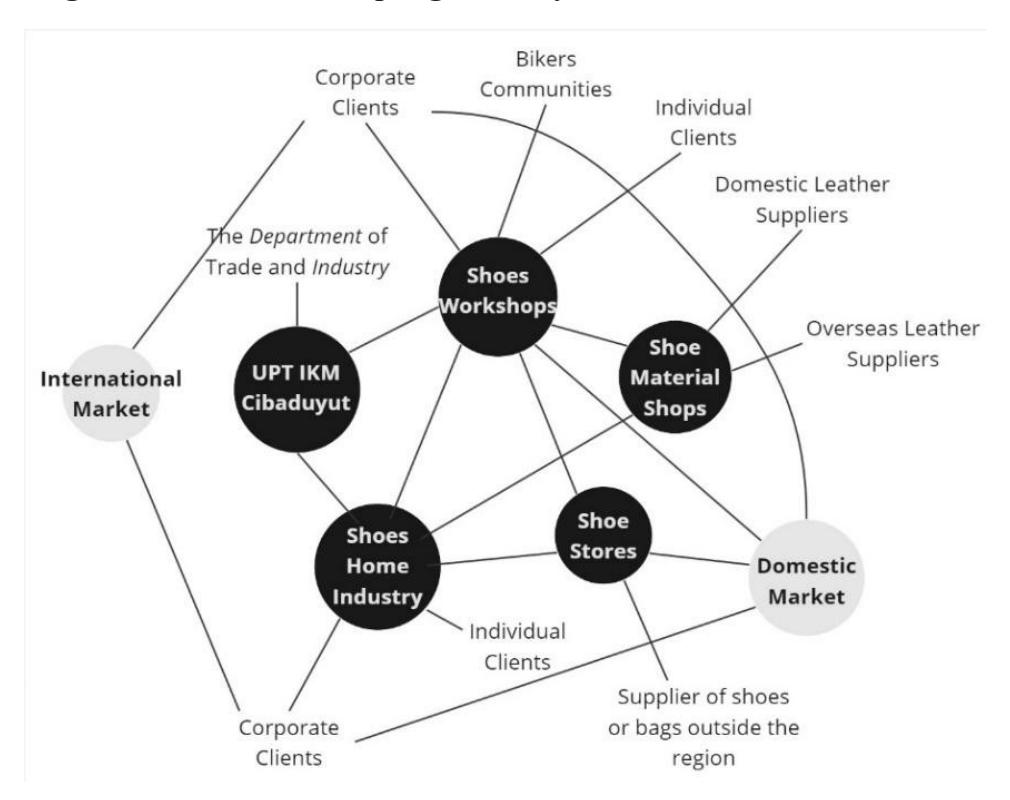
Figure 1 Heterogenous Network of kampung sepatu Cibaduyut
Four main actors in the heterogeneous network exist in kampung sepatu Cibaduyut, such as skills (actors), home industry (artifacts), shoe workshops (artifacts), tool and material shops (artifacts) and shoe shops and showrooms (artifacts). The actor-network mapped through skills is the shoe artisans and their families, who also work as shoe craftsmen. Apart from that, there is a Unit Pelayanan Teknis (UPT) in kampung Cibaduyut to do technical activities that are directly related to local shoe artisan needs. Meanwhile, non-human actors (artifacts) in the village are shoe repair shops, shoe home industries, materials shops, and shoe shops. The home industries and shoe workshops also often form business partnerships with several companies to fulfill domestic and international shoe production. According to the actor network, it can be seen that shoe workshops and shoe home industries can penetrate the international market by working with local shoe brand companies.
The Sociotechnogram Network of Tegep Boots
Figure 2 Heterogenous Network of Tegep Boots
First of all, skills were formed when the founder of Tegep Boots experienced studying and working as a partner to gain skills and innovation in making shoes. Meanwhile, the basic skills of making shoes are supported by shoe craftsmen who work at Tegep Boots. Tegep Boots also shares its knowledge with students, vocational high school students, and Tegep Boots shoe craftsmen. Then, to maintain the quality of shoe materials, Tegep Boots obtains leather materials from domestic and foreign suppliers and imported shoe-making machines. The shoe products produced are in demand by various groups, such as various communities, agencies, and artists. This product is marketed via social media, promoted at domestic and international fashion shows, and displayed at the Offenbach Museum in Germany. Another material artifact is the existence of architectural spaces such as workshops, studios, showrooms, warehouses, and offices.
The Sociotechnogram Network of Exodus57
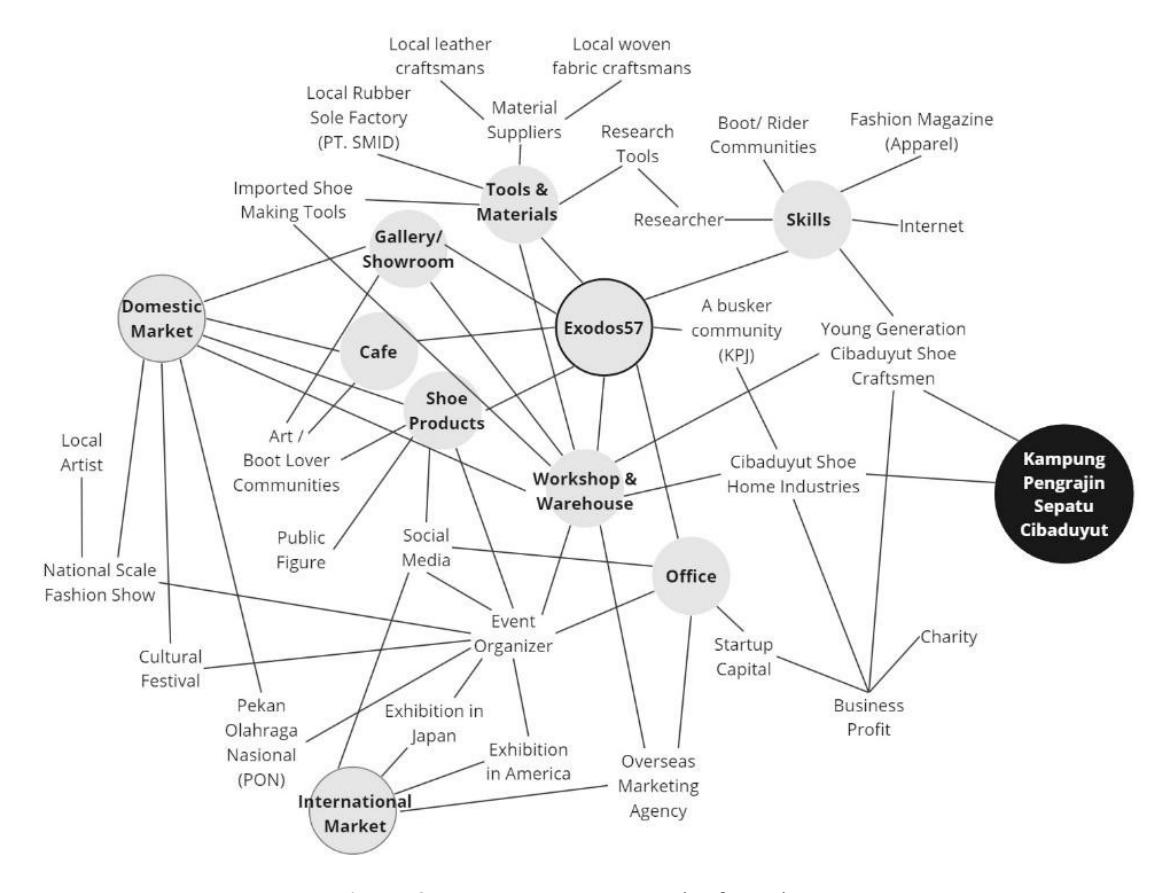
Figure 3 Heterogeneous Network of Exodos57
As stated in the diagram of a heterogenous network of Exodos57, the network of artifact actors formed from skills is the Komunitas Pengamen Jalanan (KPJ), Cibaduyut shoe craftsmen, the motorbike community, fashion apparel magazines and the internet, and researchers in material innovation. The existence of Cibaduyut shoe craftsmen supports the activities of the Exodos57 shoe industry. Meanwhile, tools and materials are sourced from local craftsmen, such as local woven cloth and leather. Furthermore, the shoe products were then worn by various art communities, boot enthusiasts, artists, and public figures. These products are published through social media and promoted through exhibitions, fashion shows, and overseas marketing agents. The existence of showrooms, cafés, workshops, warehouses, and offices becomes a non-human agent that influences other actor networks.
Discussion
Table II Study Discussion
| Study Framework | Tegep Boots | Exodos57 | |
|---|---|---|---|
| Relation with kampung sepatu Cibaduyut | The architectural space relations that occur are the result of intensive actions and relationships between shoemakers and their physical spaces (consumption and production spaces). Production spaces such as the Tegep Boots workshop are a representation of the architectural space of kampung Cibaduyut. Knowledge relations also occur in Abah Enant's shoe workshop in Cibaduyut since this place is a Tegep Boots production space to supply the lower part of the shoe when more labor is needed. Knowledge sharing was also transferred to children and workers in Abah Enant's workshop. | The architectural space relation that occurs in the Exodos57 is the production room or workshop, where Cibaduyut craftsmen innovate shoe-making techniques, select materials, and store the shoe products that are ready to be marketed. The knowledge relationship formed when the founder of Exodos57 established a business partnership with one of the shoe craftsmen (Kang Okeu) in Cibaduyut. The architectural space relationship between the two objects is identified by the importance of Kang Okeu's home industry production space. | |
| Similarity of pattern relations of knowledge and architectural space | Collaboration with shoe craftsmen in Cibaduyut occurred because of the element of closeness in terms of location and relationship Secondly, Cibaduyut Shoe Craftsmen act as controlling actors in supporting shoe production outside the locus of both brands. In addition, exhibitions and fashion shows abroad play an important role as intermediaries in introducing shoe products to the global market. | ||
| Similarity of pattern relation of knowledge and architectural space | Tegep Boots is supported by Abah Enant Workshop, while Exodos57 is supported by Kang Okeu's home industry. Hence, the existence of a shoe workshop and home industry in Cibaduyut is an important architectural element in the establishment of new shoe-making knowledge relations. | ||
The Relationship Kampung Sepatu Cibaduyut with Tegep Boots Shoe Brand
The architectural space relationship between Tegep Boots and kampung Cibaduyut is the result of intensive action and relationships between shoemakers and their physical spaces, both consumption and production spaces. The consumption space of Tegep Boots is a showroom, which is far from the production room. Meanwhile, the production space of Tegep Boots includes a workshop, studio, warehouse, and a contracted shoe workshop located in kampung Cibaduyut. The Tegep Boots' workshop and studio is a place to store various materials, tools, and shoe storage before being distributed to domestic and foreign consumers (Figure 4).
Figure 4 The studio and workshop of Tegep Boots
Besides, knowledge relations between Tegep Boots and kampung Cibaduyut occur at the shoe workshop owned by Abah Enant, located in Cibaduyut. Abah Enant works as a specialist craftsman for lower shoe parts at Tegep Boots and has his own workshop in kampung Cibaduyut. Abah Enant's shoe workshop is a Tegep Boots production space to supply the lower part of the shoe when more labor is needed. In this shoe workshop, there is also a process of transferring the knowledge of making highquality shoes that Abah Enant taught his children. The sharing of knowledge process resulted in each of Abah Enant's children being able to open their own home industry. Therefore, Abah Enant's workshop acts as a mediator in sharing knowledge of making high-quality shoes with shoe artisans in kampung Cibaduyut (Figure 5).
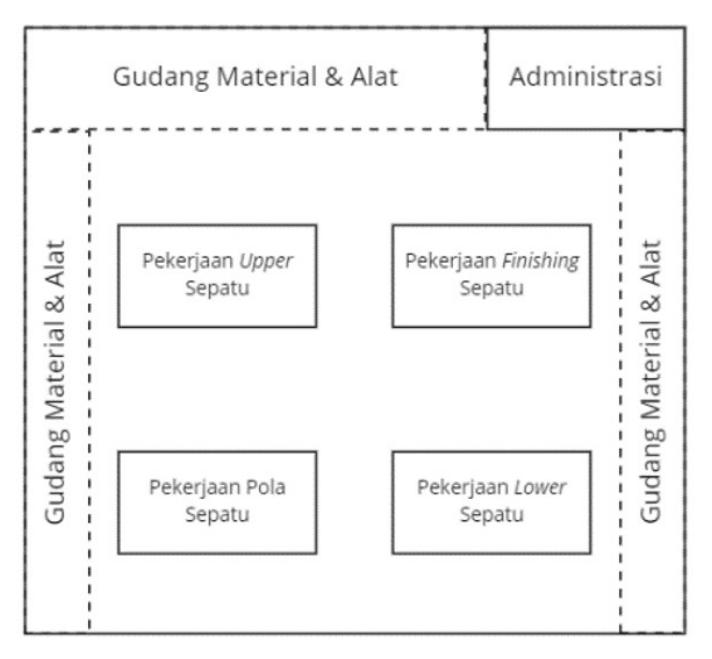
Figure 5 The illustration of Abah Enant's workshop plan
The Relationship Kampung Sepatu Cibaduyut with Tegep Boots Shoe Brand
The architectural space at Exodos57 consists of consumption and production spaces. The consumption space of Exodos57 is a showroom and café, which is a place to communicate with various creative communities, helps promote shoe products, and is a space for designing shoe products (Figure 6). Meanwhile, the production space of Exodos57 is a workshop integrated with a warehouse, where it is a place to produce shoes, implement innovation, and store shoe products that are ready to be marketed.
Figure 6 The café and workshop of Exodos57
The knowledge relationship between Exodos57 and kampung Cibaduyut was established when the founder of Exodos57 started a business partnership with a shoemaker in Cibaduyut, namely Kang Okeu. Therefore, the architectural space relationship between the two objects is identified by the existence of production space in Kang Okeu's home industry. The home industry is an architectural space located outside the Exodos57 loci for producing shoe orders at the initiation stage. Kang Okeu's home industry is typical of general home industries in kampung Cibaduyut, where the workspace and material warehouse area merge with the shoe artisans' home (Figure 5).
Figure 7 The Illustration of the Shoe Home Industry in Kampung Cibaduyut
Conclusion
Through the interpretation of social construction, creative activities in kampung sepatu Cibaduyut Shoe Village have been proven and able to produce world-class shoemaking knowledge. One of the reasons was the collaboration with local shoe entrepreneurs who are innovative and have relations with the global market, such as Tegep Boots and Exodos57.
There were similarities between artifact agents in the Tegep Boots and Exodos57 loci, namely exhibition halls and fashion shows abroad, that have acted as mediators to introduce and promote shoe products to international markets. Outside the loci, both brands were supported by production spaces in kampung sepatu Cibaduyut. Through this space, a place is socially constructed as a place for exchanging knowledge about international-class shoe production. Therefore, to improve the quality of creative activities in kampung sepatu Cibaduyut, it is necessary to focus more on shoe production spaces, such as home industries and shoe workshops, than consumption spaces.
Acknowledgement
Thanks to informants Bapak Asep Yanto as a senior designer of Tegep Boots, Bapak Yudo as cofounder and creative director of Exodos57, Bapak Pandji as secretary of Bandung Creative City Forum (BCCF), and Bapak Dadang as the informant for one of the shoe craftsmen in Kampung Cibaduyut.
References
- Agirachman, F. A., & Ekomadyo, A. S. (2017). Analisis teori jaringan aktor pada co-working space dan komunitas startup di Bandung. Jurnal Koridor, 8(2), 206–212. https://doi.org/10.32734/koridor. v8i2.1348
- Akhmanova, O. S. (2004). A dictionary of linguistic terms ((2nd ed.)). Moscow: Editorial URSS.
- Akrich, M. (1992). The description of technical objects. In Shaping Technology/Building Society: Studies in Sociotechnical Change (pp. 205–224). Cambridge: The MIT Press.
- BPIPI Kemenperin. (2021). Strengthening the footwear industry ecosystem through the BPIPI partnership program. https://bpipi.kemenperin.go.id/en/penguatan-ekosistem-industri-alas-kaki-melaluiprogram-kemitraan-bpipi/?lang=id
- Callon, M. (1990). Techno-economic networks and irreversibility. The Sociological Review, 38(1_suppl), 132–161. https://doi.org/10.1111/j.1467-954X.1990.tb03351.x
- Callon, M. (2001). Actor network theory. In International Encyclopedia of the Social & Behavioral Sciences (pp. 62–66). Elsevier. https://doi.org/10.1016/B0-08-043076-7/03168-5
- Coleman, N. (2015). Lefebvre for architects. Oxon: Routledge.
- Couto, N. (2013, February 13). Gallery: Bruno latour dan ANT (Actor-Network Theory). https:// visualheritageblog.blogspot.com/2013/02/Bruno-Latour-Dan-Ant-Actor-Network.Html.
- Cresswell, T. (2004). Place: An introduction (1st ed., Vol. 3). Malden, MA and Oxford: Wiley-Blackwell.
- Ekomadyo, A. S., & Riyadi, A. (2020). Design in socio-technical perspective: An actor-network theory reflection on community project 'kampung kreatif' in Bandung. Archives of Design Research, 33(2), 19–37. https://doi.org/10.15187/adr.2020.05.33.2.19
- Ekomadyo, A. S., Riyadi, A., Rusli, S., & Aditra, R. F. (2019). The role of built environment in collective learning: The case of rumah sahabat salman. MIMBAR : Jurnal Sosial Dan Pembangunan, 35(2), 306–313. https://doi.org/10.29313/mimbar.v35i2.4811
- Fallan, K. (2008). Architecture in action: Traveling with actor-network theory in the land of architectural research. Architectural Theory Review, 13(1), 80–96. https://doi.org/10.1080/13264820801918306
- Fitrianto, R. A., & Ekomadyo, A. S. (2021). Adoption of innovation in segregated construction project. Jurnal RUAS, 19(1), 57–67. https://ruas.ub.ac.id/index.php/ruas/article/view/304/0
- Kemendag. (2023, July 4). Mendag pada the 40th International Footwear Conference. https://www. kemendag.go.id/berita/foto/mendag-pada-the-40th-international-footwear-conference
- Latour, B. (1987). Science in action: how to follow scientists and engineers through society. Cambridge: Harvard University Press.
- Latour, B. (1992). Where are the missing masses? The sociology of a few mundane artifacts (1st ed.). London: MIT Press Cambridge.
- Latour, B. (1999). A collective of humans and nonhumans: following Daedalus' labyrinth. In Pandora's hope: essays on the reality of science studies. Cambridge: Harvard University Press.
- Latour, B. (2005). Reassembling the social: an introduction to actor-network theory. New York: Oxford University Press .
- Law, J. (1992). Notes on the theory of the actor-network: Ordering, strategy, and heterogeneity. Systems Practice, 5(4), 379–393. https://doi.org/10.1007/BF01059830
- Lefebvre, H. (1991). The Production of Space. Oxford: Basil Blackwell.
- Lestari, M. C., Rosita., & Marhanah, S. (2016). Strategi penguatan citra Cibaduyut sebagai kawasan wisata kerajinan sepatu di kota Bandung. Jurnal Manajemen Resort Dan Leisure, 13(2).
- Low, S. (2017). The ethnography of space and place. New York: Routledge.
- Miftah. (2016). Kota Bandung masuk dalam jaringan UNESCO Creative Cities Network (UCCN). https:// www.bandung.go.id/news/read/2722/kota-bandung-masuk-dalam-jaringan-unesco-%20creativecities-network-uccn
- Molotch, H. (1993). The space of Lefebvre. [Review of The Production of Space, by H. Lefebvre & D. Nicholson-Smith]. Theory and Society, 22(6), 887–895. http://www.jstor.org/stable/658004
- Pamungkas, A. S. (2016). Produksi ruang dan revolusi kaum urban menurut Henri Lefebvre. https:// indoprogress.com/2016/01/produksi-ruang-dan-revolusi-kaum-urban-menurut-henri-lefebvre/
- Prasetyo, E. B., & Ekomadyo, A. S. (2021). The conception of actor network in Jelekong art and culture village of Bandung Regency. ARTEKS : Jurnal Teknik Arsitektur, 6(1).
- Ramadhanty, S. (2022). Revolusi pusat sepatu Cibaduyut. https://sokoguru.id/berita/revolusi-pusatsepatu-cibaduyut.
- Robet, R. (2014). Ruang sebagai produksi sosial dalam Henri Lefebvre. https://caktarno.wordpress. com/2014/09/06/ruang-sebagai-produksi-sosial-dalam-henri-lefebvre/
- Tuan, Y. F. (1977). Space and place. Minneapolis: University of Minnesota Press.
- Yaneva, A. (2009). Making the social hold: Towards an actor-network theory of design. Design and Culture, 1(3), 273–288. https://doi.org/10.1080/17547075.2009.11643291
- Yaneva, A. (2022). Latour for architects. New York: Routledge.
- Yuliar, S. (2015). Tata kelola teknologi: Perspektif teori jaringan-aktor. Bandung: ITB Press.