

INFO ARTIKEL
Kata kunci:
kelas daring sinkronus dan asinkronus, aplikasi teknologi, sekolah menengah kejuruan pariwisata
ABSTRAK
Penggunaan teknologi semakin dominan di institusi pendidikan, namun penelitian yang menyelidiki pemanfaatan aplikasi teknologi di sekolah menengah kejuruan pariwisata masih terbatas. Penelitian ini mengeksplorasi aplikasi teknologi sinkronus dan asinkronus yang digunakan serta tantangan yang dialami oleh guru dan siswa sekolah menengah kejuruan (SMK) Pariwisata di Indonesia, terutama di kelas daring
perhotelan dan kuliner. Penelitian ini menggunakan pendekatan kualitatif. Data dikumpulkan dengan mengamati empat kelas pada dua SMK di Yogyakarta dan Bali. Wawancara terhadap lima guru dan lima siswa juga dilakukan atas dasar sukarela. Temuan menunjukkan guru dan siswa menggunakan berbagai aplikasi teknologi seperti Google Meet, Zoom, Microsoft Team, Cisco WebEx, Discord, dan Skype untuk pembelajaran sinkronus. Mereka juga lebih memanfaatkan aplikasi teknologi seperti WhatsApp, YouTube, Google Classroom, Google Form, Telegram, Moodle, Screencast-O-Matic, Facebook, Instagram, Quizzes, Kahoot, dan Twitter untuk pembelajaran asinkronus. Guru dan siswa menghadapi tantangan teknis, pedagogi, psikologis, dan personal seperti koneksi internet yang tidak stabil, literasi teknologi yang masih kurang, gawai yang tidak sesuai, terbatasnya partisipasi, beban kerja yang berlebihan, demotivasi dan kurangnya fokus dalam pembelajaran. Simpulannya, sejumlah aplikasi teknologi digunakan untuk membantu memfasilitasi pembelajaran di jurusan perhotelan dan kuliner meskipun banyak tantangan yang muncul dalam penggunaannya. Hasil penelitian ini dapat digunakan oleh pemangku kepentingan dalam membantu mempersiapkan pembelajaran di masa depan, khususnya di sekolah menengah kejuruan.
https://doi.org/10.5614/sostek.itbj.2024.23.1.1 Submitted: December 28, 2023 Accepted: March 21, 2024 Published: March 30, 2024
Introduction
In the past four years, the implementation of online learning has significantly increased because of the COVID-19 pandemic. It is imperative for all educational institutions to use this mode of learning in times of crisis. As a result, 1.5 billion students and 63 million teachers have transformed face-to-face learning into an online learning mode using technology (UNESCO, 2020; World Bank, 2020). All countries require all levels of education to apply online learning as the main learning mode in all courses (Ministry of Education, Republic of Indonesia, 2020). This has become a challenge for educational institutions in Indonesia, including tourism vocational high schools.
In Indonesia, the tourism sector has been established as a core industry, as indicated in the country's blueprint for the future development of tourism vocational high schools. This includes hospitality, culinary arts, tourism management, and guided tours (Kadir et al., 2016). Therefore, tourism vocational high school students need to be equipped with tourism knowledge and skills. In addition, they have to be competent in using the most updated digital and technological devices to be able to compete in the national and global tourism industries.
The tourism industry is becoming increasingly digital, and technology plays an important role in many jobs related to tourism (Kadir et al., 2016). In addition, the use of mobile learning applications as a medium for interaction between teachers and students is increasingly diverse and growing (Bunyamin et al., 2022; Huang et al., 2021; Lemay et al., 2021).
However, there are still growing concerns about the use of technology for learning, especially in tourism vocational schools. Firstly, teachers and students were not able to adapt to the new learning culture—teaching and learning using various technological applications for different learning purposes (Kadir et al., 2016; Mutohhari et al., 2021). Secondly, students faced interactional and pedagogical challenges as learning became one-way in which they did not receive sufficient and immediate feedback on what they were doing. Thirdly, there was limited opportunity to express opinions, followed by a lack of two-way interaction; therefore, their skills were not developed (Bunyamin et al., 2022; Mutohhari et al., 2021).
Studies have also reported a lack of mastery of technology among tourism vocational school graduates. This implies that the use of technology in tourism vocational high schools is still limited. This can hinder students' mastery of practical skills or hard skills, which makes it difficult for graduates to find work in the tourism industry (Kadir et al., 2016; Ministry of Education & Culture, Research & Technology, 2020).
A body of research has given an insightful picture of the current situation of online classrooms, particularly the use of technological applications, and the challenges that come with using them in vocational schools (Bunyamin et al., 2022; Kadir et al., 2016; Mutohhari et al., 2021). However, these studies were not able to capture the rich and nuanced experiences of teachers and students in their classrooms. The present research is initiated at the base of these concerns, and an in situ study needs to be conducted to understand the reality in the tourism vocational schools in Indonesia, especially from the perspectives of teachers and students. Their voices are necessary to be heard since all decisions about learning are influenced by them.
Therefore, an investigation of the technological applications used by tourism vocational high school teachers and students synchronously and asynchronously proves to be appropriate. Principally, this research addressed the two research questions as follows:
- 1) What are the synchronous technological applications used and the challenges faced by teachers and students of tourism vocational high schools in Indonesia in their online classrooms?
- 2) What are the asynchronous technological applications used and the challenges faced by teachers and students of tourism vocational high schools in Indonesia in their online classrooms?
Synchronous and Asynchronous Online Learning
Online learning, also known as distance learning or remote teaching, is principally a learning mode where teachers and students are mediated through technology via the Internet (Dron & Anderson, 2016). It also accommodates a huge number of participants and stores various kinds of learning resources integrated into a system that encourages students to be autonomous learners. In general, online learning is categorized as synchronous or asynchronous (Salmon, 2013). See Figure 1 below.
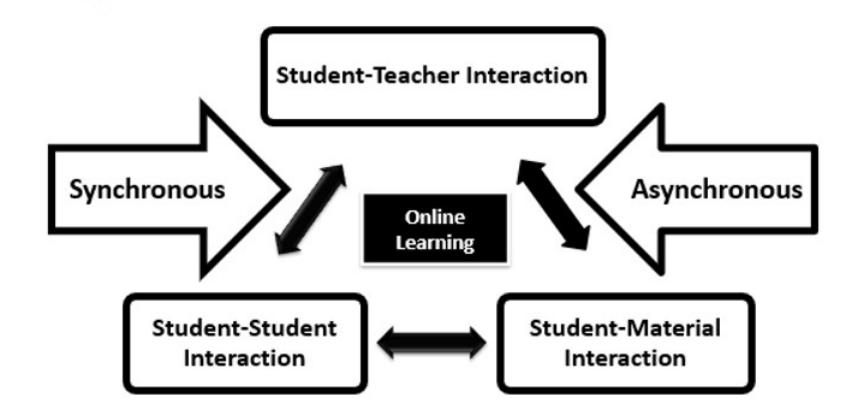
Figure 1 Synchronous and Asynchronous Online Learning (Adapted from O'Rourke & Strickler, 2017; Rido et al., 2020; Salmon, 2013; Wilkins, 2018; Ziegler, 2016)
Synchronous online learning refers to real-time learning where teachers and students meet through live video conferencing. Interactions between teachers and students, students and students, as well as students and their learning materials, take place simultaneously, like in conventional classrooms. For synchronous online learning, various technological applications are used, such as Zoom, Google Meet, Cisco, WebEx, Microsoft Team, Discord, etc. Through these applications, lectures, discussions, and presentations are conducted remotely (O'Rourke & Strickler, 2017; Wilkins, 2018).
Asynchronous online learning takes place on a learning platform where teachers and students carry out activities in their own way based on their availability. There are many technological applications used for asynchronous online learning, such as the Moodle-based learning platform, social media sites like Facebook and Instagram, and game-based applications like Kahoot and Quizzes. Activities in asynchronous online learning include textbook reading, watching learning videos, discussing projects, submitting assignments, and conducting quizzes and examinations (Ziegler, 2016).
The key point is that both teachers and students have to maximize interaction while they are using technological applications in synchronous and asynchronous online learning for different pedagogical goals. Since interaction and learning forms are part of the foundation of pedagogy, they are linked in this situation (Rido et al., 2020).
Method
This research employed a qualitative approach (Creswell & Creswell, 2018). This research was approved by the Ethic Commission of Social and Humanities, the National Research and Innovation Agency of the Republic of Indonesia (No. 80/KE.01/SK/04/2023). This research took place in two tourism vocational high school centers of excellence in Yogyakarta (SMK A) and Bali (SMK B). These schools were recommended by the Ministry of Education and Culture, Research, and Technology of the Republic of Indonesia because they were listed as the top tourism vocational high schools in Indonesia. They were also recommended by the Regional Office of Education of the respective provinces because of the achievements of the teachers, students, and alumni in the tourism industries.
The participants of this research consisted of teachers and students of SMK A and SMK B. They used pseudonyms and were purposefully selected based on some criteria, including teachers and students of hotel and culinary departments. In addition, they must be recommended by the school principals and participate on a voluntary basis. Before all participants gave their permission to be part of this study, they were first given pertinent information to make an informed consent to participate, including the purpose of the study, the identity of the researchers, participants' rights in the process, participants' names used in this study, and the benefits of participating in the study.
To collect data, the researchers used observations and interviews. Observation was employed as this research needed direct information to understand ongoing behavior, processes, and unfolding situations in the classrooms. Specifically, observation was used because it allowed the researchers to get first-hand data about technological applications used by both teachers and students. In addition, the researchers could obtain information about their classroom activities, which they were unwilling to mention during interviews. The type of observation protocol used in this research is an action protocol, which was used to record whether specific technological applications and activities were present or absent during the observational time periods.
In SMK A, the first observation was done in culinary class, and the topic was 'Grocery Shopping List Analysis'. The second observation was conducted in hotel class on the topic of 'Table Set-up'. Both classes were attended by 34 students and ran for approximately 90 minutes. Meanwhile, in SMK B, the observation was first conducted in hotel class with the topic of 'Laundry Project'. The class had 30 students and was over after 60 minutes. The second observation was done in a culinary class, and the topic was 'Pancake'. The class consisted of 35 students and was completed within 60 minutes.
After that, semi-structured interviews were also administered. The use of semi-structured interviews leaves space for the researchers to add any further questions that may arise during the actual interviews with the participants. In this research, interviews were used to collect data from the students as they were asked questions about what happened in their classrooms. It mainly involved asking a series of structured questions about how learning was facilitated using technology, both synchronously and asynchronously, and the challenges faced by the teachers and students. Then, it was probed using open-ended questions to obtain in-depth information. The interview session was arranged based on the availability of the participants and on a voluntary basis.
Semi-structured interviews were conducted with five volunteer teachers and five volunteer students through the first author. The interview sessions were arranged on a mutually agreed-upon date and time. The teachers were interviewed individually, while the students were interviewed in pairs and a small group in the teachers' meeting room. All interview sessions were conducted in Indonesian and lasted 15-20 minutes. It was recorded using the Easy Voice Recorder application, transcribed, and translated into English by the first author. To ensure the validity of the data after the transcription was done, peer debriefing was employed, and the participants were asked to verify the results to establish the credibility of the data.
Next, the data were analyzed using Braun and Clarke's (2006) six-phase framework for doing a thematic analysis. The procedure included the following: being familiar with the data, generating initial codes, searching for themes, reviewing themes, defining themes, and writing up themes. Once the patterns and themes were identified, the results of the observations and interviewees' responses were triangulated and subjected to content analysis. This allowed the authors to comb through the data accordingly.
Results and Discussion
The research arrived at two key findings showing the synchronous and asynchronous technological applications used by teachers and students of Indonesian tourism vocational high schools and the challenges experienced while they are using those applications in their online classrooms.
The Synchronous Technological Applications Used and the Challenges Faced by Tourism Vocational High School Teachers and Students in Indonesia
The findings of this research show the synchronous technological applications used by tourism vocational high school teachers and students. It can be seen in Figure 2 below.
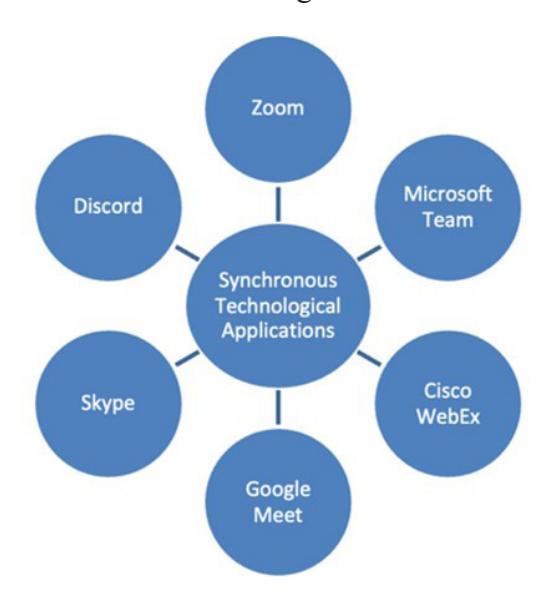
Figure 2 Synchronous Technological Applications Used by Teachers and Students
Figure 2 shows the most common synchronous technological applications utilized by teachers and students of tourism vocational high schools in Indonesia. The results show that they used technological applications like Google Meet, Microsoft Team, Cisco WebEx, Skype, and Discord in their online classrooms. The study also finds that Zoom and Google Meet became the most popular technological applications because of their practicality and accessibility. Principally, these applications were used to facilitate interactions between student and teacher as well as between student and student, through which they attended lectures, were involved in discussions, and presented their papers and ideas. The applications facilitated student group work as well.
Firstly, for student-teacher interaction, the students were introduced to basic tourism and culinary skills and concepts based on the decided topics, provided with explanations and examples, and practiced their skills with more exposure to their soft skills, such as public speaking. During the online session, they were also given opportunities to raise questions and give comments, which led to an in-depth discussion where they exchanged ideas. Sometimes they make mistakes. Therefore, they received constructive feedback from their teachers. Secondly, for student-student interaction, the students got the opportunity to synchronously interact with their colleagues through presentations, discussions, and group work, which were fully supervised by the teachers.
The above-mentioned applications were widely used by teachers and students in schools. Said applications had similar functions, facilitating direct interaction between teachers and students as well as students and students for teaching and demonstrations, group discussions, and presentations remotely (Atmojo & Nugroho, 2020; Jittisukpong, 2022; Prijambodo & Lie, 2021; Puttianovarat, 2021). With its interactive features, teachers could display and share materials, and students had no difficulty listening to teachers' talks. Students also wrote their ideas through the chat box features and exchanged ideas with their friends orally. Fitria (2021), Jittisukpong (2022), Puttinaovarat (2021), and Rahayu (2020) believe that the use of these applications is effective in improving the basic knowledge and skills of students, especially during times of crisis.
Hands-on and experiential learning like demonstration, which is the most common teaching scenario in the vocational context, can be facilitated through these synchronous technological applications (Ziegler, 2016). Here, the teachers advocate for activities and tasks that require students to apply their knowledge and skills to real-world situations relevant to their vocational training. McCombs and Whisler (1997) argue that this is an effective approach as it encourages students to complete meaningful tasks that are relevant to their vocational goals. The activities simulate real-world scenarios in the tourism industry, which helps students see the practical applications of their learning, making them better prepared for their careers (Kolb, 2014).
Nevertheless, the results of the interview show that teachers and students in both tourism vocational high schools faced a number of challenges involving synchronous online learning while they were using these applications. In general, they experienced technical issues like unstable internet connections and incompatible devices.
"Poor internet connection." (Teacher 1)
Atmojo and Nugroho (2020) and Rofiah et al. (2022) state that technical issues are one of the biggest challenges in synchronous online learning as it is conducted in real time. Insufficient infrastructure, middle-low-spec computers and mobile phones, and a lack of support from government and education institutions have become the core of the problems, and they commonly happen in developing countries in Asia (Chiablaem, 2021). The digital divide and the lack of adequate technological infrastructure in some areas can affect the mastery of technology by tourism vocational high school graduates. Unequal access to the internet and advanced technology tools can also hinder their ability to develop and enhance their technological skills (Ariyanti, 2020; Hermansyah & Aridah, 2021; Ulla & Perales, 2021).
"Blackout suddenly…server down." (Teacher 2)
"Sometimes blackout, no electricity, no internet." (Teacher 3)
"The Internet connectivity was the major issue." (Teacher 4)
"I had to install and reinstall applications so many times because of low-end gadget." (Student 1)
"Slow internet connection, so sometimes I skipped classes." (Student 2)
"My gadget was unsupported." (Student 3)
"When it was raining, the Internet was disconnected so I could not get the explanation clearly." (Student 4).
"When the Internet was slow, it's difficult to join the class on time." (Student 5)
Both students and teachers also faced pedagogical problems such as a lack of engagement and computer literacy.
"Passive students…sometimes some applications were complicated to operate, some technical issues… especially during hotel reservation online practice, and role play." (Teacher 1)
"Students were afraid to ask questions… I was not trained to use many applications for learning, just self-taught." (Teacher 2)
"They were reluctant to speak." (Teacher 3)
"When students made mistakes during cake practice, it was difficult because they had to fix their cakes as it was conducted on real-time." (Teacher 4)
"It's challenging to control students during group discussion because they were in separate rooms." (Teacher 5)
Pedagogical problems were said to mostly occur as both teachers and students were not ready and well-trained for a new culture of remote learning. To some extent, it had caused ineffectiveness in delivery and interaction (Atmojo & Nugroho, 2020). Online classrooms can lead to decreased engagement due to the absence of face-to-face interactions. Teachers might struggle to create a sense of community and maintain students' attention, leading to passive learning and reduced participation (Rofiah et al., 2022). Furthermore, technical challenges can disrupt the flow of lessons, leading to decreased learning time and an overall negative learning experience (Hermansyah & Aridah, 2021). Students might struggle to follow instructions (Prasetio & Priyana, 2020).
On the other hand, students experienced psychological concerns, namely demotivation and a lack of focus on learning.
"I hesitated to talk." (Student 1)
"Our teachers motivated us to talk. I wish I could be more confident." (Student 2)
"Sometimes we did not understand the materials at hand and our teacher did not give the opportunity to ask questions because of lack of time." (students 3)
"It was so noisy around me while I am attending the class." (Student 5)
Psychological issues obviously happened in online classrooms, and they were mainly experienced by many students. They were reluctant to speak and had an unconducive learning environment while attending a synchronous online session (Prijambodo & Lie, 2021). The sudden transition to online learning, along with the absence of physical classrooms and social interactions, can lead to demotivation among students. The lack of face-to-face engagement with teachers and peers can make learning feel impersonal and less engaging (Hermansyah & Aridah, 2021). Online learning also requires a higher degree of self-discipline and time management compared to traditional classroom settings. Students might find it challenging to maintain focus in a home environment that is often filled with distractions (Nugoro et al., 2021).
The Asynchronous Technological Applications Used and the Challenges Faced by Tourism Vocational High School Teachers and Students in Indonesia
The results of this research also indicate that tourism vocational high school teachers and students in Indonesia used more technological applications in their asynchronous online classrooms. Some difficulties were also identified by both teachers and students. It can be found in the following Figure 3.
Figure 3 Asynchronous Technological Applications Used by Teachers and Students
Figure 3 shows the most common asynchronous technological applications used by teachers and students in tourism vocational high schools in Indonesia. In general, they used YouTube, WhatsApp, Google Classroom and Form, Telegram, Moodle, Screencast-O-Matic, Facebook, Instagram, Quizzes, Kahoot, and Twitter. This research also finds that YouTube, WhatsApp, and Google Classroom were used by both teachers and students. Those became the most reliable applications for them. They were able to use these applications easily and autonomously at home.
These applications were mostly used to facilitate interactions between students and teachers, students and students, and students and learning materials. The students accessed PowerPoint slides for their reading and relevant learning videos, which could be downloaded and stored in their personal database, as well as being involved in a discussion forum where they posted their comments or shared ideas based on the given topics. They also interacted with their teachers via the chat box feature, consulting their work, asking questions, and taking examinations, quizzes, and post-tests. Here, they reported their assignments as well.
Hermansyah and Aridah (2021), Lie et al. (2020), Prasetio and Priyana (2021) mention that the principal functions of asynchronous online learning applications like WhatsApp, Telegram, Moodle, Twitter, and Facebook are for sharing learning materials, starting discussions, as well as turning in and submitting assignments. In other words, they are used mostly for autonomous learning. In the tourism vocational context, students learn how to use these technological applications to create online communities where students and teachers, students and students, and students and stakeholders from the industry can connect and network (Graham, 2013; Ulla & Perales, 2021).
Other applications such as Kahoot, Quizzes, and Quizlet were used to facilitate quizzes or examinations (Ariyanti, 2020; Chiablaem, 2021; Jittisukpong, 2022; Prijambodo & Lie, 2021; Puttinaovarat, 2021; Rinekso et al., 2021; Ulla & Perales, 2021). On these platforms, teachers can create various types of questions to measure students' knowledge and skills. In addition, Google Form, WhatsApp, Google Classrooms, Kahoot, and Quizzes provide opportunities for individualized instruction and personalized learning experiences (Rido et al., 2022), which help them to study at their own pace, sit for examinations, and seek additional support when needed (Anderson, 2016; Means & Neisler, 2020).
However, during asynchronous online learning using those technological applications, teachers and students also met some challenges. Teachers mostly faced pedagogical issues. They involved a lack of supervision and academic misconduct by students. Teachers shared their difficulty in monitoring
students' contributions during group projects. It became more challenging because they had to do it from their respective homes.
"Controlling students group work such as in table setting class with various eating utensils and styles is important because they had to do it at home." (Teacher 1)
"Housekeeping class for example when they are making bed and towel art and arranging flowers, a lot of things to do, I needed to check everyone's contribution one by one." (Teacher 2)
"Monitoring students' engagement and contribution was difficult in group project. They were at home and I was not there with them. For example, when teaching traditional Indonesian cake, students had to report the results of their observation in a traditional market near their house, finding ingredients, processing and plating the cake." (Teacher 4)
Hermansyah and Aridah (2021) state that it is difficult for teachers to control all students on an asynchronous online platform as there are many activities to do and each individual student works at his or her own pace. Besides, most teachers were not well-trained in teaching by using those platforms before the COVID-19 pandemic (Basri et al., 2021; Rinekso et al., 2021), making students not maximally engaged in learning (Prasetio & Priyana, 2021). Many teachers also found it hard to explain their materials in a manner that is easily comprehensible to all students, mainly on asynchronous online platforms (Hermansyah & Aridah, 2021).
Besides, many educational institutions, including vocational high schools, shifted to online learning to ensure the safety of students and teachers as well as to promote autonomous learning. However, this brought about new challenges, including the potential for academic misconduct.
"They claimed food recipes from YouTube." (Teacher 4)
"Students copied works from their friends." (Teacher 5)
Cheating became a serious issue among students, especially during the pandemic. Some studies show that, in many countries, including Indonesia, the most challenging situation faced by teachers was that they found a number of students copying their works from the Internet, which involved academic dishonesty (Kristina et al., 2021).
On the other hand, students generally experienced personal challenges, namely work overload and difficulties in understanding the materials.
"Overload of tasks, I was tired, working overtime." (Student 1)
"So many things to do. Sometimes I forgot to submit some assignments…some friends did not help in our group project." (Student 2)
"It's difficult when our teachers just posted the tasks and materials without explanation…I needed more examples and more times to understand everything…sometimes our teachers gave difficult questions." (Student 3)
"Teachers did not give detailed feedback to everyone." (Student 4)
"I actually wanted to ask questions, but our teachers were busy… slow response." (Student 5)
Students felt that their teachers gave them a lot of tasks that had to be completed in a short period of time, which was commonly found in many countries (Famularsih, 2020; Ulla & Perales, 2021).
In addition, students had difficulties understanding the materials, and limited feedback was given by their teachers. Existing studies indicated that this problem occurred since interaction on asynchronous platforms was mostly one-way and not done in real-time (Kristina et al., 2021).
They also faced an increase in personal spending because of expensive Internet quotas and technical obstacles such as poor Internet connections and low-quality gadgets.
"My gadget was the problem, it's difficult to open files." (Student 1)
Students also struggled with personal issues during the COVID-19 pandemic in the asynchronous online learning mode. The most common personal problems faced by students were limited access to the Internet at home and low-quality gadgets. This happened because of limited infrastructure and a lack of support from relevant stakeholders (Ariyanti, 2020; Chiablaem, 2021; Kristina et al., 2021; Ulla & Perales, 2021). Besides that, students and parents put in extra effort, which caused an increase in personal spending because of the expansive Internet quota that must be paid for themselves (Atmojo & Nugroho, 2020; Fitria, 2021; Hermansyah & Aridah, 2021).
CONCLUSION
To conclude, this research reveals the use of synchronous and asynchronous technological applications by teachers and students in two tourism vocational high schools in Yogyakarta and Bali, Indonesia. The most common synchronous technological applications used were Google Meet, Zoom, Microsoft Team, Cisco, WebEx, Discord, and Skype. These applications were mostly used for direct interaction between teachers and students as well as students and students for teaching and learning, discussions, and presentations, which helped further enhance the basic knowledge and skills of students. Some identified challenges included unstable internet connections and incompatible devices, lack of engagement and computer literacy, demotivation, and a lack of focus in learning, and passive participation.
Meanwhile, the most common asynchronous technological applications used were WhatsApp, YouTube, Google Classroom, Google Form, Telegram, Moodle, Screencast-O-Matic, Facebook, Instagram, Quizzes, Kahoot, and Twitter. These applications were used to facilitate interaction between students and learning materials or for self-access learning, assignment submission platforms, and examinations, which helped to facilitate self-directed and collaborative learning. The challenges of using asynchronous technological applications were pedagogical issues like a lack of control and academic misconduct. The problems also included personal issues such as work overload, difficulties in understanding the materials, and an increase in personal spending because of the expensive internet quota. In addition, they experienced technical obstacles because of poor internet connections and lowquality gadgets, which delayed their learning.
The use of technological applications in teaching and learning in the tourism vocational high school context presented a unique opportunity for such innovation. Thus, this research offers some suggestions. Firstly, tourism vocational high school teachers should be well-equipped with pedagogical competencies for teaching using technological applications synchronously and asynchronously, mainly for demonstration and practical classes, especially in hotel and culinary departments, to anticipate the challenge of future learning. Secondly, teachers should also be empowered to have the requisite skills, appropriate knowledge, and relevant attributes to provide the pedagogic value of technology and thus frame the use of technology from a critical and humanistic perspective instead of a technical orientation.
"Sometimes, no internet quota at home." (Student 2)
"I used a lot of internet data…downloading materials, submitting assignments." (Student 3)
"The internet was expensive." (Student 4)
"Unstable internet connection…sometimes we could not hear our teachers' voices." (Student 5)
Thirdly, students should be supported with sufficient technological facilities and more spaces for interactions with their teachers, friends, and learning sources so that their hard and soft skills are further developed.
This research also has limitations. The data gained in this research only involved a limited number of tourism vocational high schools and volunteered participants from the hotel and culinary departments. Thus, it cannot be generalized. There must be further research involving a greater number of schools and participants to get a better understanding of synchronous and asynchronous classrooms in tourism vocational high school online classrooms in Indonesia.
Acknowledgement
We would like to extend our highest appreciation to the National Research and Innovation Agency (BRIN) of the Republic of Indonesia for funding this research through the Research for Collaborations Scheme, or IPSH 2023. We would also like to thank Universitas Teknokrat Indonesia and Mahidol University International College for supporting this research.
References
- Anderson, R. D. (2016). Tailoring instruction to student needs: A case study in tourism education. Journal of Vocational Education, 21(4), 312-326. http://dx.doi.org/10.21831/jpv.v11i2.39980
- Ariyanti. (2020). EFL students' challenges towards home learning policy during Covid-19 outbreak. Indonesian Journal of English Language Teaching and Applied Linguistics, 5(1), 167-175. http:// dx.doi.org/10.21093/ijeltal.v5i1.649
- Atmojo, A. E. P., & Nugroho, A. (2020). EFL classes must go online! Teaching activities and challenges during COVID-19 pandemic in Indonesia. Register Journal, 13(1), 49-76. https://doi.org/10.18326/ rgt.v13i1.49-76
- Basri, M., Husain, B., & Modayama, W. (2021). University students' perceptions in implementing asynchronous learning during COVID-19 era. Metathesis: Journal of English Language, Literature, and Teaching, 4(3), 263-276. http://dx.doi.org/10.31002/metathesis.v4i3.2734
- Braun, V., & Clarke, V. (2006). Using thematic analysis in psychology. Qualitative Research in Psychology, 3(2), 77–101. https://doi.org/10.1191/1478088706qp063oa
- Bunyamin, B., Samsudi, S., & Rohman, S. (2022). Soft skills improvement strategy based on career and 21st century learning oriented. Journal of Vocational and Career Education, 7(1), 65-77. https:// doi.org/10.15294/jvce.v7i1.41103
- Chiablaem, P. (2021). Enhancing English communication skills of Thai university students through Google Apps for Education (GAFE) in a digital era during COVID-19 pandemic. Shanlax International Journal of Education, 9, 91-98. https://doi.org/10.34293/education.v9i3.3921
- Creswell, J. W. & Creswell, J. D. (2018). Research design: Qualitative, quantitative, and mixed method approaches (5th edition). Los Angeles: SAGE.
- Dron, J & Anderson, T. (2016). The future of e-learning. In The Sage Handbook of e-learning research (pp. 537-556). Haythornwaite, C.A.: Sage.
- Famularsih, S. (2020). Students' experiences in using online learning applications Due to COVID-19 in English Classroom. Studies in Learning and Teaching, 1, 112-121. https://doi.org/10.46627/silet. v1i2.40
- Fitria, T. N. (2021). Students' perception toward the implementation of synchronous learning during COVID-19 pandemic in English language teaching (ELT). E-Structural, 4(1), 1-16. https://doi. org/10.33633/es.v4i01.4470
- Graham, C. R. (2013). Emerging practice and research in blended learning. In R. E. West, W. R. Shelter, & J. E. Hirsch (Eds.), Teaching and learning online: New models of learning for a connected world (pp. 261-268). Routledge.
- Hermansyah, H., & Aridah, A. (2021). Teachers' perception toward the challenges in online English teaching during COVID-19 pandemic. Indonesian Journal of EFL and Linguistics, 6, 63-77. https:// doi.org/10.21462/ijefl.v6i1.342
- Huang, R., Tlili, A., Wang, H., Shi, Y., Bong, C. J., Yang, J., & Burgos, D. (2021). Emergence of the Online-Merge-Offline (OMO) learning wave in the post-COVID-19 era: A pilot study. Sustainability, 13, 3512. https://doi.org/10.3390/su13063512
- Jiang, Y., Chen, Y., Lu, J., & Wang, Y. (2021). The effect of the online and offline blended teaching mode on English as a foreign language learners' listening performance in a Chinese context. Front. Psychol, 12, 742742. https://doi.org/10.3389/fpsyg.2021.742742
- Jittisukpong, P. (2022). Students' perception toward using google classroom application in EFL classroom during the COVID-19 pandemic at Thai-Nichi Institute of Technology. The New English Teacher, 16(1), 153-168.
- Kadir, S., Nirwansyah, N., & Bachrul, B.A. (2016). Technical and vocational education and training in Indonesia: Challenges and opportunities for the future. Singapore: National University of Singapore.
- Kolb, D. A. (2014). Experiential learning: Experience as the source of learning and development. FT Press.
- Kristina, F., Syahrial, S., & Yunita, W. (2021). Platforms, problems and solutions of online English language teaching at vocational high school. Jurnal Basis, 8(2), 299–310. https://doi.org/10.33884/ basisupb.v8i2.4480
- Kusumawati, A. J. (2020). Redesigning face-to-face into online learning for speaking competence during Covid-19: ESP for higher education in Indonesia. International Journal of Language Education, 4(2), 276-288. https://doi.org/10.26858/ijole.v4i2.14745
- Lemay, D. J., Bazelais, P., & Doleck, T. (2021). Transition to online learning during the COVID-19 pandemic. Computers in Human Behavior Reports, 4, 100130. https://doi.org/10.1016/j. chbr.2021.100130
- Lie, A., Tamah, S. M., Gozali, I., Triwidayati, K. R., Utami, T. S. D., & Jemadi, F. (2020). Secondary school language teachers' online learning engagement during the Covid-19 pandemic in Indonesia. Journal of Information Technology Education: Research, 19, 803-832. https://doi.org/10.28945/4626
- Mandasari, B. (2020). The impact of online learning toward students' academic performance on business correspondence course. Journal of Education and Technology, 4(1), 98-110. https://doi. org/10.29062/edu.v4i1.74
- McCombs, B. L., & Whisler, J. S. (1997). The learner-centered classroom and school: Strategies for increasing student motivation and achievement. Routledge.
- Means, B., & Neisler, J. (2020). Teaching and learning in the time of COVID: The student perspective. Online Learning, 25(1), 8-27. https://doi.org/10.24059/olj.v25i1.2496
- Ministry of Education Republic of Indonesia (2020). Mendikbud Terbitkan SE tentang Pelaksanaan Pendidikan dalam Masa Darurat Covid-19. Tersedia online: https://www.kemdikbud.go.id/main/ blog/2020/03/mendikbud-terbitkan-se-tentang-pelaksanaan-pendidikan-dalam-masa-daruratcovid19 (Retrieved 20 October 2023).
- Mutohhari, F., Sutiman, S., Nurtanto, M., Kholifah, N., & Samsudin, A. (2021). Difficulties in implementing 21st century skills competence in vocational education learning. International Journal of Evaluation and Research in Education, 10(4), 1229 – 1236. http://doi.org/10.11591/ijere.v10i4.22028
- Nugroho A., Haghegh, M., & Triana, Y. (2021). Emergency remote teaching amidst global pandemic: Voices of Indonesian EFL teachers. VELES: Voice of English Language Education Society, 5(1), 66-80. https://doi.org/10.29408/veles%20journal.v5i1.3258
- O'Rourke, B., & Strickler, U. (2017). Synchronous communication technologies for language learning: Promise and challenges in research and pedagogy. CercleS, 7(1), 1–20. https://doi.org/10.1515/ cercles-2017-0009
- Prasetio, E., & Priyana, J. (2021). Tourism vocational high school students' online EFL learning experience during Covid-19 pandemic. Jurnal Pendidikan dan Pengajaran, 54, 596-610. https:// doi.org/10.23887/jpp.v54i3.38893
- Prijambodo, C. K., & Lie, A. (2021). Senior high school students' readiness and motivation to learn English using synchronous video conferences. Journal of Information Technology Education: Research, 20, 429-457. https://doi.org/10.28945/4880
- Pusey, K., & Nanni, A. (2022). Thai university students' attitudes toward online language learning in a time of crisis. SAGE Open, 12(2), 1-12. https://doi.org/10.1177/21582440221091712
- Puttinaovarat, S. (2021). Online learning management during COVID-19 pandemic: A case study of geoinformatics course based on cloud application. TEM Journal, 10, 1104-1111. https://doi. org/10.18421/TEM103-14
- Rahayu, D., (2020). Students' e-learning experience through a synchronous zoom web conference system. Journal of ELT Research: The Academic Journal of Studies in English Language Teaching and Learning, 5(1), 68-79. https://doi.org/10.22236/JER_Vol5Issue1pp68-79
- Rido, A., Ibrahim, N., & Nambiar, R. M. K. (2020). Models of interaction and pedagogy of vocational English language master teachers. Bangi: Universiti Kebangsaan Malaysia Press.
- Rido. A., Kuswoyo, H., & Mandasari, B. (2022). Synchronous and asynchronous online learning in English language classrooms in Indonesia: A literature review. Proceedings of the 19th International Conference on Cognition and Exploratory Learning in Digital Age (CELDA), 3-10.
- Rinekso, A. B., Muslim, A. B., & Lesagia, O. (2021). Teaching online in pandemic time: The experience of Indonesian EFL teachers. ETERNAL: English Teaching Learning and Research Journal, 7(1), 117-133. https://doi.org/10.24252/Eternal.V71.2021.A9
- Rofiah, N. L., Aba Sha'ar, M. Y. M., & Waluyo, B. (2022). Digital divide and factors affecting English synchronous learning during covid-19 in Thailand. International Journal of Instruction, 15(1), 633-652. https://doi.org/10.29333/iji.2022.15136a
- Salmon, G. (2013). E-activities: The key to achieve online learning. London: Routledge.
- Suharsih, S., & Wijayanti, M. A. (2020). Online learning for EFL learners: perceptions, challenges, and expectation. Journal of English Language Studies, 6(2), 244-257. http://dx.doi.org/10.30870/jels. v6i2.12122
- Thongmak, M., & Ruangwanit, N. (2021). Online learning vs. offline learning in an MIS course: Learning outcomes, readiness, and suggestions for the post- covid-19 world, Proceedings of the International Conference on Electronic Business, 21, 312-332.
- Ulla, M. B., & Perales, W. F. (2021). Facebook as an integrated online learning support application during the COVID19 pandemic: Thai university students' experiences and perspectives. Heliyon, 7(11), 1-8. https://doi.org/10.5334/jime.617
- UNESCO (2020). Covid-19 Educational disruption and response. Available online: https://en.unesco. org/covid19/ educationresponse (Retrieved 8 May 2023).
- Valverde-Berrocoso, J., Garrido-Arroyo, M. D. C.., Vurgos-Videla, C., & Morales-Cevallos, M. B. (2020). Trends in educational research about e-learning: a systematic literature review (2009- 2018). Sustainability, 12(5153), 1-23. https://doi.org/10.3390/su12125153
- Wilkins, B. (2018). Asynchronous collaboration integrating online learning in foreign language classroom. The Journal of Language and Teaching, 8(2), 101-108.
- World Bank. (2020). Individuals Using the Internet (% of population) | Data. Available Online: https:// data.worldbank. org/indicator/IT.NET.USER.ZS?name_desc=false (Retrieved 10 May 2023).
- Ziegler, N. (2016). Synchronous computer-mediated communication and interaction. Studies in Second Language Acquisition, 38(3), 553–586. https://doi.org/10.1017/S027226311500025X