

INFO ARTIKEL
Kata kunci:
pemasaran influencer, pemasaran viral, cita rasa, keputusan pembelian
ABSTRAK
Di era persaingan bisnis yang semakin ketat, perusahaan harus meningkatkan penjualan untuk menarik pelanggan dalam memutuskan pembelian. Dengan kemajuan teknologi yang terus berkembang, banyak perusahaan melakukan inovasi dalam upaya meningkatkan penjualan melalui pemasaran digital yang lebih efisien, termasuk memanfaatkan pemasaran influencer dan strategi pemasaran viral. Selain itu, perusahaan juga harus menggunakan teknologi yang bijak untuk menyesuaikan kampanye pemasaran dengan preferensi dan perilaku pelanggan. Penelitian ini bertujuan untuk mengetahui pengaruh pengambilan keputusan konsumen mengenai strategi penjualan pemasaran viral, influencer marketing, dan cita rasa. Sebanyak 250 konsumen Roti Keset Condet menjadi sampel dalam penelitian ini. Pengambilan sampel menggunakan teknik Accidental Sampling dengan memilih konsumen yang secara kebetulan bertemu dengan peneliti. Software smartPLS digunakan untuk melakukan analisis data menggunakan model persamaan struktural. Hasil penelitian menunjukkan sebagian besar variabel independen mempunyai pengaruh yang signifikan terhadap
variabel dependen, variabel yang memengaruhi keputusan pembelian, yaitu viral marketing dan cita rasa. Namun, pemasaran influencer tidak berpengaruh terhadap keputusan pembelian. Dalam hal ini, konsumen lebih memperhatikan hal yang disampaikan dalam media dan cita rasa produk daripada orang yang menyampaikan.
https://doi.org/10.5614/sostek.itbj.2024.23.1.9 Submitted: February 2, 2023 Accepted: April 8, 2024 Published: March 30, 2024
Introduction
Current marketing strategies require bold innovation from business actors in marketing their products, one of which is taking advantage of rapid technological developments. Viral marketing technology is critical in today's digital era because online content can be disseminated quickly through various digital channels and social media platforms. One of the techniques used in marketing is social media because of its many benefits, such as its ability to serve clients anywhere, at any time. You can quickly produce and share interesting material on social media. Viral marketing is a viable tool for implementing marketing tactics in the digital age. Unlike traditional advertising, viral marketing is typically more affordable and successful (Trusov et al., 2009). Viral marketing, as defined by Camarero & San José (2011), is the rapid expansion and dissemination of marketing messages to new audiences. Viral marketing, commonly called word-of-mouth Internet marketing, involves leveraging established social networks to encourage people to spread information (such as product specs, updates, campaigns, etc.) via email or other social media Ž(Wilson, 2000). In addition, viral marketing can raise revenues and enhance consumer perceptions of brands (Wu & Wang, 2011). Thus, it can be said that viral marketing is a strategy that spreads word of mouth or social media sharing to educate others about goods and services that can potentially affect consumer purchase decisions. Past studies have demonstrated that viral marketing significantly affects consumers' buying decisions (Anindya & Indriastuti, 2023; Maulida et al., 2022).
With the speed at which technology develops, businesses may now use consumer preferences and online behavior to target more relevant customers. Influencer marketing is another component of the marketing strategies that are employed. According to Brown & Nick (2008), influencer marketing is a form of advertising that leverages influencers' recommendations to boost sales. However, the goals are meant to encompass more general results, such as attracting the interest of possible buyers, spreading word of mouth, and fostering consumer interaction with the brand or product. Media companies frequently mention using social media influencers to promote influencer marketing as the practice gains popularity (Voorveld, 2019). One should not undervalue the significance of influencer marketing. Because of their influence and power, influencers can affect the purchasing habits of their followers. This is consistent with earlier studies demonstrating how influencer marketing affects consumers' buying decisions (Munandar, 2021; Nurhamidah, 2022).
Bread is one of the most widely consumed staple meals worldwide. Zhang et al. (2023) define bread as a baked food item with wheat flour as its primary ingredient. Nevertheless, bread contains other elements such as water, sugar, eggs, butter, and yeast in addition to the primary raw material (Xin et al., 2022). During the Dutch colonial era in Indonesia, indigenous people have been sold bread since 1930. Bread varies in texture and flavor, ranging from hard to soft. At the time, bread in Indonesia was still made very simple, without using yeast, and it would be naturally fermented under a moist cloth. However, global information availability and technological advancements have significantly influenced Indonesia's bread of developments as time passes.
Because bread is a popular commodity in the culinary market, Indonesia is seeing the emergence of bakery operations, naturally leading to increased rivalry. Businesses need techniques that sway consumers' decisions on what bread to buy to survive. Choosing what to buy and when to buy it is one of the most frequent decisions we have to make in our daily lives (Diez & Pallarés, 2021). According to
Salem (2018), many factors go into choosing what to buy, such as where to buy, what brand, what kind of product to buy, when to buy it, how much to spend, and how to pay. According to Schiffman & Kanuk (2018), a purchase choice is the act of selecting among a range of goods or services offered to satisfy the needs or preferences of the buyer. Thus, consumer choices are critical to a business's ability to profit and keep clients. As a result, companies frequently conduct effective market research and employ marketing techniques to sway the decisions of their customers.
How someone eats and enjoys meals is typically determined by the flavor and quality of the meals. Taste is the primary consideration when selecting food (Laviano et al., 2018). Avery et al. (2020) define taste as the fundamental feeling in the oral cavity, particularly on the tongue. These basic sensations typically include sweet, sour, salty, bitter, and umami. Taste, fragrance, texture, color, and other sensations are perceived by the five senses; dining experiences, and the setting in which food is experienced combine to generate the complex sense of taste (Tachibana & Tsuda, 2022). Most individuals frequently mix up taste and flavor. According to Auvray & Spence (2008), flavor is technically related to how taste, smell, and maybe other sensations combine to create a cohesive perception. For this reason, in culinary commerce, food taste is crucial. Past studies have demonstrated that taste significantly influences decisions about what to buy (Dilasari et al., 2022; Kumalasari, 2023).
For business owners, consumer purchase decisions are crucial. Entrepreneurs put much effort into persuading customers to purchase their goods. In addition to being influenced by the quality of the products being sold, the researcher's attention in this study is on how viral marketing and influencers might enhance customer purchasing decisions.
Influencer Marketing
The most popular influencer-based marketing tactic at the moment is influencer marketing. Influencer marketing is a fundamental idea in word-of-mouth advertising that is professionally executed, emphasizing social context (Sudha & Sheena, 2017). According to Campbell & Farrell (2020), influencer marketing pays individuals to promote goods or services on social media. Influencer marketing is a great way to promote goods or services without upsetting clients, as most internet users steer clear of most forms of advertising (Insights, 2017). As such, most internet shoppers are content to participate in influencer marketing initiatives. By using influencers who have the power to affect consumer behavior and popularize items, the author concludes that influencer marketing is the process of disseminating information about goods or services. The research uses several influencer marketing metrics, including experience, reliability, and attractiveness (Venciute et al., 2023).
According to Venciute et al. (2023), influencer marketing is a relatively new form of marketing technique in which consumers are persuaded to make decisions based on the opinions of influencers. According to Fülöp (2007), decision-making is the study of decision-makers' values and preferences to identify and select options. Decision-making requires us to weigh various options and choose the best one that fits our preferences and objectives. Prior studies demonstrate that influencer marketing significantly and favorably affects consumers' buying decisions (Wilis & Faik, 2022). As a result, a hypothesis can be stated as follows:
H1: Influencer marketing influences purchasing decisions.
Taste
Flavor selection requires differentiation based on flavor (Drummond & Brefere, 2010). According to Breslin (2013), taste is a crucial sense that enables people to evaluate the nutritional value of food that has been consumed. Avery et al. (2020) presented an alternative viewpoint, stating that taste pertains to the fundamental senses experienced by the oral cavity, particularly the tongue. These senses typically consist of sweet, sour, salty, bitter, and umami, which can be blended to provide a distinct taste. Specific to a given class of food item. Flavor, smell, appearance, and texture are the four indications of taste, according to Drummond & Brefere (2010). As a result, this flavor becomes distinctive to clients or consumers and influences their decision to buy. This will incite entrepreneurs to compete by creating unique dishes that will become well-known to the general population.
Companies that engage in ongoing research and development might enhance the caliber of their flavors. Customers will be more inclined to purchase the goods if they taste better. Consumer choices influence their actions, which are necessary for all activities. Individuals typically decide by considering various choices previously known as possibilities and selecting one (Beach & Lipshitz, 2017). This is consistent with studies by Sari & Mulyani (2021), which found that flavor significantly influences decisions about what to buy. As a result, a hypothesis can be stated as follows:
H2: Taste influences purchasing decisions.
Viral Marketing
Nowadays, it is becoming less common for people to use radios to find information; instead, more of us choose to use the Internet. To reach today's generation, a viral marketing strategy is therefore required. According to Kaplan & Haenlein (2011), viral marketing is a technique and process for distributing electronic messaging that informs the public about products. In the meantime, viral marketing, according to Long & Wong (2014), is a technique for product promotion that uses "word of mouth" connections. Viral marketing, sometimes called buzz marketing or word-of-mouth marketing, is a kind of advertising in which consumers and marketers accidentally share information (Phelps et al., 2004). According to De Bruyn & Lilien (2008), viral marketing aims to disseminate knowledge about goods and services from company to customer instead of the company to the consumer. This leads to a quicker and more economical uptake of the product on the market. Based on this viewpoint, the author concludes that viral marketing is an electronic marketing technique that spreads product information to a large audience by using social media platforms that are already in use, such as email or social media. Three factors can be considered when evaluating viral marketing: the environment, the message, and the messenger (Kaplan & Haenlein, 2011).
Customers may obtain more information about products and offers more easily with this viral marketing method, which helps them make more informed purchasing decisions. Consumers usually concentrate on gathering as much information as possible when selecting correctly. Making decisions involves the decision-maker choosing multiple possibilities, weighing them against one another, and assessing the outcome (Gürkut et al., 2023). Previous studies have provided evidence to support this opinion, demonstrating that viral marketing influences customer purchase decisions in a positive and significant way (Hamade, 2021). As a result, a hypothesis can be stated as follows:
H3: Viral marketing influences purchasing decisions.
Purchase Decision
There has been much research on purchasing decisions in the marketing literature. Buying decisions are one facet of consumer behavior (Rosa, 2021). Salem (2018) said consumers undergo a process while they are making purchases, including identifying a need, weighing their options, and selecting specific goods and brands. Customers can choose and are prepared to pay for the right to possess or utilize the good or service during the purchasing decision phase (Kotler & Keller, 2016). According to Carrillo et al. (2023), purchase decisions result from a hierarchy-based process in which different components play distinct roles. Therefore, purchasing decisions can be defined as buyers' actions before purchasing (Hanaysha, 2022). Consumers' past experiences with a company's offerings and the ability of their products to meet specific needs usually determine consumer behavior when purchasing something. Five indicators influence consumer purchasing decisions: realization of needs, search for information, evaluation of alternatives, buying decisions, and impressions after the purchase (Kotler, 2002). The following diagram illustrates the framework for this study:
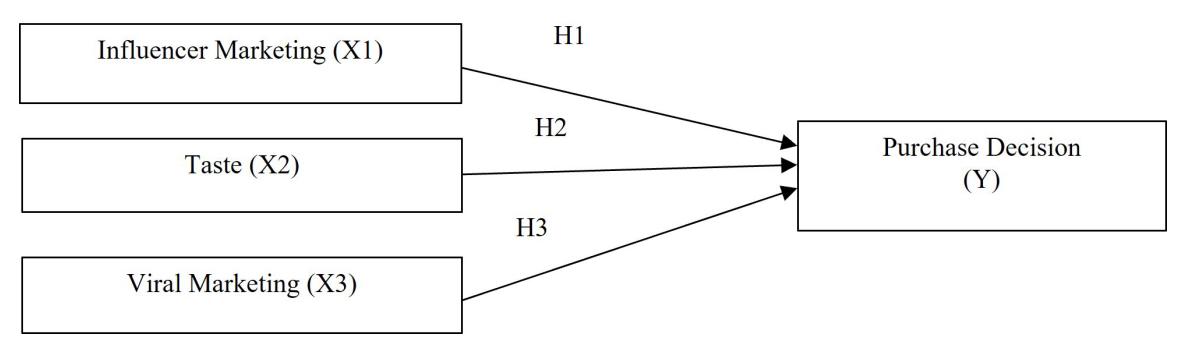
Figure 1 Framework for Thinking Source: Author, 2023
Method
The population in this research is consumers who will make a purchase or have already purchased Roti Keset; as many as 250 respondents used the accidental sampling technique for consumers who happened to meet the researcher (Sugiyono, 2017). The research was conducted in November 2023 at several outlets to obtain global opinions from connoisseurs and buyers of the products used as research.
In this study, measurements were carried out using a Likert scale (1-5) where 1 (strongly disagree), 2 (disagree), 3 (neutral), 4 (agree), and 5 (strongly agree). Several measurements were used to measure the variables in this research, including influencer marketing use, experience, trustworthiness, and attractiveness (Venciute et al., 2023). Taste states four indicators regarding taste: flavor, smell, appearance, and texture (Drummond & Brefere, 2010). Viral marketing uses the messenger, the message, and the environment (Kaplan & Haenlein, 2011). In addition, it uses purchase decisions based on the realization of needs, search for information, evaluation of alternatives, buying decisions, and impressions after the purchase (Kotler, 2002).
Next, the data obtained was analyzed using SEM (Structural Equation Model) with the help of SmartPLS 3. First, the validity and reliability of the model were tested. Then, the multicollinearity test, R2 (R square), F test, q2 test, and hypothesis test were continued to see the effect of each variable.
Result and Discussion
Respondent descriptions are used to determine the characteristics of respondents who filled out the questionnaire in this study. Several questions are the focus of this research, as it is depicted in Table I below:
| Demographic Variables | Frequency | Percentage | |
|---|---|---|---|
| Gender | |||
| Men | 74 | 29.6 | |
| Women | 176 | 70.4 | |
| Age | |||
| < 17 year | 23 | 9.2 | |
| 18-25 year | 187 | 74.8 | |
| 26-35 year | 26 | 10.4 | |
| > 35 year | 14 | 5.6 | |
Table I Characteristics of Respondents
| Occupation | ||
|---|---|---|
| Students | 118 | 47.2 |
| Housewife | 29 | 11.6 |
| Private employees | 79 | 31.6 |
| Civil employees | 3 | 1.2 |
| Entrepreneur | 21 | 8.4 |
| Reason for purchasing | ||
| Love the taste | 118 | 47.2 |
| Love the variants | 43 | 17.2 |
| See a recommendation | 79 | 31.6 |
| Near the place | 10 | 4.0 |
| How many times have you made a purchase? | ||
| Two times | 106 | 42.4 |
| 3-5 times | 68 | 27.2 |
| >5 times | 55 | 22.0 |
| One time | 21 | 8.4 |
| Influencers are well known. | ||
| Azizah Salsha | 9 | 3.6 |
| Fadil Jaidi | 67 | 26.8 |
| Fadil Jaidi, Keanuagl | 6 | 2.4 |
| Fadil Jaidi, Keanuagl, Azizah Salsha | 1 | 0.4 |
| Fadil Jaidi, Keanuagl, Ria Ricis | 6 | 2.4 |
| Fadil Jaidi, Keanuagl, Ria Ricis, Azizah Salsha | 1 | 0.4 |
| Fadil Jaidi, Ria Ricis | 2 | 0.8 |
| Keanuagl | 27 | 10.8 |
| Keanuagl, Azizah Salsha | 1 | 0.4 |
| Rachel Vennya | 41 | 16.4 |
| Rachel Vennya, Azizah Salsha | 3 | 1.2 |
| Rachel Vennya, Fadil Jaidi | 2 | 0.8 |
| Rachel Vennya, Fadil Jaidi, Keanuagl | 3 | 1.2 |
| Rachel Vennya, Fadil Jaidi, Keanuagl, Azizah Salsha | 2 | 0.8 |
| Rachel Vennya, Fadil Jaidi, Keanuagl, Ria Ricis | 10 | 4.0 |
| Rachel Vennya, Fadil Jaidi, Keanuagl, Ria Ricis, Azizah Salsha | 22 | 8.8 |
| Rachel Vennya, Ria Ricis | 2 | 0.8 |
| Ria Ricis | 44 | 17.6 |
| Ria Ricis, Azizah Salsha | 1 | 0.4 |
| TOTAL | 250 | 100 |
Source: Data Processing, 2023
The respondent profile revealed that 70.4% of respondents were women and 29.6% of respondents were men. This indicates that they are both considering buying the Roti Doormat Condet item. The age group with the most outstanding scores was 18–25 years old (74.8%), followed by 26–35 years old (10.4%), under-17 years old (9.2%), and over-35 years old (5.6%). 47.2% comprise students, compared to 31.6% of private workers, 11.6% of housewives, 8.4% of businesses, and 1.2% of government employees demonstrates the relationship between the years spent as a student and the age range of 18 to 25. 47.2% claimed they bought it because they enjoyed the flavor, 31.6% claimed they did it after seeing recommendations, 17.2% claimed they preferred the variety, and 4.0% claimed it was nearby. Aside from that, 42.4% of respondents had made two purchases, 27.2% had made three to five purchases, 22.0% had made more than five purchases, and 8.4% had made one purchase. With a score of 26.8%, Fadil Jaidi was the influencer that respondents knew the most about, followed by Ria Ricis with a score of 17.6%.
Structural Model
In this study, taste, viral marketing, and influencer marketing are the exogenous variables. The only endogenous variable at this time is the choice to purchase. Convergent validity is ensured by applying outside loadings, also known as factor loadings. If the external pressure value is higher than 0.05, an indicator may be deemed to satisfy the excellent category standards for convergent validity. As evidenced by the data in Figure 2, all variable indicators are suitable for use in future studies. As a result, none of them has an external loading value lower than 0.05.
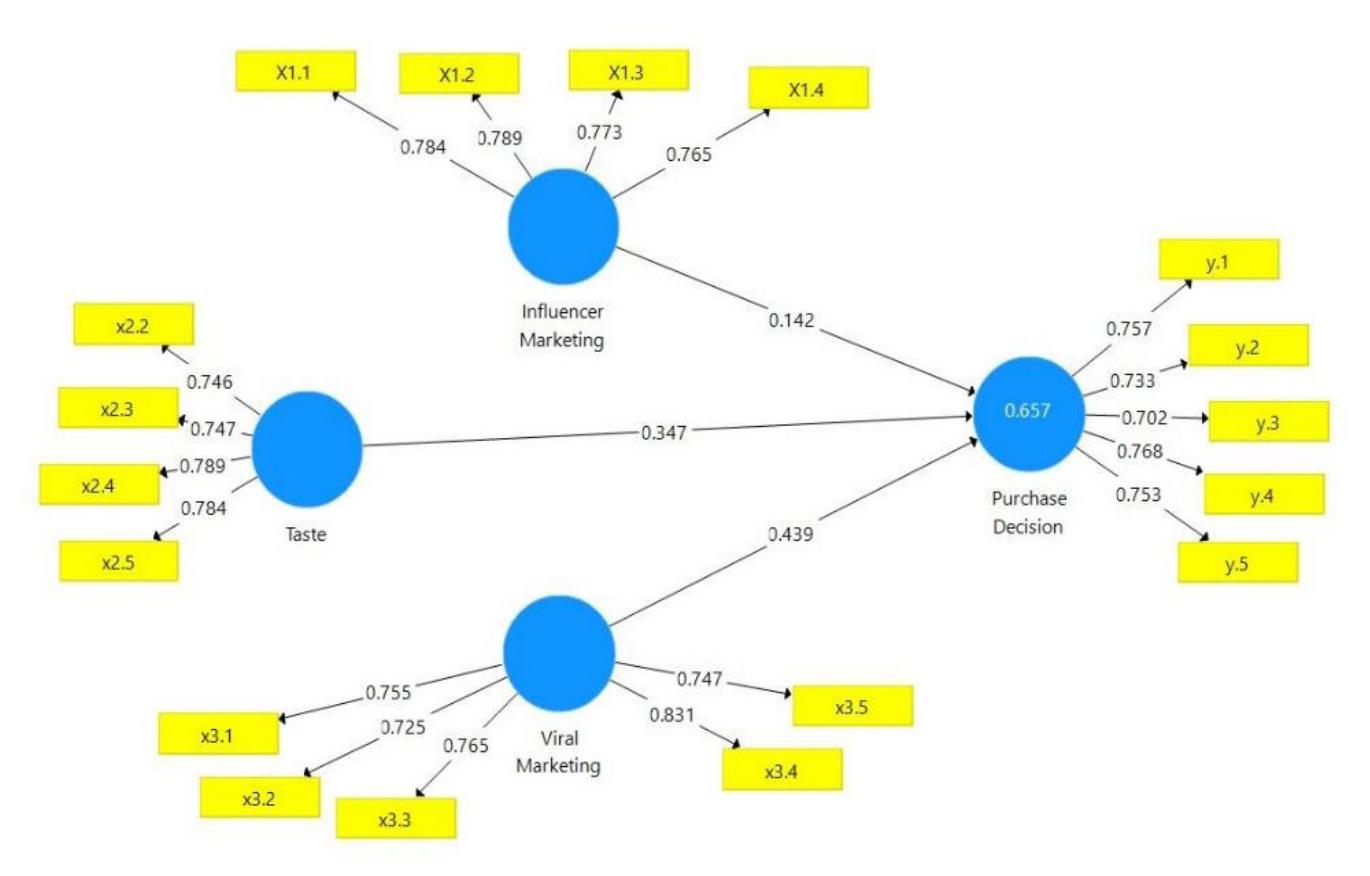
Figure 2 Structural Model
Evaluation of External Loading Models
Any relationship between indicators and latent constructs or variables is assessed using convergent validity. Convergent and discriminant validity are the two forms of PLS-SEM validity.
Convergent Validity Test
The study's findings show that every loading factor possesses convergent validity. As can be seen in the image above, the loading factor is more significant than 0.700. This affects the chosen data, which shows that all study variables meet validity and reliability requirements with a value of >0.700. Furthermore, Cronbach's alpha value in PLS is used to calculate composite reliability (CR), which measures consistency between constructs. Additionally, the requirements can be approved if the CR generates a good value and has a value greater than 0.7.
Table II Measurement Model
| Variable | Indicator | Items | Loading Factor | Reliability | AVE |
|---|---|---|---|---|---|
| Influencer Marketing | 1. Experience 2. Trustworthiness 3. Attractiveness (Venciute et al., 2023) | X1.1 X1.2 X1.3 X1.4 | 0.784 0.789 0.773 0.765 | 0.860 | 0.605 |
| Taste | 1. Flavor 2. Smell 3. Appearance 4. Texture (Drummond & Brefere, 2010) | X2.2 X2.3 X2.4 X2.5 | 0.746 0.747 0.789 0.784 | 0.860 | 0.588 |
| Viral Marketing | 1. The Messenger 2. The Message 3. The Environment (Kaplan & Haenlein, 2011) | X3.1 X3.2 X3.3 X3.4 X3.5 | 0.755 0.725 0.765 0.831 0.747 | 0.851 | 0.586 |
| Purchase Decision | 1. Realization of needs 2. Search for Information 3. Evaluation of Alternatives 4. Buying Decisions 5. Impressions after the Purchase (Kotler, 2002) | YI.1 Y1.2 Y1.3 Y1.4 | 0.757 0.733 0.702 0.768 | 0.876 | 0.552 |
| Y1.5 | 0.753 |
Source: Data Processing, 2023
The average variance extracted (AVE) of each indicator can also be used to determine the discriminative validity. The AVE value should be greater than 0.05 to obtain a statistical model. The AVE data in Table II shows that the AVE values for the variables influencer marketing (X1), taste (X2), viral marketing (X3), and purchase decision (Y) have AVE values less than 0.05. According to the results, each variable has a high degree of discriminant validity.
Table III Discriminant Validity-Fornell Lacker
| Influencer Marketing | Purchase Decision | Taste | Viral Marketing | |
|---|---|---|---|---|
| Influencer Marketing | 0.778 | |||
| Purchase Decision | 0.615 | 0.743 | ||
| Taste | 0.575 | 0.701 | 0.767 | |
| Viral Marketing | 0.623 | 0.743 | 0.621 | 0.766 |
Sources: Data Processing, 2023
According to the information in the above table, influencer marketing (0.778), purchase decision (0.743), taste (0.767), and viral marketing (0.766) have the highest values for each variable. Discriminant validity is deemed valid if it can be demonstrated that each indicator statement has a higher loading factor value for each latent component (Fornell & Larcker, 1981).
Table IV R square
| R Square | |
|---|---|
| Purchase Decision | 0.657 |
Sources: Data Processing, 2023
The amount that external variables impact other variables is determined using the R squared (R2) value. As it is shown in Table III, the R2 purchase decision value is 0.657. This indicates that the purchase decision variable is influenced by taste, viral marketing, and influencer marketing in 65.7% of cases.
Table V Data f Square
| Variable | F Square | |
|---|---|---|
| Influencer marketing (X1) → Purchase decision (Y) | 0.032 | |
| Taste (X2) → Purchase decision (Y) | 0.196 | |
| Viral marketing → Purchase decision (Y) | 0.286 |
Sources: Data Processing, 2023
The F-square test determines how strongly the independent and dependent variables are related. A square larger than 0.02 denotes a small size, a square higher than 0.15 denotes a medium size, and a square larger than 0.35 denotes a large size, according to the measuring standards. A value of less than 0.02, according to Sarstedt et al. (2017), suggests that there is no effect. Table IV indicates that the variable influencing purchase decisions through marketing has the smallest effect size, with an impact size of F-square = 0.032. Regarding purchasing decisions, the taste variable has a medium effect size (f square value: 0.196), whereas the viral marketing variable has a medium effect size (f square value: 0.286).
Table VI Multicollinearity Results – Inner VIF Value
| Influencer marketing | Purchase Decision | Taste | Viral marketing | |
|---|---|---|---|---|
| Influencer marketing | 1.804 | |||
| Purchase decision | ||||
| Taste | 1.797 | |||
| Viral marketing | 1.965 |
Sources: Data Processing, 2023
Based on the VIF value, multicollinearity between constructs is demonstrated. Table VI shows that the study's VIF value, which does not surpass 5.0, ranges from 1.804 to 1.965. According to the data, multicollinearity is not an issue, and more research can be done on this topic.
Table VII Prediction Accuracy Test (Q2)
| SSO | SSE | Q2 (=1-SSE/SSO) | |
|---|---|---|---|
| Influencer Marketing | 1,000,000 | 656,135 | 0.344 |
| Purchase Decision | 1,250,000 | 841,049 | 0.327 |
| Taste | 1,000,000 | 688,671 | 0.311 |
| Viral Marketing | 1,250,000 | 781,595 | 0.375 |
Sources: Data Processing, 2023
The Q2 value can be utilized with the prediction accuracy test. When Q2 is greater than zero, the model is thought to have a high degree of prediction accuracy; when Q2 is less than zero, the model is believed to have a low degree of prediction accuracy. With Q2 values ranging from 0.311 to 0.375, the table above demonstrates that all variables have high prediction accuracy.
Table VIII Path Coefficient
| Original Sample (O) | Sample Mean (M) | Standard Deviation (STDEV) | T Statistics (|O/STDEV|) | P Values | Result | |
|---|---|---|---|---|---|---|
| Influencer Marketing → Purchase Decision | 0.142 | 0.137 | 0.074 | 1.922 | 0.055 | Not accepted |
| Taste → Purchase Decision | 0.347 | 0.345 | 0.057 | 6.072 | 0.000 | Accepted |
| Viral Marketing → Purchase Decision | 0.439 | 0.446 | 0.067 | 6.548 | 0.000 | Accepted |
Sources: Data Processing, 2023
The hypothesis results can be accepted if the p-value is less than 0.05 and the t-table path coefficient is more significant than 1.96. The hypothesis is rejected due to the lack of evidence supporting it, as indicated by the t-statistic value of 1.922 (<1.96) and p-value of 0.055 (>0.05) for the association between influencer marketing and purchase decisions. The hypothesis regarding the association between flavor and purchasing decisions is accepted because the p-value is 0.000 (<0.05) and the t-statistic value is 6.072 (>1.96). The association between viral marketing and purchase decisions has a t-statistic value of 6.548 (>1.96) and a p-value of 0.000 (<0.05), indicating a positive and significant effect. Therefore, the hypothesis is accepted.
Discussion
According to Lin et al. (2019), business actors employ influencer marketing to draw in clients, hoping that the products given will be consumed by their followers due to the impact of the influencers. Influencer marketing is a standard tool of firms use to enhance their marketing in the current digital era. Influencer marketing is a widely used marketing tactic businesses use to promote their goods. Influencer marketing aims to provide potential customers with more product knowledge. Various findings from this study indicate that influencer marketing has little bearing on buying decisions. Influencer marketing does not influence consumer purchase decisions, even when the influencer has a sizable following. This indicates that other factors have a more significant influence on consumers' purchasing decisions.
The findings indicate that the viral marketing variable has a considerable impact on purchase decisions, in contrast to the usage of influencer marketing. Viral marketing is a word-of-mouth marketing strategy that uses social media to rapidly disseminate a marketing message, or "buzz," to a large audience (Yang et al., 2013). Customers make more judgments based on what is posted on social media because they are more interested in what is said than the person explaining it. Social media may swiftly spread messages and influence customer decisions as a promotional tool. This is consistent with the viewpoint presented by De Bruyn & Lilien (2008), who claim that viral marketing aims to disseminate knowledge about goods and services through online or social media consumer-to-consumer communication.
As a company that manufactures goods, the primary factor in drawing clients is still the product's flavor. According to this study, consumers are influenced by a product's flavor while they are making purchases. Taste matters while customers make purchases because a satisfying experience can increase customer satisfaction. Additionally, a product's good taste can foster an emotional bond with consumers, increase brand loyalty, and motivate them to make repeat purchases. According to Breslin (2013), taste is a crucial sense that enables people to evaluate the nutritional value of food that has been consumed. Customers will consider factors other than the food's taste when they are choosing what to buy.
Conclusion
Viral marketing is an inexpensive form of advertising since it uses social media to disseminate content. This study demonstrates that viral marketing can persuade people to purchase the advertised goods. Influencer marketing, on the other hand, does not affect what customers decide to buy. Customers tend to pay more attention to what is said in the media they read than to the person delivering it. Taste is still an essential consideration for entrepreneurs when selling food or goods. Not only do consumer decisions mark the beginning of taste recognition, but they also mark the beginning of good consumer behavior, followed by a purchase. Consumers consider the taste of products, especially in the food and beverage industry. Taste quality and consumer satisfaction can make or break a brand's reputation. If customers are satisfied with the product's flavor, they are more inclined to repurchase it and recommend others to buy it. Conversely, if a product has poor taste, it can generate an experience that is not beneficial for future purchasing decisions. Producers and brands frequently emphasize enhancing and preserving taste quality to satisfy consumer expectations.
References
- Anindya, F., & Indriastuti, H. (2023). The rise of viral marketing and brand awareness. International Journal of Economics, Business and Accounting Research (IJEBAR), 7(1), 173–183. https://jurnal. stie-aas.ac.id/index.php/IJEBA
- Auvray, M., & Spence, C. (2008). The multisensory perception of flavor. Consciousness and Cognition, 17(3), 1016–1031. https://doi.org/10.1016/j.concog.2007.06.005
- Avery, J. A., Liu, A. G., Ingeholm, J. E., Riddell, C. D., Gotts, S. J., & Martin, A. (2020). Taste quality representation in the human brain. Journal of Neuroscience, 40(5), 1042–1052. https://doi. org/10.1523/JNEUROSCI.1751-19.2019
- Beach, L. R., & Lipshitz, R. (2017). Why classical decision theory is inappropriate for evaluating and aiding most human decision-making. In Decision Making in Aviation. https://doi. org/10.4324/9781315095080-5
- Breslin, P. A. S. (2013). An evolutionary perspective on food and human taste. Current Biology, 23(9), R409–R418. https://doi.org/10.1016/j.cub.2013.04.010
- Brown, D., & Nick, H. (2008). Influencer Marketing: Who Influences Your Customers? (p. 235). Elsevier/ Butterworth-Heinemann. https://books.google.co.id/books?id=250VSJ5JwjIC
- Camarero, C., & San José, R. (2011). Social and attitudinal determinants of viral marketing dynamics. Computers in Human Behavior, 27(6), 2292–2300. https://doi.org/10.1016/j.chb.2011.07.008
- Campbell, C., & Farrell, J. R. (2020). More than meets the eye: The functional components underlying influencer marketing. Business Horizons, 63(4), 469–479. https://doi.org/10.1016/j. bushor.2020.03.003
- Carrillo, E., González, M., Parrilla, R., & Tarrega, A. (2023). Classification trees as machine learning tools to explore consumers' purchasing decision pathways. A case study on parents' perception of baby food jars. Food Quality and Preference, 109(March), 0–6. https://doi.org/10.1016/j. foodqual.2023.104916
- De Bruyn, A., & Lilien, G. L. (2008). A multi-stage model of word-of-mouth influence through viral marketing. International Journal of Research in Marketing, 25(3), 151–163. https://doi. org/10.1016/j.ijresmar.2008.03.004
- Diez, Í. A., & Pallarés, J. M.-. (2021). Neurophysiological correlates of purchase decision-making. Biological Psychology, 161(February). https://doi.org/10.1016/j.biopsycho.2021.108060
- Dilasari, E. M., Yosita, G., & Sanjaya, V. F. (2022). Pengaruh cita rasa dan promosi melalui media sosial terhadap keputusan pembelian konsumen kopi janji jiwa Bandar Lampung. REVENUE: Jurnal Manajemen Bisnis Islam, 3(1), 25–42. https://doi.org/10.24042/revenue.v3i1.10448
- Drummond, K. E., & Brefere, L. M. (2010). Nutrition for foodservice and culinary Professionals (Seventh Ed). Simultaneously, in Canada.
- Fornell, C., & Larcker, D. (1981). Fornell, C. and Larcker, D.F. (1981). "Evaluating structural equation models with unobservable variables and.pdf. Journal of Marketing Research, XVIII(February), 39–50.
- Fülöp, J. (2007). Introduction to decision making. Digital Decision Making, pp. 13–32. https://doi. org/10.1007/978-1-84628-673-5_2
- Gürkut, C., Elçi, A., & Nat, M. (2023). An enriched decision-making satisfaction model for student information management systems. International Journal of Information Management Data Insights, 3(2), 100195. https://doi.org/10.1016/j.jjimei.2023.100195
- Hamade, L. (2021). Viral Marketing and Its Influence on Customer's Purchasing Decisions: A Quantitative Study in Lebanon. Resilience and Economic Intelligence Through Digitalization and Big Data Analytics, pp. 331–340. https://doi.org/10.2478/9788366675704-033
- Hanaysha, J. R. (2022). Impact of social media marketing features on consumer's purchase decision in the fast-food industry: Brand trust as a mediator. International Journal of Information Management Data Insights, 2(2), 100102. https://doi.org/10.1016/j.jjimei.2022.100102
- Insights, S. (2017). Key influencer marketing trends for 2017. https://www.smartinsights.com/online-pr/ influencer-marketing/key-influencer-marketing-trends-2017/
- Kaplan, A. M., & Haenlein, M. (2011). Two hearts in three-quarter time: How to waltz the social media/viral marketing dance. Business Horizons, 54(3), 253–263. https://doi.org/10.1016/j.bushor.2011.01.006 Kotler, P. (2002). Marketing management, millenium edition (p. 456).
- Kotler, P., & Keller, K. L. (2016). Marketing Management Global Edition (15th ed., Vol. 15E). https:// doi.org/10.1080/08911760903022556
- Laviano, A., Di Lazzaro, L., & Koverech, A. (2018). Changes in eating behavior, taste, food preferences, and the effects of gastrointestinal hormones. Clinical Nutrition Experimental, 20, 65–70. https:// doi.org/10.1016/j.yclnex.2018.06.002
- Lin, R. H., Jan, C., & Chuang, C. L. (2019). Influencer marketing on instagram. International Journal of Innovation in Management, 7(1), 33–41.
- Long, C., & Wong, R. C. W. (2014). Viral marketing for dedicated customers. Information Systems, pp. 46, 1–23. https://doi.org/10.1016/j.is.2014.05.003
- Maulida, A. R., Hermawan, H., & Izzuddin, A. (2022). Pengaruh viral marketing dan brand awareness terhadap keputusan pembelian. Publik: Jurnal Manajemen Sumber Daya Manusia, Administrasi dan Pelayanan Publik, 9(1), 27–37. https://doi.org/10.37606/publik.v9i1.260
- Munandar, D. (2021). The role of digital marketing, influencer marketing and electronic word of mouth (eWOM) on online purchase decisions for consumers of private university students in Bandung West Java. International Journal of Artificial Intelligence Research, 6(1). https://doi.org/10.29099/ ijair.v6i1.298
- Nurhamidah, I. A. (2022). Pengaruh influencer marketing terhadap keputusan pembelian baso aci akang Bandung, Indonesia. International Journal Administration, Business & Organization, 1(3), 47–53.
- Phelps, J. E., Lewis, R., Mobilio, L., Perry, D., & Raman, N. (2004). Viral marketing or electronic word-of-mouth advertising: Examining consumer responses and motivations to pass along email. Journal of Advertising Research, 44(4), 333–348. https://doi.org/10.1017/S0021849904040371
- Rosa, G. (2021). Purchasing decisions of travelers in Poland in the context of their age. Procedia Computer Science, 192, 2406–2412. https://doi.org/10.1016/j.procs.2021.09.009
- Salem, M. Z. (2018). Effects of perfume packaging on Basque female consumers' purchase decision in Spain. Management Decision, 56(8), 1748–1768. https://doi.org/10.1108/MD-04-2017-0363
- Sari, F. N., & Mulyani, I. D. (2021). Pengaruh cita rasa dan harga terhadap keputusan pembelian kerupuk udang sinar jaya kaligangsa Brebes. Journal Economics and Management, 2(01), 19–27.
- Sarstedt, M., Ringle, C. M., & Hair, J. F. (2017). Partial least squares structural equation modeling. Handbook of market research, September. https://doi.org/10.1007/978-3-319-05542-8
- Schiffman, L., & Kanuk, L. L. (2018). Buku perilaku konsumen leon schiffman dan leslie lazar kanuk. pdf (Edisi Ketu).
- Sudha, M., & Sheena, K. (2017). Impact of influencers in consumer decision process: The fashion industry. SCMS Journal of Indian Management; Kochi 14(3), 14–30.
- Tachibana, S., & Tsuda, K. (2022). A study on analysis model for influence of expressions from others on taste expressions in word-of-mouth data of cooking recipe website. Procedia Computer Science, 207, 1500–1508. https://doi.org/10.1016/j.procs.2022.09.207
- Trusov, M., Bucklin, R. E., & Pauwels, K. (2009). Effects of word-of-mouth versus traditional marketing: Findings from an internet social networking site. Journal of Marketing, 73(5), 90–102. https://doi. org/10.1509/jmkg.73.5.90
- Venciute, D., Mackeviciene, I., Kuslys, M., & Correia, R. F. (2023). The role of influencer–follower unity in the relationship between influencer marketing and purchase behavior. Journal of Retailing and Consumer Services, 75(April), 103506. https://doi.org/10.1016/j.jretconser.2023.103506
- Voorveld, H. A. M. (2019). Brand communication in social media: A research agenda. Journal of Advertising, 48(1), 14–26. https://doi.org/10.1080/00913367.2019.1588808
- Wilis, R. A., & Faik, A. (2022). Effect of digital marketing, influencer marketing and online customer review on purchase decision: A case study of cake shop "lu'miere." Petra International Journal of Business Studies, 5(2), 155–162. https://doi.org/10.9744/ijbs.5.2.155-162
- Wilson, R. (2000). The six simple principles of viral marketing related papers. Web Marketing Today. http://www.hotmail.com.
- Wu, P. C. S., & Wang, Y. C. (2011). The influences of electronic word-of-mouth message appeal and message source credibility on brand attitude. Asia Pacific Journal of Marketing and Logistics, 23(4), 448–472. https://doi.org/10.1108/13555851111165020
- Xin, T., Tang, S., Su, T., Huang, Z., Huang, F., Zhang, R., Dong, L., Deng, M., Shen, Y., & Su, D. (2022). Impact of replacing wheat flour with lychee juice by-products on bread quality characteristics and microstructure. Lwt, 165(March), 113696. https://doi.org/10.1016/j.lwt.2022.113696
- Yang, J., Zhuang, D., Xie, W., & Chen, G. (2013). A study of design approach of spreading schemes for viral marketing based on human dynamics. Physica A: Statistical Mechanics and Its Applications, 392(24), 6494–6505. https://doi.org/10.1016/j.physa.2013.07.059
- Zhang, Q., Peng, S., Li, Y., Zhang, H., Qin, X., & Liu, G. (2023). Malic acid enhances proanthocyanidin stability and has combined effects on dough rheological properties and bread quality. Lwt, 184(68), 115066. https://doi.org/10.1016/j.lwt.2023.115066