

INFO ARTIKEL
Kata kunci:
Analisis Sentimen, media sosial, Kementerian Republik Indonesia, respons warganet, TextBlob
ABSTRAK
Saat ini masyarakat lebih mudah untuk menyampaikan pendapat, kritik, saran, dan bahkan hujatan melalui media sosial. Melalui analisis sentimen, penelitian ini mencoba untuk menyelidiki bagaimana pengguna online bereaksi terhadap akun media sosial Kementerian Republik Indonesia dengan melakukan pengambilan sampel metode Purposive Sampling. Dari tahun 2022 hingga 2023, penulis mengumpulkan 100 komentar dari pengguna Instagram, Facebook, dan Twitter. Pemilihan dilakukan dengan melihat postingan yang mendapat like dan komentar terbanyak. Setelah itu, teknik TextBlob digunakan untuk menganalisis emosi dari 3400 komentar yang terkumpul dari 34 kementerian. Berdasarkan Peraturan Presiden Nomor 68 tahun 2019, analisis difokuskan pada empat kelompok kementerian: koordinator dan 3 kementerian kelompok. Kementerian kelompok II memiliki persentase sentimen yang tidak menguntungkan tertinggi mencapai 15,8%. Di sisi lain, kementerian kelompok III memimpin dengan persentase opini yang menguntungkan terbesar 54,6%. Data ini memberikan gambaran seberapa responsif administrasi selama dua tahun terakhir terhadap keinginan publik yang terungkap di media sosial.
Introduction
The nature of international communication has changed significantly as a result of the development of internet technology and social media as the main platform for social connection. Millions of people and companies use social media to establish an online presence, demonstrating this (Sivarajah et al., 2020). According to a detailed analysis by Kepios, there were 5.07 billion social media users worldwide at the beginning of April 2024, equivalent to 62.6 percent of the global population (Kepios, 2024). Users can connect with people who share their interests and abilities by using social media networks, such as Facebook, Instagram, and Twitter. As a result, social media is essential for promoting larger social networks. Social media's explosive expansion, particularly in Indonesia, has given rise to a phenomenon known as "acculturation through technology," which allows people to freely communicate ideas, criticism, suggestions, and even disparagement via a variety of social media platforms (Nabiilah et al., 2022).
The COVID-19 pandemic of 2019 has contributed to the continuous increase in the number of new users on social media. According to Kurniawan (2023), Indonesia is among the countries with a relatively high proportion of active social media users. According to Hootsuite (We Are Social), 191.4 million Indonesians were active social media users in 2022 out of the 277.7 million people living in the nation (Kurniawan et al., 2023; Riyanto, 2022). Later, in 2023, Hootsuite (We Are Social) published information about the number of Indonesians who use social media regularly, and the results showed that there were almost 167 million of them, or 60.4% of the 276.4 million people living in the nation (Kemp, 2023; Riyanto, 2023). Both data sets demonstrate social media's increasing importance in Indonesian society.
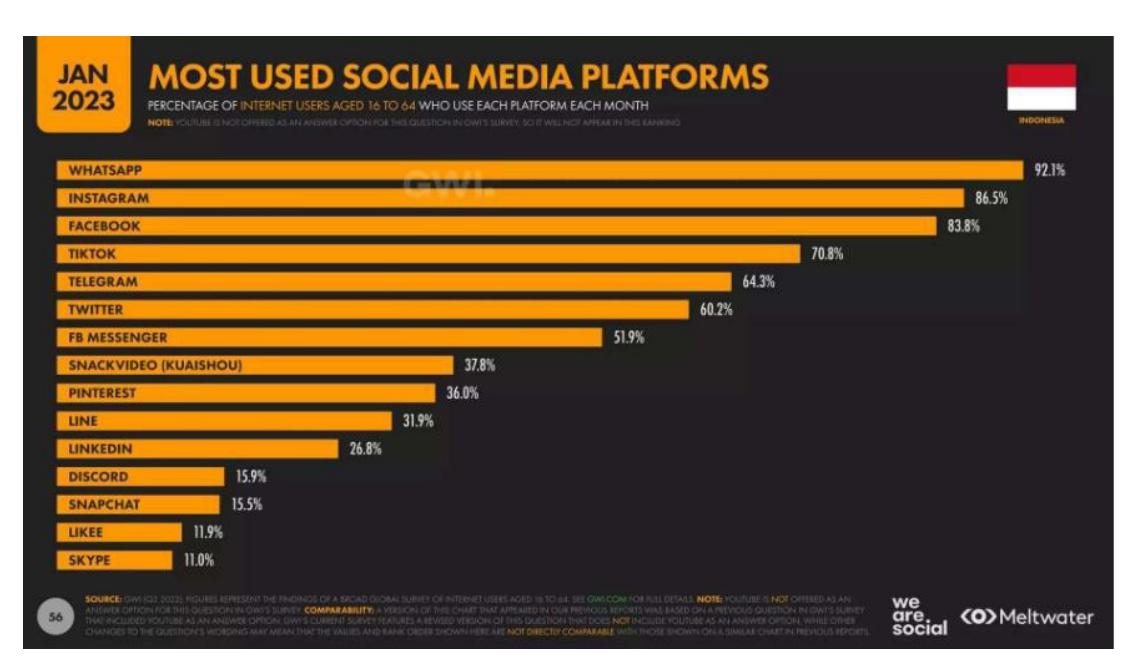
Figure 1 Most Used Social Media Platforms
Figure 1 from Hootsuite's "We Are Social" illustrates this. The Indonesian Digital Report 2023 shows that the proportion of people using social media across different platforms has gone up. For example, the percentage of people using Instagram increased to 86.5% from 84.8% the year before, while the percentage of people using Facebook increased to 83.8% from 81.3% the year before. Furthermore, the percentage of people using Twitter increased to 60.2% from 58.3% the year before (Riyanto, 2023). This suggests that social media usage has been steadily rising over time and is still a vital component of digital life in Indonesian society. The notable upsurge in social media activity has resulted in a content explosion, which has affected the number of comments on these platforms (Nabiilah et al., 2022).
Information, communications, and technology (ICT) compel governments to provide effective frameworks for carrying out public policy, given the rising trend in social media usage and its impact on digital communication. In Indonesia, people view ICT as a crucial tool for public service delivery, as it enables swift delivery of a wide range of services (Hutahaean et al., 2023). E-government is one of the ICT products that the government uses to give the public suitable services (Li & Shang, 2020). Improving information management systems, expanding public services, and encouraging the public sector to utilize information technology are the main goals of e-government implementation. Its main goals are to increase institutional coordination and provide public information and services (Hutahaean et al., 2023). Social media platforms offer a more virtual and participatory atmosphere than official government websites (DePaula & Dincelli, 2018). Establishing a two-way communication channel makes it easier for the public and the government to connect on social media, resulting in a more efficient and transparent interchange of information. Additionally, it might cause different reactions from online users (Bartels & Turnbull, 2020; Hung et al., 2020). An investigation is required to uncover the potential deeper repercussions of these policies and to obtain a more thorough grasp of how the public observes and interprets them to comprehend the community's reactions. As a result, the government can use this type of analysis as a foundation for improving or modifying policies to better meet the demands and goals of the general population.
The analysis is carried out by gathering information from public responses to questions about policies or material made available under specific circumstances. According to earlier studies, the public uses government social media more frequently when it perceives the material as reliable and beneficial (Yuan et al., 2023). There was a slight difference between good opinion (20.27%) and negative sentiment (19.44%) on Twitter concerning government policies regarding the relocation of the capital, according to another survey (Satrya et al., 2022).
Therefore, the goal of this study is to use social media platforms like Facebook, Twitter, and Instagram to gather public opinion about policies that the government is proposing to implement. The replies are divided into three categories: those that indicate support, those that indicate dissatisfaction, and those that are neutral and reflect opinions that are neither strongly in favor nor against the idea. An analysis of these diverse responses is expected to provide a more comprehensive image of public attitudes and reactions to government policy that is communicated through social media.
Method
The initial step of this research's sentiment analysis process entails gathering information from social media sites like Facebook, Instagram, and Twitter based on preset standards. Following the collection of all the data, sentiment analysis is the next step, which comprises labeling and evaluating each data point. Next comes the categorization and assessment procedure. This evaluation step will produce a presentation detailing netizens' satisfaction with government policies. Figure 2 below illustrates the steps we took.
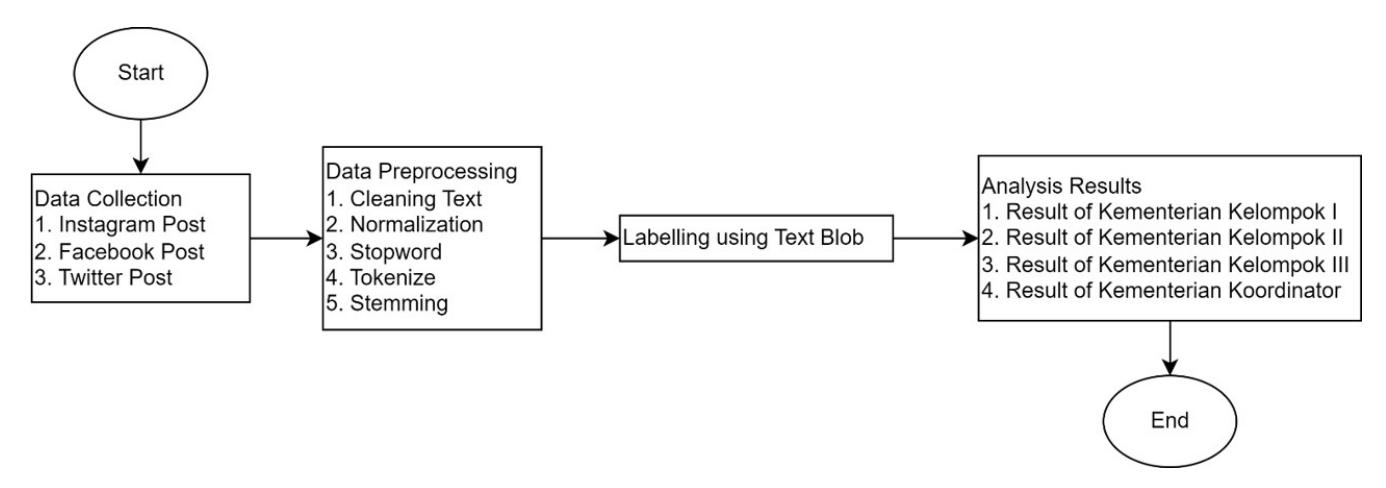
Figure 2 Research Method
Data Collection
Based on their current level of popularity, Instagram, Facebook, and Twitter were selected as the social media platforms for the data collection approach. The procedure for gathering data was carried out manually. We examined the posts and comments on the Ministry of the Republic of Indonesia's social media accounts between 2022 and 2023 to understand the public's perception of these accounts. We chose 100 comments from the most well-liked posts on each platform by counting the total number of likes and comments using the Purposive Sampling approach.
Data Preprocessing
In text analysis, data preprocessing is a crucial phase that involves several critical actions to ensure data uniformity and cleanliness. The first step in this procedure involves data cleaning, a process that eliminates unnecessary characters such as URLs, mentions, hashtags, symbols, emoticons, ornate dingbats, transport and map symbols, and unreadable text. These characters can lower the dataset's quality and accuracy, and grammatically incorrect sentences can make data processing more difficult (Erfina & Alamsyah, 2023). The next step involves normalization, which transforms abbreviations into forms that are more uniform and standardized. Slang words, the KBBI dictionary, and the informal Indonesian vocabulary are used to accomplish this. The next step involves eliminating stop words, commonly used terms that contribute minimally to the analysis. Tokenization is then used to divide the words in the text into distinct tokens. The following step involves reducing word variety by converting words into their base form, a process known as lemmatization or stemming. Researchers have recognized the importance of stemming and eliminating stop words in raising the caliber of sentiment analysis; they also stress the significance of these actions in increasing the effectiveness of overall sentiment analysis (Jefriyanto et al., 2023).
Labeling
Following preprocessing, the data is evaluated to determine the sentiment of the text. To do this, the TextBlob lexicon approach is used to extract the text's positive, negative, or neutral sentiment. Words with associated subjectivity, polarity, and intensity values are listed in the TextBlob lexicon; the polarity score goes from -1 (negative) to +1 (positive) (Qi & Shabrina, 2023). The purpose of sentiment analysis is to comprehend public opinions and responses to governmental initiatives.
Analysis
Presidential Regulation Number 68 of 2019 is the basis for our analysis, which focuses on four categories of ministries. Ministries belonging to Group I are those whose titles still follow the 1945 Constitution. Group II includes ministries with purviews specified in the 1945 Constitution, yet they retain the freedom to rename themselves. The ministries in Group III are responsible for streamlining, organizing, and harmonizing government initiatives. The coordinating ministries, which comprise the fourth group, oversee the coordination of ministry affairs within their respective specialized sectors. Based on the ideas of popular sovereignty and democracy, all these organizations' function (Presiden Republik Indonesia, 2019).
Results and Discussions
A total of 34 social media accounts from different ministries on Facebook, Instagram, and Twitter have been successfully gathered, as it is shown in Table I below. How many internet users follow a ministry's social media accounts can be inferred from the number of followers that each account has. However, the number of posts that are known to exist provides a window into how active these social media accounts are in sharing content with their followers.
Table I Post and Follower Data
| Lembaga/Kementerian | Twitter (X) | ||||||
|---|---|---|---|---|---|---|---|
| No | Posting | Followers | Posting | Followers | Posting | Followers | |
| 1 | Kementerian Sekretariat Negara | - | 265k | 6425 | 638rb | - | 699,6k |
| 2 | Kementerian Dalam Negeri | - | 54k | 1765 | 403rb | - | 175,1k |
| 3 | Kementerian Luar Negeri | - | 113k | 1412 | 327rb | - | 238,1 |
| 4 | Kementerian Pertahanan | - | 215k | 3129 | 373rb | - | 374,5k |
| 5 | Kementerian Hukum dan HAM | - | 91k | 1709 | 540rb | - | 339,5k |
| 6 | Kementerian Keuangan | - | 214k | 2520 | 574rb | - | 806,7k |
| 7 | Kementerian Energi dan SDM | - | 177k | 3196 | 467rb | - | 309,9k |
| 8 | Kementerian Perindustrian | - | 136k | 3059 | 432rb | - | 293,6k |
| 9 | Kementerian Perdagangan | - | 33k | 3080 | 334rb | - | 436,4k |
| 10 | Kementerian Pertanian | - | 222k | 4600 | 520rb | - | 871k |
| 11 | Kementerian Lingkungan Hidup dan Kehutanan | - | 141k | 4837 | 395rb | - | 5,7k |
| 12 | Kementerian Perhubungan | - | 170k | 3869 | 670rb | - | 480,3k |
| 13 | Kementerian Kelautan dan Perikanan | - | 142k | 3458 | 227rb | - | 453,7k |
| 14 | Kementerian Ketenagakerjaan | - | 199k | 9737 | 2jt | - | 429k |
| 15 | Kementerian Pekerjaan Umum dan Perumahan Rakyat | - | 591k | 7174 | 987rb | - | 766,6k |
| 16 | Kementerian Kesehatan | - | 5,2jt | 2735 | 2,6jt | - | 747,9k |
| 17 | Kementerian Sosial | - | 172k | 2149 | 637rb | - | 408,1k |
| 18 | Kementerian Agama | - | 694k | 3079 | 1jt | - | 897,1k |
| 19 | Kementerian Kebudayaan dan Pendidikan Dasar dan Menengah RISTEK | - | 2jt | 7492 | 2,5jt | - | 1,9jt |
| 20 | Kementerian Desa, Pembangunan Daerah Tertinggal dan Transmigrasi | - | 204k | 3614 | 359rb | - | 935,8k |
| 21 | Kementerian Pariwisata | - | 224k | 18427 | 1jt | - | 263,8k |
| 22 | Kementerian Komunikasi dan Informatika | - | 339k | 3551 | 1,9jt | - | 1,3jt |
| 23 | Kementerian Koperasi dan Usaha Kecil dan Menengah | - | 8,4k | 6020 | 574rb | - | 185k |
| 24 | Kementerian Pemberdayaan Perempuan dan Perlindungan Anak | - | 73k | 2012 | 164rb | - | 183,3k |
| 25 | Kementerian Pendayagunaan Aparatur Negara dan Reformasi Birokrasi | - | 2,7k | 3177 | 961rb | - | 600,1k |
| 26 | Kementerian Perencanaan Pembangunan Nasional | - | 42k | 1868 | 246rb | - | 290,5k |
| 27 | Kementerian Agraria dan Tata Ruang | - | 35k | 5913 | 452rb | - | - |
| 28 | Kementerian Badan Usaha Milik Negara | - | 85k | 7972 | 2jt | - | 765,6k |
|---|---|---|---|---|---|---|---|
| 29 | Kementerian Pemuda dan Olahraga | - | 119k | 7938 | 639rb | - | 448,3k |
| 30 | Kementerian Koordinator Bidang Politik, Hukum, dan Keamanan | - | 34rb | 1361 | 247rb | - | 484.5K |
| 31 | Kementerian Koordinator Bidang Perekonomian | - | 27rb | 2,759 | 294rb | - | 406.2K |
| 32 | Kementerian Koordinator Bidang Pembangunan Manusia dan Kebudayaan | - | 26rb | 3,941 | 249rb | 251.2k | |
| 33 | Kementerian Koordinator Bidang Kemaritiman dan Investasi | - | 11rb | 5,013 | 285K | - | 285K |
| 34 | Kementerian Investasi Badan Koordinasi Penanaman Modal | - | 29rb | 2,851 | 133K | - | 136.6K |
Source: Processed with Purposive Sampling (2024)
We acquired information comprising 3,400 comments from 34 ministries using the purposive sample technique. We gathered comments from 2022 to 2023 from accounts on Facebook, Instagram, and Twitter. Every comment has a label that lists the name of the relevant ministry and its group cluster (Group 1, Group 2, Group 3, or Coordinator), as shown in Table II below. This sampling technique allows for the precise and focused collection of comments from ministries, resulting in a representative dataset that reflects a wide range of viewpoints and emotions from various government sectors.
Table II Sample Data Collection Results
| Text | Ministry | Cluster |
|---|---|---|
| System eror🤣🤣ðŸÂ ¤Ã'£ | Kementerian Dalam Negeri | Ministry Group I |
| inflasi harus ditekan bukan malah sibuk fee proyek | Kementerian Dalam Negeri | Ministry Group I |
| Pakkkk harga jagungggg stabil kann lahhhhSakit pakkkkk | Kementerian Dalam Negeri | Ministry Group I |
| Pelapor Kasus Korupsi Damkar Harusnya Dianugerahi Penghargaan, Bukan Ancaman Pembunuhan Yang Didapatkan | RADAR NUSANTARA NEWS https://www. radarnusantara.com//pelapor-kasus-korupsi | Kementerian Dalam Negeri | Ministry Group I |
| Apa benar Pak Tito surat ini ada di tujukan ke Mendagri oleh PJ Yetty simbiring? | Kementerian Dalam Negeri | Ministry Group I |
Source: Grouped based on Presidential Decree of the Republic of Indonesia No. 85 of 2019 concerning the Organization of State Ministries (2024)
All the data has been collected and stored in a CSV file for sentiment analysis. The CSV format facilitates easy access to the data, and analytical tools can analyze its sentiment.
Data Preprocessing Results
It starts with the categorization of comments into three main categories: negative, neutral, and positive. After that, each comment is evaluated to categorize its sentiment based on the main meaning of its message. Comments can be considered negative if they express dissatisfaction, doubt, or criticism of the ministry's performance; neutral if they are news or factual statements without expressing clear sentiments;
and positive if they show support, satisfaction, or hope towards the election or candidates. The following Table III illustrates examples of sentiments from the three categories:
Table III Comment Label Category
| Category | Comment |
|---|---|
| Negative | @haidianamru Pak gimana? Sampai kapan nih sim card saya ga kepakai? Beli legal ngikutin peraturan, eh yang beri peraturan data base dan pelayanannya ga kompeten. Ga ada pengumuman apa apa lagi. Ckckckck @agusgumiwangk @kemenperin_ri @iboxindonesia @apple |
| Neutral | Sbg rakyat kecil saya mah yg penting harga migor turun. Dah gitu aja. Males mikir yg ruwet apalagi politik2an. |
| Positive | nice info ni, salut deh sama pencapain kerja nyata kementrian kelautan dan perikanan supaya bisa bermanfaat khususnya untuk nelayan kecil dan bisa berikan perubahan yang lebih baik #PNBPpascaproduksi #SaktiWahyuTrenggono |
Source: Processed with Google Colaboratory (2024)
A cleaning procedure was performed on the raw data to eliminate words that weren't needed. Certain data entries that contained emoticons, which have since been eliminated, became NaN. 'Neutral' has been added to NaN entries in order to fix this. Additionally, slang words, the KBBI dictionary, and colloquial Indonesian vocabulary have been added to the data. After that, the data was cleaned to remove any unnecessary text and its prefixes. The dataset has then been translated into English in its entirety. Table IV below shows the outcome of this process in its final form.
Table IV Sample Data Preprocessing Results
| cleaning_text | preprocessing _text | ||
|---|---|---|---|
| sistem eror | error system | ||
| inflasi harus ditekan bukan malah sibuk fee proyek | inflation needs to be minimized instead of focusing on project fees | ||
| pakkkk harga jagungggg stabil kann lahhhh sakit pakkkkk | pakkkk the price of the corns is stable right … pakkkkk | ||
| pelapor kasus korupsi damkar harusnya dianugerahi penghargaan bukan ancaman pembunuhan yang didapatkan radar nusantara news | Whistle blower of the fire truck corruption case must be awarded instead of threat killing radar nusantara news has been receiving | ||
| apa benar pak tito surat ini ada di tujukan ke mendagri oleh pj yetty simbiring | Is it true Mr. Tito that there is a letter sent to the minister of home affairs by Yetty Simbiring? | ||
Source: Processed with Google Colaboratory (2024)
Labelling Results
The study's findings indicate that utilizing TextBlob for sentiment analysis is a useful strategy for deciphering comments or viewpoints discovered in the data. This study can produce a thorough grasp of the subjectivity and polarity of the examined text by utilizing TextBlob. The outcomes of this sentiment labeling procedure are shown in Table V.
Table V Sample Labelling Results
| preprocessing _text | label | polarity | subjectivity |
|---|---|---|---|
| error system | Neutral | 0 | 0 |
| inflation press not even busy project fees | Positive | 0.1 | 0.3 |
| pakkkk the price the universe stable right | Positive | 0.285714286 | 0.535714286 |
|---|---|---|---|
| report the damkar corruption case must award prices do not threat killing can radar nusantara news | Neutral | 0 | 0 |
| true that tito there head the minister home affairs yetty simbiring | Positive | 0.35 | 0.65 |
Source: Processed with Google Colaboratory (2024)
The TextBlob technique produces two traits: polarity and subjectivity are the two traits that arise from using the TextBlob technique. The polarity of the statement indicates its emotional orientation. The polarity value is a number between -1 and +1 that represents negative and positive attitudes, respectively. Subjectivity, on the other hand, measures how subjective a statement is by considering the speaker's thoughts, feelings, and beliefs. The subjectivity value is a number between 0 and 1, with 0 denoting objectivity and factual basis and 1 denoting high subjectivity (Abayomi-Alli et al., 2022; Abiola et al., 2023).
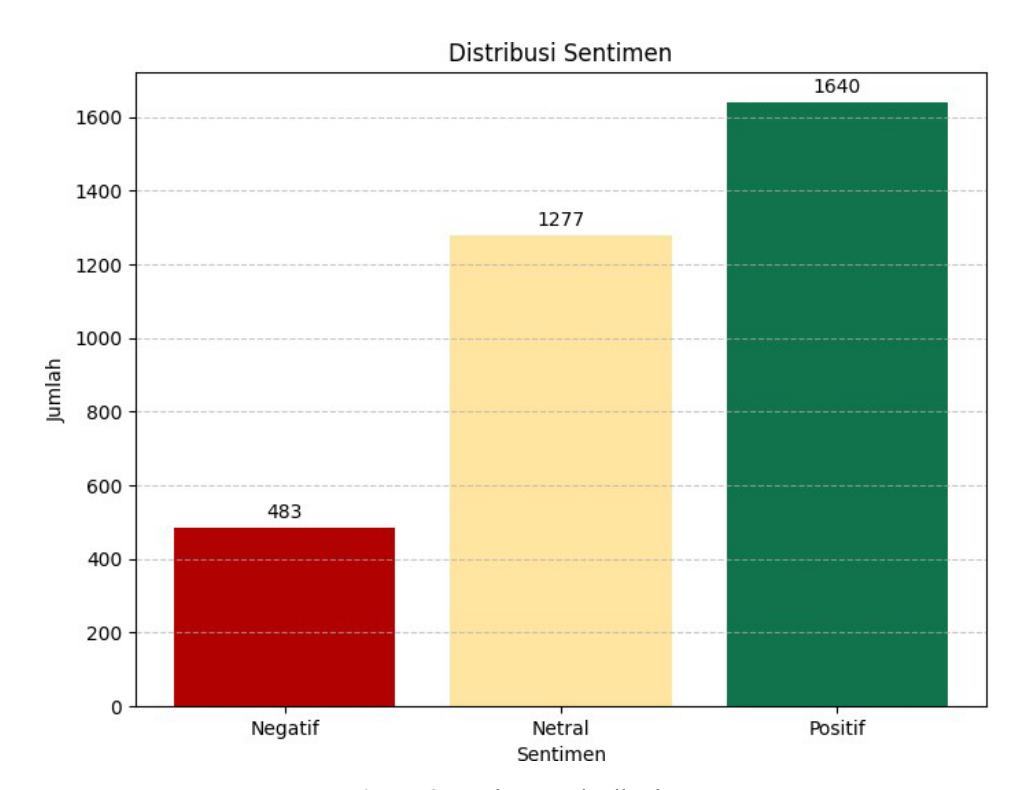
Figure 3 Sentiment Distribution
Figure 3 serves as an example of this. A total of 1,277 comments were categorized as neutral, 483 as having a negative attitude, and 1,640 as favourable.
Analysis Results
The sentiment expressed in comments varies significantly throughout ministries in Cluster I. As seen in Figure 4 below, the Ministry of Foreign Affairs often has a majority of neutral feelings (59%), whereas the Ministry of Defense tends to have a majority of positive emotions (64%). In contrast to the other ministries in this group, the Ministry of Home Affairs displays a higher level of unfavorable sentiment (15%).
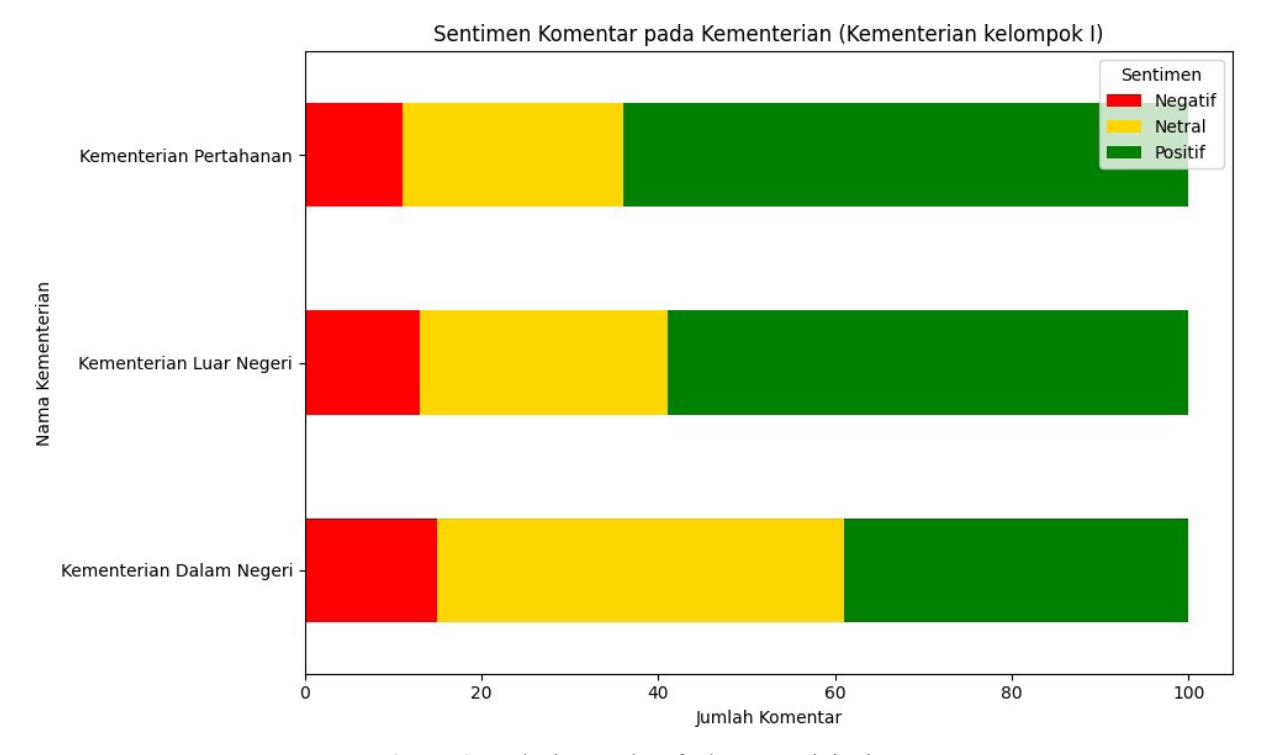
Figure 4 Analysis Results of Cluster I Ministries
Ministries in Cluster II follow a different pattern than those in the preceding cluster. The bulk of ministries in this cluster have a more even mix of negative, neutral, and positive feelings, as seen in Figure 5 below. The Ministry of Environment and Forestry has a higher percentage of negative attitude, 23%, compared to the Ministry of Villages, Disadvantaged Regions Development, and Transmigration, which stands out with a majority of good feeling, 63%.
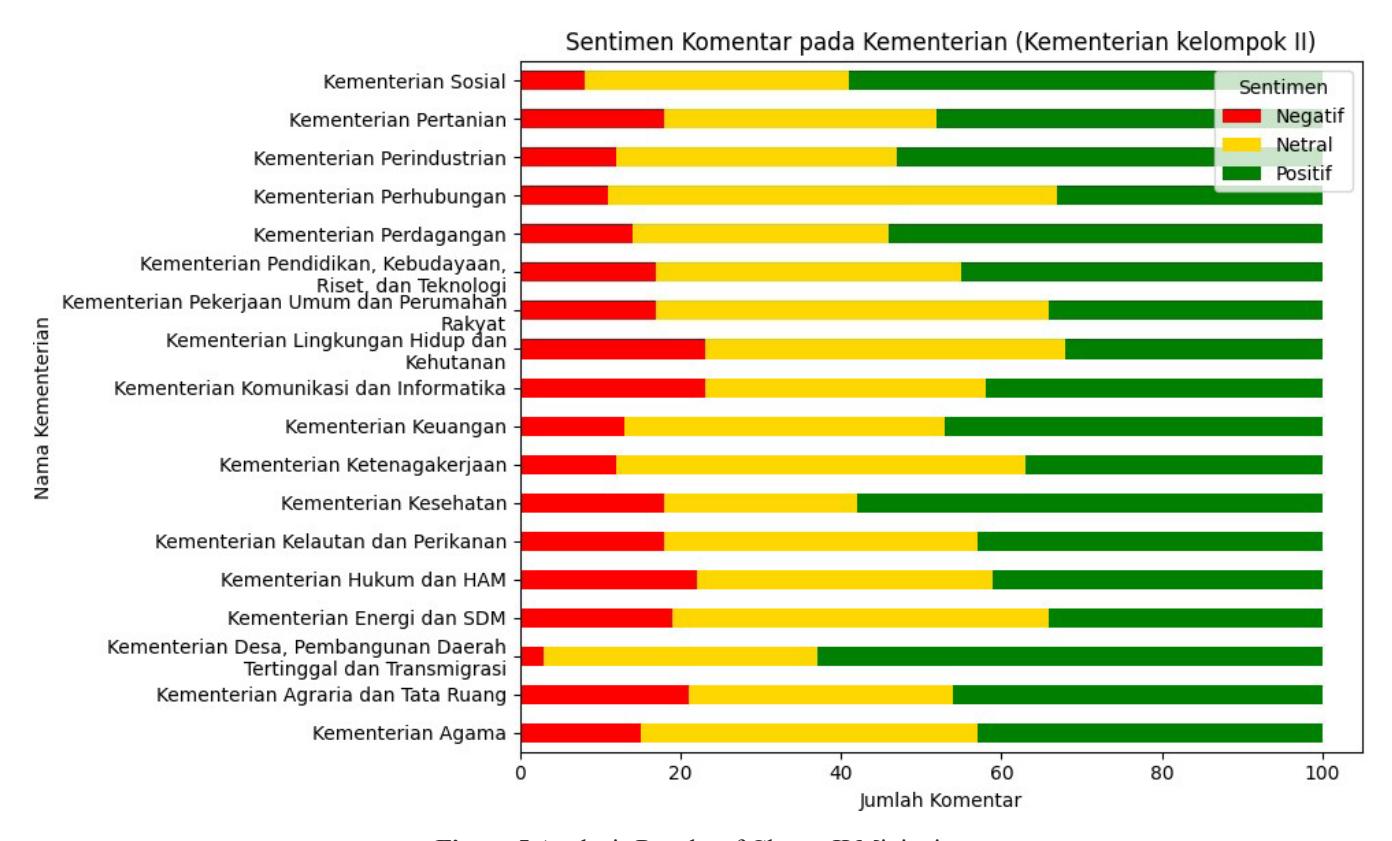
Figure 5 Analysis Results of Cluster II Ministries
With a few exceptions, ministries in Cluster III follow a similar pattern to those in the second cluster. The Investment Coordinating Board (BKPM) has a very high majority of good emotion (71%), as illustrated in Figure 6 below, but the Ministry of Women Empowerment and Child Protection displays a sizable amount of negative attitude (26%).
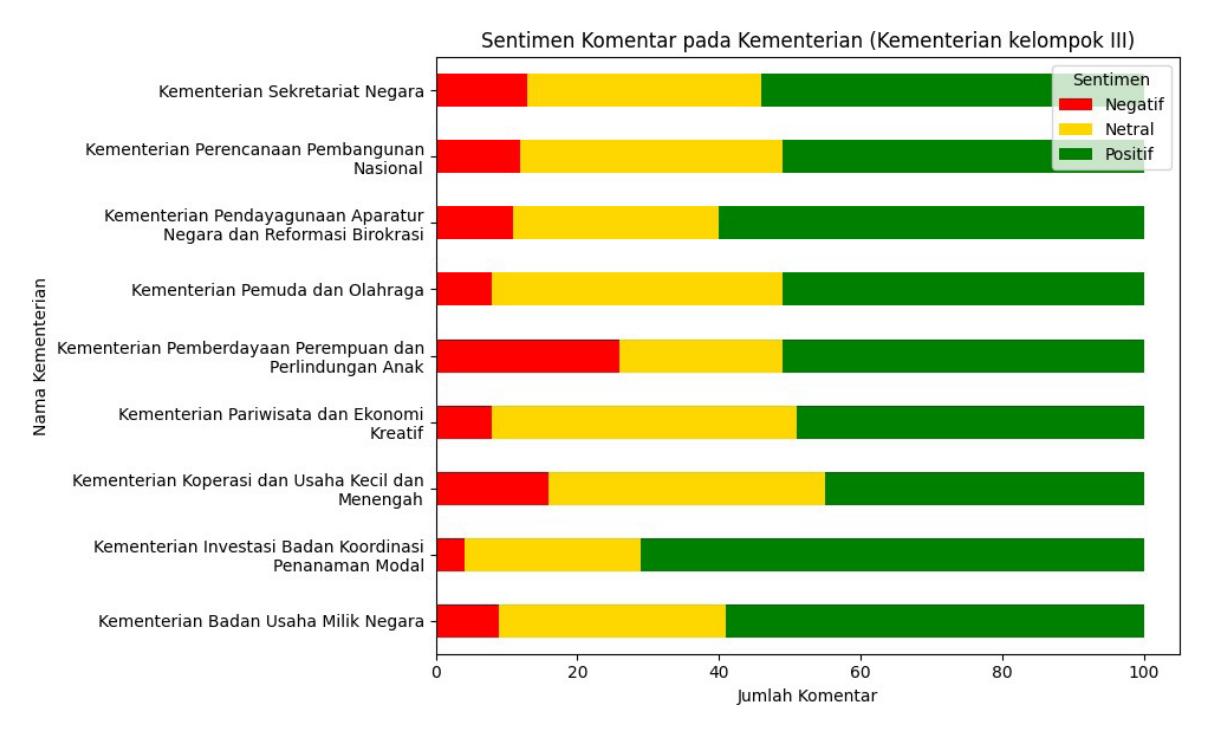
Figure 6 Analysis Results of Cluster III Ministries
The Coordinating Ministry cluster has a somewhat even range of sentiment in the comments. All of the ministries in this cluster have comparatively comparable ratios of negative, neutral, and positive sentiments, as seen in Figure 7 below. With 48% of respondents feeling positive about the Coordinating Ministry for Maritime Affairs and Investment and 46% feeling neutral about the Coordinating Ministry for Economic Affairs, the former stands out from the latter.
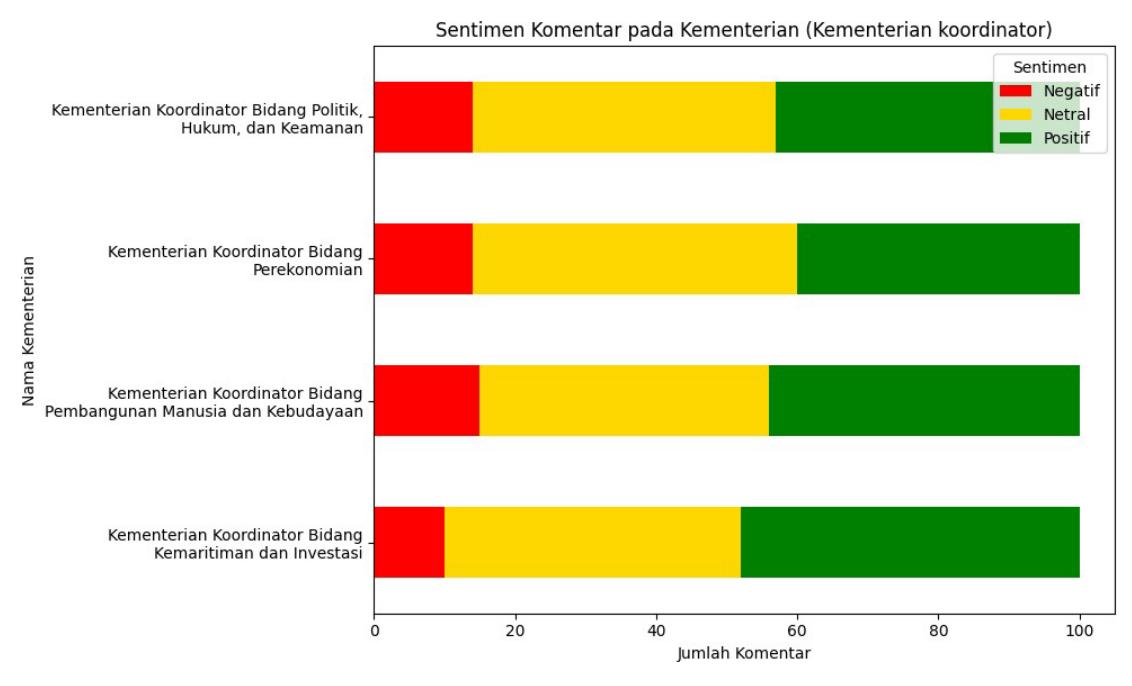
Figure 7 Analysis Results of Coordinator Ministries
The analytical results indicate that, within each cluster, the Coordinating Ministry cluster has the highest percentage of negative sentiment at 15.8%, while the ministries in Cluster III have the most positive sentiment at 54.6%. Figure 8 below shows detailed presentations of each cluster.
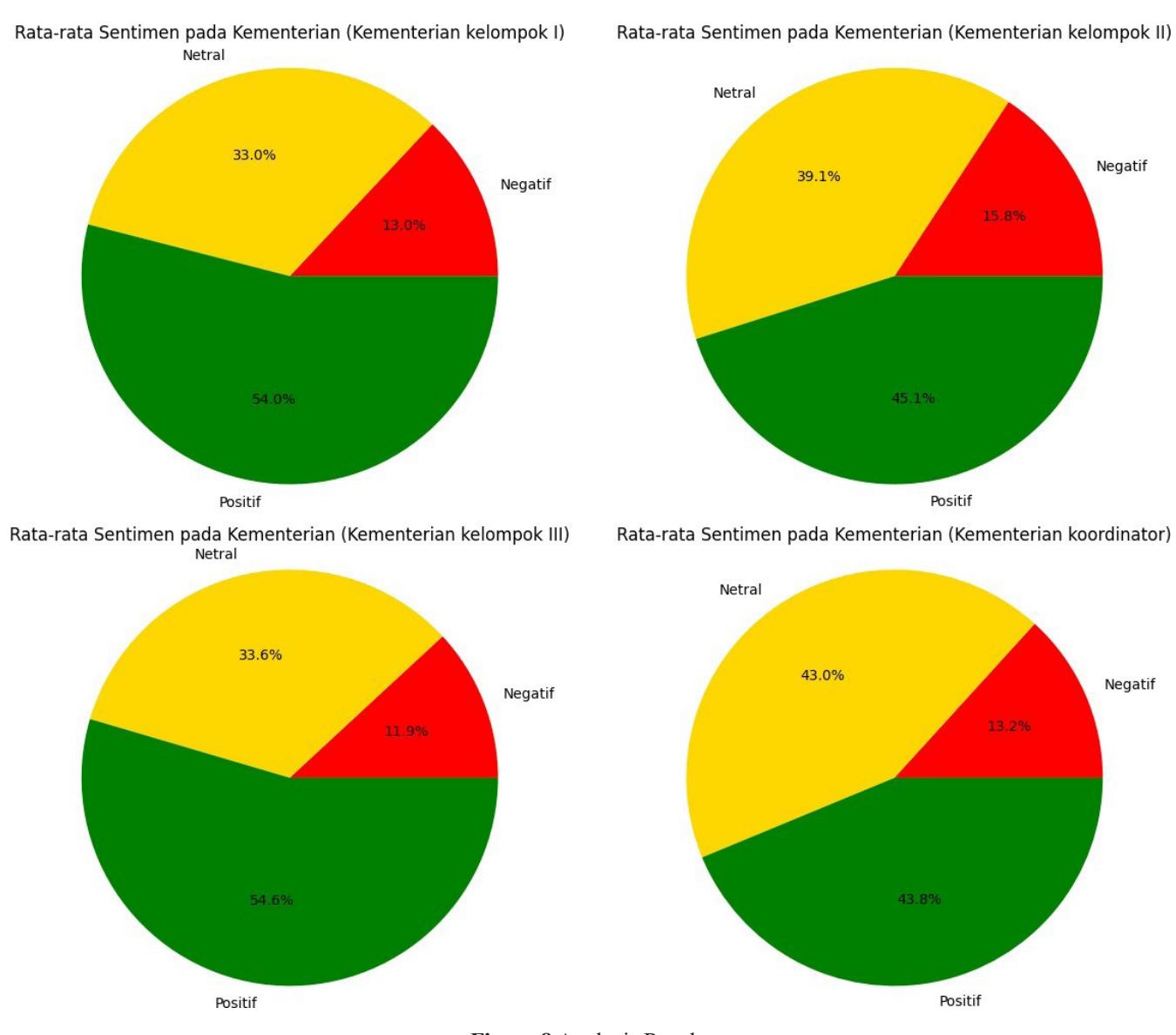
Figure 8 Analysis Results
The results shown in Figures 9 - 11 below show the analysis of commonly occurring words in the negative, neutral, and positive comments. This analysis offers a more thorough summary of the word frequency in the observed data that indicates different kinds of feelings.
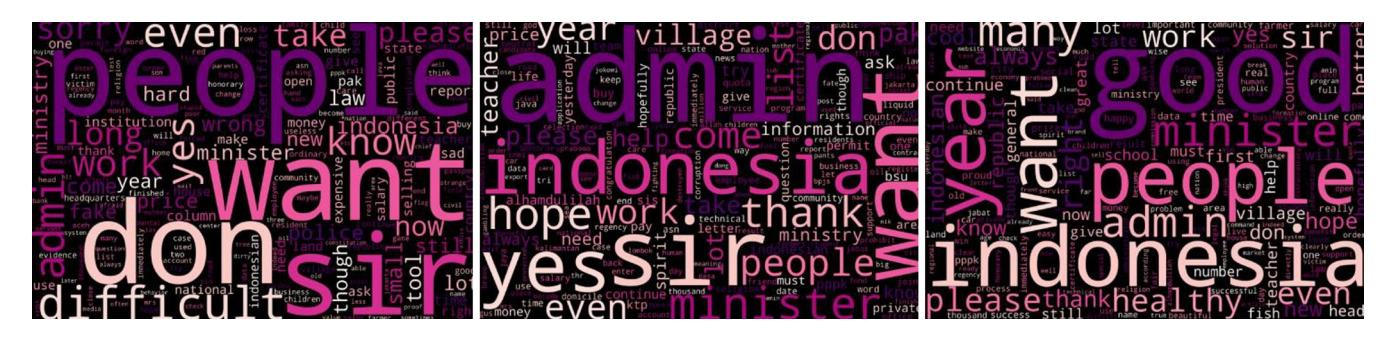
Figure 9 Negative Wordcloud Figure 10 Neutral Wordcloud Figure 11 Positive Wordcloud
This sentiment analysis provides valuable insights into how interactions with netizens on social media reflect the responsiveness and reputation of Indonesian ministries and institutions. These insights affect not only public perceptions of the government's policy but also its implementation and communication effectiveness to better serve the populace.
The results indicate that ministries that actively engage with the public on social media tend to receive more positive feedback. This suggests that transparent and responsive communication helps build public trust and improves the perception of these ministries. Ministries with higher positive sentiment are likely those that effectively communicate and address public concerns, highlighting the importance of effective communication practices in government operations.
The Indonesian Ministry of Communication and Information conducted a survey that revealed an inverse relationship between digital literacy and positive habits such as digesting online news and refraining from spreading hoaxes. The survey also revealed that those who live in urban areas and use the internet intensively tend to be more exposed to both positive and negative habits (KOMINFO & Katadata Insight Center, 2023). This underscores the need for ministries to enhance their digital literacy efforts to foster responsible online behavior and better manage public sentiment.
Supporting this, Ali et al. (2024), hypothesize that while the government provides useful digital tools, these tools are ineffective if the implementation process is complicated or if users lack the necessary skills to use them effectively. This finding significantly impacted policy development in Banda Aceh and Jambi City.
Understanding these dynamics allows the government to refine its policies and communication strategies to better meet public expectations. This research lays the groundwork for future efforts to improve government interactions with the public, ultimately leading to more effective governance and higher levels of public trust and satisfaction.
Conclusion
Based on the sentiment analysis results, it can be said that assessing netizens' reactions to the Ministry of the Republic of Indonesia's social media content offers important insights into how the public views government initiatives and policies. This discovery holds significance in comprehending the dynamics of the public-government relationship and may serve as a foundation for future policy modifications. Still, it's important to acknowledge the limitations of computerized sentiment analysis, including those observed with TextBlob. The algorithms used in TextBlob, while advantageous for their ease of use and ability to handle large volumes of text data, require further refinement to enhance their relevance and accuracy in analyzing sentiments, especially in contexts like Indonesian social media interactions. This creates new avenues for research into the ramifications of government communication via social media in a larger context and for the development of more precise and insightful sentiment analysis algorithms in the future.
References
- Abayomi-Alli, A., Abayomi-Alli, O., Misra, S., & Fernandez-Sanz, L. (2022). Study of the Yahoo-Yahoo Hash- Tag tweets using sentiment analysis and opinion mining algorithms. Information (Switzerland), 13(3). https://doi.org/10.3390/info13030152
- Abiola, O., Abayomi-Alli, A., Tale, O. A., Misra, S., & Abayomi-Alli, O. (2023). Sentiment analysis of COVID- 19 tweets from selected hashtags in Nigeria using VADER and Text Blob analyser. Journal of Electrical Systems and Information Technology, 10(1). https://doi.org/10.1186/s43067- 023-00070-9
- Ali, C., Wildhani, A. M., & Purwaningsih, T. (2024). Analyzing the factors influencing the digital transformation of public services in Banda Aceh and Jambi. Jurnal Sosioteknologi, 23(1), 1–15. https://doi.org/10.5614/sostek.itbj.2024.23.1.5
- Bartels, K., & Turnbull, N. (2020). Relational public administration: a synthesis and heuristic classification of relational approaches.Public Management Review, 22(9), 1 3 2 4 – 1 3 4 6 . https://doi.org/10.1080/14719037.2019.1632921
- DePaula, N., & Dincelli, E. (2018). Information strategies and affective reactions: How citizens interact with government social media content. First Monday, 23(4). https://doi.org/10.5210/fm.v23i4.8414
- Erfina, A., & Alamsyah, M. R. N. R. (2023). Implementation of Naive Bayes classification algorithm for Twitter user sentiment analysis on ChatGPT using Python programming language. Data and Metadata, 2, 2–11. https://doi.org/10.56294/dm202345
- Hung, S. Y., Chen, K., & Su, Y. K. (2020). The effect of communication and social motives on E-government services through social media groups. Behaviour and Information Technology, 39(7), 741–757. https://doi.org/10.1080/0144929X.2019.1610907
- Hutahaean, M., Eunike, I. J., & Silalahi, A. D. K. (2023). Do social media, good governance, and public trust increase citizens' e-government participation? Dual approach of PLS-SEM and fsQCA. Human Behavior and Emerging Technologies, 2023. https://doi.org/10.1155/2023/9988602
- Jefriyanto, J., Ainun, N., & Ardha, M. A. Al. (2023). Application of Naïve Bayes classification to analyze performance using stopwords. Journal of Information System, Technology and Engineering, 1(2), 49–53. https://doi.org/10.61487/jiste.v1i2.15
- Kemp, S. (2023). Digital 2023: Indonesia DataReportal Global Digital Insights. https://datareportal. com/reports/digital-2023-indonesia
- Kepios. (2024). Global Social Media Statistics DataReportal Global Digital Insights. DataReportal. https://datareportal.com/social-media-users
- KOMINFO & Katadata Insight Center. (2023). Status literasi digital Indonesia 2022. 80.
- Kurniawan, Y., Santoso, S. I., Wibowo, R. R., Anwar, N., Bhutkar, G., & Halim, E. (2023). Analysis of higher education students' awareness in indonesia on personal data security in social media. Sustainability (Switzerland), 15(4). https://doi.org/10.3390/su15043814
- Li, Y., & Shang, H. (2020). Service quality, perceived value, and citizens' continuous-use intention regarding e- government: Empirical evidence from China. Information and Management, 57(3), 103197. https://doi.org/10.1016/j.im.2019.103197
- Nabiilah, G. Z., Prasetyo, S. Y., Izdihar, Z. N., & Girsang, A. S. (2022). BERT base model for toxic comment analysis on Indonesian social media. Procedia Computer Science, 216(January), 714– 721. https://doi.org/10.1016/j.procs.2022.12.188
- Presiden Republik Indonesia. (2019). Perpres RI No. 68 Tahun 2019 tentang organisasi kementerian negara. 015398, 1–46.
- Qi, Y., & Shabrina, Z. (2023). Sentiment analysis using Twitter data: a comparative application of lexiconand machine-learning-based approach. Social Network Analysis and Mining, 13(1). https://doi. org/10.1007/s13278-023-01030-x
- Riyanto, A. D. (2022). Hootsuite (We are Social): Indonesian Digital Report 2022 | Dosen, Praktisi, Konsultan, Pembicara/Fasilitator Digital Marketing, Internet marketing, SEO, Technopreneur dan Bisnis Digital. Retrieved from https://andi.link/hootsuite-we-are-social-indonesian-digitalreport-2022/
- Riyanto, A. D. (2023). Hootsuite (We are Social): Indonesian Digital Report 2023 | Dosen, Praktisi, Konsultan, Pembicara/Fasilitator Digital Marketing, Internet marketing, SEO, Technopreneur dan Bisnis Digital. Retrieved from https://andi.link/hootsuite-we-are-social-indonesian-digital-report-2023/#google_vignette
- Satrya, W. F., Aprilliyani, R., & Yossy, E. H. (2022). Sentiment analysis of Indonesian police chief using multi- level ensemble model. Procedia Computer Science, 216(2022), 620–629. https://doi. org/10.1016/j.procs.2022.12.177
- Sivarajah, U., Irani, Z., Gupta, S., & Mahroof, K. (2020). Role of big data and social media analytics for business- to-business sustainability: A participatory web context. Industrial Marketing Management, 86, 163–179. https://doi.org/10.1016/j.indmarman.2019.04.005
- Yuan, Y. P., Dwivedi, Y. K., Tan, G. W. H., Cham, T. H., Ooi, K. B., Aw, E. C. X., & Currie, W. (2023). Government digital transformation: Understanding the role of government social media. Government Information Quarterly, 40(1). https://doi.org/10.1016/j.giq.2022.101775