

INFO ARTIKEL
Kata kunci:
pengaruh gaya hidup, motivasi perjalanan, platform Nusuk, komunitas Umrah Mandiri
ABSTRAK
Ibadah haji dan umrah sangat diminati oleh masyarakat Indonesia, yang mayoritas penduduknya beragama Islam. Data menunjukkan setiap tahun jumlah Jemaah haji dan umrah cendrung meningkat. Hal inilah yang melatarbelakangi menjamurnya bisnis travel haji dan umrah di Indonesia. Namun, seiring dengan perkembangan teknologi, umrah mandiri atau umroh tanpa biro perjalanan mulai diminati oleh masyarakat Indonesia. Penelitian ini dilakukan untuk menganalisis pengaruh gaya hidup dan motivasi perjalanan terhadap niat menggunakan platform Nusuk pada Komunitas Umrah Mandiri. Metode analisis yang digunakan adalah SEM (Structural Equation Modeling) dengan bantuan software LISREL. Jumlah sampel yang diteliti sebanyak 300 responden. Hasil penelitian menunjukkan gaya hidup dan motivasi perjalanan memiliki pengaruh positif dan signifikan terhadap niat menggunakan platform Nusuk. Selain alat statistik yang digunakan, kebaruan penelitian ini terdapat pada analisis niat komunitas umrah mandiri untuk menggunakan platform baru yang belum ditemukan pada penelitian-penelitian sebelumnya. Penelitian ini diharapkan dapat bermanfaat bagi pengelola platform Nusuk dalam mengembangkan program-program yang lebih menarik untuk meningkatkan niat pengguna Platform Nusuk.
https://doi.org/10.5614/sostek.itbj.2024.23.2.2
Submitted: March 28, 2024 Accepted: July 5, 2024 Published: July 31, 2024
Introduction
Indonesia is known as a country with the largest Muslim population in the world. As the country with the largest Muslim population, people who embrace Islam naturally place a high demand on worship activities such as Hajj and Umrah. Economic studies reveal that while Muslims from middle-upper economic backgrounds dominate this worship, many Muslims from low-income backgrounds also strive to finance this pilgrimage (Dewi, 2017). The Muslim Association of Hajj and Umrah Organizers, AMPHURI, has observed an annual increase in the number of Umrah pilgrims in Indonesia, indicating promising prospects for the Hajj and Umrah travel industry. This also underlies the proliferation of businesses in Hajj and Umrah.
Amid the proliferation of Hajj and Umrah travel service offerings, some people choose to perform Umrah independently instead of using Umrah travel services to find flight tickets, hotels, transportation, and so on. As technology advances, many Indonesians are beginning to consider independent Umrah. Pitaya, Masyhari, and Hanafiah's (2021) research indicates that the growing middle-class Muslim population in Indonesia will further strengthen the phenomenon of independent Umrah. The primary reason for choosing Umrah independently is its high cost, but this is not the only factor. This study also revealed that most Umrah pilgrims prioritize worship over non-urgent activities, particularly during Ramadan.
Saudi Arabia recently launched an Umrah service platform to facilitate Umrah pilgrims who perform Umrah independently. Independent Umrah pilgrims can access various services on this platform, starting with visa applications, permits, processes, and booking procedures, as well as special packages to visit historical sites in Saudi Arabia. The application boasts features in a comprehensive Indonesian language, capable of organizing pilgrims' needs on a single platform. With this one platform, pilgrims can make hotel and flight reservations and get information on how to get to Makkah and Madinah, along with accommodation information about food and drinks in those two cities. Saudi Arabia's government simplifies visitor arrivals through Nusuk and anticipates a significant increase in the number of pilgrims, particularly from Indonesia. Nusuk Managing Director Fahd Hamidaddin said that they are in a process of continuous innovation, and the launch of Nusuk in Bahasa Indonesia is evidence of agility in responding to market needs.
Several studies have been conducted previously by, among others, Almuhrzi and Alsawafi (2017), who researched the travel motivation of pilgrims to perform Umrah worship. This study demonstrates that the spiritual aspect serves as the foundation for the congregation's decision to perform Umrah. Pitaya, Makhasi, and Hanafiah's research from 2021 explores the phenomenon of independent Umrah and how lifestyle variables influence it. In their research, Atikah, Tan, Trupp, Chong, Arni, and Arumugam (2022) discuss the emergence of a new tourism segment, namely Do It Yourself (DIY) Umrah or Independent Umrah, which appeared after the Saudi Arabian government revised the visa policy. Previous studies have not compared lifestyle and travel motivation variables when using the Nusuk platform.
In the analysis, this research uses a different statistical tool from previous studies, namely structural equation modeling (SEM). We employ this tool due to its suitability for the latent variables under investigation. This tool will enhance the justifiability and conclusiveness of the results. To the best of the researcher's knowledge, no previous research in this context has used the same tool to analyze the intention of the independent Umrah community to use the new platform, which makes this research unique. Moreover, Fahd Hamidaddin, the managing director of Nusuk, stated that they are in the process of developing platform innovation. We anticipate that the outcome of this research will serve as a valuable resource for platform developers, enabling them to enhance the platform's functionality.
Literature Review
According to Kotler & Keller (2016), lifestyle is a person's life pattern shown through activities, interests, and opinions. A person's lifestyle embodies their self-concept, shaped by individual characteristics from birth and ongoing social interactions throughout their life cycle. Every individual's lifestyle is distinct and unique. Traditions, surrounding culture, and other characteristics often shape unique lifestyles (Huang & Hsu, 2016). According to Charastrakool (2020), lifestyle is considered a psychological variable that can influence individuals' choices. Generally, individuals use lifestyle as a basic motivation and guideline in making decisions based on the lifestyle they follow (Zukhrufani & Zakiy, 2019).
The current era's technological advancements and diverse lifestyles impact numerous millennial activities. Sometimes what they do becomes a benchmark for society when assessing the younger generation (Chivandi, Samuel, & Muchie, 2020). We can conclude that a lifestyle is a pattern of life where the need for self-expression intersects with the expectations of a particular group, manifested in activities and opinions. This leads to the frequent use of a group's lifestyle as its identity. The lifestyle of each group will have its characteristics. Lifestyle provides an overview of people's desires for traveling. Groups whose lifestyle prioritizes self-image and prestigious items will allocate their finances towards expensive vacations. They don't mind squandering a significant amount of money on luxuries to gain recognition from their peers. On the other hand, individuals who lead a simple lifestyle find no issue with budget-friendly vacation expenses, provided they fulfill their intended purpose.
Travel Motivation
Travel motivation is one of the things that drives individuals to travel. Generally, people tend to travel when they want to take a break from their daily activities or need to refresh their body and soul. Based on these reasons, people choose to travel either as a moment to refresh or to explore new places they have never visited. (Ramadania, Al-Fatih, Darma, & Fauziah, 2021). Michael, Wien, & Reisinger (2017), in their research, explain the theory of push and pull motivation. Internal and external forces cause tourists to travel, according to this push-pull theory. Most of the push factors are origin-oriented and represent travelers' desires, such as the desire for freedom, interpersonal relationships, and family ties (Sung, Chang, & Sung, 2015). Conversely, the pull factors pertain to the tourist destination and signify the desire of individuals to visit it. Examples of pull factors include climate, natural environment, exotic architecture, beach activities (Abodeeb, Wilson, & Moyle, 2015), fun and entertainment, and outdoor activities (Sirisack, Xayavong, Phongsavath, & Vongsana, 2014).
Previous studies identified various motivations for travelers undertaking religious tourism and Umrah. Battour, Ismail, Battor, & Awais (2017) contend that a religious lifestyle drives the search for information about Islamic destinations. Wu & Mursid (2020) conducted a study on Muslims in Indonesia, which revealed that factors such as quality, price, emotions, social connections, and both physical and non-physical Islamic attributes influenced their decision to participate in Umrah. According to Atikah, Tan, Trupp, Chong, Arni, & Arumugam (2022), flexibility, travel budget, and spirituality are travel motivations for performing Umrah independently.
Intention
Tjini and Badriwan (2016), state that intention is one of the psychological aspects of humans that encourages them to achieve certain goals. According to Kotler (2016), intention emerges when a product or service stimulates an interest in trying it. Muhubbin Syah defines intention as a tendency and enormous passion for something. According to Ramadhan, Prasetyo, and Irviana (2016), intention relates to aspects of personality that describe the desire and encouragement to choose an object. According to several definitions, experts define intention as a tendency to attract or encourage an individual to pay attention to goods, services, or activities in specific fields.
Independent Umrah Community
Independent Umrah is Umrah in which the management process is carried out independently without the help of services from a travel agency. You can use the term "independent Umrah" in various ways. Some call it backpacker Umrah because the price is relatively lower than regular Umrah, or DIY Umrah. Prospective pilgrims plan their own Umrah trip without professional help, hence the term DIY Umrah. DIY projects generally require a lot of innovation, knowledge, and skills. With the help of increasingly advanced technology, prospective pilgrims can fulfill their needs related to culture and place online through the internet and social media. The DIY Umrah concept emphasizes the time and effort required to plan and organize the trip.
Self-directed Umrah pilgrims determine their trip from a highly individualized perspective. Umrah pilgrims design and organize the trip based on their expectations and experiences (Niezgoda, 2013). In its execution, Independent Umrah possesses exceptional features, such as the absence of a travel bureau's itinerary, the absence of time constraints, the opportunity to explore destinations rarely explored by travel agencies, the overall cost savings, the liberty to choose one's accommodation, the absence of schedule constraints, and a more solemn approach to prayer (Hidayat, 2019).
Nusuk Platform
Saudi Arabia launched the Nusuk platform, the first official digital platform, to facilitate travel to Makkah, Madinah, and other parts of Saudi Arabia. The Nusuk platform provides an opportunity for Muslims to plan, book, and live the Umrah experience. Nusuk facilitates arrival procedures for prospective Umrah pilgrims, including visas, licensing processes, and flight and hotel bookings. The Nusuk platform contains interactive maps that pilgrims can use to find accommodation in Makkah and Madinah, food and beverages, and information about Umrah and pilgrimage.
Dr. Tawfiq Al-Rabiah, the Minister of Hajj and Umrah of Saudi Arabia, led a roadshow event to conduct the inaugural launch of Nusuk in Indonesia. Saudi Arabia's government launched the Nusuk Platform in Bahasa Indonesia to welcome more Umrah pilgrims from Indonesia.
Research Method
The approach applied to this research was descriptive-quantitative. The quantitative descriptive approach consists of proving the hypothesis that has been determined by processing and analyzing data in the form of numbers or statistics obtained from measuring the results of respondent surveys. This research was associative because it analyzed the effect of a variable on another variable. The sampling technique used in this research was non-probability sampling with purposive sampling. The data analysis method used in this research was structural equation modeling (SEM). SEM is a statistical technique that can analyze the pattern of relationships between latent variables and their indicators, latent variables with one another, and measurement errors directly (Sujarweni, 2021). This method can confirm the theory of several variables in the form of direct and indirect relationships.
Results and Discussion
One of the data requirements that must be met when using the SEM method is normality. Data can be said to be normal if it is normally distributed. If the significance value is > 0.05, then the data is normally distributed.
Normality Test
The normality test was carried out using IBM SPSS, which uses the asymptomatic approach by default.
| Unstandardiz ed Residual | |||
|---|---|---|---|
| N | 300 | ||
| Normal Paramet | ersa,b | Mean | .0000000 |
| Std. Deviation | 3.44736121 | ||
| Most Extreme Dif | ferences | Absolute | .032 |
| Positive | .028 | ||
| 032 | |||
| Test Statistic | .032 | ||
| Asymp. Sig. (2-tailed) | .200°.d | ||
Figure 1 Normality Test Results Source: IBM SPSS
The normality test results above show the significance of Asymp.Sig (2-tailed) is 0.2 > 0.05, so it can be concluded that the data is normally distributed.
Model Specifications
Model specifications are based on the existing theoretical basis and previous research.
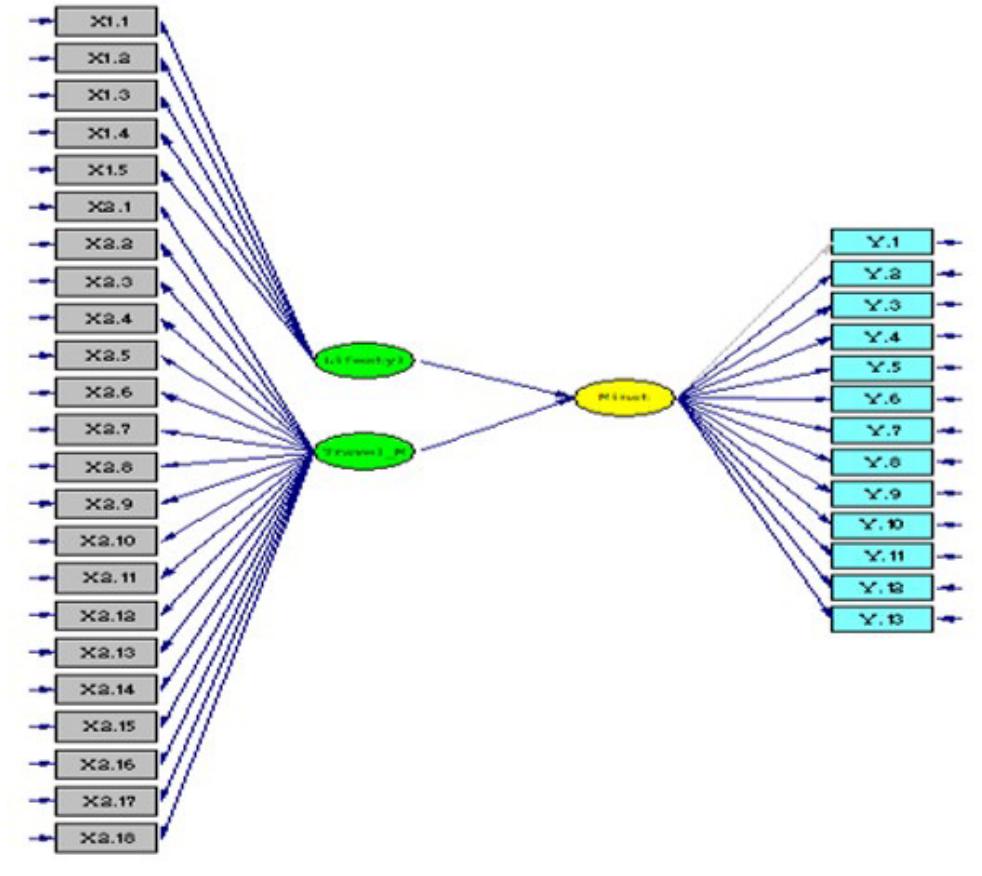
Figure 2 Full Hybrid Model Source: Output of LISREL
Model Identification
There are three types of identification: under-identified, just identified, and over-identified. A simple step that can be taken to determine the identification model is calculating the degree of freedom (df). The degree of freedom must be positive, or df >0 to proceed to the model estimation stage.
\[df = p((p+1)/2) - t\]
Description:
p = number of observed variables
t = the number of model parameters to be estimated.
The following is the calculation of degree of freedom (df)
Degree of freedom must be positive or df >0 in order to proceed to the model estimation stage.
\[df = p\left(\frac{p+1}{2}\right) - t\]
Description:
p = number of observed variables
t = the number of model parameters to be estimated.
The following is the calculation of degree of freedom (df) involving 36 variables and 74 model parameters to be estimated.
\[df = 36\left(\frac{36+1}{2}\right) - 74\] \[df = 666 - 74\] \[df = 592\]
Estimation Model
The default estimation method in LISREL is MLE. Generally, the Maximum Likelihood Estimator (MLE) is the most widely used estimator in SEM. The use of the MLE estimator is only recommended for normally distributed data. In this study, the normality test was carried out using the asymptotic Kolmogorof-Smirnov method and obtained normally distributed data results.
Confirmatory Factor Analysis (CFA)
The CFA process is a process of evaluating the causal relationship between indicators and latent variables expressed by validity testing and reliability testing. The following is the CFA output generated from LISREL.
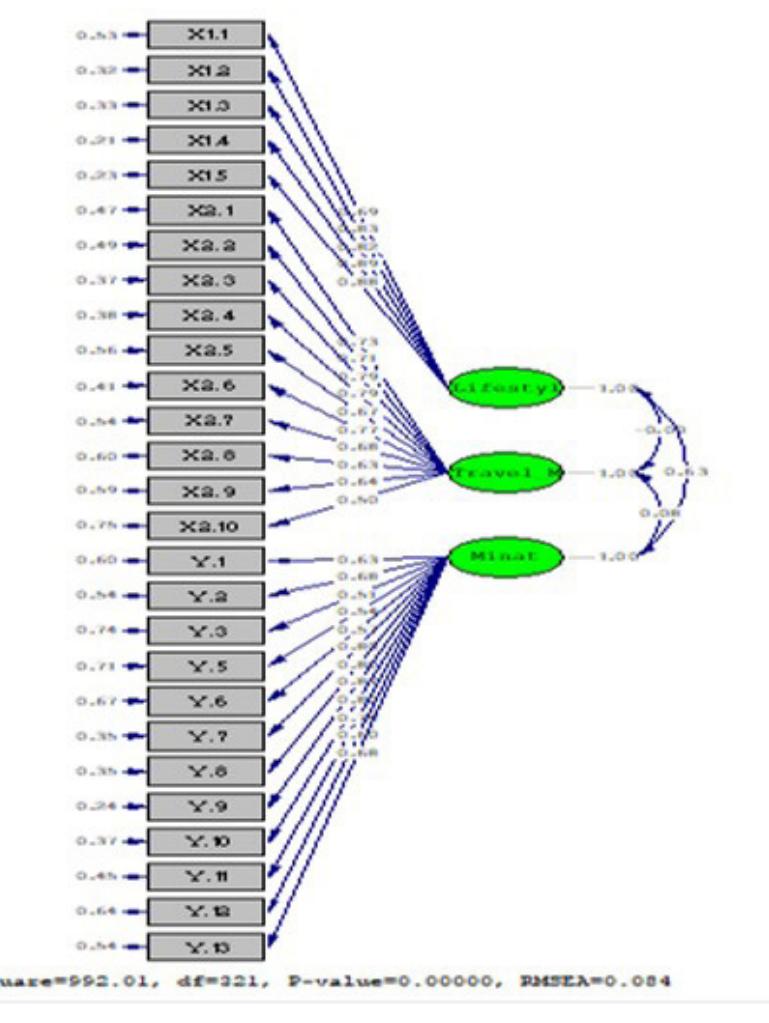
Figure 3 CFA Measurement Model Source: Output of LISREL
Model Fit Test (Goodness of Fit)
Testing is carried out with the aim of assessing how well the data fits the model.
Table I Result of Goodness of fit Test Index
| Goodness of Fit Index | Value Limit | Estimation Result | Remark |
|---|---|---|---|
| Chi-Square (χ²) | The smaller the better, p ≥ 0.05 | 864.62 (p = 0.0) | Poor Fit |
| (GFI) | ≥ 0.90 | 0.82 | Marginal Fit |
| (AGFI) | ≥ 0.90 | 0.79 | Marginal Fit |
| Standardized RMR | ≤ 0.05 | 0.061 | Marginal Fit |
| (RMSEA) | ≤ 0.08 | 0.071 | Good Fit |
| (NFI) | ≥ 0.90 | 0.93 | Good Fit |
| (NNFI) | ≥ 0.90 | 0.95 | Good Fit |
| (RFI) | ≥ 0.90 | 0.92 | Good Fit |
| (IFI) | ≥ 0.90 | 0.96 | Good Fit |
| (CFI) | ≥ 0.90 | 0.96 | Good Fit |
| (PGFI) | ≥ 0.90 | 0.68 | Poor Fit |
| Normed χ² (df = 322) | Chi-Square/df ≤ 3 or max.5 | 2.685 | Good Fit |
Source: Output of LISREL
Although there are many criteria for testing goodness of fit test, researchers are not required to fulfill all of them. There are opinions that reveal that fulfilling 4-5 criteria of goodness of fit is enough to represent the feasibility of the model. Some even argue that if one of the goodness of fit criteria is met, the model is considered feasible. However, the more criteria that are met, the better the model will be. The results of the goodness of fit test show that the GFI is 0.82 (good fit) and the RMSEA is 0.071 (good fit). This research model is completed and is suitable for further testing.
Hypothesis Test
The test is conducted to show whether there is a causal relationship between exogenous and endogenous latent variables or not. The t-values ≥1.96 indicate a significant effect, and vice versa. Below is a picture of the output results of the LISREL program to test this hypothesis. The structural model diagram and structural equations output inform the value of the coefficient of determination (R2).
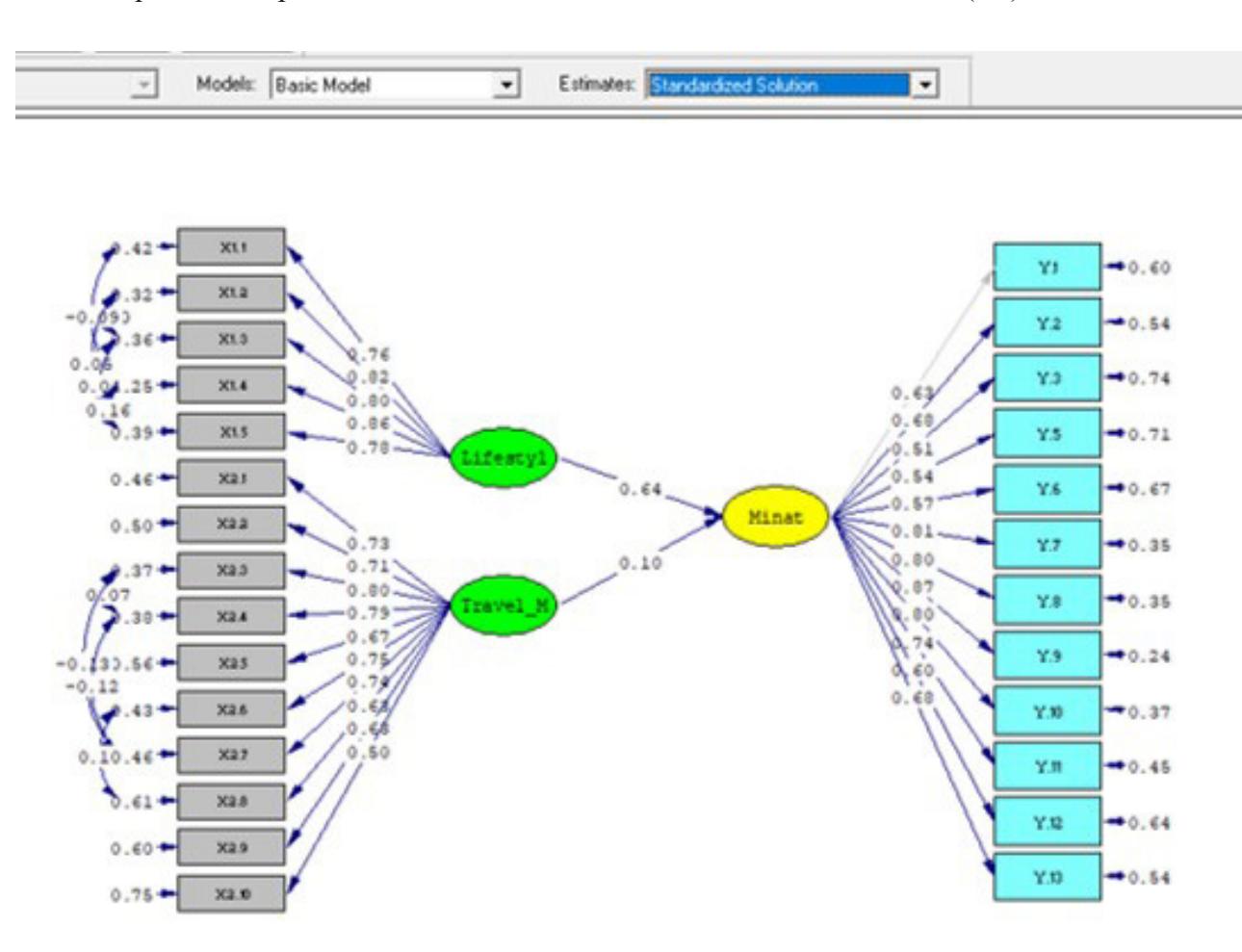
Figure 4 Standardized Loading Factor of Structural Model Source: Output of LISREL
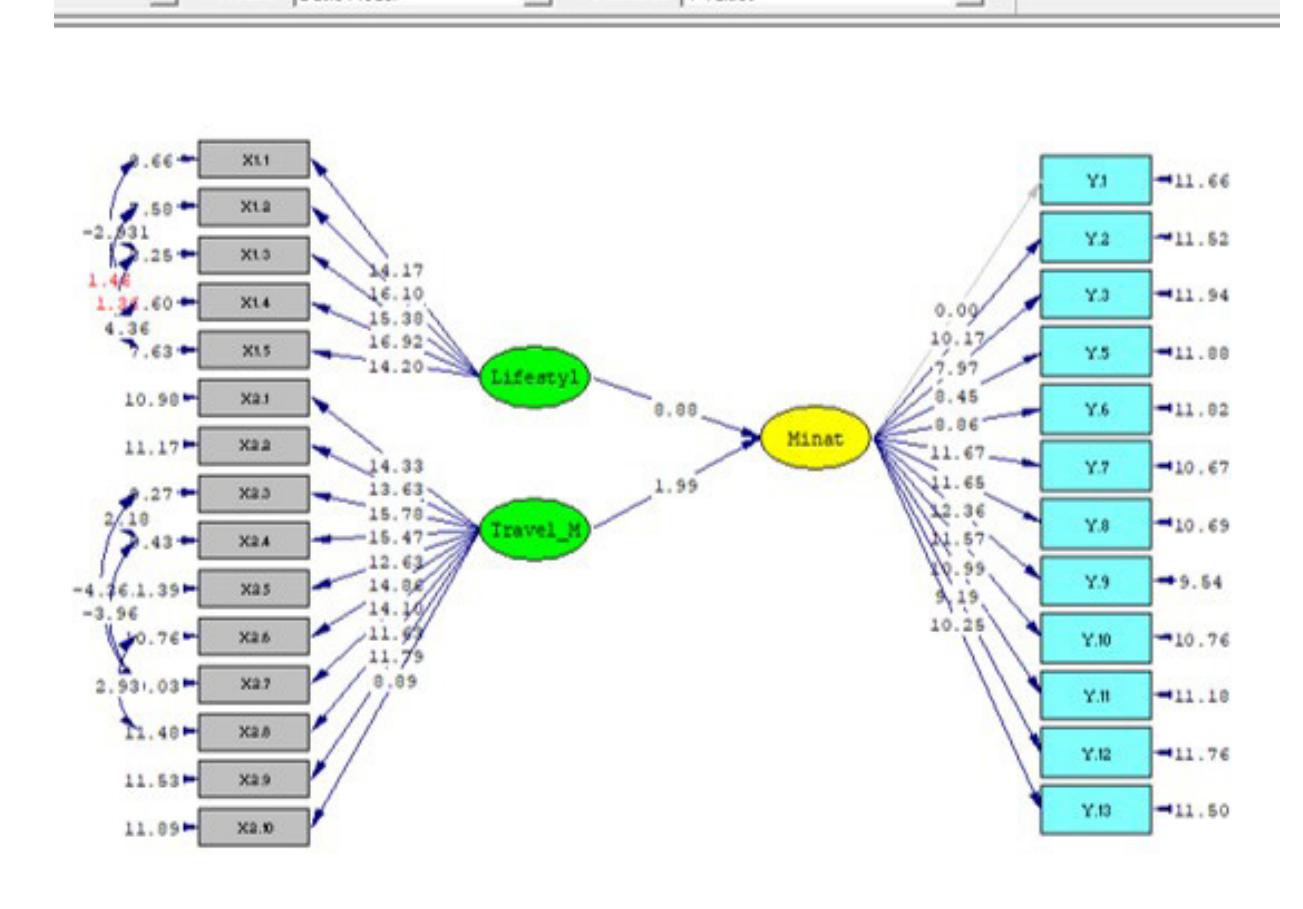
Figure 5 T-values of Structural Model Source: Output of LISREL
Table II Hypothesis Test
| Hypothesis | Path | T-values (≥1.96) | SLF | R2 | Summary |
|---|---|---|---|---|---|
| H1 | Lifestyle Intention | 8.88 | 0.64 | Significantly supported | |
| H2 | Travel motivation Intention | 1.99 | 0.10 | 0.42 | Significantly supported |
Source: Output of LISREL
Lifestyle influences the intention to use the Nusuk platform, according to the test results. The t-values of 8.88 and 1.96 indicate that lifestyle influences the intention to use the Nusuk platform. Furthermore, lifestyle has a positive SLF value (0.64), indicating that lifestyle has a positive influence on the intention to use the Nusuk platform. Therefore, it can be interpreted that the higher a person's lifestyle, the higher the intention to use the Nusuk platform.
The strongest influence of the lifestyle variable is represented by the statement indicator (X1.4), namely members of the independent Umrah community who like adventure activities, and (X1.5) members of the independent Umrah community who enjoy adventure activities. The indicator (X1.1), which represents members of the independent Umrah community who like and/or enjoy challenges, has the weakest influence on lifestyle variables.
According to the test results, travel motivation has an impact on the intention to use the Nusuk platform. The t-values of 1.99 and 1.96 suggest that travel motivation influences the intention to use the
Nusuk platform. Furthermore, the SLF value of travel motivation is positive 0.1, which means that travel motivation has a positive influence on the intention to use the Nusuk platform. We can interpret this as a positive correlation between travel motivation and the intention to use the Nusuk platform.
The strongest influence of the travel motivation variable is represented by the statement "members of the independent Umrah community want freedom in determining the duration of time when performing Umrah independently" (X2.3) and "they want freedom in determining the airline used for Umrah travel" (X2.4), while the weakest influence of the travel motivation variable is represented by (X2.10), namely "the previous Umrah worship experience makes members of the independent Umrah community interested in performing Umrah independently because it is easy."
Conclusion
The results demonstrated that all hypotheses had a positive and significant impact. The lifestyle variable contributes the most in order, followed by travel motivation. The magnitude of the standardized loading factor (SLF) value for each variable reveals this. This study reveals that lifestyle and travel motivation account for 42% of the intention to use the Nusuk platform, while other variables not included in this study account for the remaining 58%.
In the realm of lifestyle, the derivative formulation of activities and the intention dimension exert the greatest influence. The statement reveals that members of the independent Umrah community have a fondness for and delight in adventure activities. In terms of travel motivation, the most influential derivative dimension is flexibility. Members of the independent Umrah community stated that they want freedom in determining the duration of independent Umrah time and the choice of airline used.
The study's results indicate that the intention to use the Nusuk platform increases with the level of lifestyle and travel motivation among members of the independent Umrah community. This confirms the validity of the proposed hypothesis. However, the next study should investigate other interesting variables such as price, community exposure promotion, and age or social class that will also affect this interest.
References
- Abodeeb, J., Wilson, E., & Moyle, B. (2015). Shaping destination image and identity: insight for Arab tourism at Gold Coast, Australia. International Journal of Culture, Tourism and Hospitality Research, 9(1), 6-21.
- Almuhrzi, H., & Alsawafi, A. M. (2017). Muslim perspectives on spiritual and religious travel beyond Hajj: Understanding motivations for Umrah travel in Oman. Tourism Management Perspectives, 235-242.
- Atikah, R. S., Tan, A. L., Trupp, A., Cheong, K. L., Arni, A. G., & Arumugam, V. M. (2022). The emergence of a new religious travel segment: Umrah do it yourself (DIY). GeoJournal of Tourism and Geosites, 37-48.
- Battour, M., Ismail, M. N., Battor, M., & Awais, M. (2017). Islamic tourism: An empirical examination of travel motivation and satisfaction in Malaysia. Current Issue in Tourism, 50-67.
- Charastrakool, R. (2020). Factors affecting online purchase intention of Thai generation Z towards e-commerce platform. Doctoral dissertation, Department of Marketing in Digital Era, College of Innovative Business and Accountancy, Dhurakij Pundit University.
- Chivandi, A., Samuel, O., & Muchie, M. (2020). The effect of online travel agency on brand relationship in low and high-end hotels in South Africa. GeoJournal of Tourism and Geosites, 951-957.
- Dewi, S. K. (2017). Trend wisata Umrah. Empirisma, 26(2), 191-205.
- Hidayat, N. (2019). Umrah anti-mainstream. Jakarta: Rene Turos Indonesia.
- Huang, S., & Hsu, C. (2016). Reconfiguring Chinese cultural values and their tourism implications. Tourism Management, 230-242.
- Kotler, P. (2016). Prinsip-prinsip pemasaran jilid 1. Jakarta: Erlangga.
- Kotler, P., & Keller, K. L. (2016). Manajemen pemasaran edisi 13 jilid 2. Jakarta: Erlangga.
- Michael, N., Wien, C., & Reisinger, Y. (2017). Push and Pull Escape travel motivation of Emirati nationals to Australia. International Journal of Culture, Tourism and Hospitality Research.
- Niezgoda, A. (2013). Prosumers in the tourism market: The characteristics and determinants of their behaviour. Poznan University of Economics Review, 130-140.
- Pitaya, Makhasi, G. M., & Hanafiah, M. H. (2021). Not only about price but also lifestyle: Recent phenomena of backpacker Umrah in Indonesia. Economica: Jurnal Ekonomi Islam, 75-96.
- Ramadania, Al-Fatih, Y., Darma, D. C., & Fauziah, F. (2021). Millenials and traveling to domestic destination. GeoJournal of Tourism and Geosites, 398-405.
- Ramadhan, A. F., Prasetyo, A. B., & Irviana, L. (2016). Persepsi mahasiswa dalam menggunakan e-money. Jurnal Dinamika Ekonomi & Bisnis 13(2), 131-145.
- Sirisack, D., Xayavong, S., Phongsavath, S., & Vongsana, N. (2014). The characteristics and motivations of foreign tourists who visit Luang Prabang Province, Lao PDR. International Journal of Business and Social Science, 5(9), 262-275.
- Sujarweni, V. W. (2021). Panduan mudah olah data Structural Equation Modeling (SEM) dengan LISREL. Yogyakarta: PUSTAKABARUPRESS.
- Tjini, S., & Badriawan, Z. (2016). Kemudahan dan persepsi kenyamanan terhadap minat penggunaan sistem internet banking. Jurnal Ilmiah Ekonomi dan Bisnis, 1-21.
- Zukhrufani, A., & Zakiy, M. (2019). The effect of beauty influencer, lifestyle, brand image and halal labelization towards halal cosmetical purchasing decisions. Journal of islamic economics and business, 168-180.