

Keywords:
platformization, digital inequalities, platform resistance
Issues of inequality and injustice have become prevalent in economic-political discourse in digital media, particularly because of the impact of platformization on digital streaming platforms. This article examines how platformization shapes cultural production, the governance of the music streaming industry, and the resistance againts its dominance in Indonesia emerge. Through observations and interviews with indie music practitioners in Indonesia, this article discusses platform-based cultural production and the rise of new power held by aggregators in the music-streaming industry. The discussion is divided into the impact of platformization on indie musicians and alternative production patterns that challenge platform-based cultural production in Indonesia. This article aims to provide an overview of the impact of platformization on indie musicians in Indonesia and to explore alternative methods that encourage musicians to gain independence from platforms.
INFO ARTIKEL
ABSTRAK
Kata kunci:
platformisasi, kesenjangan digital, resistensi platform
Isu ketimpangan dan ketidakadilan merupakan wacana ekonomi politik pada media digital yang muncul akibat dampak platformisasi pada platform streaming digital. Artikel ini membahas produksi budaya platformisasi yang membentuk dan mempengaruhi tata kelola industri musik streaming, serta pola perlawanan yang ada dalam menghadapi dominasi platformisasi di Indonesia. Melalui observasi dan wawancara dengan para pelaku musik indie di Indonesia, artikel ini membahas tentang produksi budaya berbasis platformisasi dan munculnya kekuatan baru yang dimiliki oleh agregator di industri musik streaming. Artikel ini membahas dampak platformisasi terhadap musisi indie dan pola produksi alternatif dalam melawan produksi budaya berplatform di Indonesia. Artikel ini bertujuan untuk memberikan gambaran mengenai dampak platformisasi terhadap musisi indie di Indonesia dan mencari alternatif metode yang mendorong musisi terbebas dari platform.
Introduction
A decade ago, global pop musicians such as Taylor Swift, Thom Yorke (Radiohead), and David Byrne (The Talking Heads) complained about the unfairness of Spotify's royalties (Gayomali, 2014). Discourse on the fairness of digital streaming platforms continues to be a fascinating issue among musicians. Most local indie musicians, who are not popular on social media and digital streaming platforms, find it difficult to earn a decent income. Yogyakarta-based indie musician Nihan Lanisy, nicknamed "Jono Terbakar", had 29 records of his complete discography, 11 of which were available on Spotify, but he admitted that his monthly profit from Spotify was only around $3 to $6, which he said was "only enough to pay the parking lot fee" (Hastanto, 2022).
Unpopular indie musicians still hold grudges against digital streaming platforms, particularly because of their low profit. Herry "Ucok Homicide" Sutresna, from Grimloc Records, acknowledged the impact of a small pay-per-stream coefficient and a dearth of paid users on Indonesia's digital streaming platforms, stating that iTunes only counts playback from paid subscribers as a royalty basis. If one uses an unpaid account, the digital streaming platform will not count as a royalty" (Tempo, 2022). Nihan Lanisy comments on the small royalty coefficient in Indonesia compared to musicians from other countries: "In 2018, I expanded my business unit by forming Sangat Musik, an aggregator for uploading songs in digital outlets. Upon comparing the data, I discovered an intriguing revelation: the value of one thousand plays in Indonesia was equal to that of those in Europe. Therefore, it appears that discrimination exists. At that time, I was thinking [about] making English songs. Royalties have the potential to negatively impact my work, which I find unhealthy (Hastanto, 2022). Most indie musicians express unfairness in streaming revenues through social media. Herry "Ucok Homicide" Sutresna (Grimloc Records) wrote satirically on his Twitter that getting one million streams of play on Spotify is hard for his musical works: "Itu satu juta stream di Spotify band2 Grimloc harus brapa taun? Hkgkgk/ That is a million streams on Spotify Grimloc bands for how many years? Hkgkgkgk" (Figure 1).
Figure 1 Grimloc Records ' disappointment with Spotify's unfair royalty system Source: Personal documentation
Figure 2 Elevation Records tweets about their small revenue from Spotify Source: Personal documentation
Jakarta-based indie label Elevation Records also felt disappointed with structural unfairness in Spotify. Taufiq Rahman (Elevation Records) stated that the royalties earned from Spotify were only around $16 for the two albums from his rosters, Soleluna and Semak Belukar. On Twitter, he wrote that royalties from Spotify sold only five CDs equally (Figure 2). Taufiq Rahman said that his musical releases come from outside the stream-friendly genres. He chooses not to place album releases on digital streaming platforms. He was one of those who disagreed because of the systemic unfairness created by this digital streaming platform for certain musicians. Some small indie musicians focus on playing live shows or producing merchandise as their primary source of income instead of gaining revenue from digital streaming platforms. They seemed to use digital music streaming for promotional access without understanding the illusory practices behind this platform.
Scholars have also highlighted the crucial issues surrounding streaming fairness toward musicians (Fleischer, 2017; Hesmondhalgh, 2021a; Marshall, 2015; Moreau et al., 2022). Platformization emerged due to its ability to control cultural production within the streaming music industry. This article examines how platformization leads to inequalities and injustices in digital streaming platforms, and how indie music practitioners in Indonesia challenge this dominance. This research presents a fresh discourse on the intersection of social issues, policy, the music industry, and digital culture from the perspective of indie music practitioners.
Platformization of Culture Production
This study employs platformization theory as its theoretical framework, examining how the governance of cultural production influences the streaming music industry. Platformization can be defined as the penetration of economics, governance, and technological infrastructure into digital platforms and ecosystems that affect the production of cultural industries (Nieborg & Poell, 2018; Poell et al., 2022). Platformization involves decentralization and centralization of economic control. On one hand, platforms offer musicians the opportunity to gain audiences and earn revenue by democratizing access. Platformization also leads to the concentration of economic power in the hands of platform corporations, posing challenges for musicians due to the unfair allocation of resources and various forms of economic inequality.
Platformization has resulted in a market where superstar musicians dominate, aggregators and publishers dominate governance, and algorithms and playlist curations control the technological infrastructure for music consumption. Due to power relations and governance, platformization alters the relationship between the mechanism of cultural production and the political economy, introducing new actors and mechanisms for moderation, negotiation, and content curation (Poell et al., 2022). Platformization affects power relations in the digital music streaming industry.
Inequality and Injustice in Digital Streaming Platforms
Some argue that streaming services like Spotify, which often pay musicians less for their music than the old sales model of purchasing private copies of recordings for unlimited personal use, are unfair to musicians from an economic perspective. Note that this criticism frequently overlooks the fact that the copyright holder typically receives royalties, not the artist, and that these rates can fluctuate. The amount a musician receives depends on various factors, including agreements with record labels, aggregators, performing rights organizations, and managers (Banks, 2010). Large corporations have retained their power in the streaming era. New and complex powers have emerged even in streaming economies. There have always been issues in the streaming economy regarding transparency, revenue distribution, and royalty sharing, leading to anxiety and conflict among musicians. Thus, increasing transparency in the digital music era is crucial because it provides clear information on contracts, discount offers, and subscriber numbers, which form the backbone of understanding the new streaming economy (Nordgård, 2017).
The injustice experienced by musicians due to digital streaming platforms should not be limited to the per-streaming royalty rates offered by these platforms but should instead focus on the broader system and ownership. Thus, injustice is more systemic and comprehensive than the fees and per-streaming royalty rates musicians receive (Hesmondhalgh, 2021). Other research has highlighted the importance of a platform that is fairer to both users and musicians. The root cause of this inequality lies in platforms that disproportionately benefit superstar musicians. A user-centric payment system can enhance fairness for both users and content providers in the distribution of income among copyright holders. This system would reduce popularity bias by lowering the income of the top 10 artists, thereby creating more equitable opportunities for non-superstar artists and independent labels. It would also reduce the share of royalty payments directed to curated streams from major labels, which tends to be less reflective of user preferences. We expect a user-centric payment system to prioritize organic streams over curated ones, leading to increased consumer satisfaction. This reflects a stronger alignment between payment systems and user preferences. The system would mitigate popularity bias, which would result in a reduction in income for top artists, while providing benefits to other categories of artists. While success in cultural industries often does not fully reflect consumer preference, we can view this as a positive shift toward ensuring fairer competition among copyright holders. Additionally, the system would decrease the portion of royalty payments directed to curated streams from major labels, which typically aligns less with user preferences. Developing a user-centric business model where musicians share revenue based on monthly subscription fees is one alternative. SoundCloud and Tidal are two examples of implemented business models. Even with this new system, Portishead still received a 500% royalty. The disparity between what musicians listen to and where money ends up is the source of this injustice (Moreau et al., 2022).
Previous studies have suggested that royalties are significant in streaming governance. This disparity is due to the impact of the business model and policies related to music royalties (Sinnreich, 2014). Previous research has also noted a tendency for power to shift depending on the technological infrastructure in the streaming era. Music streaming platforms incorporate gatekeeping mechanisms, such as algorithmic coding, interface design, and human curation, which influence music choice by directing users towards mainstream music and bolstering the "superstar economy" (Maas & Spilker 2022). Other research suggests that problems with injustice and inequality in digital streaming platforms result from technological infrastructure, especially algorithms and playlist curation, which affect cultural production in the streaming era. Creative ambivalence fosters the development of 'streaming-friendly' music playlist recommendation features, thereby sustaining the power of corporate entities such as digital streaming platforms and record labels (Hodgson, 2021).
Previous studies suggest that algorithms and curatorship are crucial in cultural production mechanisms in the streaming era, impacting music consumption metrics and creating inequalities among musicians (Morgan, 2021; 2020). Other studies have also mentioned that playlist curation and song catalogs influence consumer attention. When discussing gaps in digital streaming platforms, researchers often focus on playlist research due to its connection to access and the quantity of song catalogs available on these platforms. The changing business models of digital streaming platforms stem from their reliance on subscriptions and song catalogs (Arditi, 2015; Kjus, 2022; Morris, 2020; Morris & Powers, 2015). New forms of power emerge through algorithms and playlist curation because they can shape tastes and genres and become gatekeepers in society (Werner, 2020; Bonini & Gandini, 2019; Fox, 2004). Playlists have a strong influence on building hegemony in the music industry (Bonini & Gandini, 2019; Prey, 2018; Prey, Esteve Del Valle, & Zwerwer, 2022; Webster, 2020; Werner, 2020). Spotify's playlist ecosystem has been subject to several criticisms. One of the main issues is a lack of transparency in playlist management. The vagueness and lack of transparency in the playlist curation process often leave artists, managers, and industry professionals uncertain about the decisions made regarding the movement of songs within the playlist ecosystem (Morgan, 2020). New technology often fosters prejudice and perpetuates the old system in novel ways. This reveals that the principle of "winner-take-all" brings inequality because it has the potential only to benefit the "hits-wonder" (Nieborg & Poell, 2018a; Poell et al., 2022; Taylor, 2014).
Previous studies tend to focus more on the influence of playlist curation, algorithms, and business models on the leading causes of inequality and injustice on digital streaming platforms. Research on streaming in Indonesia has mainly discussed the optimism and influence of the digital music industry (Dewatara & Agustin, 2019; Nilasari et al., 2021; Noviani et al., 2020). Research on the impact of platformization in Indonesia is still lacking. Only a few scholars have highlighted the new role of technology-based power holders and how hegemony is maintained through technological infrastructure. The novelty that wants to convey in this article is to discuss how platformization has had a disparity impact due to policy issues related to governance of digital music, aggregator mechanisms and dominance in Indonesia, and the presence of platform-independent cultural production. This study aims to contribute to the discourse on digital streaming platforms through the lens of platformization in Indonesia.
Method
The data for this research was gained through observation and interviews with local indie music practitioners (Table I), by attending the Streaming South East Asia (SEA) Workshop at Monash University on July 4-5, 2022, which featured Rudolf Dethu, the manager of Balinese-rock The Hydrant, and the Idea Fest Conference on September 30, 2023, which featured Dahlia Wijaya, the country director of Believe Music Indonesia, Ririe Cholid, the head of marketing & project manager, Believe Artist Services Indonesia, and Yura Yunita, a pop musician. These data are crucial, especially given the challenges of gathering information from the perspective of the aggregator. Several indie music practitioners participated in this study to understand the issues of inequality and injustice in digital streaming platforms in Indonesia. These data also aimed to determine how the cultural production of indie musicians in the streaming era resisted platformization.
| Names | Description |
|---|---|
| Herry "Ucok Homicide" Sutresna | Grimloc Records |
| Taufiq Rahman | Elevation Records |
| Argia Adhidanendra | The Store Front |
| Tresna Galih | Koil Manager |
| Wawan "Wansky" Hernawan | Mocca Manager |
Table I List of Informants
The primary data for this study were collected through observations and interviews with indie music practitioners. The research stage commenced with online observations of the Spotify digital streaming platform and discussions about digital streaming platforms on Twitter/X. Spotify, as one of the most discussed digital streaming platforms among scholars and a popular platform in Indonesia, particularly among the youth, served as a significant subject for this research (Rahmasari et al., 2022; Sebayang & Surbakti, 2018). The next stage involved interviews with key indie music practitioners, including Tresna Galih (manager of Koil), Wawan "Wansky" Hernawan (manager of Mocca), Herry "Ucok Homicide" Sutresna (Grimloc Records), Taufiq Rahman (Elevation Records), and Argia Adhidanendra (The Store Front) (see Table 1). These interviews aimed to gather further data on the impact of platformization and the alternative production patterns that these individuals use to counter platform dominance. The researcher also attended discussions at Streaming South East Asia (SEA), organized by Monash University on July 4-5, 2022, and a digital streaming platforms talk show session at Idea Fest 2023 to gain insights from music industry stakeholders and industry aggregators. Given the difficulty of obtaining data from aggregators, these sessions provide a clearer understanding of their mechanisms and roles within the digital music streaming platform ecosystem. Additionally, the researcher obtained secondary data from documents like the Koalisi Seni Indonesia's "Diam-Diam Merugikan: Situasi Hak Cipta Digital di Indonesia" (2023) report, which delves into the governance of the music streaming industry in Indonesia.
After collecting data from observations, interviews, and literature reviews, the researcher analyzed them using the theoretical framework of platformization, with a particular focus on governance aspects pertinent to the issues at hand.
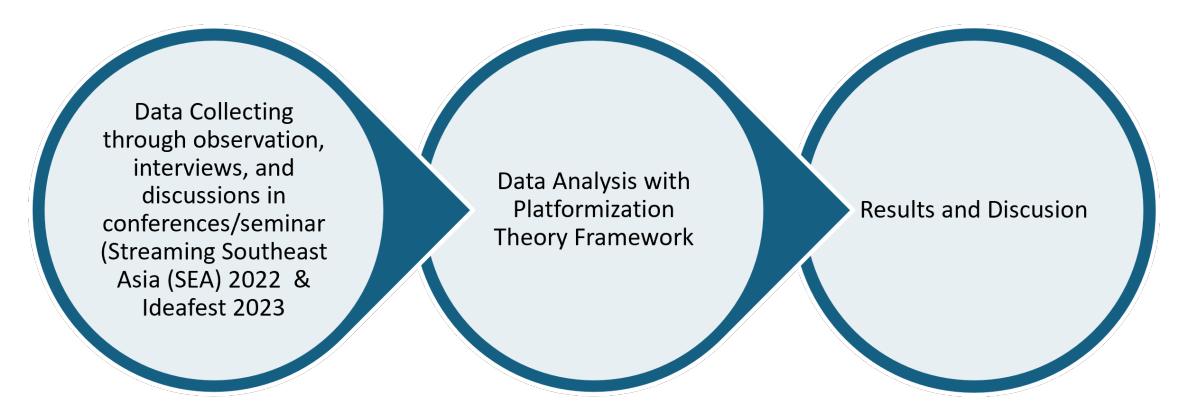
Figure 3 Stages of research method Source: Author's documentation
Results
Understanding the process and mechanism of streaming royalty payments is crucial for understanding the impact of platformization on the Indonesian music industry. The National Collective Management Institute (LMKN) lacks a transparent database on the number of streams played, and its royalty collection monitoring mechanism is weak. The Indonesian Creative Economy Agency (Bekraf) intends to establish "Portamento," an integrated digital service system, to facilitate the tracking of digital royalties. However, the situation remains unclear, particularly since President Jokowi disbanded the Bekraf institution and transferred it back to the Ministry of Tourism and Creative Economy in 2019. Hence, digital royalties depend on market mechanisms, internal regulations for digital music service providers, and agreements (licenses) among parties. The announced royalty rate for music creators in the digital music realm in Indonesia is 12% for streaming music services and on-demand music videos, 8% for download services, and 2.5% for over-the-top (OTT) services. These rates are based on common practices in other countries. Meanwhile, mechanical royalty rates vary depending on the agreement between each aggregator, digital streaming platform (DSP), and musicians or record labels (or representatives of other copyright holders) (Koalisi Seni Indonesia, 2023).
The Complexity Issues of Copyright Governance and Policies
The absence of an Indonesian legal umbrella that regulates minimum payment rates can result in Indonesian musicians receiving lower royalty payments depending on market and industry mechanisms. The issue pertains to the royalty payment mechanism, which remains unresolved due to the overlap between the various roles of Collective Management Institutions (Lembaga Manajemen Kolektif/LMK) and the National Collective Management Institute (Lembaga Manajemen Kolektik Nasional/LMKN) (Ginting, 2019).
In this digital era, the royalty payment mechanism depends on the roles of the aggregators and publishers. They are essential for distributing musical works across digital platforms. Spotify collaborates with several distribution labels and aggregators to manage music copyright, a prerequisite for inclusion in an application's music playlist. Some of these are Believe Music, Absolute Label Service, and DANMARK. In Indonesia, Spotify still requires a label or publisher to collaborate. To include songs on Spotify, musicians must first have a label or publisher in Indonesia who has the authority to manage copyright for songs or music. The existing label or publisher then submits their songs to the aggregator that Spotify has selected.
Indonesia's existing copyright law policy does not regulate music streaming mechanisms, as it does in America's Music Modernization Act (MMA). There is still no database or one-stop royalty collection system that renders digital streaming governance vulnerable to practices that lack transparency. The absence of policies or regulations regulates digital streaming governance, which emphasizes market mechanisms and internal negotiation contracts between musicians, publishers, aggregators, and digital streaming platforms (Koalisi Seni Indonesia, 2023).
Aggregator's Moderation, Negotiation, and Curation of Contents
Platformization governance explains the emergence of aggregators that control the streaming music industry due to the lack of digital streaming policies in Indonesia. Aggregators have emerged as new technological players, assuming control over the moderation, negotiation, and curation of content on digital streaming platforms. Aggregators are important for distributing songs to digital streaming platforms and for understanding the role of collective management institutions in monitoring copyright governance issues and economic rights (Njatrijani et al., 2020). Economic factors that affect the role of technological companies drive music streaming development. Changes in how people consume music have encouraged technology companies to invest in the music sector, which plays an essential role in the music streaming industry as intermediaries and licensing music from various content suppliers for commercial exploitation (Hesmondhalgh & Meier, 2018).
Aggregators have the potential to cause various forms of injustice, particularly for musicians and small record labels, as gatekeeping mechanisms often encourage restrictions on musical works on popular playlists. Note that each aggregator company's specific practices and business models influence this potential unfairness, not the aggregator's inherent role. Some aggregators may be able to mitigate this problem through strategies, such as promoting each piece of music with individual strategies tailored to the context of its release. Thus, aggregators determine specific promotional strategies to assess the success of a musical work (Vonderau 2015). The presence of aggregators can help overcome the asymmetry in bargaining between large digital music stores and small independent music labels or individual artists. However, aggregators can also promote various negotiations with song owners on their preferred terms, potentially leading to specific discrimination (Galuszka, 2015).
Aggregators play a vital role in the digital music ecosystem. Due to the need for efficiency in integrating song catalogs, digital streaming platforms rely on the role of aggregators. Digital streaming platforms do not have resources to handle licensing agreements with tens of thousands of musicians. Therefore, it would simplify the process if the digital streaming platform collaborated with an aggregator partner, enabling the aggregator to manage individual licenses for each musician or representative through the use of the aggregator's services. Digital streaming platforms generally contain lists of their partners. Partnerships are established by considering the aggregator's resources, technological capacity, and reputation. In the platformization culture production mechanism, a "multisided market" will emerge where there are changes in institutionalization and new roles for technology companies that influence governance and technology infrastructure in the streaming era, such as the presence of aggregator companies. This shows that corporate concentration is shifting specific patterns of power relations through control of access, distribution, and promotion on various playlists and social media. Through this platformization, aggregators and digital streaming platform companies can provide pathways, control, create market structures, and earn profits.
The absence of policies or governance regulating digital music leaves all mechanisms and practices to various rules and internal negotiations between musicians and aggregators. Several aggregators operate in Indonesia, including Believe, Sound-On, and Collab Asia. The global aggregator Believe Indonesia, which established a sub-division called Kithlabo, has tiered service options ranging from self-service (musicians register their work independently) to premium services that provide extra services, such as promotional strategies, distribution, and digital marketing (Figure 4). For Believe's self-service, users usually pay for the service upfront, and there is no profit-sharing. At higher levels, profit sharing is applied with different royalty percentages, the agreement mechanism of which suits musicians or record labels.
Figure 4 Instagram account of Kithlabo, a new subdivision of Believe Indonesia to assist digital marketing services to Indonesian musicians
Source: Personal documentation
In 2020, Believe Indonesia established Kithlabo, a new 'artist services' division with the aim of leveraging innovation, data technology, and digital marketing to offer promotional and digital marketing strategies for independent musicians (Antaranews.com, 2023). In the Ideafest 2023 discussion session, Dahlia Wijaya (Country Director of Believe Music Indonesia), Ririe Cholid (Head of Marketing and Project Manager of the Believe Artist Services Indonesia), and Yura Yunita (pop musician) stated that there are three stages provided by Believe and Kithlabo to Indonesian musicians according to their respective entry levels.
At the first level, Believe offers services for distributing digital music via Tunecore, particularly for new and developing do-it-yourself (DIY) musicians. We have developed streaming services independently, without the help of additional services on digital streaming platforms. Second, Believe offers distribution, promotional, and marketing services to clients on various digital streaming platforms. In the third stage, the Believe Artist Services Indonesia provides customized strategy services to promote and market musical works across various digital channels, leveraging the potential of playlists and promotional banners on these platforms. Believe Indonesia also provides a variety of digital marketing strategies to its clients, aiming to bridge the income gap and solve the challenges faced by independent musicians on digital streaming platforms. Digital marketing is essential because it increases income, reaches a wider audience, and attracts young Gen-Z listeners. For example, pop musician Yura Yunita, who collaborated with Believe and Kithlabo on the album Tutur Batin (2021), earned 290 million streams on Spotify (Figure 5). The music video, "Jalan Pulang", won the #1 spot on Indonesia's YouTube Trending Music for its record of remaining at the top of the Indonesian YouTube chart for seven consecutive days (Figure 6).
Figure 5 Yura Yunita's single "Jalan Pulang" that reached 40 million streams on Spotify (per 14 June 2024) Source: Personal documentation
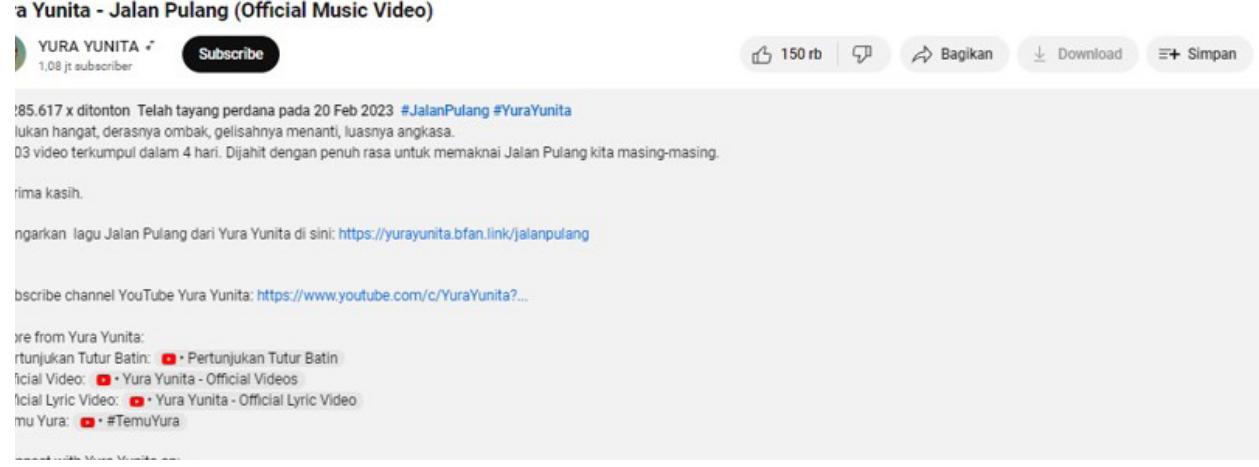
Figure 6 Yura Yunita's single "Jalan Pulang" that reached 7 million views streams on Youtube since 20 February 2023 Source: Personal documentation
According to Tresna Galih (Koil Manager), aggregator practices are similar to major record label practices in the pre-streaming era. In the pre-streaming era, major record labels with significant capital and promotions had access to various physical record stores and promotions on radio, magazines, televisions, and billboards in large cities. Aggregators now are empowered to promote songs on digital streaming platforms and social media, such as YouTube and TikTok, which are prevalent in Indonesia. Tresna Galih, the Koil Manager, stated that independent bands often release their albums without any additional services from aggregators, which can pose a challenge in reaching listeners on digital streaming platforms. However, if a band receives promotional offers and deals exclusively with an aggregator, it has many listeners on digital streaming platforms. They possess the potential resources to feature in various playlists and social media platforms. Organic cultural production on digital streaming platforms will find it difficult to compete with indie musicians using promotion and distribution strategies through aggregators extra services. These two mechanisms encourage differences in access and opportunities between bands with exclusive negotiations with aggregators and indie musicians that market their musical works organically without services from aggregators (Interview with Tresna Galih, August 17, 2023). Wawan "Wansky" Hernawan, the Mocca Manager, expressed the same sentiment. He said that aggregators had extraordinary power in the streaming era. According to an interview with Wawan "Wansky" Hernawan on August 17, 2023, bands that have a special contract and agreement with aggregators typically have special "privileges" for promotion and have access to various playlists on digital streaming platforms.
Aggregators can create a piece of known music and play it using various playlists and promotional banner advertisements on digital streaming platforms. Musical works outside the aggregator's negotiation and extra services make it difficult to attract listeners. The influence of platformization governance shapes cultural mechanisms in the digital era, including the preference for singles over albums, the prevalence of playlists, and the ability to gain popularity through platforms like TikTok and YouTube. Platformization governance and technological infrastructure create a gap between musicians, resulting in a winner-takeall system in which prominent musicians will become even more significant. Small indie musicians without aggregator digital marketing extra services find it difficult to obtain such opportunities.
As a result of this platformization, there is a practice of power because digital streaming platforms are dependent on various less transparent negotiation practices and only depend on the practice of digital capitalism or on how to gain profits based on data, algorithms, and digital activation, which benefits technological rulers such as aggregators and digital streaming platforms. These aggregators hold a significant position in the music-streaming industry, enabling them to control and negotiate the music distribution choices on digital streaming platforms (Galuszka, 2015; Nordgrd, 2017; Vonderau, 2015).
The Cultural Production of Platform-Independent
Researchers have talked about how culture is made on digital streaming platforms, with Hesmondhalgh pointing out how important it is for producers to have platforms like Bandcamp and SoundCloud as alternatives to the dominance of digital streaming platforms (Hesmondhalgh et al., 2019) and more platform-independent cultural production mechanisms (Nieborg & Poell, 2018b). In the era of digital streaming platforms, two tendencies emerge: cultural producers who rely on a platform (platformdependent) and those who are less dependent on a platform (platform-independent) (Powell et al., 2022). The presence of platformization creates a spectrum between cultural actors who depend on platforms and those who do not depend on platforms. In terms of platform dependence, cultural actors depend on the production, distribution, marketing, and monetization of cultural products on platforms. Musicians who actively disseminate their work via digital streaming platforms will emerge as platform-dependent because they depend on digital streaming platforms to market their musical works. These musicians appeared on various playlists, and promotional activations appeared on TikTok and Spotify to reach many listeners.
In contrast, platform-independent firms are less dependent on the platform and choose other paths to seek profits. Various alternative cultural productions have emerged to resist the power of platformization. Bandung's independent record label, Grimloc Records, revealed that they are not anti-streaming but feel that the business model on digital streaming platforms is not fair and transparent. According to Herry "Ucok Homicide's Sutresna" (Grimloc Records), musicians in this era of digital governance have relied on digital streaming platforms to distribute their music. Herry Sutresna stands out for its autonomy, free from the technological infrastructure of digital streaming platforms. Sutresna also revealed that the absence of a minimum tariff is a major problem in Indonesia's streaming governance. The gloomy state of streaming music governance, caused by the absence of a minimum royalty rate and low coefficient value, leads to injustice in this streaming era. Musicians must negotiate with aggregators to obtain additional services that promote their musical work on digital streaming platforms. Instead of adhering to certain practices that pose challenges for indie musicians, they should develop the mechanism organically.
According to Taufiq Rahman (Elevation Records), the core problem of injustice is created by technological infrastructure through algorithms and playlists, which seem to shape listeners' tastes in the streaming era. The dominance of streaming infrastructure, through playlists and algorithms, shapes taste in a particular music genre. Urban pop music genres like Tulus, Pamungkas, Yura Yunita, and Bernadya dominate the Indonesian music streaming industry. Musicians who do not have access to promotions on streaming playlists have difficulty achieving success on digital streaming platforms. Indie musicians must actively pitch and negotiate with aggregators to offer promotional services.
Taufiq Rahman refused to follow and submit the platformization infrastructure and governance. He prefers to release music that doesn't align with the tastes of urban pop music or Gen-Z and doesn't give a damn if his record releases appear in playlists. Elevation Records released music via Tunecore without involvement in various exclusive aggregator service offerings. Therefore, the number of listeners to albums released by Elevation Records, such as Semak Belukar and Soleluna, was low on Spotify (Semak Belukar had only 138 monthly listeners and Soleluna had only 61 monthly listeners on Spotify on October 18, 2024). He makes greater use of community networks in market records and prefers to release music in physical format (cassettes, CDs, and vinyl). In the current era of platformization, aggregators and digital streaming platforms hold the power to dominate cultural production processes in the streaming industry. Indie musicians, who rely on platforms, have the ability to incorporate various practices and mechanisms that leverage digital streaming platforms into their business models. Meanwhile, independent musicians like Grimloc Records and Elevation Records, who are less reliant on platforms, will not concentrate on releasing their music exclusively through digital streaming. They also have other options for producing musical works, such as releasing CDs, cassettes, vinyl, and music merchandise.
Democratization on digital streaming platforms is a crucial phenomenon that defies the outdated narrative of democratization, which emphasizes the ease of access for cultural actors in the digital era. However, to understand democratization, we need to examine the political, social, and cultural organizations that have created technological infrastructure in the streaming era (Nowak & Morgan, 2021). A separate effort is required to reject various platformization practices and mechanisms in the streaming era, and to foster the emergence of a 'rival' system or alternative platforms. Several alternatives and countermeasures to combat systemic platformization in the music sector include reusing the role of communities and the presence of producer/musician-centered platform systems such as Bandcamp and SoundCloud (Hesmondhalgh et al., 2019). Hesmondhalgh posits that producer-oriented platforms, like Bandcamp and SoundCloud, offer a viable alternative to digital streaming platforms, as they foster cultural and economic democratization, granting musicians autonomy (Hesmondhalgh et al., 2019). Producer-oriented platforms are necessary for musicians because they expect digital platforms to fulfill their desire to obtain justice in access and economy, not just a digital streaming platform that meets user wishes, such as low cost, easy access, and a large catalog of songs (Resmadi & Bastari, 2022). Produceroriented platforms like The Store Front, which support the indie community in the digital governance era, are a welcome addition to the Indonesian music ecosystem. An example is the digital streaming platform Fungjai (https://www.fungjai.com/home) in Thailand.
For instance, the Store Front website contributes to the creation of a platform-independent culture. The Store Front addresses the unfair treatment of musicians who do not receive proper royalties on digital streaming platforms. Rival platforms like The Store Front, which focuses on musicians and producers, offer another alternative for digital music distribution. However, what is most important is The Store Front's efforts to provide autonomy and transparency to indie musicians creatively and businesswise (Figure 7). Grimloc Records then released its catalog on Store Front's alternative platform because its business model was fair (Figure 8). The royalty value is based on the choice of musicians or producers (musicianor producer-oriented) rather than a platformization mechanism based on algorithmic calculations.
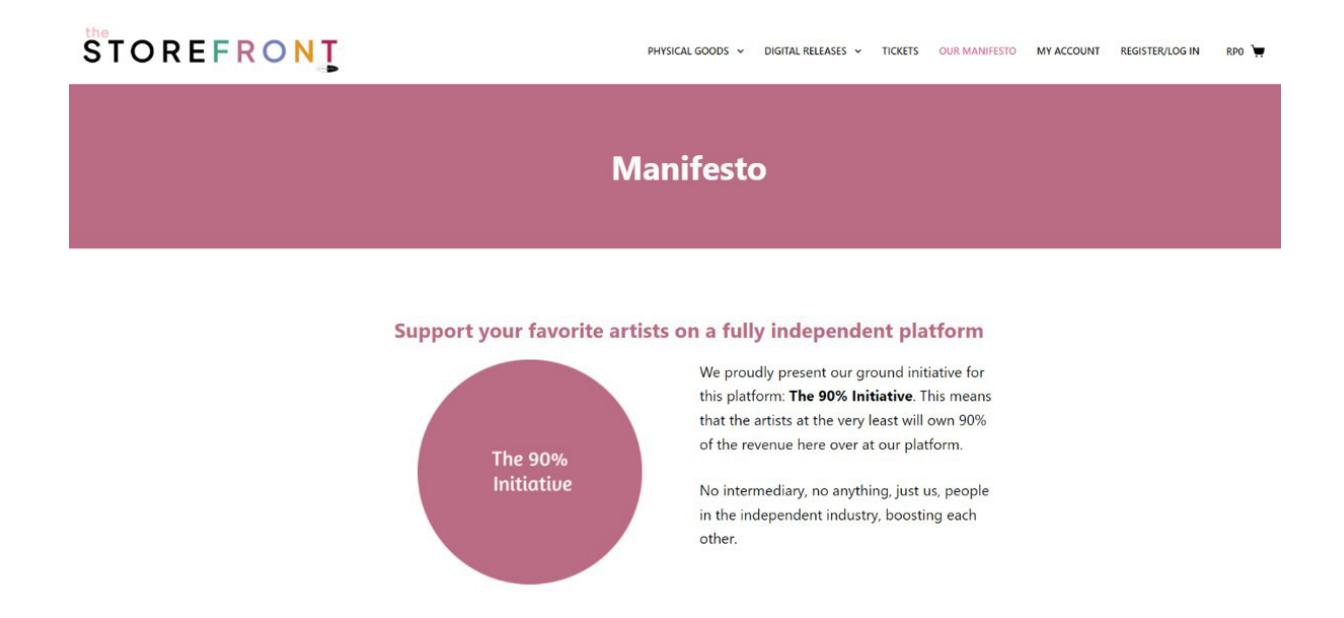
Figure 7 The Store Front's manifesto as a platform that encourages fairness for musicians Source: Personal documentation
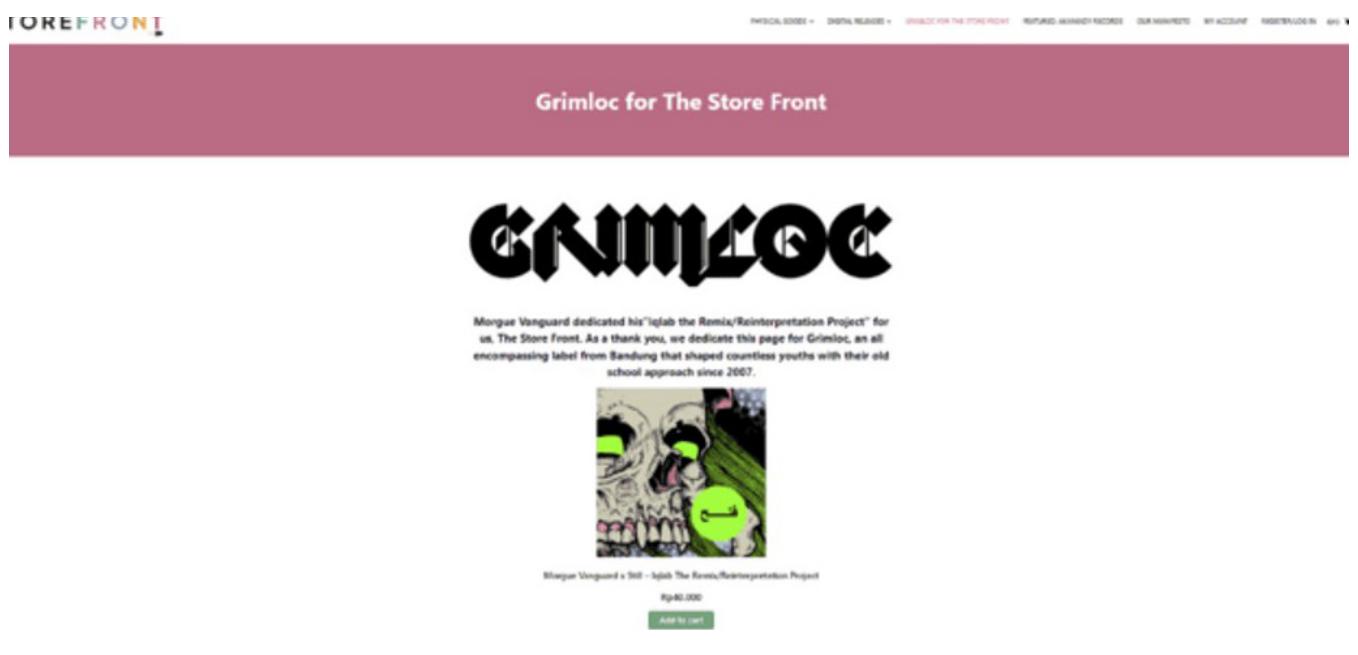
Figure 8 Grimloc Records' exclusive page on The Store Front Source: Personal documentation
Discussion
Platformization creates gaps and injustices in Indonesia's digital streaming platforms. The absence of copyright and digital music governance policies implies that aggregators can control governance mechanisms completely. The absence of minimum tariffs and regulations on digital music stakeholders suggests that various negotiation processes and exclusive contracts between technology companies, aggregators, record labels, and musicians link digital streaming mechanisms and governance to political and economic mechanisms. In this scenario, a power dynamic arises, characterized by a shift in power and dominance between the record label corporation and the aggregator.
In the streaming era, aggregators wield the power to control, distribute, promote, and monetize musical work, thereby increasing their chances of success compared to independent musicians who distribute their work organically and independently on various digital streaming platforms. This practice gives aggregators, such as record-label corporations, the power to control the governance of the music industry. Platformization threatens the homogeneous process of cultural democratization. Aggregators control the digital streaming technology through the platformization cultural production mechanism, which encourages pseudo-democratization but perpetuates the same power relations. In addition to shifts in markets and technological infrastructure, governance issues play a crucial role in the platformization culture production process.
Platforms can implement various regulatory, curation, and moderation practices in this regard through adaptation and negotiation. Transnational companies, or international aggregators like Believe Indonesia and Kithlabo, are transforming the role and control in the music streaming industry, offering exceptional services to indie musicians to enhance their promotional strategies and marketing. The governance of platformization has led to the emergence of gaps and power relationships between musicians. Platformization gives rise to two types of cultural producers: platform-dependent (musicians who focus on digital streaming platforms) and platform-independent (musicians who do not depend on digital streaming platforms). Independent record labels such as Grimloc Records and Elevation Records reject various forms of platformization. In contrast to the platform cultural production model, they reverted to their own methods of cultural production and opted not to depend on platform mechanisms.
Platform-independent cultural production promotes the return of autonomy to producers/musicians, instead of depending on the governance of digital streaming. Through a platform-independent mechanism, Grimloc Records and Elevation Records do not focus on distributing music via digital streaming platforms. They release their musical works via physical formats, such as CDs, cassettes, vinyl, and band merchandise. They also leverage more of a community base than digital distribution because they can control their cultural production. Thus, platform independence emphasizes independent autonomy rather than dependence on the platform. The presence of The Store Front also accommodates the principle of autonomy for musicians to distribute their musical works rather than depending on platform cultural production, where aggregators and algorithms play a prominent role and dominate.
This conclusion suggests that platformization only benefits aggregators who control the governance mechanisms. The solution is to regulate the minimum tariffs required to encourage fair and sustainable governance. Therefore, it is essential to increase the number of local aggregators to prevent any dominance or monopoly by a single international aggregator. Local aggregators with power in the streaming era can encourage wider opportunities for all music types. Indie musicians need to leverage communities and community-based economies in their cultural production, instead of succumbing to the false democracy of platformization. The limitation of this research is the lack of in-depth discussion from the perspective of platform developers and users, as the article focuses primarily on the views of musicians, producers, and creators as key stakeholders within the digital streaming platform ecosystem. Future research should explore platform developers' perspectives to enrich the study of platformization on digital streaming platforms.
Conclusion
The issue of inequality and injustice in the Indonesian music industry is influenced by the lack of policies and regulations related to the governance of the music streaming industry, which has an impact on the emergence of new dominant roles such as the control of moderation, negotiation, and curation of contents by aggregators. Platformization culture has influenced the emergence of inequality and injustice in Indonesia's streaming music industry. Platformization has given rise to various shifts in new politicaleconomic relations through the control of access, governance, and technology carried out by aggregators. Platformization-based cultural production mechanisms depend on the moderation, negotiation, and transparency of aggregators toward 'indie' musicians in Indonesia. This has affected the emergence of various resistances and new practices that underlie independent and organic cultural production without the exceptional services provided by aggregators on digital streaming platforms.
Grimloc Records, Elevation Records, and The Store Front pioneered platform-independent cultural production by refusing to comply with aggregator services and consistently opting for physical release of their albums (CDs, cassettes, and vinyl). They also express a greater interest in distributing their work in a community-based and independent manner, free from the control of digital streaming platforms.
Acknowledgement
This article is part of the Streaming Southeast Asia (SEA) Workshop, Monash University, July 4-5, 2022. Thanks to Dr. Emma Baulch and Dr. Ana Grgic for their insightful suggestions. Thanks to Telkom University for providing internal research grants for this research.