
INFO ARTIKEL
Kata kunci:
media sosial, grup publik Facebook, perilaku wisatawan
ABSTRAK
Media sosial telah menjadi sumber inspirasi utama, referensi, dan pendorong keputusan dalam merencanakan perjalanan wisata. Penelitian ini bertujuan untuk mengetahui pengaruh fitur grup publik Facebook dalam pengambilan keputusan perencanaan perjalanan wisatawan dan mengetahui implikasi penggunaan fitur tersebut pada pelaku layanan wisata. Metode pengambilan data dilakukan dengan dua cara, yakni memberikan daftar pertanyaan kepada informan secara daring dan melakukan wawancara semiterstruktur terhadap wisatawan serta pelaku layanan wisata yang menggunakan fitur grup publik Facebook. Data dianalisis dengan menggunakan perangkat lunak analisis data kualitatif (Nvivo 12 Pro) untuk mengindentifikasi pola bermakna. Hasil kajian ini terbagi dalam dua kategori, yaitu dari sudut pandang wisatawan dan pelaku layanan wisata. Selain itu, ditemukan empat peran utama berdasarkan sudut pandang wisatawan yaitu keaktifan, sumber informasi, ulasan dan rekomendasi, serta kelemahan. Temuan berdasarkan sudut pandang pelaku layanan wisata menunjukkan tiga peran utama, yaitu pemanfaataan output dari interaksi, ancaman dan kelemahan, serta kondisi persaingan di lapangan. Temuan ditunjukkan pada pola interaksi yang terjadi di grup publik Facebook.
Introduction
Today's technological advancements make all aspects of human life easier and more efficient (Wolff, 2021). New human interactions will undoubtedly follow, with the internet serving as a prime example (Antonucci et al., 2017). Social media usage is one of the primary reasons people use the internet (Hynan et al., 2015). Social media has become one of the most reliable sources of information. Companies often apply social media's innovative problem-solving to their communication problems (Song & Yoo, 2016).
In the realm of tourism, social media has taken on an important role, ranging from the need for promotion and strategy to market research (Arora & Sanni, 2019). Travelers often use this social media to find useful information when it comes to planning a trip (Liu et al., 2020). Gulbahar & Yildirim (2015) conducted research and found that travelers most commonly use Facebook, Instagram, Twitter, and LinkedIn for tourist information. Sholihat (2023), in her study, stated that people have a positive perception of social media marketing activities on Instagram.
Travel enthusiasts use Facebook, one of the social networks widely used by the general public, due to its useful feature that allows them to find information about the tourist trips they need (Armutcu et al., 2023). One of Facebook's features, the public group feature, acts as a forum for information related to tourist trips needed by travelers (Escobar-Rodríguez et al., 2017). Visitors can directly interact with travelers, travel service owners, tour guides, service providers, culinary experts, and others in this group forum. These public groups on Facebook can also be used to seek recommendations, share experiences, and, of course, connect with individuals who share the same goals (Niu et al., 2016). Members of Facebook public groups engage in interactive activities that enable travelers to participate more intensely in discussions. Members can pose inquiries and obtain direct feedback from their peers, which includes suggestions for tour guides and travel services (Camilleri & Kozak, 2022).
Previous research has revealed that travel activities consist of six components: destinations, transportation, accommodation, food and dining activities, attractions, and shopping and leisure activities. This study identifies that social media acts as a generator of needs, support, guidance, and approval for travelers (Liu et al., 2020). This role relates to Facebook's public groups feature, which has an indirect influence on the behavior of travelers seeking information when it comes to crafting their travel plans. In addition, similar studies have addressed certain aspects such as word-of-mouth (Burnham & Leary, 2018), trust issues in travel component purchase decisions (Sadiq et al., 2022), and the role of social media in competition between destinations (Kiráľová & Pavlíčeka, 2015).
Travelers increasingly rely on peer recommendations, user-generated content, and group discussions to shape their decisions. However, the specific ways Facebook public group features like comment threads, posts, and polls influence travel planning and decision-making remain underexplored. Although the dynamics of discussions in Facebook public groups are believed to influence travelers' planning and decision-making, there have not been many empirical studies that have explored them in depth on this topic (Mariani et al., 2019). To understand more deeply related to this topic, research was conducted to find the role of public group features on Facebook for travelers and tourism business actors. We aim to understand the impact of the Facebook public group feature on tourist travel planning decisions, as well as the consequences of its usage on tourism business actors.
The main objective of this study is to understand the extent to which the Facebook public groups feature plays a role in shaping the relationship between traveler behavior and travel service providers, which can have a valuable link in terms of marketing strategies, improving service quality, and managing the services of tourism stakeholders and entrepreneurs in the digital age. This study chose Bali as a sample due to its prominent position as a leading global tourist destination, drawing millions of domestic and international tourists annually. Bali's widespread use of digital platforms, particularly Facebook, for marketing and disseminating information facilitates the study of how interactions on social media shape tourist behavior. Given Bali's popularity and widespread use of Facebook for travel-related discussions, reviews, and recommendations, Bali is a representative case study to investigate the impact of Facebook's
public groups on the traveler decision-making process as well as the dynamics of competition among tourism service providers.
Method
This study uses a phenomenological qualitative research design. The phenomenological approach aims to understand the individual's experience and perception of a particular phenomenon (Urcia, 2021). This study is appropriate to analyze behavior, perception, and motivation from the perspective of travelers (Sutton & Austin, 2015). The phenomenological approach used is perfectly suited to generate a deep understanding of the perspectives and experiences of tourists while using the Facebook public group feature in the planning process of their travel decision-making to Bali.
Errasti-Ibarrondo et al. (2018), in their research, stated that the phenomenological approach has several characteristics, including exploring the subjective experiences of participants, in-depth interviews, and data analysis to identify the meaning of experiences owned by travelers. The achievement of validity is processed through rich and contextual descriptions of the phenomena studied (Sousa, 2014). Selfreflection of the researcher is also needed in this study to understand the raw data brought to the study (Bright et al., 2023).
Population refers to all elements of research, including objects and subjects with certain characteristics; population is not only the number of subjects studied but includes all the characteristics possessed by the subject (Amin et al., 2023). The population in this study consists of travelers and tourism service providers who interact using Facebook's public groups feature to plan their trips and to offer tourism services. The group discussion that was chosen was the one that explored information related to the visit to Bali only.
A sample is a series of cases, participants, or units of observation selected from a larger population. The sample was selected in the hope that it could be representative of the population in question, so that the researcher could draw conclusions or make generalizations about the population based on the selected sample (Palinkas et al., 2015). The sample consists of active travelers and tourism business actors who meet the criteria. The first informant is a traveler who uses a Facebook public group to plan a trip. The second informant is a tourism actor who uses the Facebook public group feature to offer the products and services provided.
The sampling technique used is intentional sampling, which is the deliberate selection of informants based on their ability to explain a particular theme, concept, or phenomenon. This technique makes it possible to select samples based on certain criteria that are relevant to the research objectives (Denieffe, 2020).
Data collection is carried out by providing a list of questions to informants online and conducting direct interviews with travelers and tourism service actors who use the group feature publicly on Facebook. Direct and in-depth interviews were conducted with four travelers who have arrived in Bali and five tourism service providers who get consumers from the feature. Meanwhile, the distribution of the list of questions online involves three travelers and six tourism business actors. Table I displays the profiles of the informants.
| Travelers | ||||||
|---|---|---|---|---|---|---|
| No | Origin | Age | Gender | |||
| Traveler1 | Malaysia | 43 | Male | |||
| Traveler 2 | Philippines | 52 | Female | |||
| Traveler 3 | Indonesia | 60 | Male | |||
| Traveler 4 | Indonesia | 31 | Male | |||
| Traveler 5 | Singapore | 64 | Female | |||
Table I Description of Informants Involved in Research
| Traveler 6 | Indonesia | 23 | Female | ||
|---|---|---|---|---|---|
| Traveler 7 | Indonesia | 43 | Female | ||
| Service Providers | |||||
| No | Origin | Age | Gender | ||
| Service Provider 1 | Tabanan | 41 | Male | ||
| Service Provider 2 | Buleleng | 44 | Male | ||
| Service Provider 3 | Gianyar | 53 | Male | ||
| Service Provider 4 | Bangli | 48 | Male | ||
| Service Provider 5 | Gianyar | 30 | Male | ||
| Service Provider 6 | Bangli | 22 | Female | ||
| Service Provider 7 | Denpasar | 52 | Male | ||
| Service Provider 8 | Gianyar | 57 | Male | ||
| Service Provider 9 | Bangli | 36 | Male | ||
| Service Provider 10 | Denpasar | 56 | Male | ||
| Service Provider 11 | Bangli | 48 | Male | ||
At the time of the live interviews, researchers worked to extract data based on travelers' first-hand experiences when using Facebook's public group feature to find information that helped them with travel planning. Data were collected through semi-structured and in-depth interviews with informants through face-to-face meetings.
The data analysis technique used is inductive thematic, which means reading a series of data that has been obtained and looking for meaning patterns from the data in order to understand the essence of the phenomenon that is happening (Heriyanto, 2018). The data is processed and analyzed using the NVivo 12 Pro qualitative data analysis software.
Result and Discussion
Facebook is one of the popular social media. As a popular social media, it facilitates a variety of human interactions. The Facebook application's public group feature accommodates these diverse interactions. There are various types of public groups according to the purpose of their creation, ranging from buying and selling property, vehicles, animals, and others. The same applies to the field of tourism and travel. There are numerous Facebook groups on the platform that feature chat topics related to travel trips. This type of public group accommodates interactions that take place between travelers and tourism service providers. This public group identifies users as the primary participants in group interactions. The interaction between these two driving components has their own point of view.
This study observes the interaction in the Facebook group discussion feature from two perspectives: that of travelers and that of tourism service providers.
The Perspective of Travelers
The data obtained in the field is analyzed using NVivo 12 Pro. This application simplifies the review process and understands raw data. After going through the analysis process, from the perspective of travelers, four main roles are obtained, as explained in the following sub-chapter.
Activeness
The public group featured in the Facebook app significantly influences travelers' behavior and decisionmaking during their travel planning. Their active interaction with fellow travelers and tourism service providers demonstrates this. Dynamic and fun interactions support this positive aspect without
overshadowing the primary objective of mutual assistance. Figure 1 illustrates the interaction that took place in the public group on Facebook.
Figure 1 The interaction between the travelers and tourism service providers in public group Facebook Source: Facebook public group (Bali Recommendations & Information Group, 2024)
Figure 1 shows various activities that occur in one of the Facebook public groups that are specifically created for tourism activities in Bali. There can be seen two-way communication between travelers and tourism service providers related to tourism products and services.
Resources
Travelers interact through the Facebook public group, providing information to both tourism service providers and fellow travelers. This information typically takes the form of travelers' experiences from their previous travels, as well as insights from tourism service providers about factors to consider when engaging in tourist activities.
Travelers' decision to plan a tourist trip will be influenced by the complex information they receive from various sources. The information obtained is also well selected; starting from looking at how the source of the information is disseminated, whether the spreading account has suspicious characteristics or not, the appearance of unattractive Facebook user profiles is considered irrelevant to be used as a reference by travelers. This pertains to the extent to which a traveler can rely on the information they provide. Additionally, travelers often cross-check information from Facebook groups with other information sources like Google, TikTok, Instagram, and others.
Reviews and Recommendations
Another outcome is that public groups serve as a platform for travelers to share and receive reviews and recommendations from others who have previously engaged in tourism activities. Through these reviews, travelers can gain a deeper understanding of the positive and negative aspects of other travelers' experiences.
Travelers also do not hesitate to give a recommendation to other travelers, whether they need accommodation, transportation, or tour packages. With strong and reliable recommendations and data from other travelers, travelers planning their travels make more mature decisions, ensuring they feel calm, comfortable, and safe in their decision-making.
Weaknesses
Travelers experience both positive and negative aspects of this Facebook feature. From the unappealing look of these public group features to the volume of information that doesn't align with real-world facts, travelers encounter numerous challenges. That way, not a few travelers feel less effective in using Facebook's public group feature in finding information about tourist trips. Figure 2 illustrates how the analysis reveals the four primary roles in the word cloud diagram.
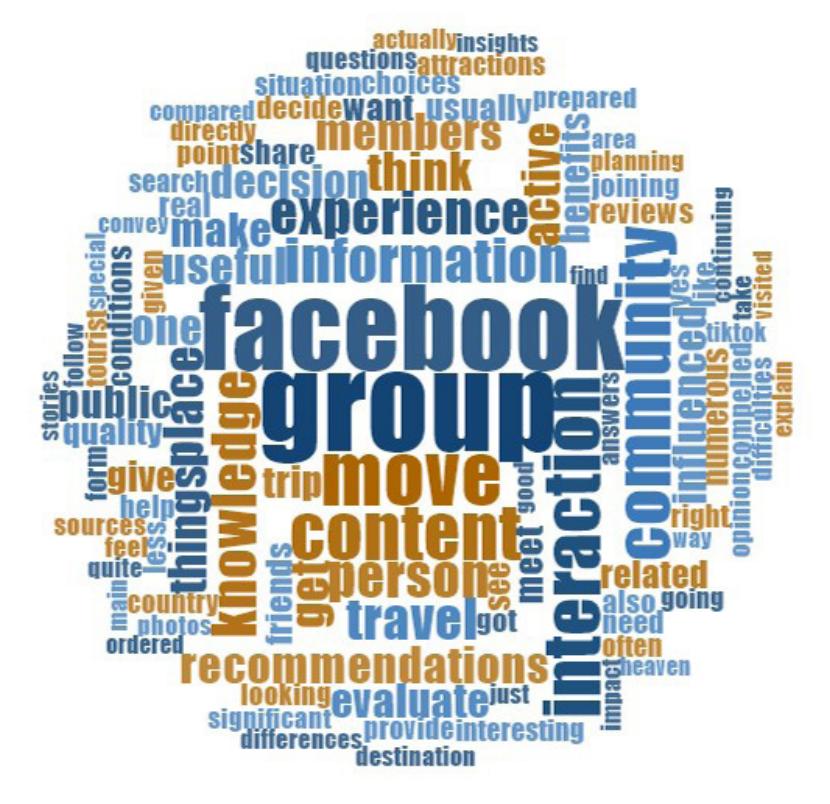
Figure 2 Word cloud from a traveler's perspective Source: NVivo 12 Pro App (2024)
The word cloud in figure 2 shows a variety of words of different sizes, with "Facebook group" appearing as the most dominant word in the middle, followed by the words "information" and "experience," which are also quite prominent. This visualization depicts a Facebook community that is active in sharing travel information and experiences, where its members interact with each other to provide recommendations, reviews, and various travel-related content. The varying word sizes in this word cloud reflect the frequency and level of importance of the topics discussed in the group, indicating that the platform serves as a collaborative space that facilitates the exchange of information and experiences between community members.
The Perspective of Tourism Service Providers
The activeness with which tourism service providers interact with travelers has a significant impact. Tourism service providers must engage with travelers in a more interactive and enjoyable manner; in addition, they must maintain a dynamic presence during interactions to capture the attention of potential travelers. With better utilization, this Facebook public group feature can have significant implications in terms of marketing strategies, service quality improvement, and service management in this digital era.
When utilizing Facebook public group features, it is important to consider factors such as the outputs generated from the interaction process, potential threats and weaknesses, and the competitive conditions present in the field. The results of the NVivo 12 Pro analysis categorize it into three main roles.
Utilization of Output from Interaction between Tourism Service Providers and Travelers
The output of interactions involving tourists with tour operators is a tourist trust with reviews as well as recommendations that can be used as a promotion strategy by the tour operator. Indirectly, tourism service providers are required to improve the quality of their services in order to get good reviews. Therefore, in the future, it can be included in one of the recommendations that can be suggested by travelers who have tried tourism services to travelers who have never tried it. Word-of-mouth (WoM) promotions that occur in Facebook public groups tend to be more effective and maximum in attracting the attention of travelers who are looking for travel services. This can certainly increase the electability and profits of tourism service actors who can make good use of it.
Facebook public groups can also be one of the sources of reference in understanding the needs of the target market. For example, there is a Facebook group that only discusses tourist activities that are liked by travelers from Australia. Segmentation like this makes tourism service providers have a better focus in understanding their target market and also does not miss the possibility for tourism service providers to penetrate into a wider market than the market they were targeting before. The feedback they get during the interaction is also one of the things that can be studied in preparing marketing strategies and improving the quality of their services.
In terms of the quality service of tourism service providers, Facebook public groups can be used as a channel for customer service. Tourism service providers can respond to travelers for questions, inputs, and complaints quickly. Indirectly, this can increase travelers' satisfaction and build strong relationships with travelers so that risk management can be controlled properly.
Before achieving that goal, the important role of Facebook's public group is also as a medium to introduce the latest information about products, events, or services that can increase the existence of businesses carried out by tourism service providers. In this case, the accuracy of the information must be maintained to make sure the target market can recognize the professionalism of the tourism service providers.
Threats and Weaknesses
The interaction between tourism service providers and travelers not only gives a positive picture of opportunities but also shows threats and weaknesses that deserve attention. During interactions in Facebook groups, scams often occur under the guise of other people's businesses. The appearance of Facebook groups' public features, which some people find less attractive, indicates that certain groups of people are less likely to use them.
The lack of sufficient capacity among tourism service providers to effectively communicate with travelers further contributes to the negative perception of this Facebook application. The existence of other applications, more relevant and promising for travelers seeking information, further exacerbates this issue. This leads many travelers, who initially used Facebook, to abandon it in favor of other, more engaging applications. One example is the TikTok application, which is considered more interactive and can convey messages on target.
Conditions of Competition in the Field
The competition that occurs between fellow tourist service providers in Facebook public groups is not good in some ways. There are many posts or comments that are not suitable for display in the group feature. From tariff wars to stifling people's efforts by prohibiting them from promoting in public Facebook groups, one party's popularity is often diminished. Group admins who also have businesses engaged in the same field often behave unfairly. Despite this, most travelers remain optimistic and prioritize enhancing the quality of their services over lowering their initial charges. Figure 3 displays a word cloud diagram that illustrates the three primary roles of tourism service providers, based on the analysis.
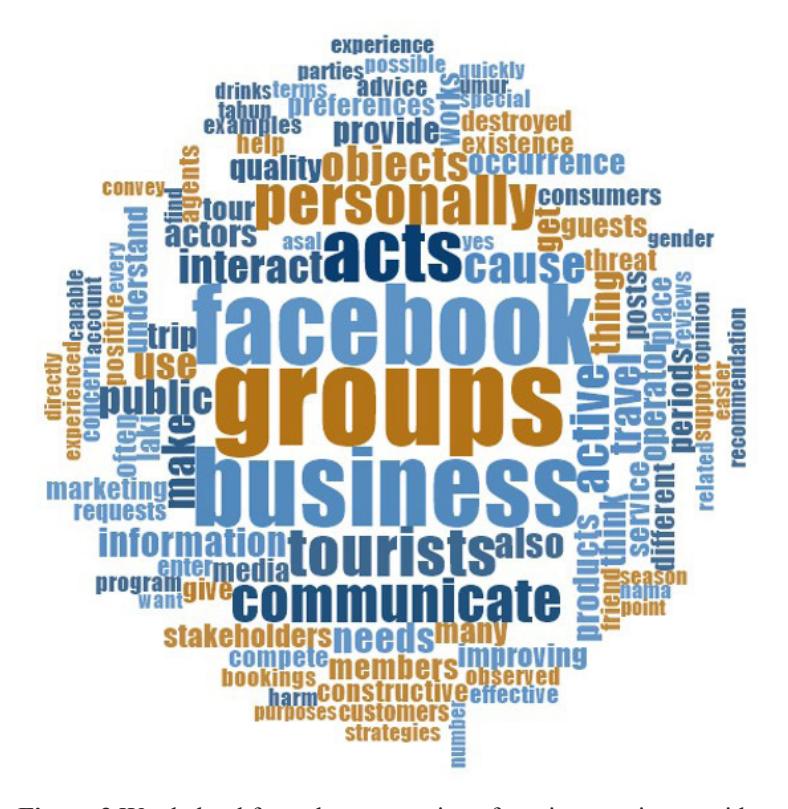
Figure 3 Word cloud from the perspective of tourism service providers Source: NVivo 12 Pro Application (2024)
The word cloud in Figure 3 displays a variety of words of different sizes, with the words "Facebook," "groups," and "business" appearing as the most dominant words in the middle of the visualization. This illustrates the main focus on the use of Facebook groups for business and tourism purposes, as evidenced by the emergence of the word "tourists." The varying word sizes reflect the frequency and level of interest in the context of discussions, where there is an interaction, communication, and personal relationship between tourism service providers and consumers or stakeholders. This word cloud indicates that Facebook groups function as a business platform that facilitates interaction and communication between tourism service providers and tourists.
The Role of Public Groups Feature in the Facebook App for Travelers and Tourism Service Providers
The results of the analysis carried out using NVivo 12 Pro and inductive thematic techniques stated that Facebook's group discussion feature acts as a guide, providing direction and guidance to travelers on what to do and expect during their trip. This is especially helpful for first-time travelers visiting certain destinations. For tourism service providers, it serves as a platform for direct interaction with travelers, the promotion of service products, and collaboration among these providers, despite potential weaknesses and threats. Figure 3 illustrates the interaction patterns that take place in Facebook public groups.
Figure 4 Interaction patterns that occur in Facebook public groups Source: NVivo 12 Pro application (2024)
Figure 4 shows a diagram describing the Facebook group feature with the words "Facebook Group Feature" as the center of the diagram. The diagram's structure comprises several interconnected components: competition, activities, threats, resources, benefits, weaknesses, and reviews & recommendations. The diagram displays each component's sub-elements in the form of a blue circle, with competition representing aspects like service quality and optimism, activities linking stakeholders with tourists, resources representing tourists' references and trusted information, and weakness referring to unclear information. This diagram comprehensively illustrates how the Facebook group feature serves as a platform that connects various aspects of the tourism industry, from interactions between tourism service providers to the challenges and benefits faced.
Conclusion
The analysis of this study as a whole provides new insights into how Facebook's public group features affect the traveler's travel planning process. We identified four main roles from the perspective of travelers: activeness, sources of information, reviews and recommendations, and weaknesses. Travelers can find useful information in public groups on Facebook, but they must balance this with a critical and selective approach when making travel decisions.
Three main roles were found from the perspective of tourism service providers, which are the use of interaction outputs, threats and weaknesses, and competition in the field. Therefore, to fully utilize this potential, tourism service providers should consider using this feature as a reference for developing marketing strategies and service management.
Implementing collaboration among tourism service providers, starting from business partners, the government, and local communities, is crucial for achieving professional and efficient tourism services. This involves paying attention to relevant content, maintaining good communication, and maintaining a polite attitude when serving travelers. When used effectively, this public group feature can significantly enhance the quality of tourism services.
Acknowledgement
The author expresses great appreciation to the Bali Tourism Polytechnic through the Center for Research and Community Service for the opportunity and support provided to conduct this research. Gratitude was also conveyed to all informants and all parties involved until the completion of this study.