

INFO ARTIKEL
Kata kunci:
critical thinking, problem solving, TaRL, model pembelajaran, geografi
ABSTRAK
Critical thinking dan problem solving merupakan keterampilan yang diperlukan peserta didik untuk menghadapi kompleksitas dan ambiguitas informasi. Pendekatan teaching at the right level (TaRL) adalah pendekatan pembelajaran yang mengorientasikan peserta didik untuk belajar pada desain pembelajaran berbasis tingkat kemampuan. Implementasi Kurikulum merdeka merupakan salah satu upaya pengembangan karakter, kemampuan critical thinking, dan problem solving peserta didik. Tujuan penelitian ini adalah untuk mengembangkan model pembelajaran geografi melalui teaching at the right level dalam meningkatkan critical thinking dan problem solving pada Kurikulum Merdeka. Metode penelitian ini menggunakan penelitian pengembangan (research and development) dengan model pengembangan 4D (four-D model) melalui tahapan define (pendefinisian), design (perancangan), develop (pengembangan) dan disseminate (penyebaran). Subjek penelitian ini adalah validator yang merupakan dosen dan guru bidang studi Geografi, serta peserta didik SMA Negeri 2 dan SMA Negeri 7 Banda Aceh. Teknik pengumpulan data menggunakan lembar uji kelayakan, tes, dan angket, kemudian dianalisis dengan N-gain. Hasil Penelitian pada tahapan define dengan pembagian kelompok siswa secara heterogen membuat guru kesulitan dalam mengembangkan kemampuan berpikir kritis siswa. Tahapan design, melakukan perancangan modul ajar, lembar kerja peserta didik dan instrumen penilaian. Tahapan develop, validasi ahli, isi, dan konstruk model yang dikembangkan termasuk kategori sangat layak untuk diimplementasikan. Pada tahapan disseminate terdapat peningkatan N-gain siswa pada kategori sedang sebanyak 50% dan tinggi sebanyak 23,3%. Respons siswa terhadap model pembelajaran termasuk dalam kategori sangat baik dengan persentase 93,8%.
Introduction
The quality of education in Indonesia is currently still lagging according to the human development index (HDI) data issued by the United Nations Development Program (UNDP) in 2020. Indonesia was ranked 121 out of 189 countries, far below other Southeast Asian countries such as Malaysia, Singapore, Thailand, Vietnam, and Brunei. Educational development must keep up with the times. In the era of Society 5.0, the massive use of information and communication technology (ICT) makes the world more open and seemingly limitless (Mourtzis et al., 2022). Another phenomenon of this era is the shift in the need for human resources (HR), which shifts low-skilled HR (manual work) to HR work with high creativity. Therefore, every individual must adapt and innovate (Carayannis et al., 2022) in order to keep up with the changing times and compete effectively with others. Each individual can start their preparations for facing the development of the era of Society 5.0 by changing their way of thinking. The way of thinking must be changed to a better direction, namely creative, innovative, and critical thinking and finding solutions to problems (Legi et al., 2023). Such changes will enable individuals to survive and compete with other individuals.
Geography education plays a role in developing students' higher-order thinking skills (HOTS), as it involves analyzing, evaluating, and synthesizing information related to the relationship between humans, the environment, and space. Geography education is an educational process aimed at understanding the interaction between humans, the environment, and space across various scales, from local to global. Integrating higher-order thinking skills into geography education is crucial, as such skills are essential for understanding complex geographical issues, comprehending concepts deeply, developing logical and evidence-based arguments, and connecting geographical knowledge with other disciplines (Virranmäki et al., 2021). Furthermore, the use of environment-based education has been proven as an effective method for enhancing students' critical thinking skills (Ernst & Monroe, 2004). Geography has the potential to enhance students' HOTS; however, students often face difficulties when confronted with questions that test these skills (Virranmäki et al., 2021).
The Kurikulum Merdeka emerged as an innovative approach with an emphasis on contextual learning; this curriculum provides students with the opportunity to improve critical thinking skills. Learning concepts in real-world situations provides students with the opportunity to enhance their critical thinking skills. This approach aims to create a learning environment that pursues academic achievement and improves students' ability to understand, analyze, and evaluate ideas in different contexts (Kollo & Suciptaningsih, 2024).
When facing various challenges, students need critical thinking and problem-solving skills as the future capital (Rodzalan et al., 2015). Critical thinking and problem-solving are ways to discover the consequences of their knowledge. Those who have this thinking ability will usually know better how to use the information received to solve a problem. In addition, they can also search for relevant information (Indraswati et al., 2020). A person who has critical thinking skills understands how to use knowledge to solve problems, can identify reliable sources of information to educate themselves, and can draw conclusions from what they have learned (Raj et al., 2022).
Critical thinking allows students to develop new hypotheses and test them against facts (Karakoc, 2016). Critical thinking skills are one of the components of high-level thinking that is the focus of 21stcentury learning. Experts generally use the main references from Ennis, Bloom's Taxonomy, and Facione to define critical thinking skills. Shao et al. (2023), drawing inspiration from Bloom, articulated the abstract concepts of critical thinking as recognizing, understanding, analyzing, evaluating, and creating. Calkins et al. (2020) define critical thinking as the process by which students deal with complex situations, consider multiple perspectives, question authority, and form their interpretations; students' ability to think contemplatively and critically reflect on their learning. Hwang et al. (2023) describe observation, experience, evaluation, reflection, communication, reasoning, analysis, and problem-solving skills. There is a strong link between critical thinking and problem-solving, but in life, it is inseparable from the basic conception of problem-solving as a specific or general domain (Greiff et al., 2013).
Problem-solving is an individual's capacity to use cognitive processes to solve real-world crossdisciplinary situations/problems where the solution path is not immediately visible (Greiff et al., 2013). In describing the relationship process between students' critical thinking and problem-solving abilities, Haller et al. (2007) describe the critical thinking and problem-solving models in an interrelated graph called cultural learning in Figure 1. Students engage in learning through repetitive activities, such as memorizing, understanding, and reflecting. These processes require students to engage in thinking in order to achieve effective learning outcomes and subsequently enhance their problem-solving skills. However, the order of thinking is different at each stage. For example, the reflection stage requires higherorder thinking (critical thinking) than the repetitive or memorization stage. Several factors can influence students' thinking processes. These factors are teacher-student relationships, collective or collaborative learning, in-depth approaches, and transformational learning (Haller et al. 2007).
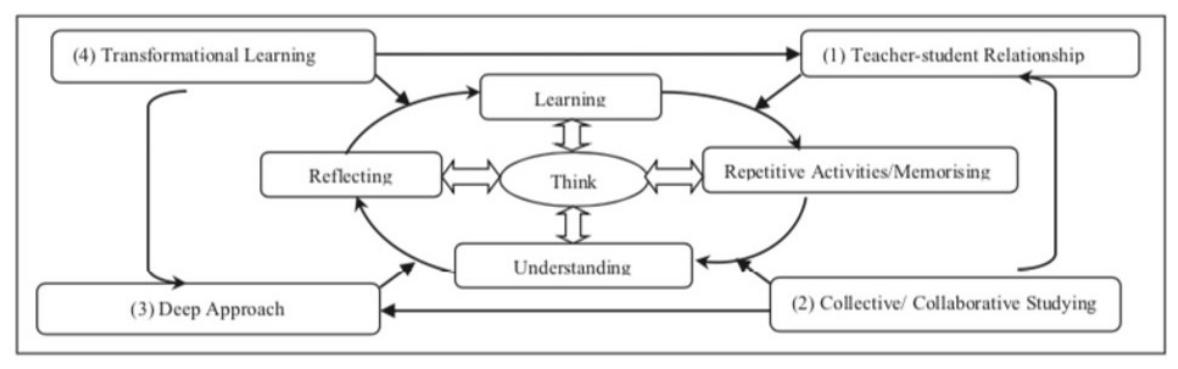
Figure 1 Cultural learning and teaching model Source: Haller et al., (2007)
Currently, the development of problem-solving skills has been supported by a series of comprehensive steps, such as the introduction of learning aids, the development of learning models, project-based learning, or games (Gao et al., 2024). The Merdeka curriculum is one of the efforts to develop character, critical thinking, and problem-solving skills. Widiastini et al. (2023) put forward several characteristics of the Kurikulum Merdeka (Independent Curriculum) currently being implemented in Indonesia, namely the application of project-based learning, emphasis on essential materials, and adjustment of learning to the abilities of each student.
Indonesian education frequently categorizes students according to their age, despite the fact that a student's age does not always correspond with their learning progress. Everyone has a different development rate, which is the basis of the TaRL approach (Indriani, 2023). The TaRL approach pioneered by India aims to increase student learning participation in class. TaRL is a teaching approach that utilizes simple test tools to assess and categorize students according to their learning level abilities compared to their age or class (Busri et al., 2023). The TaRL approach does not organize students based on class level and age but designs learning in groups based on the characteristics of the student's ability levels (Ahyar et al., 2022). The student's ability level is the main focus in designing the learning process. Students with similar ability levels are grouped in a learning process regardless of class level and age. Progress in learning outcomes is measured through periodic evaluations.
So far, research on the implementation of teaching at the right level (TaRL) has predominantly focused on its effects on learning outcomes (Listyaningsih et al., 2023; Fadilla et al., 2023; Anggriani et al., 2023; Salam et al., 2024; Puspitaningrum et al., 2024), while studies on the application of TaRL to enhance critical thinking and problem-solving skills remain limited. This is often due to teachers facing challenges in preparing teaching materials that align with students' ability levels (Busri et al., 2023), which are important for developing critical thinking and problem-solving skills. Teaching materials play a significant role in optimizing the TaRL approach. Based on this, the current study is considered important to conduct, with the aim of generating innovations in geography education through the Teaching at the Right Level approach to enhance students' critical thinking and problem-solving skills, particularly at SMAN 2 and SMAN 7 in Banda Aceh City, which have already implemented the Kurikulum Merdeka.
Method
This research is research and development (R&D) using a 4D development design model (four-D model). The 4D model was developed by Thiagarajan (1974) with stages: define, design, develop, and dissemination (Thiagarajan, 1974; Semmel & Thiagarajan, 1974; Serevina et al., 2018; Reigeluth, 2023). The subjects of this study were validators, lecturers of the Geography Education Department, experts in the field of learning model development, geography subject teachers, and students of SMA Negeri 2 and SMA Negeri 7 Banda Aceh. The data collection techniques used in this study were a feasibility test sheet (validation), tests, LKPD, and questionnaires. The feasibility test instrument was a Guttman scale with two categories consisting of scales 1 and 0 (Proctor, 1970). The test results were analyzed using N-gain (normalized gain) to measure the increase in skills before and after learning. Student responses were analyzed using the percentage formula.
Results and Discussion
The development stage is the expert assessment stage. The development stage aims to produce a learning model that experts have validated. This stage includes model development, validation by experts, and model refinement. The TaRL-based geography learning model is developed by adopting the principles of critical thinking and problem solving. By combining these ways of thinking, the TaRL-based geography learning model becomes an excellent model to use in geography learning, especially in improving students' critical thinking and problem-solving skills.
Development of TaRL-Based Geography Learning Model
The TaRL-based geography learning model consists of six main stages. Each stage has gone through an expert validation process both in terms of content and construct. The following are the six stages of the TaRL-based geography learning model.
Table I Stages of TaRL-Based Geography Learning Model
| Stage | Teacher Activities |
|---|---|
| Stimulation | The initial process where teachers create conditions that encourage students to engage actively with the learning material. The goal is to spark interest, curiosity, and motivation in students so that they are better preapred to understand the concepts being taught. This stage typically involves activities that are relevant to students' daily lives or familiar experiences, allowing them to connect the material with real-world contexts. |
| Identify the problem | Teachers play a role in helping students understand and identify the core of the problem to be solved. Activities carried out by teachers at this stage typically include facilitating initial discussions, providing supporting information, encouraging preliminary analysis, and connecting the problem to real-life experiences. |
| Define the context and analyze options | Teachers play a role in helping students understand the context of the problem more deeply and explore various solution options. Activities that teachers can carry out at this stage include providing contextual explanations, facilitating the analysis of facts, encouraging alternative thinking, and offering strategic guidance. |
| Data collection | Teachers assist students in the process of gathering relevant information to support problem-solving. Activities carried out by teachers at this stage include providing guidance on data collection, offering learning resources, directing students' focus, moitoring the data collection process, and encouraging group collaboration. |
| Data processing | The teacher's role is to help students analyze and process the data that has been collected to produce clearer understanding and solutions. Activities that can be carried out by the teacher at this stage include guiding students in data analysis, asking guiding questions, teaching analysis techniques, helping to draw conclusions and providing feedback. |
| Monitoring and evaluasion | The teacher's role is to monitor students' progress in solving probelms and evaluate the results and processes that have been carried out. Activities carried out by teachers at this stage include monitoring student progress, providing feedback, assessing processess and results, encouraging reflection, indentifying difficulties and challenges. |
Source: Primary data processing results, 2024
This table outlines the stages of the TaRL-based geography learning model, designed to enhance students' critical thinking and problem-solving skills in a structured manner. The process begins with stimulation, where students are divided into learning groups, introduced to the material, and engaged with questions that relate to their daily lives to spark interest and active participation. The second stage, identifying the problem, focuses on recognizing the causes of the issues introduced in the initial stage. In the define the context and analyze options stage, students are tasked with identifying the facts underlying the problem and constructing strategies to address it. During data collection, information is organized, and resources are allocated to support the problem-solving process. The data processing stage requires students to analyze the chosen solutions, articulate the reasoning behind their decisions, and prepare a report for presentation. Finally, in the monitoring and evaluation stage, students discuss and evaluate the outcomes of their problem-solving efforts, ensuring they grasp the steps they have undertaken. This model integrates collaboration, analysis, and reflection to holistically develop students' skills.
Furthermore, the development of the stages of the TaRL-based geography learning model is validated by experts. Expert validation includes content validation conducted by 2 lecturers in the Department of Geography Education related to the development of model stages and geography teaching materials and construct validation conducted by two geography subject teachers related to teaching modules, including student worksheets, learning media, and assessment rubrics used. Expert validation was carried out twice. The model feasibility test showed that the model's content and construct were both very feasible.
Table II Content Validity Test
| Validator | |||
|---|---|---|---|
| No | Assessment Items | 1 | 2 |
| 1. | Suitability of learning models with a scientific approach. | 1 | 1 |
| 2. | Suitability of learning models with the TaRL approach. | 1 | 1 |
| 3. | Suitability of the learning model with Piaget's learning theory. | 1 | 1 |
| 4. | Suitability of learning models with Vygotski's learning theory | 1 | 1 |
| 5. | Determination of phases in the syntax of the learning model | 1 | 1 |
| 6. | The syntax of the learning model is easy for teachers to apply. | 0 | 1 |
| 7. | Clarity of student and teacher activities at each stage of learning | 1 | 1 |
| 8. | Clarity of the relationship between student and teacher activities at each stage of learning. | 1 | 0 |
| 9. | The determination of the components of the social system in the learning model below is based on a strong theory: a. Students are active in discussions. b. Students can work together in their learning groups. c. Are democratic. | 1 | 1 |
| 10. | Clarity of social relations and interactions between teachers and students in learning. | 1 | 0 |
| 11. | The suitability of the teacher's role as a facilitator and mediator with the TaRL approach. | 1 | 1 |
| 12. | Teacher activities provide opportunities for students to ask questions, express ideas and collaborate. | 1 | 1 |
| 13. | Suitability of teaching materials and LKPD for Introduction to Geography material with learning models. | 1 | 1 |
| 14. | Clarity of description of student activities in learning. | 1 | 1 |
| 15. | Clarity of the teacher's role in helping students during the learning process | 1 | 1 |
Source: Primary data processing results, 2024
Tabel III Construct Validity Test
| Validator | ||||
|---|---|---|---|---|
| No | Assessment Items | 1 | 2 | |
| 1. | No conflicting understandings were found between the components of the learning model. | 1 | 1 | |
| 2. | The relationship between concepts and principles is contained in the components of the learning model. | 1 | 1 | |
| 3. | The relationship between student and teacher activities in each component of the learning model. | 1 | 1 | |
| 4. | Clarity of supporting theories used in the learning model. | 1 | 1 | |
| 5. | There is an internal link between each phase in the learning model syntax | 1 | 1 | |
| 6. | The relationship between student and teacher activities in each phase in the syntax of the learning model. | 0 | 1 | |
| 7. | There is an internal relationship between the components of the social system in the learning model below: a. Students are active in discussions, asking questions and ideas. b. Students are able to work together in their study groups. c. Democratic | 1 | 1 | |
| 8. | The way teachers care about students that are expected in learning in each component of the learning model is interrelated, namely: | 1 | 1 | |
| Pay attention and build student interaction in groups | 1 | 1 | ||
| Providing and managing conceptual and relevant learning materials | 1 | 1 | ||
| Directing students so that they can construct knowledge through group activities and class discussions. | 0 | 1 | |
|---|---|---|---|
| Provide limited assistance to each student | 1 | 1 | |
| 9. | There is a relationship between the media and the teaching materials used | 1 | 0 |
| 10. | The learning materials for Introduction to Geography used are in accordance with the learning model | 1 | 1 |
| 11. | Clarity of description of interrelated student activities. | 1 | 1 |
| 12. | The clarity of the teacher's role in helping students is interrelated | 1 | 1 |
Source: Primary data processing results, 2024
The results of the study indicate that the developed model is very feasible to implement. This fact is evidenced by the results of expert validation conducted twice each. There are several advantages to the learning process. First, the learning activities that are conducted make students interested and actively involved. Second, the problems given by the teacher challenge students to hone their problem-solving skills. With enthusiasm and solid cooperation in groups, students try their best to solve the problems given by the teacher. Third, the teacher allows group representatives to present their work in front of the class, providing space for students to develop scientific communication and presentation skills. As stated by Shoimin (2014), through this learning model, students are encouraged to work together in groups to develop problem-solving skills that are relevant to real situations in everyday life. They are also trained to communicate scientifically through discussion activities and by presenting their work. (Nisa et al., 2023) In the teaching and learning process, teachers must make optimal efforts to use various learning approaches.
While there are advantages to the learning process, there are also disadvantages. Shoimin (2014) stated that the division of tasks in the class is too diverse, so it is very difficult. Considering that students have varying levels of understanding and abilities, the TaRL-based geography learning model can be the right solution to overcome the weaknesses of the problem-based learning (PBL) learning model. Teachers provide special treatment to groups of low-ability students. Teachers provide more intensive direction and explanation of the material as well as guidance so that their learning outcomes can improve. Meanwhile, high- and medium-ability students are allowed to learn independently and with peers, and teachers are ready to assist if needed. In this process, low-ability students are very active in learning pedosphere material. As stated by Pratama et al. (2023), the TaRL approach is an approach that adjusts the learning process to the level of achievement or knowledgeability of each student.
The weakness in using the TaRL-based geography learning model is that teachers find it difficult to understand the characteristics of students quickly, so it takes more time. In addition, there are difficulties in delivering material in the learning process due to technical obstacles such as projectors. During learning, some students are busy with their affairs, and some disturb their classmates, making the classroom atmosphere noisy. This happens because geography lessons are scheduled for the last hour. Ineffective teaching can be caused by teachers' constraints in following an unrealistic curriculum and using traditional teaching methods such as lectures and writing on the board, which results in an inability to adjust learning to students' needs.
This conclusion is in line with the theory of differentiated learning put forward by Mahfudz (2024), which states that each student has unique characteristics and learning styles, so they cannot be treated homogeneously. This does not mean giving different treatment to each student or distinguishing between smart and less smart students. Differentiated learning aims to bridge the diversity of students' learning needs, ensuring that each student has an equal opportunity to achieve their best potential.
In the pedagogical aspect, the concept of the Merdeka curriculum emphasizes the existence of freedom and flexibility in maximizing the abilities possessed by teachers and students. This conveys the idea of a free relationship between teachers and students, where students are encouraged to develop
naturally according to their individual learning needs. Teachers must also be able to guide and be facilitators for students. Differentiated learning is very relevant to the pedagogical vision of Ki Hajar Dewantara, especially in managing learning based on students' diversity of interests, readiness, and learning profiles (Santika & Khoriyah, 2023). In the Merdeka curriculum, teachers are required to guide students based on their natural abilities by aligning learning activities with student abilities based on different readiness and learning profiles.
Application of Learning Models to Students' Critical Thinking and Problem-Solving Skills
Before the learning is conducted, a pre-test is performed, and a post-test is conducted after the learning activity is completed. The test results are analyzed using N-gain (normalized gain) to measure the increase in skills before and after learning. This stage aims to evaluate how well the product being developed works. At this stage, the model is implemented on students. The goal is to gather feedback on the developed model.
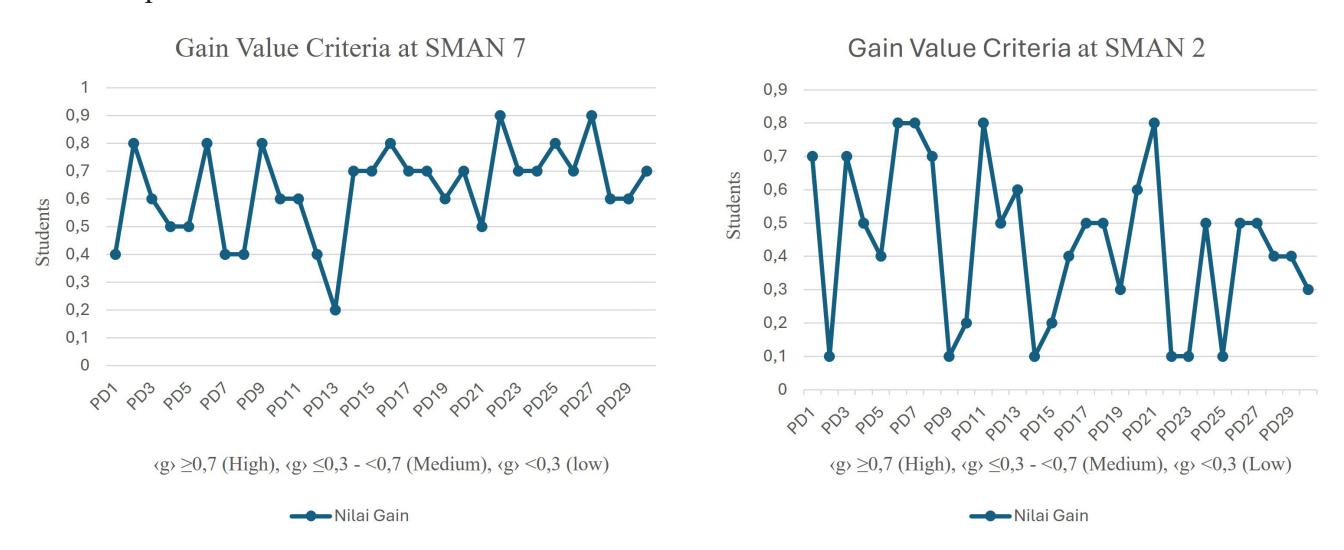
Figure 2 Gain value criteria at SMAN 7 Banda Aceh and SMAN 2 Banda Aceh Source: Primary data processing results, 2024
Table IV Recapitulation Based on N-Gain Criteria at SMAN 2 Banda Aceh and SMAN 7 Banda Aceh
| N-Gain | |||||||
|---|---|---|---|---|---|---|---|
| School | Low | Medium | High | Total | |||
| Number | % | Number | % | Number | % | ||
| SMAN 2 Banda Aceh | 1 | 3,3 | 14 | 46,6 | 15 | 50 | 30 |
| SMAN 7 Banda Aceh | 8 | 26,6 | 15 | 50 | 7 | 23,3 | 30 |
Source: Primary data processing results, 2024
The results of the study indicate how effectively the implemented learning model evaluates the development of the product. The learning model was implemented for students of SMA Negeri 2 Banda Aceh and SMA Negeri 7 Banda Aceh, which had a total of 60 students; the results showed that there was an increase in critical thinking and problem-solving skills of the students. The N Gain value before and after the implementation of learning of the SMAN 7 Banda Aceh students showed 50%, or 15 students, experienced an increase in the High Gain Value category, which was more than 0.7. In SMAN 7 Banda Aceh, 15 students, or 50%, experienced an increase in the Medium Gain Category value. Overall, the implementation of this learning model improved students' critical thinking and problem-solving skills, with the result that more than 70% of students experienced an increase in gain values in the medium and high categories. This learning model can encourage students to work together in groups to develop problem-solving skills relevant to real situations in everyday life. TaRL allows teachers to group students based on their abilities so that learning can be tailored to individual needs. The approach helps students with lower abilities get more focused and tailored guidance (Ristiyaningtiyas et al., 2024). Research conducted by Istiqomah et al. (2024) states that by using the Teaching at the Right Level approach, teachers can group students based on their abilities so that teachers can provide guidance according to needs, which is more in-depth and effective. They are also trained to communicate scientifically, both through discussion activities and by presenting their work. This approach is able to improve students' critical thinking skills and problem-solving abilities. Affandy et al. (2024) states more, by integrating creative elements, students are faced with challenges and situations that stimulate analytical thinking, idea synthesis, complex problem solving, and the ability to adapt to various situations. The findings of this study support the idea that project-based learning activities in the classroom contribute positively to student creativity. Students who participate in project-based learning show higher levels of creative thinking than those not involved in such activities (Widodo, 2024).
Student Responses to the Implementation of Learning Models
After completing the learning implementation, students were given a questionnaire to determine their response to the learning model's implementation. The results of the study show that 93.8% of students had a positive response to the learning model's implementation.
Table V Student Response Data of SMAN 7 and SMAN 2 Banda Aceh
| No | Response | |||
|---|---|---|---|---|
| Statment | Yes | No | ||
| 1. | Do you feel happy/unhappy about it? | |||
| Learning activities | 59 | 1 | ||
| Teaching materials about Introduction to Geography | 57 | 3 | ||
| LKPD (Student Worksheet) | 58 | 2 | ||
| Learning media | 55 | 5 | ||
| The learning atmosphere in class | 59 | 1 | ||
| Learning model | 55 | 5 | ||
| 2. | Do you think the following things are new/not new? | |||
| Learning activities | 57 | 3 | ||
| Teaching materials about Introduction to geography | 55 | 5 | ||
| LKPD (Student Worksheet) | 57 | 3 | ||
| Learning media | 54 | 6 | ||
| The learning atmosphere in class | 58 | 2 | ||
| Learning model | 56 | 4 | ||
| 3. | Do you feel happy during the learning activities? | 57 | 3 | |
| 4. | Do you feel more independent than before during learning activities? | 53 | 7 | |
| 5. | Are you interested in participating in further learning activities, such as those carried out for the Introduction to Geography material? | 55 | 5 | |
| Total Score | 845 | 55 | ||
| Maximum Score | 900 | 900 | ||
| Percentage | 93.8% | 6.1% | ||
| Criteria | Very Good | |||
The table presents data on student responses from SMAN 7 and SMAN 2 Banda Aceh regarding various aspects of learning in the Introduction to Geography material. Student responses were evaluated based on questions about their feelings, novelty, independence, and interest in learning activities. In terms of feelings, most students provided positive responses to learning activities, teaching materials, student worksheets (LKPD), learning media, the classroom atmosphere, and the learning model. Regarding novelty, most students also considered these aspects new, although there were slight differences in responses for learning media and the learning model. Additionally, students expressed feelings of happiness during the learning activities, more independent than before, and interested in participating in further learning activities. With a total score of 845 out of 900 and a percentage of 93.8%, students' responses to this learning experience are categorized as "very good."
Conclusion
The results of the study show that the learning model is very feasible to implement, as proven by the expert validation test. Expert validation includes content validation by two lecturers in the Department of Geography Education and construct validation by two geography subject teachers. After being implemented in SMA 2 and SMA 7 Banda Aceh, there was an increase in learning outcomes before and after the implementation of the learning. Students' critical thinking and problem-solving abilities increased after the learning was implemented. More than 90% of students responded very positively to the implementation of the model. Based on the research findings, further researchers are suggested to implement or test the model on a wider scale, meaning it is implemented in more schools for more students, to see its reliability and to find its weaknesses.