

INFO ARTIKEL
Kata kunci:
kawasan sains dan teknologi, perspektif multi tingkat, inovasi, ITB Innovation Park (IIP)
ABSTRAK
Pengembangan Science Techno Park (STP) di Indonesia dilakukan sebagai upaya untuk memfasilitasi pertumbuhan industri berbasis inovasi. Di sisi lain, ITB berkomitmen untuk mewujudkan entrepreneurial university dengan mengoptimalkan potensi inovasi dari hasil riset melalui STP ITB atau ITB Innovation Park (IIP). Innovation Park (IIP) berperan sebagai pusat inovasi yang menghubungkan riset dengan kebutuhan pasar dan berfungsi sebagai akselerator komersialisasi inovasi. Hasil penelitian dengan menggunakan kerangka Multi-Level Perspective menunjukkan pergeseran dalam perubahan kebijakan terkait konsep pengembangan STP dalam periode 2015- 2019 dan 2020-2024. Meskipun Innovation Park (IIP) telah menghasilkan berbagai
produk inovasi, transisi sistem sosio-teknikal dalam komersialisasi produk riset masih menghadapi tantangan. Upaya IIP menunjukkan terjadinya fit & fit, namun dalam proses fit & stretch IIP masih menghadapi tantangan, salah satunya terkait respons pasar terhadap produk-produk inovasi yang ditawarkan sekaligus mencerminkan proses stretch yang masih berlangsung. Oleh karena itu, keberhasilan IIP untuk mengubah rezim membutuhkan peningkatan kolaborasi, validasi inovasi, serta dukungan kebijakan pemerintah dalam membentuk rezim baru yang berbasis inovasi.
Introduction
Conceptually, a science park or technology park is described as a business area where the main activities of the companies are research and development of products, rather than conventional business activities such as manufacturing, sales, or administration. Most of the workforce consists of scientists or engineers with higher educational backgrounds who participate in the research and development process (Luger & Goldstein, 1991: 75). On the other hand, the international association of science parks (IASP) and areas of innovation define a technology park (TP) as an organization managed by specialized professionals with the primary aim of increasing community wealth through promoting a culture of innovation, business competitiveness, and knowledge-based institutions. To achieve these goals, TPs manage the flow of knowledge and technology between universities, research and development institutions, companies, and markets. They also facilitate the formation and growth of innovation-based companies through incubation and spin-off processes, and they provide additional services such as high-quality space and facilities (IASP, 2023).
One of the most successful STPs in the world is ideon science park (ISP) at Lund University, Sweden. ISP focuses on information and communication technology (ICT), life sciences, and cleantech. Since its establishment 28 years ago, ISP has hosted 900 companies, including large corporations such as Ericsson and Microsoft. Another STP is Tsing Hua University Science Park (TusPark-China), established in 1994. Covering an area of 730 hectares with 22 buildings, TusPark has evolved into a technological and economic center hosting more than 400 companies and employing 35,000 workers. It counts several multinational companies among its tenants, including Google and Microsoft. TusPark was established on the constructive collaboration of four main pillars: space, resources, services, and tenants, aiming to foster an innovation environment akin to Silicon Valley (Muhammad et al., 2017).
In Indonesia, the development of science techno parks (STPs) was initiated by the president in 2015 as part of the 2015–2019 national medium-term development plan (RPJMN), formalized in Presidential Regulation Number 2 of 2015. This initiative was further reinforced by Presidential Regulation Number 106 of 2017 concerning Science and Technology Areas. The goal of this regulation is to facilitate innovationbased industrial growth by providing specialized areas and mechanisms to transform inventions into innovations, thereby increasing competitiveness and productivity. The development of STPs aligns with the vision and mission of the President of the Republic of Indonesia, specifically within the 6th Nawacita, which aims to enhance people's productivity and international competitiveness. This initiative ensures that Indonesia can progress and rise alongside other Asian nations by developing STPs equipped with the latest technological infrastructure.
Previous studies have examined the development of STPs in Indonesia from various perspectives. Soenarso et al. (2013) observed that STP development remains at an early stage and has yet to achieve full constructive collaboration among the three key actors in the triple helix model: government, industry, and universities. Similarly, Novella et al. (2021) highlighted the crucial role of universities in ensuring successful STP development. Muhammad et al. (2017) analyzed the requirements for industrial-scale STPs and identified several challenges in their implementation. Pitaloka and Humaedi (2020) further argued that these challenges would persist as long as the triple helix framework is maintained, thus stressing the need to shift toward a quadruple helix approach. In line with this, Ningrum and Runiawati (2019)
emphasized the importance of creating an ecosystem that enables penta-helix constructive collaboration. Taken together, these studies underscore ongoing obstacles in Indonesia's STP development, particularly in fostering effective collaboration among stakeholders. This study argues that STP development involves interactions among actors operating at multiple levels. To explore these dynamics, it adopts the multilevel perspective (MLP) framework (Geels, 2004; Geels, 2019), which allows for an analysis of crosslevel interactions, the involvement of diverse actors, and the emergence of new elements or transitions during the establishment of the ITB IP. The focus is placed on the higher education sector, with a specific case study of the ITB IP. The IIP advances innovation in four priority areas: information and communication technology, food and health, transportation and energy, and regional development and disaster management. Its establishment represents a significant milestone in Indonesia's STP landscape.
Method
This research examines the development of the innovation park (IP) at the ITB. The data utilized in this research includes both primary and secondary sources. Primary data is collected directly from the sources without intermediaries (Helaludin & Wijaya, 2019). Secondary data, on the other hand, is preexisting data collected and processed by other parties (Wahyuni, 2020). Primary data for this study were gathered through observations and interviews with the ITB IP coordinator and representatives from the National Development Planning Agency. Secondary data sources included document reviews and webbased information such as regulations, meeting minutes, and documents published on relevant websites. Following data collection, analysis was conducted using the Multi-Level Perspective Framework developed by Frank Geels (2005).
Multi-Level Perspective Framework
The Multi-Level Perspective is a framework developed to understand system innovations and technological transitions (Geels, 2005). In his analysis of technological transitions, Geels (2005) distinguishes three levels: the socio-technical landscape, technological regimes, and technological niches (Figure 1). These levels aim to integrate insights into technological evolution.
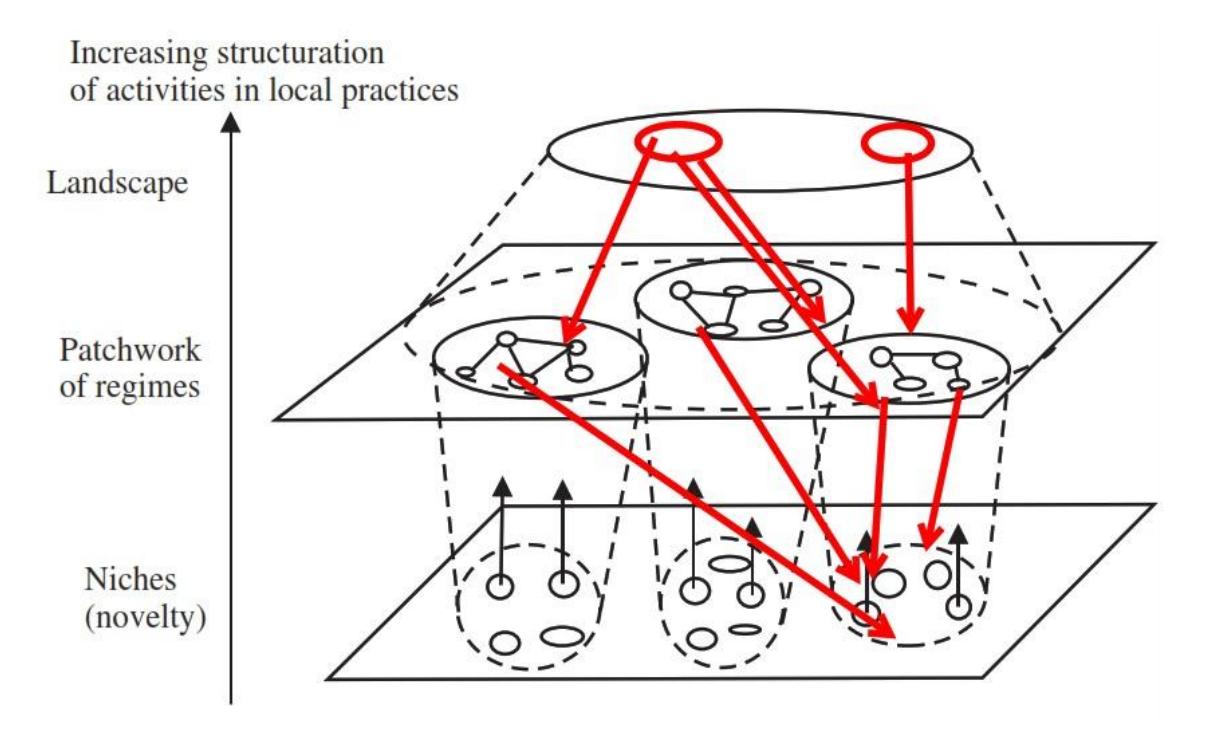
Figure 1 Multi-Level Perspective Framework Source: Geels, 2005
System innovations emerge through the interconnection of dynamics across multiple levels (niche, regime, and landscape). At the landscape level, changes usually occur slowly, thereby exerting pressure on the regime. Regimes create opportunities for the entry of novelties when existing problems can no longer be addressed with available resources. At the niche level, there is considerable uncertainty, and actors may move in different directions. Multiple niches may coexist, potentially competing with one another, yet over time, they may also converge and mutually reinforce. It is important to view regimes not merely as barriers but also as sources of opportunity for radical innovations, particularly when such innovations are able to connect with ongoing regime processes, whether through complementary technologies, new regulations, emerging markets, cultural discourses, or industrial networks (Geels, 2004). Geels further developed a typology of Fit–Stretch patterns in the co-evolution of form and function in new technologies, emphasizing that emerging technologies typically begin with a Fit–Fit Strategy, in which both form and functionality remain close to the existing regime. Gradually, as designs mature and new functionalities emerge, the strategy evolves toward a stretch–stretch strategy. In this phase, the new technology develops more specific design forms while simultaneously creating new markets and functionalities (Figure 2).
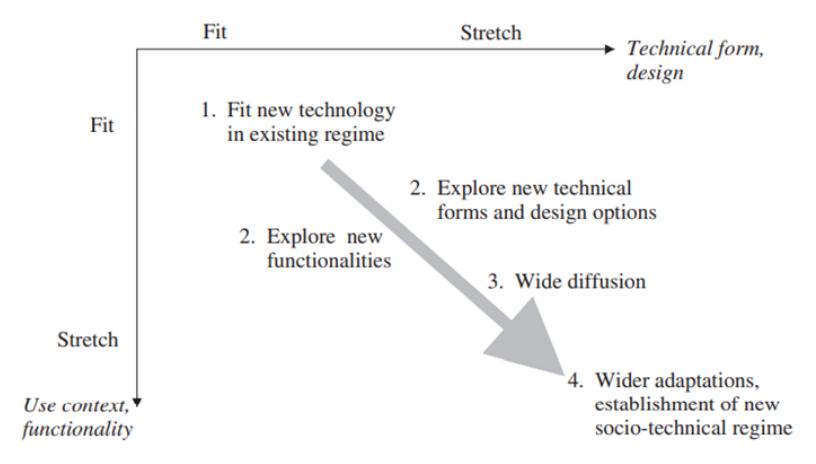
Figure 2 Fit-Stretch in co-evolution of form and function Source: Geels, 2019
Results and Discussion
The data shows the timeline of IIP development illustrated in Figure 3. When President Jokowi took office for the 2014–2019 term, he introduced Nawacita as the cornerstone of his leadership for Indonesia. Nawacita, translating to "nine ideals," serves as a strategic framework aimed at catalyzing significant societal improvements across Indonesia. One of its nine goals is to enhance people's productivity and competitiveness in international markets (point 6), along with achieving economic self-sufficiency by leveraging strategic sectors of the domestic economy (point 7). These priorities of Nawacita inspired and were integrated into the 2015–2019 RPJMN, established on January 8, 2015, through Presidential Regulation Number 2 of 2015.
As part of efforts to bolster Indonesia's innovation capacity and enhance its competitiveness, the government introduced the concept of STPs in the 2015–2019 RPJMN. These are detailed across various levels, namely: National STP (National Level), Science Park (Provincial Level), and Techno Park (Regency/City Level). To achieve its targets, the government encourages the involvement of ministries, institutions, and local governments at both provincial and regency/city levels. Responsibilities for developing science parks and techno parks are allocated to relevant ministries and institutions based on their mandates. These include the Ministry of Research and Higher Education, BRIN, BPPT, Ministry of Industry, Ministry of Agriculture, and Ministry of Maritime Affairs and Fisheries.
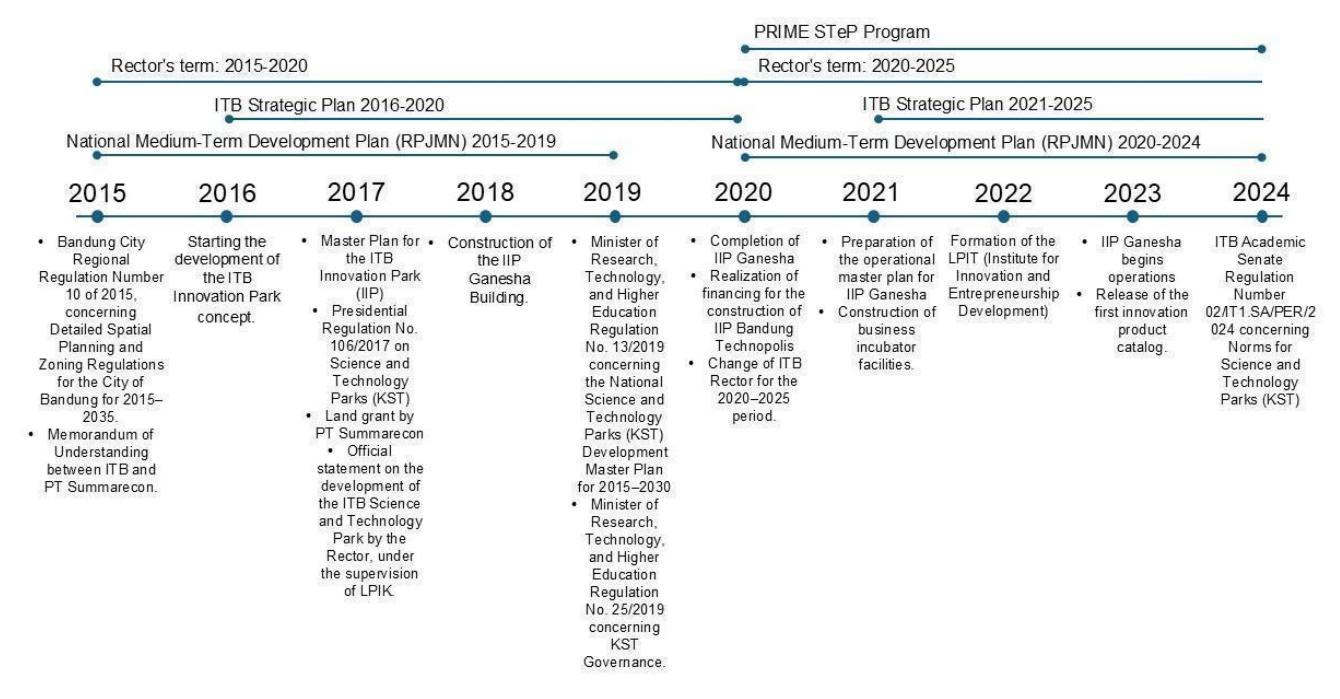
Figure 3 Timeline of IIP development
In line with Nawacita and the RPJMN's emphasis on innovation, Presidential Regulation Number 106 of 2017 was enacted concerning science and technology areas. President Jokowi has frequently highlighted the critical role of technology and innovation in adding value to products or services and enhancing national competitiveness. Additionally, small and medium enterprises (SMEs) play a crucial role in the national economy by contributing to employment, equitable welfare distribution, and poverty alleviation. Despite their importance, the SME sector faces challenges, including issues related to technology availability. Thus, Presidential Regulation 106 of 2017 represents a strategic initiative aimed at reinforcing the triple helix concept. This collaborative approach fosters constructive collaboration among government, universities, and industry to promote downstream technology and innovation. Aligned with the central government's initiatives, the Bandung City Government introduced the Technopolis concept, selecting Gedebage as the site managed by PT. Summarecon, as outlined in Bandung City Regional Regulation Number 10 of 2015 on Detailed Spatial Planning and Zoning Regulations for 2015–2035.
Meanwhile, during the 2015 meeting of the ITB Board of Trustees (MWA), the rector of ITB outlined ambitious plans to transform ITB into an entrepreneurial university within five years. The key to achieving this strategic advantage is the establishment of a robust innovation ecosystem. In 2016, ITB embarked on developing the ITB Innovation Park concept within the Gedebage Technopolis Area, following its collaboration with a private developer enterprise. However, during this period, there was still uncertainty regarding the specific concept to be developed—whether it would be a Science Park, Techno Park, Creative Park, or Innovation Park (Laporan Kinerja ITB, 2016). This initiative aimed to serve as a platform to highlight research results, patents, industrial designs, and artistic works, aligning with the objectives outlined in ITB's Strategic Plan for 2016–2020.
After successfully preparing the ITB Innovation Park Master Plan, the ITB Innovation Park officially launched on July 10, 2017, positioned as an innovation hub dedicated to leveraging ITB's research outcomes (Atmanegara, 2018). It operated under the supervision of the ITB Innovation and Entrepreneurship Development Institute (LPIK).
Conceptual Change in Indonesia's STP Model
The underachievement of STP development across various regions, hindered by a lack of robust knowledge bases and unconverted innovation research, prompted the imperative to optimize university-based STPs. In 2020, President Joko Widodo enacted Presidential Regulation Number 18 of 2020, outlining Indonesia's National Medium-Term Development Plan for 2020–2024. Within this plan, a strategic priority project is the STP Development Project, focusing on four major universities (ITB, IPB, UGM, and UI). The rationale for developing STPs at these universities includes 1) Indonesia's global innovation index (GII) score of 29.8 in 2018 (ranked 85th out of 126 countries); 2) the scattered development of STPs lacking robust knowledge bases; 3) challenges in commercializing innovation research outcomes; and 4) the need to optimize STPs at universities with substantial potential for innovation and tenant candidates (researchers and students) to drive research and innovation product commercialization.
ITB, selected by the government for STP optimization, boasts a rich innovation potential and a pool of prospective tenants (researchers and students) crucial for research and innovation product commercialization. ITB's commitment to advancing its innovation ecosystem is exemplified by the completion of the ITB Innovation Park Ganesha building by the end of 2020 (Figure 4). Operational readiness and commercialization program services were initiated the following year as part of the master plan for operationalizing the ITB Innovation Park Ganesha. This initiative includes commercialization and technology transfer programs aimed at empowering ITB's faculties, centers, and research units to contribute effectively to technology commercialization. It also involves knowledge extraction from industry experts engaged in technology transfer and acceleration. The commercialization and marketing program of ITB Innovation Park Ganesha, overseen by LPIK ITB, plays a pivotal role in disseminating information on research activities and the startup ecosystem at ITB.
Figure 4 Building of ITB STP Ganesha Source: Laporan Kinerja ITB 2022
Preparations for financing the construction of the ITB Innovation Park in the Bandung Technopolis area have commenced to support the 2020–2024 STP Major Project program, coordinated by Bappenas. The proposed financing for this project is listed on the Bappenas Priority List (DPP) under the State Sharia Securities (SBSN) financing scheme. To develop the funding proposal for the ITB Innovation
Park in Bandung Technopolis, close coordination has been established with the Directorate of Higher Education of the Ministry of Education and Culture. This collaborative effort aims to enhance the focus on fundraising and project management for the ITB Innovation Park in Bandung Technopolis, initiated in 2020 (Figure 5).
Figure 5 Development Plan of ITB STP Bandung Teknopolis in Gedebage Source: Laporan Kinerja ITB, 2022
In 2021, ITB STP prioritized the establishment of business incubator facilities aimed at fostering the commercialization of research outcomes generated by academic staff and students to benefit society. Throughout the year, the ITB implemented several programs both internally and in collaboration with partners such as BRIN and the Ministry of Education, Culture, Research, and Technology. However, ITB faced challenges in promoting IIP Ganesha and its innovation services due to a lack of human resources dedicated to robust promotional strategies and supporting components (Laporan Kinerja ITB, 2021).
Moving into 2022, the ITB established the Science and Technology Development Institute (LPIT) through Rector's Decree No. 624A/IT1.A/PER/2022. LPIT operates under the coordination of the Vice Rector for Research and Innovation, integrating the Center and Research Centers (P/PP) along with the STP at ITB. LPIT focuses on four key fields: information and communication technology, food and health, transportation and energy, and regional affairs and disasters. STP serves as an ecosystem, facilitating the transition from invention to innovation. It provides facilities and programs that serve as hubs for researchers, startups, industry players, investors, and the government, fostering acceleration, co-creation, and co-branding processes (Nugroho et al., 2022).
In 2023, ITB IP Ganesha has collaborated with several parties, including PLN, Antam, Kaskus, Indonesia Power, and others. In terms of commercialization, IIP already has several offices, stores, and virtual tenants (building more than 245 startups) with a profit value of 1.4 billion. IIP Ganesha offers collaboration spaces in the form of co-creation rooms, function halls, and meeting rooms, which are rented and earn a profit of 80 million rupiah (Laporan Kinerja ITB, 2023). In supporting its operational function as a hub, IIP also receives funding assistance from the PRIME STEP program, which not only
provides funds for ITB STP but also provides assistance funds for researchers and startups from ITB. Several startups founded by ITB IP can be seen in Figure 6.
Figure 6 Several Startups Founded by ITB IP. Source: Laporan Kinerja ITB 2023
In conducting its function as an accelerator for the commercialization of research products or innovative products, ITB IP also took another step, namely releasing the first edition of the catalog in January 2023. The innovation product catalog is a collection of information about products developed by community members. ITB academics through the results of research and innovation. This catalog was created with the aim of promoting innovative products to the public so that they can be useful for users. However, there is another aim in creating this product catalog, namely increasing ITB's reputation as a superior learning and research institution in Indonesia. The products displayed consist of four types: transportation and artificial intelligence technology; social impact; information and communication technology; infrastructure and disasters; and nanotechnology. Currently, the innovation product catalog promoted by IIP has been released in its third edition and is also promoted online on the portal https:// itbinnovationpark.id/en/catalogue (Figure 7).

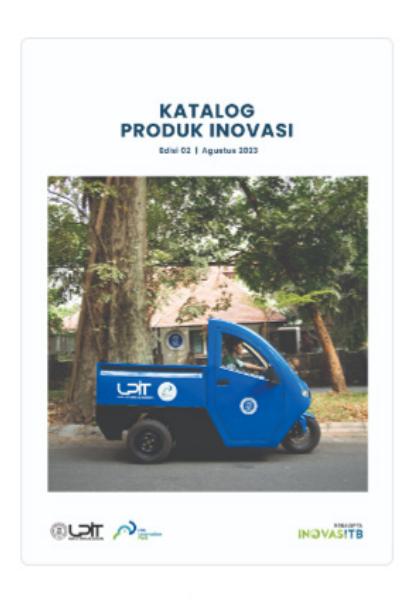
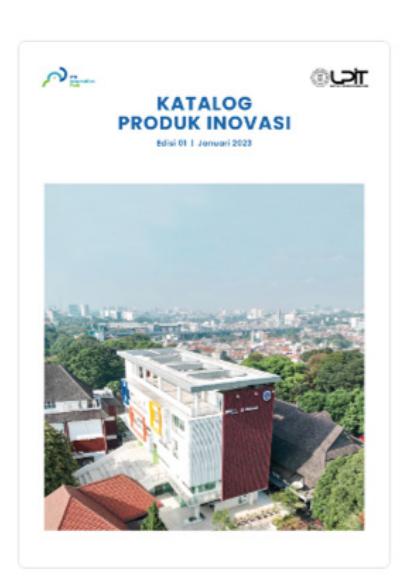
Figure 7 Innovation Product Catalog on the IIP Portal. Source: ITB Innovation Park, 2023
Apart from the product catalog, one of the items featured has also been commercialized through an online shop or e-commerce platform, namely Tokopedia and has also been registered in the e-catalog of the National Public Procurement Agency (LKPP) (Figure 8).
Figure 8 IIP innovation products in (a) Tokopedia (b) LKPP e-catalog. Source: (a) tokopedia.com, (b) https://e-katalog.lkpp.go.id/
In 2024, the ITB Academic Senate enacted Regulation Number 02/IT1.SA/PER/2024 concerning Science and Technology Area Norms to Enhance the Innovation Ecosystem at the ITB. According to these regulations, ITB STP is a specialized facility designed to support research and technological innovation involving key stakeholders: ITB, research institutions, industry, government, and the private sector. Managed under the IIP brand, ITB STP facilitates the expansion and impact of research and innovation results through downstreaming and commercialization efforts. These new regulations are set to take effect in July 2024.
Interviews with IIP stakeholders revealed two primary roles for IIP as an implementation unit. Firstly, IIP serves as a hub to integrate anchor industries within ITB's ecosystem, fostering technology development that meets market demands and advancing research innovations to practical applications, such as semiconductor facilities. Secondly, IIP functions as a market catalyst, driving the development of innovative products with strong market competitiveness. The establishment of IIP aims to promote technological and innovative products that address current societal needs effectively. ITB STP is mandated to finance its own units through various activities, including service provision, innovation research collaboration, start-up development, consulting and training services, laboratory facilities, certification services, intellectual property commercialization, scientific seminars, and network strengthening, all while adhering to ITB regulations.
Since its operation in 2023, IIP has still been experiencing several challenges. There are four main challenges faced by IIP, namely: 1) Difficulty building collaboration with industry, especially global industry (for example, Google, Hyundai, etc.); 2) Limited funding at the kick-start stage; 3) Limited superior talent to become advanced researchers; and 4) Lack of professionals in marketing.
Multi-Level Perspective
The data indicates two distinct periods that marked the evolution of ITB STP: the 2015–2019 period and the 2020–2024 period (Figure 9). In the 2015–2019 timeframe, there was a notable focus on product innovation research aligned with President Joko Widodo's agenda to boost the domestic product industry through downstreaming research products to bolster the economy. This initiative was subsequently supported by the Ministry of Research, Technology, and Higher Education, emphasizing the economic contributions of research and innovation products. Concurrently, ITB pursued its goal of enhancing university competence through the entrepreneurial university concept. During the 2020–2024 period, the 2020–2024 RPJMN was formulated, designating four universities, including ITB, to develop STPs. This strategic inclusion of ITB in the RPJMN prompted a shift in the STP development policy. Initially aimed at fostering an entrepreneurial university, the focus pivoted towards creating an STP capable of achieving economic independence and enhancing global competitiveness.
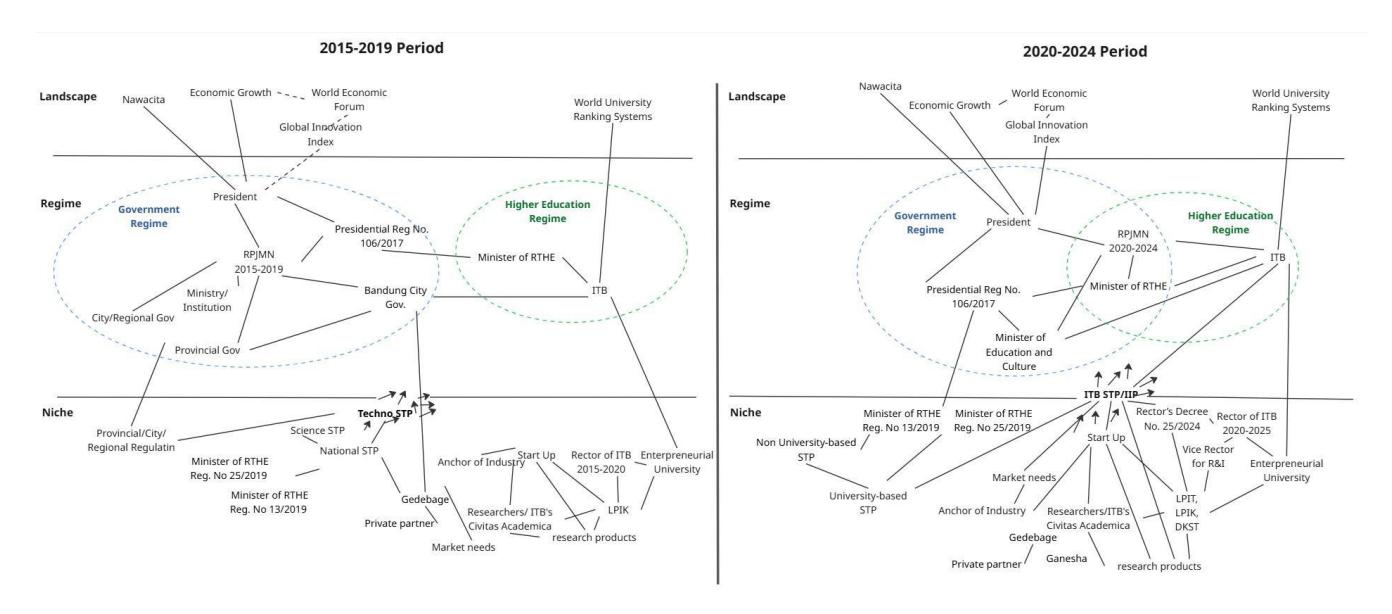
Figure 9 Multi-Level Perspective of ITB STP
2015 - 2019 Period
Landscape
World University Ranking Systems has fundamentally reshaped higher education, posing challenges and opportunities for institutions like the ITB. The landscape has broadened access for students worldwide, empowering them to select universities that best meet their educational needs. Consequently, ITB faces intensified competition among universities across nations, heightened international student mobility, rapid technological advancements, and escalating demands from the labor market. These factors compel ITB to enhance its competencies and rethink strategies to elevate its international ranking as a worldclass university.
In addition, Indonesia's involvement in international trade has driven the government to enhance its competitiveness. During this period, the Nawacita agenda underscores Indonesia's commitment to comprehensive development across various sectors, emphasizing economic competitiveness rooted in natural resource advantages, quality human capital, and continuous advancements in science and technology. However, Indonesia faces challenges in widespread technology application and governance, limiting production efficiency and the quality of goods and innovative products. Consequently, the competitiveness of domestic products in the global market falls short of expectations.
Regime
The 2015–2019 RPJMN was crafted in response to the directives outlined in Nawacita. A key component of this document was the initiative to establish 100 technoparks at the district or city level and science parks in each province. To support the establishment of STPs, guidelines were developed, culminating in Presidential Regulation Number 106 of 2017 on Science and Technology Areas. This regulatory framework aimed to foster the growth of innovation-driven small and medium industries, aligning with national development goals. Subsequently, the Ministry of Research, Technology, and Higher Education formulated derivative regulations to operationalize the presidential decree. These include Ministerial Regulation Number 13 of 2019, detailing the Master Plan for the Development of National Science and Technology Areas from 2015 to 2030, and Ministerial Regulation Number 25 of 2019, focusing on the management of science and technology areas.
In accordance with national directives, the Bandung City Government introduced the Technopolis concept in Gedebage, leveraging PT. Summarecon as the land provider under Bandung City Regional Regulation Number 10 of 2015. This framework guided spatial planning and zoning in Bandung City until 2035. ITB subsequently entered into a Memorandum of Understanding with Summarecon on December 11, 2015, marking the inception of the ITB Innovation Park in Gedebage. In 2016, the ITB rector issued a decree to establish the Gedebage ITB Innovation Park development team, tasked with formulating plans for its construction and management.
Niche
ITB's rector for the 2015 to 2020 period articulated ITB's ambition to transform into an entrepreneurial university focused on fostering innovation to generate both economic and societal value from research products. This vision was underscored during the Board of Trustees meeting in 2015, where ITB's strategic plan for 2016–2020 was crafted with a specific emphasis on establishing a Science and Technology Park (STP). The STP initiative, branded as IIP, serves as a pivotal implementation unit aimed at enhancing ITB's entrepreneurial competence. Within the ITB STP framework, the ITB Innovation Park fulfills dual roles. Firstly, it acts as a hub to stimulate technology development aligned with market demands, facilitating the direct utilization of research and innovation outcomes by end-users. Secondly, IIP serves as a market catalyst, fostering the development of high-competence product innovations that resonate strongly in the market.
Initially, ITB STP operated under the ITB LPIK, as per Rector's Decree No. 277/SK/I1.A/OT/2017. ITB LPIK functions as an innovation intermediary, promoting the application of research findings in higher education. LPIK drives various activities to nurture innovation, including entrepreneurship development programs, intellectual property rights awareness initiatives, and the institutionalization of innovation ecosystems within its organizational framework. As a business incubator, LPIK plays a crucial role in supporting the success of new ventures. This model is highly relevant in Indonesia, where the focus on business incubators is tailored to aid both new and established businesses with novel product and service proposals. By facilitating the commercialization of research outcomes generated by academic staff and students, ITB's business incubator aims to deliver tangible benefits to society.
2020 - 2024 Period
Landscape
One of the primary objectives of Nawacita is to achieve economic independence by advancing key sectors of the domestic economy. Central to this goal is the promotion of innovation to enhance the competitiveness and productivity of local industries. Indonesia's membership in the world intellectual property organization (WIPO) underscores its commitment to fostering innovation, as evidenced by its participation in the global innovation index (GII), which assesses Indonesia's global standing in innovation and informs government policy. The GII, published by WIPO, plays a crucial role in providing insights into Indonesia's innovation performance on the global stage. This data serves as a foundational tool for the Indonesian government to design effective innovation policies aimed at bolstering Indonesia's innovation capabilities and technological competitiveness. This imperative drives the establishment of a regulatory framework that supports the development of innovation hubs across Indonesia.
In pursuing a robust research and innovation ecosystem, the Indonesian government has engaged universities in managing the establishment and operation of science and technology parks. The designation of the ITB as one of these universities has redirected the initial trajectory of ITB STP development. Originally conceived under pressure to align with global standards and transform ITB into an entrepreneurial university, the focus of ITB STP or IIP development has now shifted towards enhancing Indonesia's GII ranking. This strategic shift aims to align with Nawacita's objectives of fostering economic independence through innovation-driven growth.
Regime
In the 2020–2024 RPJMN, significant policy adjustments were implemented, highlighted by the creation of the STP Major Project initiated by Bappenas. This strategic shift aimed to enhance Indonesia's ranking in the global innovation index (GII) by emphasizing university-industry research and development (R&D) collaborations. Concurrently, the Ministry of Education, Culture, Research, and Technology introduced the promoting research and innovation through modern and efficient science and technology parks project (PRIME STEP) for 2023–2027 (Nindita, 2023). This initiative reframed the STP concept from commodity-based to knowledge-based at four Legal Entity State Universities (PTN BH), namely IPB, ITB, UGM, and UI. The impact of these efforts was evident in 2023, with Indonesia's ascent to 61st place globally out of 132 countries in the university-industry R&D collaboration parameter, a significant jump from its previous position. This achievement underscored the effectiveness of the revised policy framework in fostering innovation-driven growth.
In 2021, aligning with President Joko Widodo's directives, the Ministry of Research and Technology merged with the Ministry of Education and Culture to form the Ministry of Education, Culture, Research, and Technology (Kemendikbudristek). This merger aims to streamline efforts to enhance innovation, research, and technology development by consolidating tasks and functions under the Directorate General of Higher Education, Research, and Technology (Ditjen Dikti Ristek). Consequently, research and innovation initiatives undertaken by ITB STP now fall under the purview of this directorate, facilitating a more cohesive approach to advancing Indonesia's research and educational landscape.
Niche
In order to transition towards a knowledge-based STP development approach, ITB has initiated a shift from individual research utilization to institutional utilization of research outcomes. This strategic evolution is closely monitored by the Indonesian government through several key regulations, including Presidential Regulation Number 106 of 2017, Minister of Research, Technology, and Higher Education Regulation Number 13 of 2019 on the Master Plan for the Development of National Science and Technology Areas (2015–2030), and Ministerial Regulation Number 25 of 2019 on the Governance of Science and Technology Areas. Building upon this regulatory framework, the rector of ITB for the 2020–2025 period spearheaded the establishment of the LPIT at ITB in early 2022. Established through Rector's Decree No. 624A/IT1.A/PER/2022, LPIT operates under the oversight of the Deputy Rector for Research and Innovation.
In response to the STP development plan, ITB issued ITB Academic Senate Regulation Number 02/IT1.SA/PER/2024 concerning Science and Technology Area Norms for Improving the Innovation Ecosystem of the ITB. This regulation was crafted to formulate the development framework for the ITB STP area. Although the STP program has been operational since 2016, the formal conceptualization of the ITB STP model is slated for 2024. This regulation underscores the notion of ITB STP as an independent
institution. The independence envisioned is grounded in ITB STP's capacity to generate funding from its operational activities or to achieve financial autonomy.
On August 1, 2024, ITB renamed LPIK as the Directorate of Science and Technology Park, formalized by Rector's Decree No. 25/IT1.A/PER/2024. This restructuring was aimed at strengthening institutional capacity in managing the science and technology park, thereby enhancing ITB's role in advancing science and innovation in Indonesia. The change underscores the positioning of ITB STP as a key driver of the innovation ecosystem, rather than focusing solely on the downstream commercialization of research outcomes.
Fit-Stretch Analysis, Diffusion
Niches fit into and stretch within regimes during technological transitions and within the context of system innovation. Fit and stretch manifest when new technologies are explored and implemented within a niche. Fit denotes a strong alignment between niches and regimes where the technical and functional aspects are highly compatible. This alignment occurs when the new technology in the niche aligns well with the existing rules and functional interpretations of the regime. In contrast, "stretch" refers to relationships that emerge when the rules and functional interpretations in a niche diverge significantly from those of the existing regime (Table I).
Table I Fit and Stretch of IIP
| Tech. Env. | Fit | Stretch |
|---|---|---|
| Fit | The ITB Innovation Park, as a hub, aligns with efforts to foster the establishment of ITB's research and innovation ecosystem, not only to generate inventive products but also to stimulate the growth of national industries. | Technical alignment has been advanced through regulatory formulation and continuous infrastructure development, including institutional adjustments to position the IIP within the emerging regime. |
| Stretch | Despite IIP's efforts to transform research outcomes into "products" that can be further developed within industry or deployed as ready-to-use solutions for society, including potential adoption by government stakeholders, the utilization of research-based products has yet to achieve broad market acceptance. This is partly because the ITB Innovation Park has thus far focused primarily on connecting research outputs to the market, rather than fostering research driven by market demand. | The Fit & Stretch process is still ongoing, indicating that the ITB STP has not yet been fully integrated into nor has it transformed the existing regime. |
The development of ITB STP, oriented towards knowledge-based approaches, involves leveraging research previously conducted individually by ITB's academic community for institutional use and commercialization of research products. In this context, the ITB IP focuses on accelerating the market readiness of research outcomes. ITB STP applies specific limits and criteria to determine the suitability of research products for commercialization, highlighting approved innovations like e-Trike, Autowater, and Ecofoam, among others.
The innovation ecosystem should prioritize output and knowledge by mobilizing resources conducive to innovation (Xu & Maas, 2019). Currently, ITB STP, as a higher education STP, continues to advance technological innovations through research but faces challenges in fully aligning with market demands, particularly concerning pricing and production costs. The limited number of companies raises concerns about ITB STP's sustainability. To achieve the critical mass necessary for structural growth, ITB
STP must attract companies that align closely with its innovation goals and foster synergistic partnerships (Al-Kfairy et al., 2020).
The ITB Innovation Park represents a new organizational unit that has undergone experimentation and adaptation processes within its niche to integrate into the broader regime. This diffusion involves the acceptance and spread of innovations among actors within the regime, aligned with Indonesia's goal of commercializing domestic products for economic independence and institutionalizing ITB as an entrepreneurial university. This diffusion process may necessitate policy adjustments, regulatory changes, and structural adaptations within Indonesia's STP regime. Innovations originating in niches undergo diffusion and integration processes to establish ITB STP as a pivotal component of Indonesia's STP landscape.
However, in the case study of the establishment of the ITB STP, the "stretch" has not yet occurred in the development of the ITB Innovation Park due to the absence of fundamental changes in regulations and functional interpretations that support the transformation of ITB's innovation ecosystem. Although efforts have been made to develop a knowledge-based STP, ITB STP primarily functions as a platform for highlighting research outcomes rather than serving as the main driver of innovation product commercialization. One of the key challenges identified is the difficulty in attracting companies that can function as strategic partners, as well as bridging the gap between academic research outputs and market demands, particularly in terms of pricing and production costs. Moreover, there is a lack of concrete policies and regulations to promote the adoption of research-based innovative products. This situation limits the potential for ITB STP to operate independently and achieve financial sustainability without reliance on government funding. Therefore, while ITB STP has evolved within a "fit" framework aligned with national policies, it has yet to undergo a "stretch" process that signifies a systemic transformation within ITB's innovation ecosystem.
Conclusion
This study examines the trajectory of the ITB IP in advancing the commercialization and downstream utilization of ITB's research outputs for the benefit of society and the national economy. Findings within the MLP framework indicate that the development of IIP has not yet achieved a transformation of the existing regime. Instead, downstreaming efforts have adapted to the prevailing regime without generating the degree of stretch required to advance the envisioned innovation landscape. This outcome is linked to challenges at both the niche and regime levels, which collectively influence the trajectory of sociotechnical transitions.
At the landscape level, Indonesia's government is confronted with pressures to enhance competitiveness and economic self-reliance. This imperative has led to strategies articulated in the Presidential Nawacita agenda. As a member of WIPO, Indonesia is also required to strengthen its innovation capacity, prompting the government to promote the development of STPs not only on a regional basis but also in partnership with higher education institutions recognized as key sources of innovation. In parallel, ITB is increasingly challenged by global university ranking systems, which pressure the institution to strengthen its competitiveness, particularly through research and innovation outputs. Collectively, these dynamics underpinned the establishment of the ITB STP as an initiative to address such challenges.
At the regime level, the Nawacita was translated into the RPJMN 2015–2019 and 2020–2024, which emphasized the role of STPs as instruments for downstreaming research to enhance national industrial competitiveness. Presidential Regulation No.106/2017 and its derivative policies were formulated to govern the development of STPs. The initial target of establishing 100 techno parks across regional areas in 2015–2019 was later refocused on universities regarded as key sources of innovation, beginning with the establishment of STPs at ITB, IPB, UI, and UGM. For ITB, this reinforced its role as a research university and advanced its trajectory toward becoming an entrepreneurial university. The development of the ITB STP is also linked to institutions such as the Ministry of Education, Culture, Research, and Technology, as well as Bappenas. A major challenge at this level lies in creating market conditions within the broader ecosystem that foster technological innovation, thereby shifting research efforts toward market-driven needs rather than focusing solely on the commercialization of research outputs.
At the niche level, the ITB STP serves as an experimental space for transforming research outcomes into marketable products. Through incubation, acceleration, co-creation, and co-branding, it aims to bridge research outputs and market needs. While numerous startups and innovative products have emerged, they continue to face barriers to industrial integration, funding constraints, and the absence of regulatory mandates for research utilization. Efforts to integrate the ITB STP into the regime include institutional adjustments, such as the renaming of LPIK into the Directorate of Science and Technology Park through Rector's Decree No.25/IT1.A/PER/2024, which formally established the STP as an independent institutional entity. On the infrastructural side, the construction of STP facilities in Ganesha and Gedebage demonstrates efforts to integrate the ITB STP into the emerging regime. Although the IIP has advanced over more than nine years of development, significant challenges remain, including pressures to meet top-down targets and persistent difficulties in achieving market adoption of researchbased products. This is largely because current efforts remain centered on commercialization rather than fostering market-oriented research. Given the ongoing stretch process, the transition of the STP into the regime remains contingent upon both the extent of this stretch and the responses of regime actors.
Based on this research, efforts need to be made to support the development of ITB STP, including:
- a. Intensive efforts are needed to overcome structural obstacles and enhance the ITB STP role as the primary catalyst in the broader socio-technical system. Recommendations to achieve this transition include bolstering collaboration and networking between ITB STP and key regime actors, ensuring the stabilization and validation of innovations through comprehensive pilot and evaluation projects, and developing adaptive strategies to address potential policy changes resulting from leadership transitions.
- b. Creating innovative products requires research into market needs, alongside considerations of production costs and pricing factors. This is essential to ensure that innovative products developed at ITB STP align with market needs.
- c. Collaboration with large companies is essential for maintaining financial stability.
- d. Government policies are crucial to support the entry and competitiveness of innovative products in the market. Examples include policies that restrict imported products and other supportive measures.