

INFO ARTIKEL
Kata kunci: lingkungan mandiri, fasilitas
lingkungan, 15 menit berjalan kaki, kota-kota di Jabodetabek
ABSTRAK
Kawasan perkotaan menghadapi tantangan mobilitas yang tidak efisien, distribusi fasilitas tidak merata, serta penurunan kualitas hidup. Konsep self-contained neighborhood dan 15-minute city ditawarkan sebagai solusi yang menekankan keterjangkauan fasilitas esensial dalam 15 menit berjalan kaki. Kajian empiris pada perkotaan metropolitan seperti Jabodetabek masih terbatas, meskipun wilayah ini rentan terhadap fragmentasi spasial, urban sprawl, dan ketimpangan akses. Penelitian ini menilai kemandirian lingkungan pada kota-kota di Jabodetabek dari dimensi fungsional melalui survei waktu tempuh berjalan kaki dari rumah menuju 42 jenis fasilitas dengan acuan Google Maps. Analisis data dilakukan melalui uji normalitas Kolmogorov-Smirnov dan uji t satu sampel untuk menguji perbedaan rata-rata waktu tempuh terhadap ambang 15 menit. Hasil penelitian menunjukkan rata-rata waktu tempuh berjalan kaki menuju fasilitas adalah 16,35 menit (SD = 4,18), lebih tinggi dari ambang 15 menit. Fasilitas dasar seperti minimarket, sekolah dasar, masjid, apotek, dan balai warga dapat dijangkau kurang dari 10 menit, sementara fasilitas non-dasar seperti pendidikan tambahan, rekreasi, olahraga, layanan keuangan, dan rumah ibadah minoritas umumnya lebih dari 20 menit. Kondisi ini menunjukkan lingkungan yang dikaji hanya memenuhi sebagian prinsip lingkungan mandiri. Hasil ini sejalan dengan temuan penelitian terdahulu bahwa perkotaan metropolitan menghadapi kesulitan mewujudkan 15-minute city akibat ketidakseimbangan spasial dan keterbatasan infrastruktur pejalan kaki. Kesimpulannya, sampel lingkungan pada kota-kota di Jabodetabek belum sepenuhnya memenuhi kriteria self-contained neighborhood, sehingga diperlukan redistribusi fasilitas non-dasar, peningkatan infrastruktur pejalan kaki yang aman dan nyaman, serta penerapan mixed-use development yang terintegrasi dengan pengembangan berbasis TOD untuk mengurangi ketergantungan pada kendaraan bermotor dan meningkatkan kualitas hidup perkotaan.
Introduction
Urban areas face complex challenges, including mobility inefficiency, unequal access to facilities, and a declining quality of life (Ardouti et al., 2025; Hossen et al., 2024; Shoukat et al., 2025). They also experience urban sprawl (Alkinani et al., 2022) and a growing dependence on private vehicles (Mpanang'ombe, 2022), which exacerbate congestion and pollution (Ardouti et al., 2025), as well as social inequality (Garcia, 2025). The concept of a self-contained neighborhood emerges as a relevant response, emphasizing spatial proximity where essential facilities can be accessed within a short walking distance, thereby reducing reliance on motorized transport.
Previous studies on self-contained neighborhoods have largely focused on the conceptual aspect (as can be found in the writings of Alidoust et al., 2017; Barton, Grant, & Guise, 2010; Ellen & Turner, 1997; Erickson & Highsmith, 2018; Galster, 2001; Ogilvy, 1968; etc.), the planning aspect (in the article by Cervero, 1995; Pena & Shah, 2022; etc.), and the design aspect (in the paper of Patricios, 2002; Roy et al., 2019; etc.). However, research gaps remain in applying this concept contextually in developing metropolitan areas such as Jabodetabek, which face spatial fragmentation, high commuter mobility, and unequal distribution of facilities (Firman & Fahmi, 2017). Thus, it is essential to move beyond normative discourse and examine the empirical implementation challenges in Indonesia's urban regions, especially in Jabodetabek.
The Jabodetabek area comprises Jakarta, located in the inner part, surrounded by several cities, including Bogor, Depok, Tangerang, Tangerang Selatan, and Bekasi. These cities are among the highestdensity urban areas in Indonesia. Additionally, the provision of facilities in cities is denser than in regencies. Nevertheless, Jabodetabek still faces the traffic problem, with carbon emissions reaching 206 million tons per annum for Jakarta only, of which 89% came from transportation. The annual economic loss due to congestion in this area is IDR 71.4 trillion, according to a study by BPTJ/Jabodetabek Transportation Management Agency (CNN Indonesia). This loss cannot be allowed to continue, so middle- and longterm solutions are needed to achieve sustainability. The effort that can be made is to rearrange the city's spatial layout by providing various facilities that are close to where they live.
A self-contained neighborhood is a settlement where residents can live, work, shop, worship, recreate, and access daily services within a 15-minute walking distance from their homes (Coleman, 1963; SNI 03-1733-2004, 2004). The key principle is accessibility and proximity, which contribute to reducing car dependency, lowering carbon emissions, and enhancing urban quality of life (Khatibi et al., 2025; Moreno et al., 2021). This concept has become increasingly relevant in metropolitan areas such as Jabodetabek, where the high volume of commuting to Jakarta results in economic losses due to traffic congestion and pollution, as well as in the context of aging populations that reduce mobility, as observed in Japan (Nguyen, 2016). Experiences from the development of new towns in Korea and Japan demonstrate that neighborhood self-containment is not achieved instantly but gradually evolves through the provision of local commercial, social, and transportation facilities (Lee & Ahn, 2005). With the growing proportion of elderly citizens in Indonesia (12% in 2023), the demand for accessible and self-contained residential environments has become more urgent.
Recent studies emphasize that the idea of self-contained neighborhoods aligns with the 15-minute city concept. The 15-minute city concept, introduced by Carlos Moreno (2016) and popularized by Anne Hidalgo in Paris, emphasizes that essential needs—such as work, education, healthcare, and recreation should be accessible within a 15-minute walk or bicycle ride (Alter, 2020; Duany & Steuteville, 2021). Its core principle is proximity, aimed at reducing car dependency and strengthening community life (Pinto & Akhavan, 2022; Sharifi, 2016). Various cities have attempted to implement this idea, such as Paris, with its expansion of bike lanes and restrictions on private cars (Euklidiadas, 2020); Shanghai, with the 15-minute community life circle, despite uneven facility distribution (Wu et al., 2021); and Chicago, which faces disparities in access among different socio-economic groups (Bright, 2021). Shoina et al. (2024) examines the implementation of the 15-minute city in Thessaloniki to support sustainable urban transformation. Akrami et al. (2024) indicate that the central part of Oslo is already a 15-minute city, and several areas are undergoing transformation in that direction. Overall, the 15-Minute City is regarded as a key strategy for advancing more sustainable, healthy, economically equitable, and inclusive urban environments (Allam et al., 2022; Boychev, 2021; Ulloa-Leon et al., 2023).
Neighborhoods are seen as multidimensional—spatial (Bartzokas-Tsiompras & Photis, 2020; Galster, 2001; Gargiulo et al., 2021; Haque et al., 2020; Houghton & Castillo-Salgado, 2020; Ilyankou et al., 2023; Kim & Hipp, 2020), social (Algren et al., 2020; Wang et al., 2020; Wright & Skubak Tillyer, 2020; Zhang et al., 2020), functional (Kaveh, 2027; Lausselet et al., 2020), perceptual (Baranyi et al., 2020; Chen & Yuan, 2020; Pinkster et al., 2020; Stergiou & Farmaki, 2020), and related to well-being (Hewton, 2023; Liu et al., 2023).
Self-contained neighborhoods and a 15-minute city are relevant concepts for Jabodetabek, where dense motorized commuting and dispersed settlements put pressure on infrastructure and accessibility. Based on those perspectives, in this study, functional dimensions are employed to delineate neighborhoods based on the utilization of various types of facilities located within a 15-minute walking radius from the dwelling. This study investigates neighborhood self-containment in Jabodetabek cities by measuring average walking times to various facilities within a 15-minute radius to inform facility distribution strategies to enhance accessibility and reduce motorized travel.
Method
This study assessed neighborhood self-containment by examining the availability and walking distance (in minutes) of facilities within a 15-minute or 1.2 km radius from their house. A total of 42 facility types were considered, including commerce, education, health, worship, sports and open spaces, other commercial, and public services. Data were collected through a household survey in which all family members were invited to report walking times (minutes) from their home to each facility usually used. To ensure consistency across respondents, Google Maps (walking mode, minutes as a unit) was employed as a reference, with detailed instructions provided to keep consistent responses among them. Respondents also reported the number of each facility type located within the defined radius. Supporting information included household location (urban village, sub-district, city, postal code).
The unit of analysis was the neighborhood, functionally defined as the area within a 15-minute walking radius from the respondent's home. A neighborhood was categorized as self-contained if facilities were available within a 15-minute walking time.
Since the number of households in Jabodetabek is unavailable, the population size is considered unknown, and the infinite population formula was applied. With a 95% confidence level and a 10% margin of error, the minimum required sample size was 96. A total of 100 questionnaires were distributed, 75 were returned, and after data cleaning, 57 were valid for analysis, which still meets the minimum requirement based on the rule of thumb (30–50 samples for basic analysis).
To evaluate whether the mean walking time to facilities was below the 15-minute threshold, a onesample mean comparison was conducted (Walpole, 2012). When normality assumptions held, a t-test (Welch, 1947) was applied; otherwise, the Wilcoxon signed-rank test was used (Siegel, 1997).
Methodologically, this approach is significant for urban and housing planning research, as walking distance serves as a practical indicator of neighborhood self-containment. It reflects the extent to which daily needs can be met locally without reliance on motorized transport, thereby promoting sustainable mobility, reducing congestion, and enhancing quality of life in urban areas.
Results and Discussion
Table 1 and Figure 1 summarize the average walking times to neighborhood facilities. The results show substantial variation by facility type. Basic services such as minimarkets (6.70 minutes), primary schools (8.46 minutes), pharmacies (10.26 minutes), mosques (4.35 minutes), and community halls (7.83 minutes) are accessible within 10 minutes on foot, indicating good coverage of essential daily needs.
Table I The Average Walking Distance (Minutes)
| Facilities | Average Walking Distance (Minutes) | |
|---|---|---|
| Commerce | stationery store | 9,21 |
| electronic store | 11,91 | |
| grocery store | 9,25 | |
| minimarket | 6,70 | |
| market | 18,11 | |
| shophouse | 12,27 | |
| Worship | mosque | 4,35 |
| church | 17,42 | |
| temple | 37,76 | |
| monastery | 33,86 | |
| pagoda | 37,29 | |
| Education | primary school | 8,46 |
| junior high school | 12,70 | |
| senior high school | 16,79 | |
| tutoring | 17,98 | |
| language course | 20,69 | |
| computer courses | 24,09 |
| Health | general practitioner | 13,39 | |
|---|---|---|---|
| dentist | 14,31 17,17 | ||
| maternity clinic | |||
| pharmacy | 10,26 | ||
| community health center | 15,30 | ||
| Public service | residents' office | 9,13 | |
| community hall | 7,83 | ||
| security posts | 8,32 | ||
| multipurpose building | 14,15 | ||
| package delivery service | 9,50 | ||
| automated teller machines | 9,52 | ||
| credit service office | 24,69 | ||
| pawnshop | 18,46 | ||
| Sport and Open space | futsal field | 14,89 | |
| basketball court | 20,98 | ||
| volleyball court | 24,13 | ||
| badminton court | 12,66 | ||
| swimming pool | 22,98 | ||
| playground | 19,35 | ||
| gym/fitness center | 19,60 | ||
| Other commercial | haircut | 7,12 | |
| beauty salon | 8,88 | ||
| restaurant | 11,02 | ||
| café | 11,75 | ||
| bicycle repair shop | 9,77 | ||
By contrast, non-basic facilities—such as supplementary education (20–24 minutes), certain sports facilities (23–24 minutes), minority places of worship (over 30 minutes), and financial services (18– 25 minutes)—often require more than 20 minutes of travel, reflecting uneven distribution and spatial concentration.
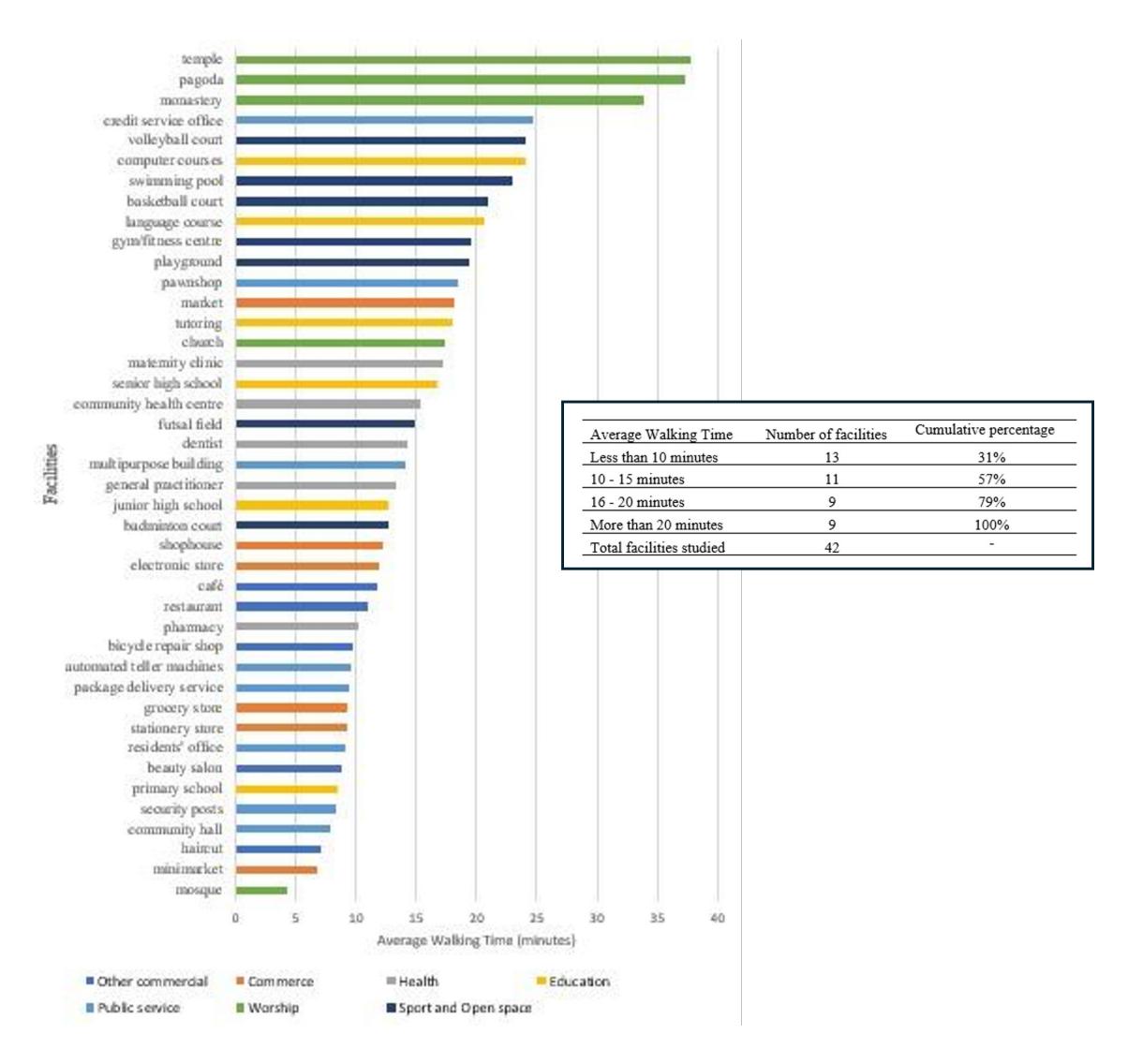
Figure 1 Average Walking Time (minutes) Source: Personal documentation, 2025
In Figure 1, it can be observed that 57% of facility types (24 out of 42) have an average walking time of less than 15 minutes. These findings provide important insights into the extent to which the studied neighborhood can be considered self-contained. The relatively short walking times to basic facilities such as minimarkets, primary schools, pharmacies, mosques, and community halls demonstrate that everyday needs can be met locally, supporting the principle of accessibility central to the self-contained neighborhood model (Iqbal et al., 2025; S. Y. Lee & Lee, n.d.). However, the much longer walking times required for supplementary education, minority religious facilities, financial services, and recreational amenities suggest spatial inequalities and reliance on wider urban networks. This pattern echoes Jacobs' argument (1961) that vibrant and inclusive neighborhoods must integrate diverse functions beyond daily necessities. Neighborhood planning frequently encounters trade-offs between ensuring local accessibility and accommodating specialized, city-level services. This tension has been highlighted in the historical literature on urban planning (Hall, 2014), empirically examined in relation to urban form and travel demand (Cervero & Kockelman, 1997), and further developed in contemporary discussions of the 15-minute city (Moreno et al., 2021). The evidence here, therefore, suggests the partial fulfilment of selfcontainment, where essential daily functions are adequately covered. Still, broader social, cultural, and leisure needs remain unmet within the neighborhood boundary.
Table II Time Walking to Various Facilities
| N | Min | Max | Mean | St. Deviation | |
|---|---|---|---|---|---|
| Average | 57 | 6.23 | 25.74 | 16.3482 | 4.17944 |
Based on Table II, from 57 samples, the walking time to various facilities ranged from a minimum of 6.23 minutes to a maximum of 25.74 minutes, with an average (mean) of 16.35 minutes and a standard deviation of 4.18 minutes. These figures indicate a considerable variation among respondents in accessing facilities. In general, the average walking time is higher than the ideal benchmark of 15 minutes, which is commonly used as a standard for a self-contained neighborhood in this study.
Prior to the testing of the hypothesis, a normality test was conducted, as shown in Table III. The Kolmogorov-Smirnov test produced a z-statistic value of 0.068, which is smaller than the z-table value of 1.96, and a significance value of 0.200 > 0.05. Therefore, H0 is accepted, and the data can be considered normally distributed. This result allows the use of a parametric test (t-test) for the mean comparison.
Table III One-Sample Kolmogorov-Smirnov Test
| Average | ||
|---|---|---|
| N | 57 | |
| Normal Parameters a,b | Mean | 16.3482 |
| Std. Deviation | 4.17944 | |
| Test Statistic | .068 | |
| Asymp. Sig. (2-tailed) | .200 c,d | |
| a. Test distribution is Normal. | ||
Testing the assumptions of normality of the data is as follows:
Ho: data is normally distributed
H1 : data is not normally distributed
Alpha (α) = 0.05
The Kolmogorov-Smirnov test produced a z-statistic value of 0.068, which is smaller than the z-table value of 1.96, and a significance value of 0.200 > 0.05. Therefore, H0 is accepted, and the data can be considered normally distributed. This result allows the use of a parametric test (t-test) for the mean comparison.
Table IV presents the results of the mean hypothesis test. The hypotheses tested are as follows:
H0 : μ = 15 (the average walking time is equal to 15 minutes).
H1 : μ < 15 (the average walking time is less than 15 minutes).
With a significance level of α = 0.05, the rejection criterion for H0 is if the p-value < 0.05 and the t-value is smaller than -1.67. The test results show a t-value of 2.436 with a p-value of 0.018. The positive t-value, which is greater than the t-table value, indicates insufficient evidence to reject H0 . This means that the average walking time to facilities is not proven to be less than 15 minutes; instead, it is actually above 15 minutes. Thus, the average travel time remains longer than the 15-minute standard, which serves as the benchmark for neighborhood self-containment.
Table IV T-Test Results
| t | df | Sig. (2-tailed) | Mean Difference | |
|---|---|---|---|---|
| Average | 2.436 | 56 | .018 | 1.34825 |
The findings show that pedestrian accessibility to various facilities in the 57 sampled neighborhoods in Jabodetabek cities is not yet optimal, as the average walking time still exceeds 15 minutes. This indicates that the sampled residential areas in Jabodetabek cities (including Jakarta, Bogor, Depok, Tangerang, Tangerang Selatan, and Bekasi) do not fully meet the criteria for a self-contained neighborhood, particularly as employment opportunities are generally located outside the neighborhoods, making transportation problems in Jabodetabek difficult to resolve. Cervero (1995) examined the relationship between the degree of self-containment in new/planned towns in the United States, the United Kingdom, metropolitan Paris, and Greater Stockholm and their commuting patterns. Overall, an inverse relationship was found between the level of self-containment and the use of public transport modes for both internal and external movements. He suggested that integrated transport service policies have a stronger influence on residents' mode choices than initiatives focused on achieving jobs–housing balance or self-sufficiency. Historically, according to him, Ebenezer Howard's Garden Cities were designed as socially and economically selfsustaining communities intended to ease London's congestion, accommodate the poor, and finance infrastructure and services through value-capture principles.
The results are consistent with earlier findings that large metropolitan regions struggle to achieve the 15-minute city. In Pazakiau's view, the primary objective of urban planning is no longer to direct residents toward centralized activity nodes but rather to embed diverse activities within residential neighborhoods themselves. This perspective denotes a paradigmatic shift in planning focus—from emphasizing neighborhood accessibility to urban functions toward ensuring the spatial proximity and integration of such functions within the fabric of everyday living environments (Pozoukidou & Chatziyiannaki, 2021).
From the theoretical perspectives of a self-contained neighborhood, this concept envisions communities where residents meet most daily needs locally (Pozoukidou & Chatziyiannaki, 2021). Findings here show only partial self-containment: minimarkets or schools are within walking distance, but specialized healthcare or recreational facilities are farther away. This perspective supports theoretical views that self-containment requires not just availability but also proximity and quality of access (Khavarian-Garmsir et al., 2023). Meanwhile, the 15-minute city framework emphasizes four principles: proximity, diversity, density, and human scale (Moreno et al., 2021b). This study addresses proximity but not diversity or quality of public space, thus providing an initial but incomplete evaluation. Critiques of the concept also stress equity concerns—nearby facilities may remain inaccessible to vulnerable groups if pedestrian conditions are unsafe or inadequate (Mahmoudpour & Shirazi, 2025). This study supports such critiques, as poor sidewalks make even short-distance trips less feasible. Local research supports these findings. Hidayati et al. (2021) showed that limited pedestrian access in Jakarta extends travel times despite short distances.
Transit-oriented development (TOD) can be viewed as a practical application of the self-contained neighborhood concept, in which the former emphasizes connectivity to mass transit networks and the latter highlights proximity to functions within a 15-minute walk. While both are complementary—selfcontained neighborhoods providing the foundation for local needs and TOD linking neighborhoods to the wider metropolitan system—each alone has limitations: TOD without self-containment risks dependence on long-distance commuting, and self-contained neighborhoods without TOD tend to rely on private vehicles, as not all services can be locally provided. In the case of Jakarta, Hasibuan & Mulyani's (2022) longitudinal study (2013–2020) demonstrates that TOD's success hinges on policies ensuring balanced land use, greater private sector engagement, and affordable public transportation provision.
Implications for housing, urban planning, and policy are as follows. Residential planning should include internal neighborhood-scale facilities beyond the basics, such as small recreation or healthcare
services. Pedestrian-friendly design—direct, safe, and connected pathways—is essential, as is integrating small-scale mixed-use elements to reduce dependency on distant services. At the city level, redistributing public facilities at the district scale is necessary, supported by GIS-based spatial analysis. Adopting Complete Streets principles will improve walkability and equity. Integrating the 15-minute city with TOD is also crucial; transport nodes must connect not only to mobility networks but also to everyday services.
Policies should incentivize balanced facility distribution through zoning and detailed spatial plans. Governments could provide fiscal incentives for service providers in underserved areas. Community co-creation can help to combine facilities with local needs. Finally, cities should monitor accessibility indicators (e.g., percentage of residents within 15 minutes of key services) and make a report regularly.
This study has several limitations. The sample size restricts generalizability. Walking times were estimated via surveys and Google Maps, which overlook real conditions such as sidewalk safety and comfort. The focus was solely on proximity and their availability, without assessing facility use or quality.
Conclusions
This study fills an empirical gap on neighborhood self-containment in Indonesia by examining pedestrian accessibility in Jabodetabek, where the average walking time to facilities (16.35 minutes) exceeds the 15-minute benchmark. While basic services are within reach, non-basic facilities remain unevenly distributed and less accessible, indicating only partial self-containment. The novelty lies in quantitatively assessing accessibility to 42 facility types and linking the findings with the self-contained neighborhood, 15-minute city, and transit-oriented development (TOD) frameworks. The results imply the need for redistributing non-basic facilities, improving pedestrian infrastructure, and integrating mixed-use development with TOD to reduce motorized dependence and enhance quality of life. Future research should employ larger and stratified samples, incorporate GIS-based isochrone and GPS mobility data, and address equity dimensions to ensure that the 15-minute city concept is inclusive.
References
- Akrami, M., Sliwa, M. W., & Rynning, M. K. (2024). Walk further and access more! Exploring the 15-minute city concept in Oslo, Norway. Journal of Urban Mobility. Elsevier. https://www. sciencedirect.com/science/article/pii/S2667091724000074
- Algren, M. H., Ekholm, O., Nielsen, L., Ersbøll, A. K., Bak, C. K., & Andersen, P. T. (2020). Social isolation, loneliness, socioeconomic status, and health-risk behaviour in deprived neighbourhoods in Denmark: A cross-sectional study. SSM - Population Health, 10. https://doi.org/10.1016/j. ssmph.2020.100546
- Alidoust, S., Bosman, C., Holden, G., Shearer, H., & Shutter, L. (2017). The spatial dimensions of neighbourhood: how older people define it. Journal of Urban Design, 22(5), 547–567. https://doi. org/10.1080/13574809.2017.1336057
- Alkinani, A. S., Al-Hussaini, Z. I. H., & Alzaidi, M. M. K. (2022). Cities' urban resilience in the face of urban sprawl challenges. Acta Scientiarum Polonorum, Administratio Locorum, 21(3), 295–319. https://doi.org/10.31648/aspal.7508
- Allam, Z., Bibri, S. E., Chabaud, D., & Moreno, C. (2022). The '15-Minute City'concept can shape a netzero urban future. Humanit Soc Sci Commun, 9(126), 1–5. https://doi.org/https://doi.org/10.1057/ s41599-022-01145-0
- Alter, L. (2020). The 15-Minute City Is Having a Moment. Accessed July. https://www.treehugger.com/ the-15-minute-city-is-having-a-moment-5071739
- Ardouti, E. K., Salahshour, D., & Sarafraz, V. (2025). Investigating pedestrian-based environmental quality in Andisheh Alley, Dezful City, with the 15-minute city approach, 7(1), 104–122.
- Badan Standarisasi Nasional. (2004). Tata cara perencanaan lingkungan perumahan di perkotaan, 1-58. http://sni.litbang.pu.go.id/index.php?r=/sni/new/sni/detail/id/694
- Baranyi, G., Sieber, S., Cullati, S., Pearce, J. R., Dibben, C. J. L., & Courvoisier, D. S. (2020). The longitudinal associations of perceived neighborhood disorder and lack of social cohesion with depression among adults aged 50 years or older: An individual-participant-data meta-analysis from 16 high-income countries. American Journal of Epidemiology, 189(4), 343–353. https://doi. org/10.1093/aje/kwz209
- Bartzokas-Tsiompras, A., & Photis, Y. N. (2020). Does neighborhood walkability affect ethnic diversity in Berlin? Insights from a spatial modelling approach. European Journal of Geography, 11(1), 163–187. https://doi.org/10.48088/ejg.a.bar.11.1.163.187
- Boychev, M. (2021). Reshaping Cities Through Sustainable Urban Planning Strategies and Creating Healthy, Equitable and Sustainable Communities Addressing the United Nations …. yorkspace. library.yorku.ca. https://yorkspace.library.yorku.ca/xmlui/handle/10315/38588
- Bright, D. (2021). Whose 15-Minute Windy City?: Evaluating Access to Walkable Places in Chicago. cdr. lib.unc.edu. https://cdr.lib.unc.edu/concern/masters_papers/xs55mm87d
- Cervero, R. (1995). Planned Communities, Self-containment and Commuting: A Cross-national Perspective. Urban Studies, 32(December 1993), 1135–1161. https://doi.org/doi:10.1080/00420989550012618
- Cervero, R., & Kockelman, K. (1997). Travel demand and the 3Ds: Density, diversity, and design. Transportation Research Part D: Transport and Environment, 2(3), 199–219. https://doi. org/10.1016/S1361-9209(97)00009-6
- Chen, Y., & Yuan, Y. (2020). The neighborhood effect of exposure to blue space on elderly individuals' mental health: A case study in Guangzhou, China. Health and Place, 63. https://doi.org/10.1016/j. healthplace.2020.102348
- Coleman, S. D. (1963). Illness in a New Town. Contact, 7(1), 18–21. https://doi.org/10.1080/13520806 .1963.11759513
- Duany, A., & Steuteville, R. (2021). Defining the 15-minute city. Public Square.
- Ellen, I. G., & Turner, M. A. (1997). Does neighborhood matter? Assessing recent evidence. Housing Policy Debate, 8(4), 833–866. https://doi.org/10.1080/10511482.1997.9521280
- Erickson, A. T., & Highsmith, A. R. (2018). The neighborhood unit: Schools, segregation, and the shaping of the modern metropolitan landscape. Teachers College Record, 120(3).
- Euklidiadas, M. M. (2020). Paris wants to become a "15-minute city." Tomorrow.City (p. 1). https://www. tomorrow.city/paris-15-minute-city/
- Firman, T., & Fahmi, F. Z. (2017). The Privatization of metropolitan Jakarta's (Jabodetabek) urban fringes: The early stages of "post-suburbanization" in Indonesia. Journal of the American Planning Association, 83(1), 68–79. https://doi.org/10.1080/01944363.2016.1249010
- Galster, G. (2001). On the nature of neighbourhood. Urban Studies, 38(12), 2111–2124. https://doi. org/10.1080/00420980120087072
- Garcia, M. (2025). Urbanization and social inequality : A global analysis of dynamics , impacts , and mitigation strategies. Global Society and Behavioral Sciences, 1(1), 1–23.
- Hall, P. (2014). Cities of tomorrow: An intellectual history of urban planning and design since 1880 (Fourth Edi). Wiley Blackwell.
- Haque, I., Rana, M. J., & Patel, P. P. (2020). Location matters: Unravelling the spatial dimensions of neighbourhood level housing quality in Kolkata, India. Habitat International, 99. https://doi. org/10.1016/j.habitatint.2020.102157
- Hasibuan, H. S., & Mulyani, M. (2022). Transit-oriented development: Towards achieving sustainable transport and urban development in Jakarta Metropolitan, Indonesia. Sustainability (Switzerland), 14(9). https://doi.org/10.3390/su14095244
- Hidayati, I., Yamu, C., & Tan, W. (2021). Realised pedestrian accessibility of an informal settlement in Jakarta, Indonesia. Journal of Urbanism, 14(4), 434–456. https://doi.org/10.1080/17549175.2020 .1814391
- Hossen, M. S., Haque, A. M., Hossain, I., Haque, M. N., & Hossain, M. K. (2024). Towards comprehensive urban sustainability: Navigating predominant urban challenges and assessing their severity differential in Bangladeshi city corporations. Urbanization, Sustainability and Society, 1(1), 1–17. https://doi.org/10.1108/uss-10-2023-0009
- Houghton, A., & Castillo-Salgado, C. (2020). Analysis of correlations between neighborhood-level vulnerability to climate change and protective green building design strategies: A spatial and ecological analysis. Building and Environment, 168. https://doi.org/10.1016/j.buildenv.2019.106523
- Iqbal, A., Nazir, H., & Qazi, A. W. (2025). Exploring the 15-minutes city concept: Global challenges and opportunities in diverse urban contexts. Urban Science, 9(7), 1–25. https://doi.org/10.3390/ urbansci9070252
- Jacobs, J. (1961). The Peculiar Nature of Cities. Vintage Books a Division of Random House, Inc. New York, 1–23.
- Khatibi, M., Khaidzir, K. A. M., Syed Mahdzar, S. S., & Sharifi, A. (2025). Revisiting the neighborhood definition in view of the 15-minute neighborhood and sustainable neighborhood concepts. Cities, 162(April), 105986. https://doi.org/10.1016/j.cities.2025.105986
- Khavarian-Garmsir, A. R., Sharifi, A., & Sadeghi, A. (2023). The 15-minute city: Urban planning and design efforts toward creating sustainable neighborhoods. Cities, 132(October 2022). https://doi. org/10.1016/j.cities.2022.104101
- Kim, Y. A., & Hipp, J. R. (2020). Street egohood: An alternative perspective of measuring neighborhood and spatial patterns of crime. Journal of Quantitative Criminology, 36(1), 29–66. https://doi. org/10.1007/s10940-019-09410-3
- Lausselet, C., Ellingsen, L. A. W., Strømman, A. H., & Brattebø, H. (2020). A life-cycle assessment model for zero emission neighborhoods. Journal of Industrial Ecology, 24(3), 500–516. https:// doi.org/10.1111/jiec.12960
- Lee, C. M., & Ahn, K. H. (2005). Five new towns in the Seoul metropolitan area and their attractions in non-working trips: Implications on self-containment of new towns. Habitat International, 29(4), 647–666. https://doi.org/10.1016/j.habitatint.2004.05.004
- Lee, S. Y., & Lee, K. O. (n.d.). What matters to achieve self-contained neighborhood in the new normal era ? Analysis of travel behavior changes in Singapore.
- Mahmoudpour, A., & Shirazi, M. R. (2025). Justice at the core: Rethinking the 15-min city for just urban futures. Applied Geography, 183(January), 103745. https://doi.org/10.1016/j.apgeog.2025.103745
- Moreno, C., Allam, Z., Chabaud, D., Gall, C., & Pratlong, F. (2021a). Introducing the "15-minute city": sustainability, resilience and place identity in future post-pandemic cities. Smart Cities, 4(1), 93– 111. https://doi.org/10.3390/smartcities4010006
- Moreno, C., Allam, Z., Chabaud, D., Gall, C., & Pratlong, F. (2021b). Introducing the "15-minute city": sustainability, resilience and place identity in future post-pandemic cities. In Smart Cities (Vol. 4, Issue 1, pp. 93–111). https://doi.org/10.3390/smartcities4010006
- Mpanang'ombe, W. (2022). Addressing car dependency in Cape Town [Dissertation]. University of Cape Town.
- Nguyen, A. (2016). Exploring self-containment of discretionary activities in an aging new town of Japan based on a destination choice model with social network effects. Asian Transport Studies, 4(1), 129–139.
- Ogilvy, A. A. (1968). The self-contained new town. Town Planning Review, 39(1), 38–54. https://doi. org/10.3828/tpr.39.1.p400g1212621mk35
- Patricios, N. N. (2002). Urban design principles of the original neighbourhood concepts. In Urban Morphology (Vol. 6, Issue 1, pp. 21–32).
- Pena, J., & Shah, S. (2022). Supporting active living through mixed-use developments. American Planning Association, 1–2. https://www.planning.org/blog/9227408/supporting-active-livingthrough-mixed-use-developments/
- Pinkster, F. M., Ferier, M. S., & Hoekstra, M. S. (2020). On the stickiness of territorial stigma: Diverging experiences in Amsterdam's most notorious neighbourhood. Antipode, 52(2), 522–541. https://doi. org/10.1111/anti.12608
- Pinto, F., & Akhavan, M. (2022). Scenarios for a post-pandemic city: Urban planning strategies and challenges of making "Milan 15-minutes city." Transportation Research Procedia, 60(2021), 370– 377. https://doi.org/10.1016/j.trpro.2021.12.048
- Pozoukidou, G., & Chatziyiannaki, Z. (2021). 15‐minute city: Decomposing the new urban planning Eutopia. Sustainability (Switzerland), 13(2), 1–25. https://doi.org/10.3390/su13020928
- Roy, S., Juy, N. A., Akter, A., & Chowdhury, N. (2019). Application of urban design principles to develop a self-contained residential unit that shape the urban form: An approach towards neighborhood development at Meherchandi, Rajshahi. Architecture and Civil Engineering, February.
- Sharifi, A. (2016). From Garden City to Eco-urbanism: The quest for sustainable neighborhood development. Sustainable Cities and Society, 20, 1-16. https://doi.org/10.1016/j.scs.2015.09.002
- Shoina, M., Voukkali, I., Anagnostopoulos, A., Papamichael, I., Stylianou, M., & Zorpas, A. A. (2024). The 15-minute city concept: The case study within a neighbourhood of Thessaloniki. Waste Management and Research, 42(8), 694–710. https://doi.org/10.1177/0734242X241259926
- Shoukat, G., Mahmood Awan, S., & Qadeer, Z. (2025). Policy paper: Enhancing women's political participation in Sindh, Pakistan. Policy Journal of Social Science Review Online, 3(1), 121–135. https://journalofsocialsciencereview.com/index.php/
- Stergiou, D. P., & Farmaki, A. (2020). Resident perceptions of the impacts of P2P accommodation: Implications for neighbourhoods. International Journal of Hospitality Management, 91. https:// doi.org/10.1016/j.ijhm.2019.102411
- Ulloa-Leon, F., Correa-Parra, J., Vergara-Perucich, F., & ... (2023). "15-Minute city" and elderly people: Thinking about healthy cities. Smart Cities. mdpi.com. https://www.mdpi.com/2624-6511/6/2/50
- Wang, R., Feng, Z., Liu, Y., & Lu, Y. (2020). Relationship between neighbourhood social participation and depression among older adults: A longitudinal study in China. Health and Social Care in the Community, 28(1), 247–259. https://doi.org/10.1111/hsc.12859
- Wright, E. M., & Skubak Tillyer, M. (2020). Neighborhoods and intimate partner violence against women: The direct and interactive effects of social ties and collective efficacy. Journal of Interpersonal Violence, 35(19–20), 3913–3938. https://doi.org/10.1177/0886260517712276
- Wu, H., Wang, L., Zhang, Z., & Gao, J. (2021). Analysis and optimization of 15-minute community life circle based on supply and demand matching: A case study of Shanghai. In PLoS ONE (Vol. 16, Issue 8 August). journals.plos.org. https://doi.org/10.1371/journal.pone.0256904
- Zhang, W., Liu, S., Zhang, K., Wu, B., & Meeks, S. (2020). Neighborhood social cohesion, resilience, and psychological well-being among Chinese older adults in Hawai'i. Gerontologist, 60(2), 229– 238. https://doi.org/10.1093/geront/gnz104