

INFO ARTIKEL
Kata kunci:
mutiara, Pinctada maxima, Lombok, physicochemical, EBM
ABSTRAK
Pulau Lombok merupakan pusat budidaya tiram mutiara Pinctada maxima penghasil mutiara Laut Selatan yang bernilai tinggi. Keberhasilan budidaya di wilayah ini tidak hanya ditentukan oleh kualitas perairan, tetapi juga oleh penerapan Ecosystem-Based Management (EBM) dengan melibatkan pemerintah, pelaku usaha, dan kelompok
masyarakat dalam menjaga kelestarian lingkungan perairan. Penelitian ini menerapkan pendekatan Ecosystem-Based Management (EBM) untuk mengevaluasi kesesuaian lingkungan bagi budidaya mutiara berkelanjutan di perairan Lombok Barat. Data lapangan dikumpulkan dari tiga lokasi budidaya pada periode Januari–Februari 2025 melalui pengukuran in situ dan analisis laboratorium terhadap parameter fisikakimia utama. Hasil penelitian menunjukkan pH (7,69), oksigen terlarut (6,38 mg/L), salinitas (29,69 ‰), amonia (0,037 mg/L), dan TSS (0,065 mg/L) berada dalam kisaran optimal serta memenuhi baku mutu kualitas air laut untuk biota. Namun, suhu pada lokasi tercatat mencapai 32,8°C melebihi kisaran optimal bagi Pinctada maxima, yang berpotensi menimbulkan stres fisiologis dan menurunkan kualitas mutiara. Teknologi floatation-controlled longline dapat diterapkan untuk menyesuaikan kedalaman tiram berdasarkan kondisi termoklin suhu air dan salinitas yang sesuai untuk menunjang pertumbuhan Pinctada maxima. Integrasi teknologi adaptif dan adanya kolaborasi aktif seluruh pemangku kepentingan dalam kerangka EBM menjadi faktor kunci untuk menjaga stabilitas ekosistem dan keberlanjutan sosial-ekonomi budidaya mutiara di Lombok Barat.
Introduction
Lombok Island is a world-class tourist destination in Indonesia (Faiz & Komalasari, 2020). One of the most popular destinations on Lombok Island is its water tourism. Tourists can enjoy activities such as swimming, fishing, snorkeling, or diving (Rahadi et al., 2022). In addition to enjoying the underwater beauty, many tourists seek souvenirs typical of Lombok Island, such as pearls (Imran et al., 2022).
The South Sea pearls are renowned among tourists for their lustrous color, strong texture, and large size (Gandhiwati & Rahmanita, 2023). The pearls cultivated on Lombok Island are derived from the Pinctada maxima oyster species (Syachruddin et al., 2018), a species well adapted to tropical marine environments and recognized for its ability to produce high-quality pearls. Pearl cultivation in Lombok began in 1983 and has gradually developed into one of Indonesia's key marine aquaculture industries.
South Sea pearls produced from Pinctada maxima in Lombok are generally larger and have substantially thicker nacre than Akoya pearls, giving them a deep, satiny luster and greater resilience; typical South Sea sizes average 10–15 mm (and can exceed 20 mm) with nacre often measured in millimeters. By contrast, Akoya pearls from Pinctada fucata are smaller (commonly 6–9 mm), prized for an intense, mirror-like luster but with much thinner nacre. (Muhammad et al., 2017). Tahitian black pearls are cultivated in the waters of the French Polynesian Islands using Pinctada margaritifera oysters. They are distinctive for their naturally dark and varied color palette (peacock, green, gray, and black tones), intermediate sizes (often up to ~16 mm), and strong metallic orients (Hilsenroth et al., 2018). These differences in pearl characteristics are closely related to species-specific biological responses and environmental conditions, highlighting the importance of understanding local physicochemical parameters in supporting optimal pearl formation.
The favorable physicochemical parameters of marine waters and minimal waste pollution support successful pearl cultivation (Ani et al., 2023). Physicochemical parameters that contribute to the growth of Pinctada maxima oysters include dissolved oxygen (DO), salinity, acidity (pH), and temperature (Muhammad et al., 2017; Wulandari et al., 2023). Changes in physicochemical parameters of marine waters can affect oyster growth and the formation of pearl nacre.
Changes in physicochemical parameters around Lombok Island are inevitable. This is because of the increasing local population and the increasing number of tourists. Based on data obtained from the West Nusa Tenggara Tourism Office, the number of tourist arrivals reached 2,119,927 people (Disparntb, 2024).
The government believes that increasing the number of tourists will increase regional income and boost the economy of the surrounding community. However, this increase in tourist numbers can impact on the ecosystem balance on Lombok Island. This increase in tourist numbers will be accompanied by an increase in waste production (Hampton & Hampton, 2008). Improper waste management can cause pollution on land and in the ocean. The increased mobility of tourists travelling from one island to another by boat can increase the potential for waste pollution from fossil fuels in the waters and increase sediment turbidity, ocean noise, and wave currents. Organic pollution from tourists' domestic waste can also increase (Sekito et al., 2019).
Although Lombok Island has excellent potential in the tourism and pearl cultivation sectors, the quality of its aquatic environment, which is vulnerable to anthropogenic pressures, greatly influences its attractiveness. Therefore, continuous monitoring and evaluation of the physicochemical parameters of the waters at Pinctada maxima oyster cultivation sites are necessary. Understanding these environmental dynamics is crucial not only for maintaining successful pearl production but also as a basis for sustainable coastal area management. In this context, this study advances an ecosystem-based management (EBM) approach as a holistic framework to integrate physicochemical assessment, stakeholder engagement, and adaptive aquaculture strategies to support long-term sustainability in Lombok's coastal waters. This study was conducted to assess the physicochemical conditions at several pearl cultivation sites on Lombok Island and analyze their interrelationships to achieve an adaptive cultivation system.
Method
The research was conducted between January and February 2025, with data collection locations in Batu Putih, Labuan Poh, and Gili Genting. These three locations are used for pearl oyster cultivation. The locations of data collection are shown in Figure 1.
Data collection was conducted during the high rainfall season to obtain a picture of water quality conditions at the most critical time, when land surface runoff and peak parameters reach extreme values. Three selected locations represent different geomorphological characteristics: location 1 (Batu Putih) represents open water, location 2 (Labuan Poh) represents a semi-enclosed bay area, and location 3 (Gili Genting) represents open water around small islands. This selection allows the analysis of the influence of different geographic conditions on the stability of physicochemical parameters.
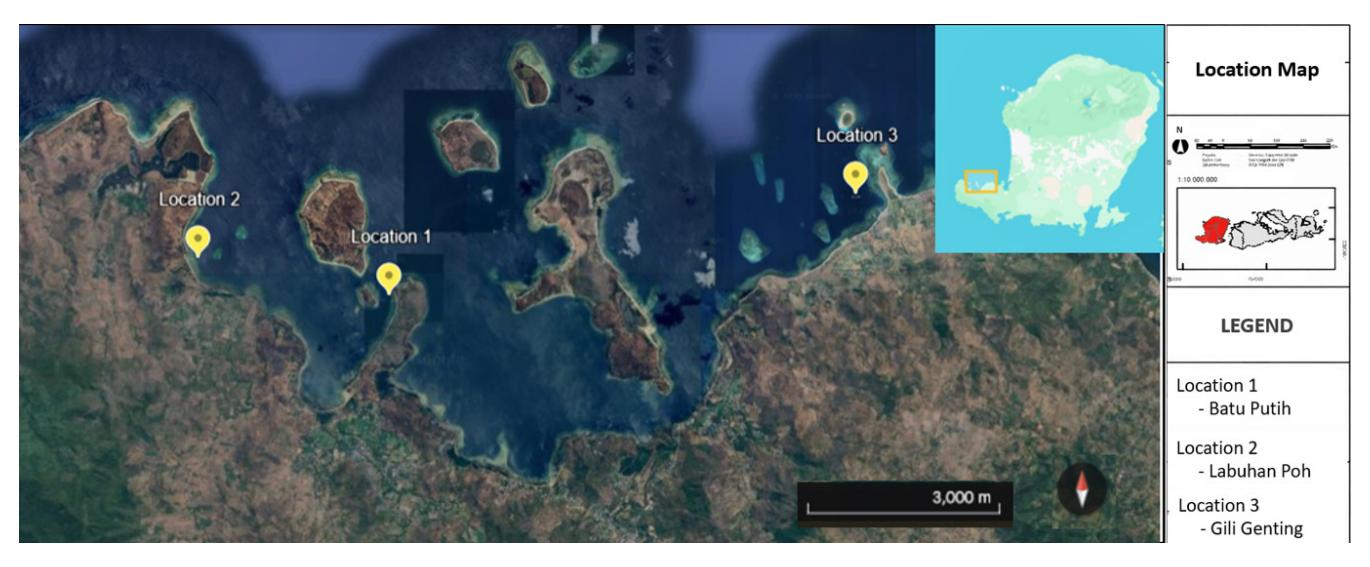
Figure 1 Geographic distribution of pearl oyster sampling stations in West Lombok, Indonesia. Source: google map, 2025
The collected data included the key physicochemical parameters of the water samples. The parameters measured in situ were salinity using a Horiba LAQUATWIN B-721 salinometer, light
intensity using a Krisbow KW06-288 lux meter, brightness using a Secchi disk, acidity using a digital pH meter, and temperature and DO using a calibrated multiparameter Vernier Optical Probe to ensure accuracy. Meanwhile, water samples were subjected to TSS, TDS, ammonia, nitrate, and chlorophyll-a parameter analysis in the laboratory using spectrophotometric and gravimetric methods. Nitrate content was determined using the brucine method at a wavelength of 410 nm, while ammonia was determined using the phenate method at a wavelength of 640 nm (SNI 1991, 2005). Chlorophyll-a levels were determined by acetone extraction at wavelengths of 630, 647, 664, and 750 nm (Bai et al. 2025).
Data from each location were presented as mean values, standard deviations, and ranges to provide a clear statistical description. The measurement results were then compared with two primary references: the Seawater Quality Standards for Marine Biota established by the Decree of the Indonesian Minister of Environment No. 51/2004 and the optimal environmental ranges for the growth and survival of Akoya pearl oysters (Pinctada fucata) and Tahitian black-lip pearl oysters (Pinctada margaritifera). Biological interpretation of the water quality parameters was conducted through a systematic literature review approach. The search strategy focused on studies examining the physiological responses of pearl oysters to key physicochemical parameters (genus Pinctada). Relevant studies were selected to predict the potential impacts of the measured field conditions on oyster health and growth (Page et al., 2021; Bramer et al., 2018). To analyze the ecosystem-based management component, we conducted direct observations and semi-structured interviews with key stakeholders, including pearl farmers, coastal non-governmental organizations, and the Marine and Fisheries Agency of West Nusa Tenggara (Dinas Kelautan dan Perikanan Provinsi Nusa Tenggara Barat, DKP NTB).
Results and Discussion
Data on the physicochemical parameters of water at three locations in the western part of Lombok Island. The data were collected during periods of high rainfall in the study area. The data obtained show variations in values between locations (Table I).
Location 1, Batu Putih Village, at Siung Beach, is a coastal area with open waters. This area has a stable pH of 7.57–7.76, with the highest DO value reaching 8. The waters around Siung Beach recorded the highest TDS and TSS values (29.9 and 0.102 mg/l, respectively) compared to other locations. This can be caused by waves and sediment carried by the current. The temperature parameters in the waters of Siung Beach have the largest fluctuating range, namely between 28.8°C and 32.8°C.
Location 2, located in Labuan Poh–Kores Beach, is a semi-enclosed water area. At this location, the salinity parameters tended to be stable, i.e., between 30 ‰ and 30.2‰. The level of clarity measured using a Secchi disk in the waters around Labuan Poh was the highest, reaching 6.25 m. Similarly, the chlorophyll parameter was the highest, 0.593 mg/L. This indicates that light penetration can enter the waters optimally, thus supporting phytoplankton growth and development.
| Table 1 Physical and Chemical Parameters of the water | ||||||||
|---|---|---|---|---|---|---|---|---|
| Parameter | Location | _ | Quality | Akoya | Tahitian black | |||
| 1 | 2 | 3 | Average | Range | Standard KLH | Pearl P. Fucata | pearl P. Margaritifera | |
| Water temperature (°C) | 28,8 - 32,8 | 28,5 - 31,3 | 28,2 - 28,3 | \(28,65 \pm 0,49\) | 28,2 – 32,8 | Coral 28-30 | 17 – 291 | 23 – 282 |
| рН | 7,57 - 7,76 | 7,64 - 7,74 | 7,56 - 7,86 | \(7,69 \pm 0,11\) | 7,56 – 7,86 | 7 – 8,5 | \(8,0-8,2^3\) | 7,8 – 8,24 |
| DO (mg/l) | 5,87 – 8,00 | 5,53 - 7,21 | 5,77 - 6,17 | \(6,38 \pm 0,89\) | 5,53 – 8,00 | > 5 | > 55 | > 56 |
Table I Physical and Chemical Parameters of the Water
| Salinity (‰) | 28,1 – 29,2 | 30 - 30,2 | 29,46 - 30,5 | 29,69 ± 0,85 | 28,1 – 30,5 | Coral 33-34 | 27 – 317 | 28 – 328 |
|---|---|---|---|---|---|---|---|---|
| Secchi depth (m) | 5,3 | 6,25 | 5,2 | 5,23 ± 0,59 | 5,2 – 6,25 | > 5 m | N/A | N/A |
| TDS (mg/l) | 29,9 | 29,7 | 26,3 | 28,30 ± 1,87 | 26,3 – 29,9 | Coral 20 | N/A | N/A |
| Light intensity (lux) | 32,4 - 80,4 | 59,7 - 126,6 | 36,7 - 80,2 | 70,88 ± 31,99 | 32,4 – 126,6 | N/A | N/A | N/A |
| TSS (mg/l) | 0,102 | 0,0955 | 0,021 | 0,065 ± 0,04 | 0,021 – 0,102 | N/A | < 29 | 1 – 210 |
| Ammonia (mg/l) | 0,04 | 0,03 | 0,04 | 0,0371 ± 0,004 | 0,03 – 0,04 | 0,3 | N/A | N/A |
| Nitrate (mg/l) | 0,002 | 0,003 | 0,05 | 0,0228 ± 0,025 | 0,002 – 0,05 | 0,008 | N/A | N/A |
| Chlorophyll (mg/l) | 0,297 | 0,593 | 0,031 | 0,267 ± 0,252 | 0,031 – 0,593 | N/A | 1-311 | 0,2 – 0,311 |
Description:
Location 1: Batu Putih – Siung Beach (8°44'54.8"S 115°53'40.2"E)
Location 2: Labuan Poh – Kores Beach (8°44'35"S 115°52'00"E)
Location 3: Gili Genting – Elak Beach (8°44'02"S 115°57'43"E)
1 Numaguchi, K., & Tanaka, Y. (1986), 2 (Yukihira et al., 2000), 3 (Li et al., 2015), 4 (Le Moullac et al., 2016), 5 (Yang et al., 2023), 6 (Pouvreau et al., 2000), 7 (Wang et al., 2020), 8 (Doroudi et al., 1999), 9 (Kripa et al., 2007), 10(Yukihira et al., 2006), 11(Zhu et al., 2018)
Location 3, Gili Genting Hamlet, Elak Beach, is an area along the Sekotong Highway. The waters are relatively open with several small islands, such as Gili Genting and Gili Lontar. The stable parameters at this location are temperature and pH. The temperature parameter is in the range of 28.2°C–28.3°C, while the pH is between 7.56 and 7.86. The lowest parameters at Elak Beach compared to other locations are chlorophyll, TDS, and TSS. The chlorophyll, TDS, and TSS values were 0.031, 26.3, and 0.021 mg/l, respectively, which can indicate water clarity.
Nitrate levels in water can indicate the availability of nutrients from the surrounding environment. Nitrate sources in water can be both natural and anthropogenic. Natural nitrate formation occurs from the decomposition of organic matter and upwelling. Meanwhile, nitrates from anthropogenic activities can include domestic waste from residential areas or homestays, agricultural use of chemical fertilizers, or feed waste from fish farming. Based on the data obtained, the highest nitrate level (0.05 mg/l) was found at Location 3, Gili Genting Hamlet, Elak Beach.
Diagram of Quality Standards and Physicochemical Parameter Conditions
Based on Table I, a diagram of the physical and chemical parameters of the waters can be created that illustrates the quality standards based on the Ministry of Environment and Forestry (KLH) and research on Akoya pearls and Tahitian black pearls, as shown in Figure 2.
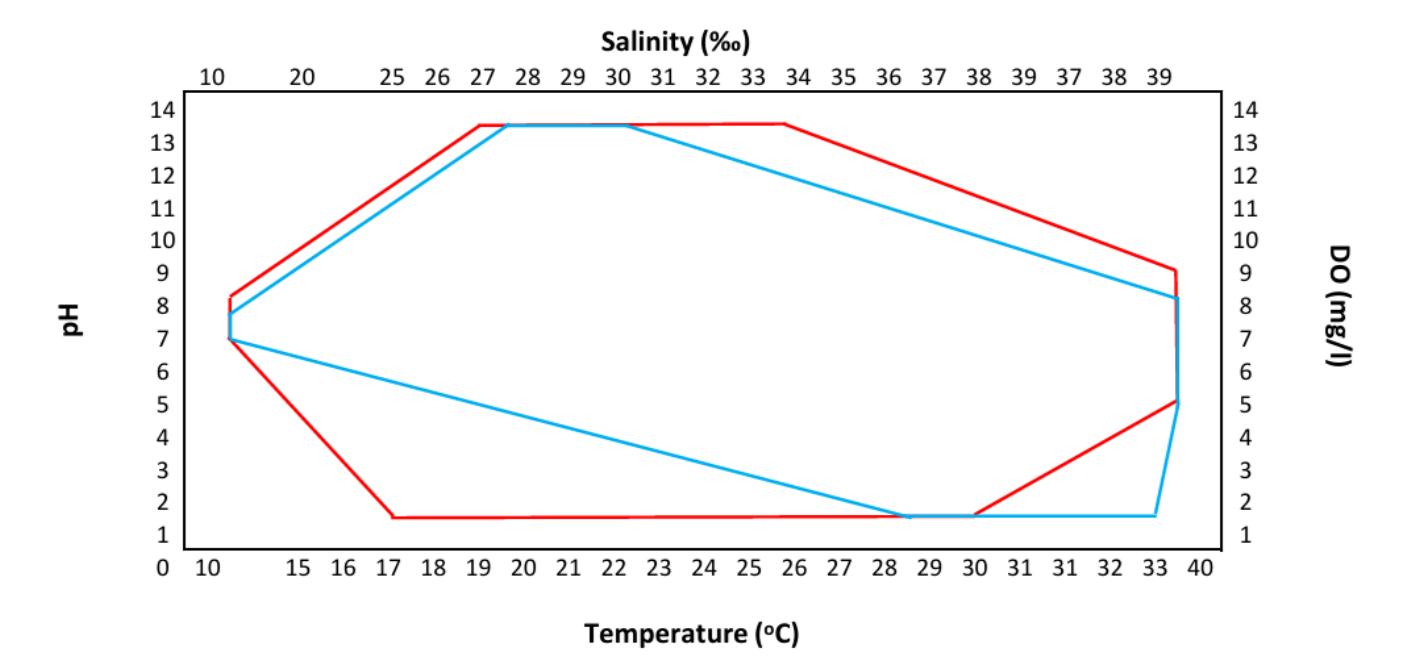
Figure 2 Diagram of water physicochemical parameters. a) The red line is the quality standard: b) the blue line is the parameter value at the research location.
The red line in Figure 2 shows the optimum temperature quality standards in the range of 17°C– 30°C, optimum pH in the range of 7–8.2, optimum dissolved oxygen (DO) in the range of 5–9 mg/L, and optimum salinity in the range of 27 ‰ –34 ‰. The blue line shows the range of parameter values obtained from the three research locations. The temperature values are in the range of 28.2°C–32.8°C, pH in the range of 7.56–7.86, dissolved oxygen in the range of 5.53 mg/L–8.00 mg/L, and salinity in the range of 28.1 ‰–30.5 ‰.
Analysis of Physicochemical Parameters
The quality of the aquatic environment is crucial for the success of pearl oyster (Pinctada maxima) cultivation. Ideal physicochemical parameters in seawater will support the growth, metabolism, and nacre formation of pearl oysters. The results of water quality measurements from three cultivation locations on Lombok Island are shown in Table I compared to the quality standards stipulated in the Decree of the Minister of State for Environment No. 51 of 2004 for the marine biota category (KLH, 2004). To facilitate interpretation, the key parameters and their implications for pearl cultivation are summarized in Table II.
| Parameter | Observed Condition | Biological Implication | Management Relevance (EBM Context) | |
|---|---|---|---|---|
| Temperature | Up to 32.8 °C at Site 1 | Risk of thermal stress, reduced shell matrix protein expression, lower nacre quality | Depth adjustment (longline system), seasonal monitoring | |
| pH | 7.56–7.86 (within | Supports biomineralization and metabolic | Maintain buffer stability; | |
| standard) | processes | monitor runoff impact | ||
| Dissolved | 5.53–8.0 mg/L (above | Supports metabolism and immune function | Maintain circulation and prevent | |
| Oxygen | minimum standard) | eutrophication | ||
| Salinity | 28.1–30.5 ‰ (within | Supports osmotic balance; extreme | Monitor freshwater runoff | |
| optimal range) | fluctuation may cause stress | during rainy season | ||
| Ammonia | 0.03–0.04 mg/L (below threshold) | No immediate toxicity risk | Continuous monitoring near settlements |
|---|---|---|---|
| Nitrate | 0.05 mg/L at Site 3 | Potential eutrophication and algal bloom | Waste management and nutrient |
| (exceeds standard) | risk | source control | |
| TSS | Very low (0.021–0.102 | Favors filtration and growth; P. maxima | Maintain sediment control |
| mg/L) | tolerant to moderate turbidity | practices |
The temperature range at Location 3 ranges from 28.2°C to 28.3°C, approaching the optimum temperature for the growth of pearl oysters, Pinctada maxima, which is 23°C–28°C (Hamzah & Nababan, 2009). Locations 1 and 2 have higher temperatures of up to 32.8°C, which can cause physiological stress on oysters and increase ammonia toxicity (Zhao et al., 2003). According to Numaguchi & Tanaka (1986), the optimum temperature for oyster growth is in the range of 17.5°C to 29°C. Although nacre growth is faster at higher temperatures, it is limited to the optimum temperature range (Muhammad et al., 2017).
Research conducted by Liu et al. (2014) on oysters given treatment beyond the optimum range limit, namely at a high temperature of 32°C, showed a decrease in the expression of shell matrix proteins. The expression of these proteins plays a role in the formation of shells (Takeuchi & Endo, 2006) and pearl layers (Miyamoto et al., 2005). High temperatures increase the risk of very rapid growth but reduce pearl quality. According to Taylor & Strack (2008), the surface texture of pearls becomes rougher, which is known as "hammering" (Taylor & Strack, 2008). High temperatures can also accelerate metabolism and shorten the lifespan of larvae, so they need to be controlled with proper cultivation management.
The measured pH values at the three locations ranged from 7.56 to 7.86. This range falls within the seawater quality standards for marine biota, which are 7.0–8.5 (KLH, 2004). The optimal pH for pearl oysters is between 7.5 and 8.6. This pH range supports calcium carbonate shell formation and larval metabolism. A pH between 4.0 and 6.5 can reduce oyster activity, while a pH above 9.0 can disrupt oyster reproduction (Jamilah, 2015).
Research conducted on the pearl oyster Pinctada fucata (Li et al., 2015) showed that exposure to pH 7.5 reduced the capacity of extra pallial fluids to form pearls. Furthermore, phagocytosis activity was significantly reduced despite the increased number of immune cells. Furthermore, metabolic disruptions in the biomineralization process occurred due to calcium leaching from immune cells (Gazeau et al., 2013).
Dissolved oxygen (DO) concentrations across all locations ranged from 5.53 to 8.0 mg/L. This value is above the minimum quality standard threshold for marine biota (≥5 mg/L). According to Arini and Jaya (2011), a good DO range for cultivating pearl oysters (Pinctada maxima) is between 3.2 and 6.6 mg/L. Higher DO can increase metabolic activity (Arini & Jaya, 2011).
Waters with dissolved oxygen concentrations below <2 mg/L are considered hypoxic (Yang et al., 2023). Oysters exposed to hypoxic waters can experience decreased activity of acid phosphatase (ACP) and alkaline phosphatase (AKP), thereby weakening their immune system. Long-term exposure to hypoxia can also cause oxidative damage to cells and reduced survival (Le Moullac et al., 2016).
Salinity measured at the three locations ranged from 28.1‰ to 30.5%. This range is within the water quality standard for marine biota, namely 33-34‰ (KLH, 2004). This range is also within the optimal range for pearl oysters, namely 26–35‰ (Taylor et al., 2004; Wulandari et al., 2023). This salinity level supports the stability of cell osmotic pressure in pearl oysters. However, if there is an extreme fluctuation, such as a sudden decrease due to rain or freshwater runoff, it can cause osmotic stress in pearl oysters.
Research conducted by Yang et al. (2022) on Pinctada fucata oysters exposed to salinity levels beyond the optimal range showed disruptions in the digestive system and growth metabolism. The activity of the key enzymes AMS (amylase) and TRYP (trypsin) decreased drastically at low and high salinities, respectively. This reduced energy and nutritional intake. Furthermore, there was an increase in SOD (superoxide dismutase) and GPX (glutathione peroxidase) in the hepatopancreas and gills under nonideal salinity conditions. This caused the available energy to be used for osmoregulation and emergency
metabolism, leaving little energy for growth, reproduction, and pearl formation (Doroudi et al., 1999; Yang et al., 2022).
Ammonia concentrations across all locations ranged from 0.03 to 0.04 mg/L, well below the maximum quality standard for marine biota of 0.3 mg/L (KLH, 2004). However, nitrate levels at location 3 reached 0.05 mg/L, exceeding the maximum quality standard of 0.008 mg/L (KLH, 2004). These high nitrate levels likely stem from domestic waste, residential runoff, tourist activities, or agriculture (Sekito et al., 2019).
Total suspended solid (TSS) values at all three locations were well below the marine biota standard (≤ 20 mg/L). The lowest TSS was found at location 3 (0.021 mg/L), indicating very clear water conditions ideal for particle filtration by oysters (Wulandari et al., 2023). Research on Pinctada maxima and Pinctada margaritifera has been conducted (Yukihira et al., 2006), and there are differences in their ability to adapt to the value of suspended solid material in water. Pinctada maxima has a wider tolerance compared to Pinctada margaritifera, which is only in the range of 1-2 mg/L of suspended solid material (Suspended Particulate Matter/SPM). Therefore, Pinctada maxima can still adapt to more turbid waters up to 15 mg/L SPM, while Pinctada margaritifera can only grow well in clear waters (Yukihira et al., 1999).
Pearl Oyster Adaptation
Pearl cultivation, which generally uses Pinctada maxima, Pinctada fucata, and Pinctada margaritifera oysters, can yield varying results due to environmental factors. These oysters can adapt to the environmental parameters of their cultivation environment. Pinctada maxima and Pinctada fucata exhibit a wider tolerance range than Pinctada margaritifera. Pinctada maxima and Pinctada fucata are well adapted to the temperature fluctuations typical of coastal waters (Le Moullac et al., 2016; Yukihira et al., 2000). Conversely, Pinctada margaritifera, which specializes in stable lagoon waters, has a narrow tolerance to temperature increases.
The adaptations of Pinctada maxima and Pinctada fucata again show a broad tolerance to salinity, making them euryhaline (Taylor et al., 2004; Yang et al., 2022). Pinctada fucata even shows physiological optimization at a salinity of around 28 ppt. In contrast, Pinctada margaritifera is stenohaline, relying heavily on the stable high salinity typical of its environment to optimally carry out its osmoregulatory function (Doroudi et al., 1999).
The most striking difference in adaptation lies in their response to turbidity (Total Suspended Solids/SPM). Pinctada maxima is highly tolerant (Yukihira et al., 2006). Pinctada fucata has moderate tolerance, but it can experience decreased digestive function and immunity under conditions of high inorganic SPM. On the other hand, Pinctada margaritifera is very sensitive and requires clear water with a very low SPM.
Finally, their responses to chemical stress also differ. Pinctada margaritifera exhibits remarkable resistance to pH decline. Pinctada fucata is more sensitive and exhibits decreased calcification rates under low pH conditions (Gazeau et al., 2013; Li et al., 2015). Regarding dissolved oxygen (DO), Pinctada fucata is highly susceptible to hypoxia (Yang et al., 2023), while Pinctada maxima is reported to tolerate levels ranging from 3.2 to 6.8 mg/L (Wulandari et al., 2023).
Pinctada maxima's ability to adapt to higher temperatures than other pearls have the potential for rapid growth, resulting in a thicker nacre layer. However, this poses a risk of the pearl's surface texture becoming rougher, resulting in "hammering" (Taylor & Strack, 2008). Furthermore, Pinctada maxima's ability to tolerate turbidity can reduce the luster of the pearls produced.
Marine Conservation in West Lombok
The physicochemical parameters measured at the study sites indicated that the water temperature exceeded the established quality standards (Figure 1). Although temperature values fluctuate depending on weather conditions (Sarojini et al., 2022), farmers still require careful attention to implement appropriate mitigation
measures. One mitigation practice already applied by farmers is lowering the depth of the pocket nets on the long line system to reach layers with more optimal temperatures. This local knowledge is consistent with the characteristics of water thermoclines, in which temperature varies across depth layers at certain times (Fiedler, 2010). This approach is commonly used in flotation-controlled longline systems.
Other parameters, such as pH, dissolved oxygen, and salinity, are within the optimal range. This condition indicates that most of the physicochemical parameters in West Lombok water support the growth of Pinctada maxima pearl oyster cultivation (Zhu et al., 2018). This is possible due to the awareness of farmers and the local government to conserve the ecosystem in the West Lombok waters. The government has designated the Gili Tangkong, Gili Nanggu, and Gili Sudak Marine Tourism Parks, known as the Gita Nada Marine Conservation Area (KKPD TWP).
The TWP Gita Nada was first designated as a conservation area through a decree of the regent of West Lombok and was subsequently strengthened by the decree of the governor of West Nusa Tenggara No. 523–505 of 2016. The TWP Gita Nada conservation area covers 21,556 ha and includes five villages. The map of the area and zoning division of the TWP Gita Nada is shown in Figure 3.
The TWP Gita Nada conservation area implements the principles of Ecosystem-Based Management (EBM) by dividing its marine territory into four zones, as shown in Figure 3. The red area represents the core zone, the green area represents the utilization zone, the dark blue area corresponds to the sustainable fisheries zone, and the gray area represents the mooring zone used for vessel anchorage. This zoning system is aligned with the spatial and conservation zoning concepts of Klein et al. (2010).
The core zone is used as a nursery area for fish and other biota to ensure the natural bioecological processes. Only educational activities, research, development, captive breeding, and wildlife release are permitted in the core zone. The usage zone permits marine nature tourism and the preservation of indigenous cultures. The sustainable fisheries zone is an area with ecosystem characteristics that allow for environmentally friendly use and ensure sustainable aquaculture management. This zone permits marine biota cultivation and fishing with vessels of less than 10 GT.
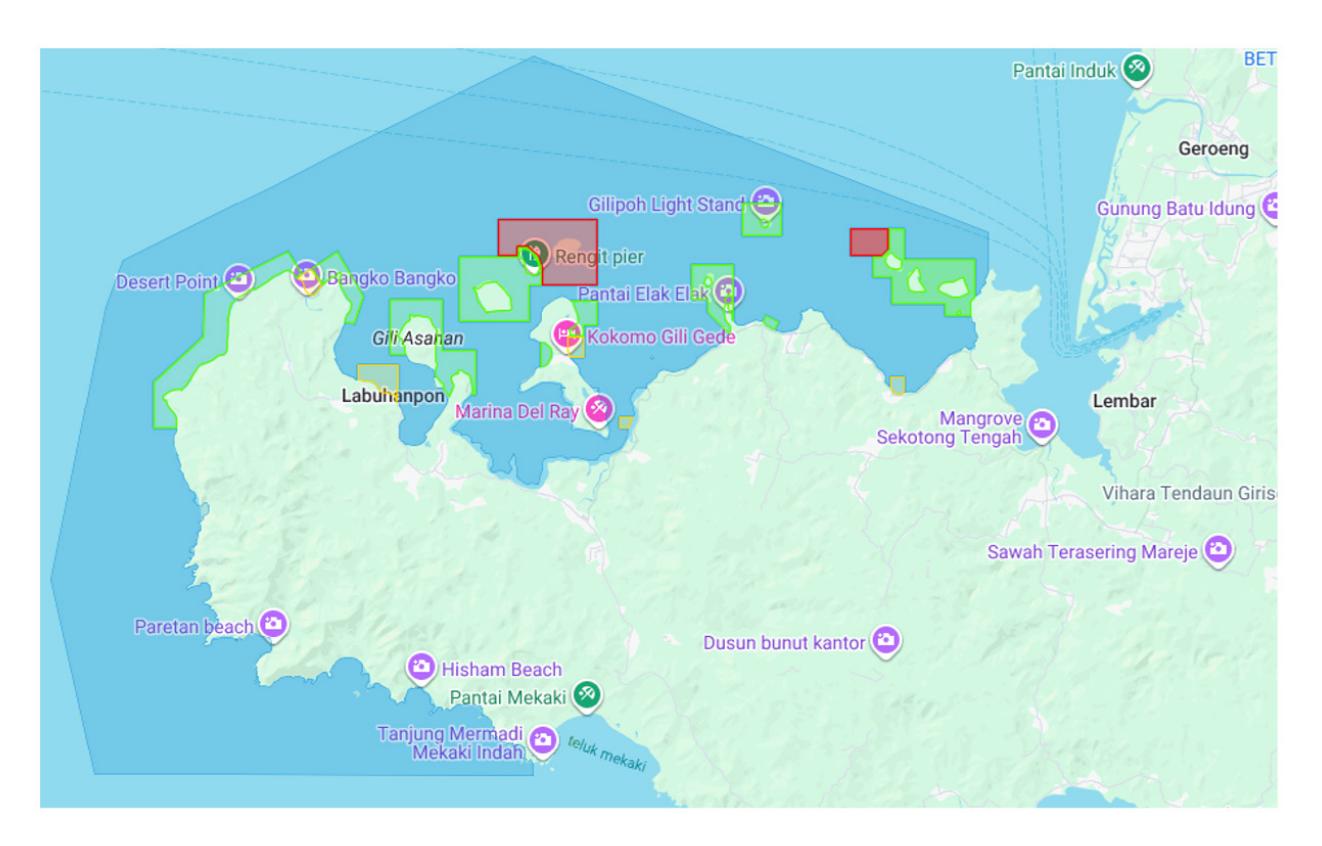
Figure 3 Zoning Map of the TWP Gita Nada KKPD Source: NTB DKP, 2016
The TWP Gita Nada is not only managed by the government but also involves active participation from the community, including non-governmental organizations, tourism awareness groups (Pokdarwis), fish farmers, and fishermen. Joint activities between the water and air police (Polairud) and the community include outreach and prohibitions on marine littering and poison and bomb fishing, which damage coral reefs. Furthermore, educational activities on preserving the marine ecosystem are conducted for students and coastal communities. This is one of the mitigation activities in maintaining and preserving the aquatic ecosystem in West Lombok, thereby maintaining the quality of the physicochemical parameters of the waters that support pearl cultivation.
Conclusion
The physicochemical conditions of the surrounding waters of Lombok strongly influence the aquaculture sustainability of pearl oysters (Pinctada maxima). Based on measurements conducted at three major pearl-farming sites in West Lombok, the environmental conditions generally support the growth of Pinctada maxima, with seawater temperature being a critical concern. The mean temperature (28.65 °C) was slightly above the optimal range (23°C–28°C) and fluctuated up to 32.8 °C at Site 1 (Batu Putih), a condition that may induce physiological stress, reduce nacre quality, and increase ammonia toxicity. Other key parameters—including pH (7.69), dissolved oxygen (6.38 mg/L), salinity (29.69‰), ammonia (0.037 mg/L), and TSS (0.065 mg/L)—remained within safe and acceptable limits. High water transparency, low concentrations of organic pollutants, and conservation support through the Gita Nada Marine Tourism Park (TWP), which applies an Ecosystem-Based Management (EBM) approach, further strengthen the suitability of the region for pearl cultivation. Species-specific tolerance also plays a critical role, as Pinctada maxima exhibits a wider tolerance to temperature and turbidity fluctuations than the more sensitive Pinctada margaritifera, making Pinctada maxima the most suitable species for the environmental conditions of West Lombok. The application of flotation-controlled longline technology can be used to adjust oyster depth according to thermocline temperature and salinity patterns, thereby optimizing the growth conditions for Pinctada maxima. However, this study was limited to short-term observations during a single seasonal period and focused primarily on physicochemical parameters without incorporating long-term biological performance indicators or socio-economic variables. Future research should include multi-seasonal monitoring, experimental validation of temperature adaptation strategies, and a broader integration of ecological, economic, and stakeholder-based assessments to strengthen the implementation of ecosystem-based management in pearl aquaculture systems.
Acknowledgement (Optional)
We would like to express our gratitude to the FMIPA UI Postgraduate Publication Grant 2025 for Noverita Dian Takarina. We also extend our gratitude to the BPBL Lombok Laboratory and Pearlium for their facilities and support during the research. We also thank all research assistants and partners who assisted in data and sample collection.