

1. INTRODUCTION
Comics as the popular medium of communication, especially medium for the children due to its capabilities in telling stories with its visual narrative, has been known for quite long. In Japan which is famous for its form of comics known as manga, comics not only acts as a medium of communication for all ages but also for its ability to convey messages through methods that its very different from its Western counterparts. Manga introduces unique visual and storytelling approaches such as the masking effects, the objectifying power or by putting the readers in the driver's seat, giving an extraordinary experience. It is said that in the East, there is a rich tradition of cyclical and labyrinthine works of art while in the West, they are much a pretty goal-oriented culture. Japanese comics may be theirs to this tradition, in the way they so often emphasize 'being there' over 'getting there'.
One of the unique features of manga is the existence of a sequence that tells a story using image only, with no or minimal use of words or texts. This scene (A scene consists of a group of sequences) is known as silent scene.
2. THEORIES AND REFERENCES
Comic is basically a visual based medium to convey several degree of information to its audience. It relies on visual to tell the story as scholar Scott McCloud stated that comic is a sight-based medium. The visual components within comics could be categorized in to two: text and image. Both text and image could be combined in various ways to transmit a connected series of ideas. McCloud broke the relation into seven categories: word specific, picture specific, duo specific, additive, parallel, montage and interdependent. And since it is based on visual, the message could also be communicated using each component itself (or at least with minimum support from the other component). However, there is no premise on which combination is the best, since each of them has their own purpose.
Comic is also a visual narrative medium, using sequential art and mostly closure to convey the messages toward its audiences. Closure is a phenomenon of observing the parts but perceiving the whole and in comics is commonly found in the gutter between panels. Comics panels fracture both time and space, offering a jagged, staccato rhythm of unconnected moments and closure allows the readers to connect these moments and mentally construct a continuous, unified reality. In short, the readers would play an important role while reading comics since they will use imagination to 'visualize' what is happening between the panels, to create bridge between the panel's transition.
Furthermore, McCloud then stated that there are six types of panel to panel transitions: moment to moment, action to action, subject to subject, scene to scene, aspect to aspect and non sequitur. Aspect to aspect – a transition that bypasses time for the most part and sets a wandering eye on different aspects of place, idea or mood- that is used to establish a mood or a sense of place with quiet contemplative combinations. The readers' involvement in this kind of transition is very high since the readers have to combine scattered moments that seem unrelated in capturing the real meaning of the scene.
One of the unique ways in telling story or conveying messages with series of pictures only (or with the support of minimum text)
is known in manga (comics from Japan). This series of sequential scenes mostly told using images (that shows fragmented moments) is called 'silent scene'. The viewer has to combine the message by relating and combining those fragmented moments to get the whole idea. This particular scene is usually shown with minimal dialogue to establish the 'mood'.
3. ANALYSIS AND SAMPLES OF SILENT SCENES IN MANGA
A silent scene is a scene that consists of various 'unconnected' imagery to convey messages/particular mood. Usually, it is built by the combination of visual-only panels and aspect to aspect transitions. The viewer has to combine the message by relating and combining those fragmented moments to get the whole idea. Please take a note that the word 'silent' in the silent scene is implied for scene that is told through silent (using minimal or no dialogue/narration). The scene itself could have many actions that resemble no silence at all.
As implied in the previous part, there are two visual components in the comics: visual elements within inside the panel and the transition between panels (closure). Both of these visual components work together to convey the message in two basic premises: what is the message (the content or the message itself) and how it conveys the message to the readers (such to give direct information or to give the reader a complete experience).
The following part would try to explain several samples of silent scene in the manga by focusing of what the message of each scene and how each of them (the silent scenes) conveys the message to the readers.
3.1. Scenes from Nodame Cantabile by Ninomiya Tomoko, Vol. 17, page 4-15
Chiaki Shinichi, the main character from the story is the conductor of Roux-Marlett Orchestra in Paris. The previous orchestra's performance had been a disaster; therefore Chiaki thrives hard to put the best performance after the orchestra rebuilds itself by gaining new members.
The sequences in are another fine example in how to 'create' sound using sequential images and how the music affects the audiences using various aspect to aspect panel transitions that move between the orchestra's players, conductor and audiences.
a. Page 4 and page 5
(Fig. 1) Panels from page 4 to 5 of Nodame Cantabile vol. 17 Images are read from right to left
The panels in the first two pages show how the classic composition begins with the direction from the conductor and the major instruments that play important part at the beginning of the composition, such as tuba, timpani, flute section, violin and trumpet. The 2nd panel in the 2nd page shows that most of the instruments in the orchestra are being played by portraying the scene with a long shot view.
b. Page 6 and page 7
(Fig. 2) Panels from page 6 and page 7 of Nodame Cantabile vol. 17 Images are read from right to left
The scene then switches to the audiences, showing their preliminary respond for the opening act before entering a more silent part of the composition, focusing on a solo performance by the flute player. The focus on the conductor's and the flute player's gesture with dark background creates a calmer nuance. The scenes then move from one player to another, creating the sense of sound of each instrument as one harmony, and create the music in the readers' mind
c. Page 10-11
(Fig. 3) Panels from page 10 and page 11 of Nodame Cantabile vol. 17 Images are read from right to left
Page 10 begins with a change in the tempo, followed by the heavy sound part (by focusing the scene to the timpani in the 3rd panel). From the 2nd panel on page 11, we could 'hear' that the composition now focuses on the flute instruments before back in full force and the end of the page. Also in this page, when the panel focuses on the oboe player, we could detect one special relationship between him and one of the female audiences. The focus on the hand's gesture on the 4th panel delivers this message.
d. Page 12 to page 13
(Fig. 4) Panels from page 12 to 13 of Nodame Cantabile vol. 17 Images are read from right to left
The following two pages represent the climax moment of the classic composition with all of the instruments showcase their strength, creating a rich musical harmony.
e. Page 14 to Page 15
The page starts with a 180 degrees turn from the previous pages with the conductor ended the composition in complete silent. The conductor's gesture in creating an accomplished sign is enforced by how he is visualized in contrast (portrayed in black) with all the orchestra players (which are drawn with only outline). The following three panels also give the reader moment of silence, before the readers could find out the respond from the audiences: whether they like the performance or not.
(Fig. 5) Panels from page 14 to page 15 of Nodame Cantabile vol. 17 Images are read from right to left
To build up the story to the climax, the final page begins with a very positive respond from the audiences, before moves to another aspect to aspect transition, depicting various expressions from the orchestra players to the audience. Starting from the 2nd panel, it renders the players' respond as a mixed one. From the feeling of disbelief that they managed to make a good performance (2nd panel) to the satisfaction that all the hard work had finally been paid off (3rd and 4th panel). The scene then moves to another moment of silence, that despite all the noisy respond, there are audiences that are really moved by watching the musical performance.
All of the sequences in these ten pages brilliantly bring the sound of a classical music performance, the details of the composition, the drama of how the composition is being played and how the audiences would respond while actually being presented visually with silent scenes. The aspect to aspect panel transition in these scenes act as fragmented moments that form one unity, to portray the complexity and harmony of the classic composition. They also manage to give additional story regarding the supporting characters within the story, serving a round up and complete experience for the readers.
The Message:
• The good performance by the orchestra after the previous failure.
How to convey the message:
• The performance is built up by showing various classical music elements: harmony, instruments, tempo, solo performances and the audiences' response. Readers are 'invited' to listen to the composition played by the orchestra.
3.2. Scenes from H2 by Adachi Mitsuru, Vol. 25, pages 94-103
H2 is another comics created by Adachi Mitsuru about baseball. The story preceding the pages is about the hard effort by the baseball team from Senkawa High School in order to win the elimination round in the fall season to get a place in the Koshien, a prestigious baseball championship in Japan.
The interesting part is that the final match to win a place to Koshien is told in brief, only capturing several key moments rather than showing the complete and intense match between both teams. It also uses various aspect to aspect panel transitions to tell the final result in combination with several side stories.
a. Page 94 to page 95
The story opens with two establishing shots to inform the readers about the place and season where the story took place. The 1st panel shows dry leaves scattered on the ground, followed by a long shot of an empty street in the 2nd panel (possibly a typical Japanese street) to inform the readers about the setting (that took place in Japan) during fall season. The scene then moves to the following panels that serve as comic relief while bridging to the next page.
(Fig. 6) Panels from page 94 of H2 vol. 25 Images are read from right to left
The first three panels on page 95 is a continuation of a series of comic relief from the previous page. The dog is actually the main character's pet. The 4th and 5th panels show the stadium where the final match is taken place and also act as a bridge in connecting the following page. The transition between 3rd and 4th panels creates a wandering eye that moves from the main character's home to the baseball stadium with the sky (in 4th panel) serves as the connector of both places. If it is shot in a movie, the transition from 4th to 5th panel would be a tilt down shot.
b. Page 96 to page 97
(Fig. 7) Panels from page 96 to page 97 of H2 vol. 25 Images are read from right to left
The scene then focuses on the main character, Hiro Kunimi, who is the ace player and pitcher of the Senkawa baseball team, throwing his best pitching from the mound (which is also in the center of the baseball field) before wandering again to different place to introduce another side story that sets in a golf course.
The 1st panel on page 97 informs the reader about the Golf tournament for the employees of the Koga Company, followed by series of golf ball being hit and the result that shows the poor performance from the golf player. The 4th panel reveals that the poor golf player is actually the father of the ace pitcher from Senkawa. The 5th panel puts the focus back to the main story to show the excitement of the final match between the Senkawa team and its (unknown) opponent.
c. Page 98 to page 99
The 1st panel in page 98 acts as a diversion to introduce another side story and also the second main character from H2, Hideo Tachibana in his regular training. The 4th panel brings back the focus to the final match with one of the Senkawa's player manages to catch a long hit from the opponent's batter. This panel also serves as a connector from Hideo's scene to the Senkawa's match since the sky is above both places.
Page 99 takes another transition for another side story to introduce the third main character, Hikari Amamiya. The following scenes that took place inside a library building tell the readers about Hikari's diligent personality (the indication is that she is studying during weekends since the matches in the fall season are being held every Saturday). The falling of ginko leaves also emphasizes on the fall season.
(Fig. 8) Panels from page 98 to page 99 of H2 vol. 25 Images are read from right to left
d. Page 100 to page 102
The following three pages depict various excited moments from the final match as a sequence of fast cuts (emphasizes on the characters' action with blurry backgrounds) ended in a final clue of a winning celebration at the end of page 100. Page 101gives Hiro Kunimi (as the main character) and the readers a moment of glory with a full page scene, followed by various winning moments both from the players (1st and 2nd panel on page 102) and audiences (3rd to 6th panel on the same page). Notice that the winning celebration is told without sound effects, but using various gestures and visual elements.
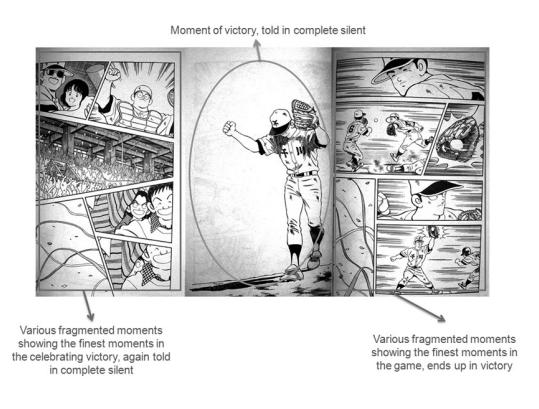
(Fig. 9) Panels from page 100 to page 102 of H2 vol. 25 Images are read from right to left
e. Page 103
The final page is took place one day after the final match, with the win gets into the newspaper's headline. The 2nd and 3rd panels show the respond from Hikari's parents about the winning event. The last three panels take an irony as Hiro's father seems to be proud of something. It turns out that he ends up in the last place in the Golf tournament, a stark contrast in comparison to what his son manages to achieve.
(Fig. 10) Panels from page 103 of H2 vol. 25 Images are read from right to left
These pages are another brilliant sample of the capability of silent scenes in conveying information. Using various combination of aspect to aspect transition that takes place in an almost the same time (all events takes place in the fall season), these pages are not only telling about the outcome of the final match, but also several side stories that are important to build up the overall story (such as character's development) and comic relief moments.
In those scenes, readers are put in the wandering eye (like a camera that moves freely from one place to another) to the extreme. It does not limit its (the camera's) movements around the main idea (the final match for the Senkawa baseball team) but to include many unrelated events to build up even larger experience for the readers.
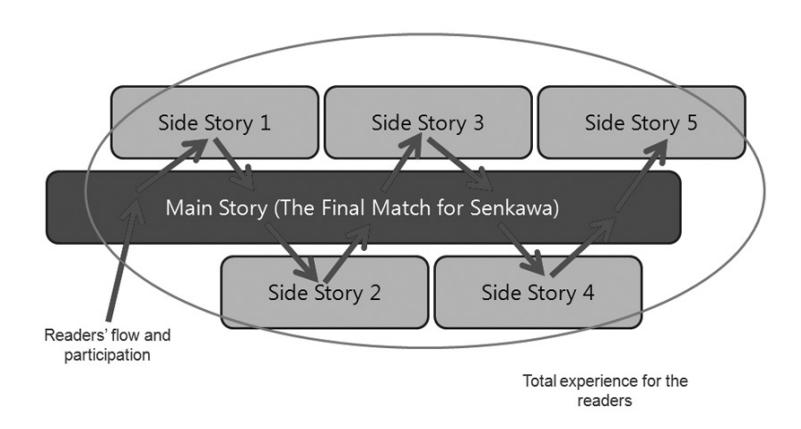
(Fig. 11) Diagram of the panel transitions from page 94 to page 103 of H2 Vol. 25
It is not only to show the moment of victory but also what the victory means to other characters related to the story. The facial expressions from Hideo Tachibana (on the 3rd panel of page 98) and Hikari Amamiya (on the 4th and 5th panel of page 99) show their hope for Senkawa's victory on the final match.
The Message:
- The final game to get a Koshien ticket which is won by Senkawa's baseball team. How to convey the message:
- By building up the story with fast paced match game with lots of 'unrelated' side stories to create a full experience for the readers regarding the characters and the story.
4. RESEARCH FINDINGS
A silent scene is a scene that consists of various 'unconnected' imagery to convey messages/particular mood. Usually, it is built by the combination of visual-only panels and aspect to aspect transitions. The viewer has to combine the message by relating and combining those fragmented moments to get the whole idea.
Aspect to aspect panel transitions is most
often used since it has the capability to put the readers in the wandering eye, freely moves from one aspect to another, capturing fragmented moments, provides the reader with the feeling of 'being there'. The visual-only panels require the specific mastery in portraying each moment/panel since the visual has to speak by itself.
The fragmented moments could also be used as an alternative way -by providing great details in such 'unnoticed' methodto support the main theme or story. Using these 'detailed' scenes, the viewer would perceive additional yet valuable information to enrich his/her understanding regarding the story or theme.
In reading the silent scenes, the readers take an active part. Just like a game of puzzle, the readers are continuously being challenged to solve the game, thus give them a complete experience while reading. The power of the silent scenes mostly relies on visual elements (such as images in form of facial expressions, gestures, backgrounds and panel transitions). This could be an advantage since visual elements could break the language barrier, thus creating a more universal language to some degree.
5. REFERENCES
Adachi, Mitsuru; H2 Vol. 25; Elex Media
Komputindo; Jakarta; 2006
Gravett, Paul; 60 Years of Japanese Comics;
Harper Design International; USA; 2004 Lehmann, Timothy; Manga: Masters of the
Art; Collins Design, New York; 2005
McCloud, Scott; Understanding Comics;
Paradox Press; New York; 1999.
Napier, Susan J.; Anime: From Akira to
Princess Mononoke; Palgrave Press; 2001
Ninomiya, Tomoko; Nodame Cantabile Vol.
17; Kodansha; Tokyo; 2006
Schodt, Frederik; Manga! Manga! The
World of Japanese Comics; Kodansha
International USA Ltd; New York; 2003.