

1. Introduction
Epidemiology and Clinical Impact of ESBL-Producing Bacteria
Extended-Spectrum Beta-Lactamase (ESBLs) are enzymes capable of hydrolyzing and inactivating a wide range of β-lactam antibiotics, including third generation cephalosporins such as cefotaxime and ceftriaxone. The presence of ESBLs in bacterial pathogens is of critical concern in clinical microbiology due to their substantial contribution to antimicrobial resistance, thereby compromising the efficacy of conventional therapeutic regimens for bacterial infections [1,2]. The escalating prevelance of ESBL-producing organisms is multifactorial in origin. A primary driving factor is the widespread oversue and inappropriate administration of antibiotics, particularly third generation cephalosporins, which exert selective pressure favoring resistant strains. This issue is exacerbated in healthcare environments, where prolonged hospitalization, frequent antimicrobial exposure, and high patient turnover facilitate the transmission of resistant organism. Furthermore, suboptimal infection control measure
such as inadequate hand hygiene, improper sterilization of medical devices, and insufficient isolation protocols further promote the dissemination of ESBL-producing bacteria [3].
In clinical microbiology laboratories, various diagnostic platforms are employed for the identification of ESBL producers. The VITEK automated system is commonly used for both bacterial identification and antimicrobial susceptibility testing. However, this system is not without limitations, particularly in the accurate identification of nonfermenting Gram-negative bacilli and certain Gram-positive cocci, which may lead to diagnostic discrepancies [4]. These limitations underscore the need for more robust and specific molecular diagnostic tools. To address this challenge, our training program focuses on the development of a polymerase chain reaction (PCR) based identification method utilizing CTX and TEM primers, specifically targeting CTX-M-15 and TEM-15—two of the most prevalent ESBL genotypes circulating in Indonesia [5].
ESBL is produced by various Gram-negative bacterial
species, particularly Escherichia coli and Klebsiella pneumoniae, which are frequently implicated in urinary tract infections, pneumonia, and bloodstream infections [6]. The production of this enzyme is encoded by several genes, including CTX-M, TEM, and SHV, which differ in the active site of their beta-lactamase enzymes but exhibit similar activity in hydrolyzing beta-lactam antibiotics [7]. The CTX-M group is the most prevalent worldwide, particularly in clinical settings, and has been subdivided into various subtypes based on their genetic variations . TEM and SHV enzymes were among the first ESBLs discovered and continue to be relevant in antibiotic resistance studies due to their evolving mutations that enhance their hydrolytic efficiency [5,6]. Patients infected with ESBL-producing bacteria are generally advised against using third-generation cephalosporins and require alternative therapies with other antibiotics, such as carbapenems or betalactamase inhibitor combinations. However, the overuse of carbapenems has led to the emergence of carbapenemresistant Enterobacterales (CRE), complicating treatment strategies and emphasizing the need for novel therapeutic approaches [8].
Challenges in Molecular Diagnosis
PCR has been increasingly utilized due to its ability to provide more specific and reliable results compared to biochemical methods, which may yield false-positive or falsenegative results due to bacterial phenotypic variability [9,10]. PCR enables the amplification of conserved, specific genes, making it a more accurate tool for identifying the presence of ESBL genes in pathogenic bacteria. Real-time PCR and multiplex PCR have further improved detection efficiency, allowing for simultaneous amplification of multiple target genes, reducing the time required for bacterial identification. Moreover, whole-genome sequencing (WGS) has been explored as a high-resolution approach for characterizing ESBL-producing strains, providing detailed insights into resistance mechanisms and potential transmission routes [11,12].
In PCR techniques, primer selection is a crucial step that determines the success of DNA amplification. A primer is a single-stranded oligonucleotide that serves as the initiation site for DNA synthesis during PCR. Typically, primers range from 12 to 25 nucleotides in length and are designed to recognize and flank the target region within the bacterial genome. The optimal selection of primers is essential to ensure amplification specificity and efficiency, which depends on several parameters, including guanine-cytosine (GC) content, melting temperature (Tm), and the absence of secondary structures such as primer dimers or hairpins that may hinder the PCR reaction [8,10]. Bioinformatics tools, such as Primer3 and BLAST, are commonly used to design and validate primers to enhance their specificity and reduce the risk of non-specific amplifications [13].
Primer Design and Optimization for ESBL Gene Detection
ESBL-producing bacteria possess the CTX-M and TEM genes, which encode enzymes capable of hydrolyzing beta-lactam antibiotics. Given their critical role in ESBL production, these genes serve as reliable molecular targets for the identification of ESBL-producing bacteria [14] . In this study, primers targeting the CTX-M and TEM genes were designed to facilitate PCR-based identification of ESBLproducing bacteria. Prior to PCR implementation, these primers were analyzed in silico to evaluate their specificity and physicochemical properties. In silico analysis involves the use of computational methods to assess primer binding efficiency, melting temperature, and potential secondary structures, ensuring optimal primer performance in PCR assays [15].
Subsequently, annealing temperature optimization was conducted using a thermal cycler to ensure efficient and specific amplification of the target genes. Annealing temperature plays a crucial role in primer binding, and its optimization is essential to maximize specificity while minimizing nonspecific amplifications. Gradient PCR is often employed to determine the optimal annealing temperature by running PCR reactions at a range of temperatures and selecting the condition that yields the most specific and intense amplification. This method is expected to enable faster and more accurate identification of resistant bacteria, thereby facilitating more effective therapeutic interventions for infections caused by ESBL-producing bacteria. The adoption of these molecular diagnostic techniques will enhance the ability of healthcare professionals to detect antibiotic resistance patterns, guiding appropriate antimicrobial stewardship and improving patient outcomes [16,17].
The growing prevalence of ESBL-producing bacteria poses a significant challenge in clinical microbiology and infectious disease management. Molecular techniques such as PCR provide a robust approach for the rapid and accurate identification of resistance genes, which is essential for effective patient management and infection control. Further research into alternative therapies, novel antimicrobial agents, and the integration of genomic surveillance will be critical in addressing the ongoing threat posed by antibiotic-resistant bacteria [13,16,17].
2. Methodology
This study is an experimental study focused on the design and optimization of CTX-M and TEM primers for detecting Extended-Spectrum Beta-Lactamase (ESBL)-producing bacteria. The primer design process involved the use of bioinformatics tools to ensure specificity and efficiency. The characteristics of the designed primers were thoroughly analyzed, followed by optimization of the primer annealing
temperature using a thermal cycler to achieve optimal polymerase chain reaction (PCR) performance.
The primer design was conducted using two wellestablished bioinformatics tools: the National Center for Biotechnology Information (NCBI) "Primer-BLAST Tool" and the Integrated DNA Technologies (IDT) "PrimeQuest Tool." These tools utilized DNA templates derived from the CTX-M gene (Accession Number NG_048935.1) and the TEM gene (Accession Number NG_050590.1), both of which were obtained from the NCBI GenBank database. Once the tools generated the recommended primers, they underwent further analysis using Geneious Prime Software. The analysis focused on evaluating their specificity, melting temperature (Tm), secondary structures, and GC content (%GC) to ensure their suitability for PCR applications.
To optimize the annealing temperature, a sample of Escherichia coli (E. coli) was used. The bacterial strain was isolated from the urine of patients diagnosed with urinary tract infections (UTIs) who had previously been confirmed to exhibit beta-lactam resistance through phenotype screening. The inoculum was then incorporated into a PCR master mix that contained the GoTaq™ Promega reagent, PCRgrade water, and the synthesized CTX-M and TEM primers manufactured by PT Macrogen-Indolab Utama.
PCR amplification was performed using the VeritiPro™ Thermal Cycler from Applied Biosystems™. Following amplification, the resulting PCR products were subjected to electrophoresis using a 1% agarose gel to analyze their migration patterns. This step was crucial in confirming the presence of the expected amplicons, ensuring the effectiveness of the designed primers in detecting the target genes.
Manuscript preparation
In the preparation of this manuscript, the authors employed several AI-assisted tools to enhance the clarity and quality of the text. Grammarly was utilized to identify and correct grammatical and typographical errors across various sections. Additionally, ChatGPT was employed to paraphrase selected sentences, with the aim of improving clarity, readability, and academic tone.
3. Results and Discussion
3.1 In Silico Primer Specificity Analysis
Specificity analysis was conducted to ensure that the designed primers could selectively bind to the target gene. This analysis was performed by inputting the primer sequences into the BLAST nucleotide database (https://www.ncbi.nlm. nih.gov). The in silico specificity analysis confirmed that the designed primers effectively targeted the CTX-M and TEM genes, which are widely associated with Extended-Spectrum
Beta-Lactamase (ESBL) production. BLAST analysis showed that these primers exhibited strong specificity towards the target sequences, successfully identifying the CTX-M and TEM genes across multiple bacterial species. This specificity is crucial for molecular detection, as it ensures that non-target sequences do not interfere with amplification, leading to reliable and reproducible results. The ability of the primers to recognize these genes in various bacterial strains highlights their broad applicability in antibiotic resistance screening. Given that ESBL-producing bacteria pose a significant clinical challenge, the development of such primers provides an essential molecular tool for early detection and surveillance.
The widespread distribution of CTX-M and TEM genes can be attributed to horizontal gene transfer, a process that facilitates the dissemination of resistance determinants among bacterial populations. These genes, originally identified in Escherichia coli and Klebsiella pneumoniae, have now been detected in other clinically relevant bacteria, further complicating treatment strategies. Table 1. illustrates the mobility of these resistance genes through plasmid-mediated transfer, emphasizing the importance of monitoring their spread. The detection of these genes in diverse bacterial species reinforces the necessity for precise molecular tools, such as the designed primers, to track resistance patterns effectively. By incorporating these primers into routine diagnostic workflows, researchers and clinicians can improve antibiotic stewardship and mitigate the impact of resistant infections.
The PCR amplicon was designed to produce distinct bands at 455 base pairs (bp) for the CTX-M gene and 254 bp for the TEM gene, ensuring clear differentiation of the target genes during gel electrophoresis (Figure 1). The significant difference in product size allows for easy visualization and interpretation of results, reducing the likelihood of misidentification. The robust amplification observed in PCR assays underscores the efficiency of these primers in detecting resistance genes with high accuracy.
CTX-M-15 and TEM-15 are among the most prevalent ESBL genes in Indonesia and the ability to accurately detect these genes has significant implications for public health. The rise of antibiotic-resistant bacteria necessitates improved molecular surveillance to track resistance trends and inform treatment decisions. The findings of this study support the use of these primers as effective molecular tools for identifying ESBL-producing bacteria, contributing to enhanced diagnostic capabilities. Future studies should explore the application of these primers in real-time PCR assays for quantitative detection and investigate their efficacy in detecting emerging ESBL variants. The continued refinement of molecular detection tools is essential for combating the growing threat of antibiotic resistance in clinical and environmental settings.
| No. | Bacteria | CTX-M | TEM |
|---|---|---|---|
| 1 | Klebsiella pneumoniae | | |
| 2 | Salmonella enterica | | |
| 3 | Escherichia coli | | |
| 4 | Enterobacter | | |
| 5 | Vibrio parahaemolyticus | | - |
| 6 | Acinetobacter baumanni | | |
| 7 | Bacillus subtilis | - | |
| 8 | Enterobacter homaechei | - | |
| 9 | Citrobacter freundii | - | |
Table 1.Prevalence ofBacteria HarboringCTX-MandTEMβ-Lactamase Genes.
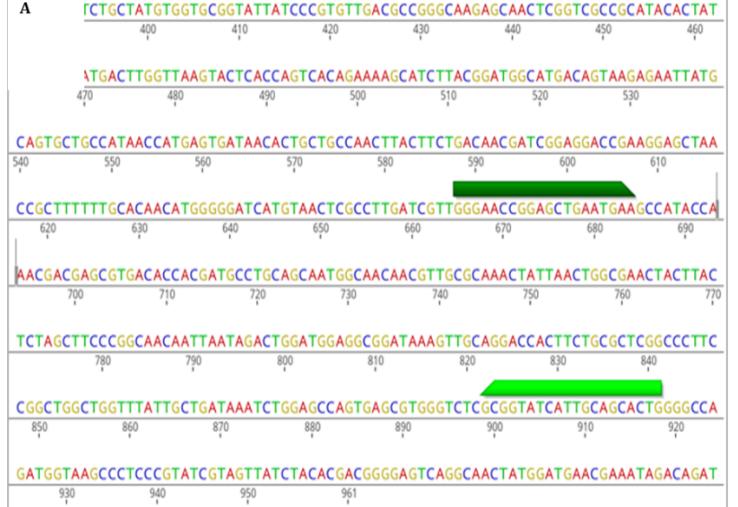
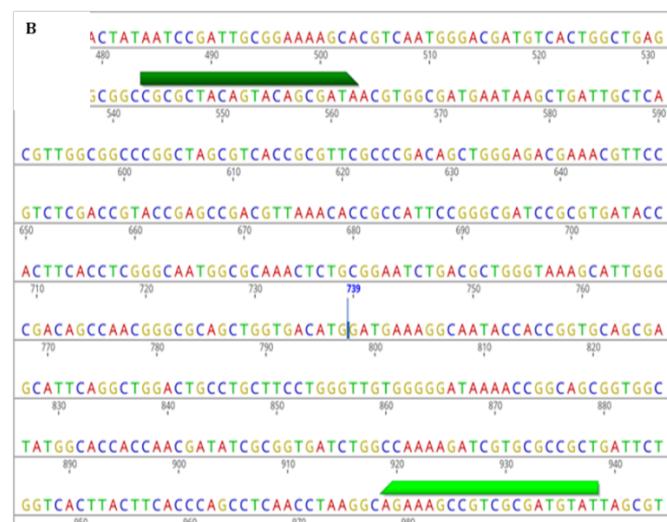
Figure1.A.AnnealingSiteofCTX-Mprimers,B.AnnealingSiteofTEMprimers.
3.2 Analysis of Primer Annealing Temperature in silico
The evaluation of primer annealing temperature ensures the accuracy and efficiency of polymerase chain reaction (PCR) amplification. In this study, the primers were analyzed using the Geneious Prime application to assess their melting temperature (Tm), secondary structures, and G/C content. The melting temperature (Tm) directly influences the annealing step and overall amplification efficiency. An optimal Tm ensures that primers bind specifically to the target DNA without causing mispriming or non-specific amplification. Ideally, the forward and reverse primers should have similar Tm values, as significant differences may lead to inefficient binding, reduced amplification efficiency, or primer-dimer formation. A wellbalanced Tm also minimizes the risk of partial or incomplete primer annealing, which can compromise the accuracy of PCR results. Furthermore, selecting primers with an appropriate Tm enhances the robustness of the reaction, particularly in complex DNA templates where specificity is paramount. By maintaining primer Tm within the optimal range, researchers can achieve reproducible results and improve the overall reliability of the PCR assay [8,18].
The results of the in silico analysis revealed that all
designed primers exhibited a Tm of approximately 60°C, which falls within the commonly recommended range for PCR applications (Table 2). This uniformity ensures that both primers anneal efficiently to their respective target sequences under similar thermal conditions, reducing the likelihood of non-specific binding. Maintaining a Tm around 60°C also contributes to the stability of primer-template hybridization, thereby increasing the accuracy of amplification. Additionally, a well-matched Tm between primers enhances the efficiency of thermocycling steps, particularly during rapid cycling protocols where precise annealing temperatures are critical. The consistency in Tm values across all primers highlights their suitability for PCR, reinforcing their role as reliable molecular tools for detecting specific genetic targets. Proper optimization of primer annealing conditions based on Tm calculations significantly improves the success rate of PCR, making it a fundamental aspect of assay development.
3.3 Analysis of Primer Secondary Product
Primer design is a critical aspect of polymerase chain reaction (PCR) optimization, with the formation of secondary structures such as self-dimers and hairpins being a key consideration. Self-dimers arise when primers anneal to
Table 2.PrimerCharacteristicTable
themselves rather than the target DNA, reducing the number of available primers for amplification and compromising reaction efficiency. This phenomenon can lead to weak or inconsistent PCR signals, negatively impacting the overall assay performance. The propensity for self-dimerization is primarily determined by Gibbs free energy (ΔG), which indicates the thermodynamic stability of such unintended interactions. More negative ΔG values signify a greater tendency for self-dimer formation, especially at lower temperatures, while values closer to zero suggest reduced dimerization potential and the need for higher temperatures to induce such structures. To ensure efficient primer-target hybridization and minimize mispriming, primers should exhibit minimal self-complementarity, making the evaluation of ΔG values a crucial step in primer selection [18,19].
The findings of this study indicate that all selected primers demonstrated ΔG values below zero, suggesting a minimal likelihood of self-dimer formation, even at elevated temperatures (Table 2.). This optimal balance between stability and specificity ensures that primers effectively bind to the target sequence while mitigating the risk of unintended secondary structures. Furthermore, low ΔG values enhance PCR efficiency by preserving primer availability for hybridization with the target DNA rather than promoting self-interaction. The absence of significant self-dimerization contributes to distinct and specific amplification bands during gel electrophoresis, thereby improving the reliability and accuracy of molecular detection. These findings underscore the importance of primer design in PCR-based identification assays, particularly for the detection of Extended-Spectrum Beta-Lactamase (ESBL)-producing bacteria. By minimizing secondary structure formation, the designed primers demonstrate their robustness and efficacy as molecular tools for precise bacterial identification. The strategic evaluation of
ΔG values and structural complementarity thus plays a pivotal role in enhancing PCR assay performance and ensuring consistent, high-fidelity amplification outcomes in molecular diagnostics.
3.4 Analysis of Primer G/C Content
The propensity for self-dimerization is primarily determined by Gibbs free energy (ΔG), which indicates the thermodynamic stability of such unintended interactions. More negative ΔG values signify a greater tendency for self-dimer formation, especially at lower temperatures, while values closer to zero suggest reduced dimerization potential and the need for higher temperatures to induce such structures. To ensure efficient primer-target hybridization and minimize mispriming, primers should exhibit minimal self-complementarity, making the evaluation of ΔG values a crucial step in primer selection.
The guanine-cytosine (G/C) composition of primers is another critical parameter influencing thermodynamic stability, binding efficiency, and overall specificity in PCR assays. An optimal G/C ratio (typically ranging between 40% and 60%) enhances primer-template hybridization by promoting strong hydrogen bonding while preventing excessive secondary structure formation. The presence of three hydrogen bonds between G/C pairs, compared to two in adenine-thymine (A/T) pairs, contributes to the stability of the primer-DNA complex, facilitating efficient amplification. However, an excessively high G/C content can elevate the melting temperature (Tm), potentially leading to suboptimal annealing conditions or primer-dimer formation. Conversely, primers with a low G/C content may exhibit weak binding affinity, reducing amplification efficiency. The primers designed in this study adhered to recommended G/C content guidelines, ensuring both thermal stability and hybridization efficiency, which are essential for achieving high PCR specificity and accuracy in detecting target sequences [20].
The results of this analysis indicate that all selected primers demonstrated ΔG values below zero, suggesting a minimal likelihood of self-dimer formation, even at elevated temperatures (Table 2.). This optimal balance between stability and specificity ensures that primers effectively bind to the target sequence while mitigating the risk of unintended secondary structures. Furthermore, low ΔG values enhance PCR efficiency by preserving primer availability for hybridization with the target DNA rather than promoting selfinteraction. By minimizing secondary structure formation, the designed primers demonstrate their robustness and efficacy as molecular tools for precise bacterial identification. The strategic evaluation of ΔG values and structural complementarity thus plays a pivotal role in enhancing PCR assay performance and ensuring consistent, high-fidelity amplification outcomes in molecular diagnostics.
3.5 Optimizing of Primer Annealing temperature
The annealing temperature is a critical parameter in polymerase chain reaction (PCR), as it governs primer hybridization and ensures the specificity and efficiency of DNA amplification. The selection of an appropriate annealing temperature is fundamental in achieving accurate target amplification while minimizing non-specific binding and primer-dimer formation. Suboptimal annealing conditions may lead to off-target amplification, reducing the reliability of PCR-based detection methods. If the temperature is too low, primers may anneal to non-complementary sequences, leading to the generation of undesired amplicons. Conversely, excessively high annealing temperatures may impede primer binding, resulting in low amplification efficiency and weak PCR signals. To optimize the annealing temperature, in silico predictions are often combined with empirical validation through gradient PCR [20,21].
In this study, two annealing temperatures (55°C and 60°C) were evaluated to determine the most effective condition for amplifying CTX-M and TEM genes, which are commonly associated with Extended-Spectrum Beta-Lactamase (ESBL) production. The results demonstrated that both primer pairs successfully amplified the expected DNA fragments, with amplicon sizes of 455 base pairs (bp) for CTX-M and 254 bp for TEM (Figure 2.). These results confirm that the primers were appropriately designed and exhibited high target specificity under the tested conditions. However, further analysis was required to determine the optimal annealing temperature that maximized amplification efficiency while minimizing non-specific interactions.
Gel electrophoresis analysis revealed differences in band intensity between the two annealing temperatures, providing insight into amplification efficiency. At 60°C, the PCR bands were more distinct and exhibited greater intensity compared to those observed at 55°C, suggesting that higher annealing temperatures facilitated more stringent primer-template hybridization. This enhanced specificity likely contributed to improved amplification efficiency, as stronger band intensity correlates with higher DNA yield. In contrast, the relatively weaker bands observed at 55°C indicate the possibility of non-specific primer binding, potentially compromising the accuracy of the PCR assay. These results highlight the necessity of annealing temperature optimization in PCR protocols to enhance amplification fidelity and reduce unwanted PCR artifacts.
The findings of this study underscore the importance of selecting an optimal annealing temperature to ensure efficient and reproducible PCR amplification. Based on the experimental data, 60°C was identified as the most suitable annealing temperature, as it yielded stronger, more distinct amplicons compared to 55°C.
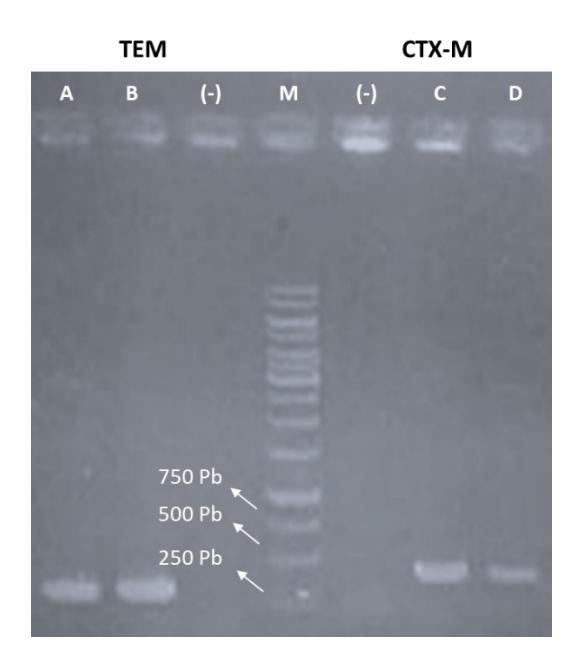
Figure 2. Agarose Gel Electrophoresis of Primer Annealing Temperature Optimization: (A) TEM Primer at 55°C, (B) TEM Primer at 60°C, (-) Non-Template Control , (M) 1000 bp DNA Marker, (C) CTX-M Primer at 55°C, (D) CTX-M Primer at 60°C.
4. Conclusion
The designed CTX-M and TEM primers meet essential criteria for effective PCR amplification, including optimal melting temperature (Tm), balanced GC content, and minimal secondary structure formation. Empirical analysis determined that an annealing temperature of 60°C provides efficient and specific DNA amplification, minimizing non-specific binding and enhancing assay reliability. These findings confirm the suitability of the primers for accurate detection of ESBLrelated genes in bacterial samples. The optimized PCR conditions contribute to improved molecular diagnostics, facilitating precise monitoring of antibiotic resistance and supporting clinical and epidemiological studies aimed at controlling the spread of resistant bacterial strains.
Acknowledgements
The author would like to thank to Faculty of Pharmacy, Mulawarman University for funding support to this research.