

1. Introduction
Macroalgae are photoautotroph organisms that have a body structure in the form of a talus consisting of a blade (part that resembles a leaf), stipe (part that resembles a stem), and a holdfast that functions like a root. In some types of macroalgae, the stipe is absent so that the blade is directly connected to the holdfast [1]. In taxonomy, macroalgae are included in the Thallophyta division which is divided into three main groups based on pigment differences, namely Chlorophyta (green algae), Phaeophyta (brown algae), and Rhodophyta (red algae) [2]. Macroalgae live in coastal waters and are found mainly in the intertidal zone or tidal area and subtidal zone with varied substrates such as sand, mud, coral, and rocks. Sometimes macroalgae grow by utilizing substrates in the form of shells, wood, and even grow epiphytes by attaching
themselves to other plants [3]. The existence of macroalgae in the ecosystem scope has an important role, namely as a potential biological resource to be developed because it has ecological and economic values that support biodiversity [4].
The ecological roles of macroalgae include, among others, as primary producers that provide the main food source for herbivorous biota in the sea, shelter and habitat for small biota such as echinodermata, mollusca, crustacea, gastropoda, and several species of fish, as spawning and enlargement habitats, providing protection against waves and participating in the carbon cycle by absorbing CO2 emissions in nature along with seagrasses and mangroves to reduce the effects of global warming [5]. In addition to its ecological role, macroalgae are also utilized in the medical field because they contain various bioactive compounds, so they are widely used as ingredients
334 DOI: 10.5614/3bio.2025.7.2.1
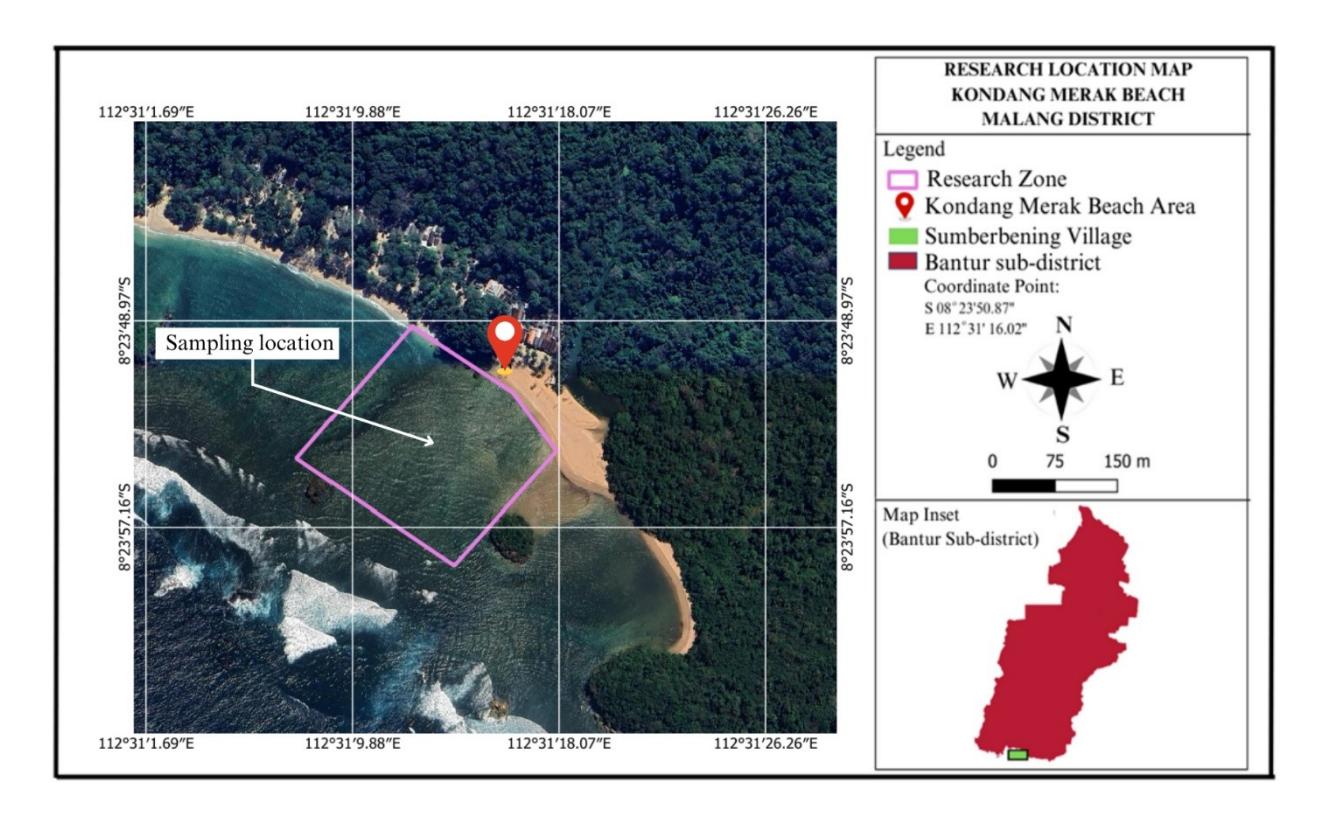
Figure1.MapoftheResearchLocationin theKondangMerakBeach area,MalangRegency
for medicines, making cosmetics, and cultivated food sources [6]. One of the coastal water locations that has abundant biological resources, including quite diverse macroalgae, is Kondang Merak Beach.
Kondang Merak Beach is administratively located in Sumberbening Village and is included in the Bantur District, Malang Regency. This area is directly adjacent to the protected forest area and still has a complete coastal ecosystem, namely mangroves, coral reefs, and seagrasses [7]. Good ecosystem conditions supported by adequate water environment quality, allow macroalgae species to grow and develop well, because macroalgae also act as indicators of the health of the aquatic environment [8]. Changes in the composition of macroalgae growth can reflect the impact of changes in the quality of the surrounding waters. Based on this, macroalgae inventory research at Kondang Merak Beach, Malang Regency is expected to provide information related to the condition and potential threat of damage to coastal ecosystems through the analysis of macroalgae species found.
2. Methodology
The research was conducted on November 03, 2024 in the Kondang Merak Beach area of Malang Regency, East Java (Figure 1) which is located at coordinates 08°23'50.87" S and 112°31'16.02" E. The research method used free roaming with a qualitative descriptive approach. The data collection process was carried out when the sea water receded around 05.00 WIB until 10.00 WIB. Tools used in the study include
Global Position System (GPS), turbidimeter, total dissolved solid meter (TDS), dissolved oxygen meter (DO), pH meter, anemometer, lux meter, refractometer, 50 ml beaker glass, tweezers, observation table, net, stationery, camera, and jar. Materials used include macroalgae specimens found, distilled water, 70% alcohol to preserve specimens.
The macroalgae specimens found were then analyzed qualitatively by performing morphological characterization of species based on color, shape, size, talus branching, and paying attention to the type of macroalgae holdfast. The identification process was carried out in the field and in the biology laboratory of UIN Sayyid Ali Rahmatullah Tulungagung. References used for macroalgae identification come from books, articles and the World Register of Marine Species.
3. Results and Discussion
The results of the study found nine species of macroalgae consisting of three phyla, namely Chlorophyta, Phaeophyta, and Rodophyta found in the Kondang Merak Beach area of Malang Regency. Macroalgae consisted of two species belonging to the Clorophyta phylum, one species belonging to the Ochorophyta phylum, and six species belonging to the Rhodophyta phylum (Table 1 and Figure 2).
Halimeda macroloba
Halimeda macroloba is a type of calcareous green algae with a dense talus type and is found in tropical waters attached to rocky substrates. This algae produces calcium carbonate (CaCO₃) and contributes greatly to carbonate production in marine ecosystems [9]. Halimeda macroloba lives on rocky sand substrates [10]. Morphologically, the talus structure of Halimeda macroloba is composed of blades and holdfasts ranging in size from 11.6-25.3 cm with a height from the base to the first branching ranging from 10.3-22.2 cm. The blade is shaped like a mace, with a stiff and chalky texture, with a width between 1.3-2.6 cm. Holdfast is shaped like an elongated tube. the color is green and in dry conditions becomes yellowish green, has a size ranging from 1.1 cm-3.2 cm and is elongated (like a tuber) [11]. Halimeda macroloba contains compounds of flavonoids, terpenoids, phenols, saponins and alkaloids that play a role in inhibiting bacterial growth [12].
Ulva lactuca
Ulva lactuca or sea lettuce is a member of the Chlorophyta division (green algae), found abundantly in areas close to the shoreline or up to 7 m from the shoreline at the lowest tide [13]. Morphologically, the talus structure of Ulva lactuca is up to 100 cm long, 3 cm wide, composed of blade and holdfast. The membranous blades are thin leaf-like sheets and have strap-shaped blades with smooth but wavy edges. The center of each blade is often pale and darker towards the edges. Root-like organs (holdfasts) are disk-shaped and attached to rocks and corals. Ulva lactuca has potential as an antioxidant because it contains melatonin-like compounds that can neutralize free radical toxins [14]. seaweed is also widely used as a food product because it has a high carbohydrate and protein content but is low in fat [15].
Padina gymnospora
Padina gymnospora is a type of brown algae (Phaeophyta) that is often found in various habitats from intertidal to subtidal zones in clear waters up to 15-20 m deep [16]. Morphologically, the talus of Padina gymnospora has a fanlike shape with a diameter of 3-4 cm, composed of blade, stipe, and holdfast. The fan-like blade has horizontal lines called concentric lines and the tip of the leaf has gametangia, the stipe is short, and the holfast is a small, stringy disk that sticks to the rocky substrate [17]. Padina gymnospora has great potential in wound healing and as an antibacterial. Methanol extracts of this algae have been shown to stimulate the growth and movement of fibroblast cells, which play an important role in accelerating the wound healing process [18].
Acanthophora spicifera
Acanthophora spicifera is a member of the Rhodophyta division which has a multi-branched talus (dichotomus) alternating cylindrical rather stiff with pustules sticking out sideways like spines with a rough surface. The talus is 9-10 cm long, reddish yellow or reddish brown in color. The color of Acanthophora spicifera sometimes varies according to sun exposure, from yellow in shallow waters exposed to bright light, to green, red or dark brown in areas with lower radiation. It grows attached to coral rocks, coral fragments, as well as dead corals [19]. In the active compound test, Archantophora sp. contains flavonoids, phenolics, and saponins that act as antibacterial, antifungal, and antivirus [20].
Table 1.Typesofmacroalgae found onKondangMerakBeach
| Phylum | Class | Order | Family | Genus | Species |
|---|---|---|---|---|---|
| Chlorophyta | Ulvophyceae | Bryopsidales | Halimedaceae | Halimeda | Halimeda macroloba |
| Ulvophyceae | Ulvales | Ulvaceae | Ulva | Ulva lactuca | |
| Ochrophyta | Phaeophyceae | Dictyotales | Dictyotaceae | Padina | Padina gymnospora |
| Rhodophyta | Florideophyceae | Ceramiales | Rhodomelaceae | Acanthophora | Acanthophora spisifera |
| Gigartinales | Cystocloniaceae | Hypnea | Hypnea valentiae | ||
| Gigartinaceae | Gigartina | Gigartina papillate | |||
| Solieriaceae | Kappaphycus | Kappaphycus striatus | |||
| Nemaliales | Galaxauraceae | Galaxaura | Galaxaura rugosa | ||
| Palmariales | Palmariaceae | Palmaria | Palmaria palmata |
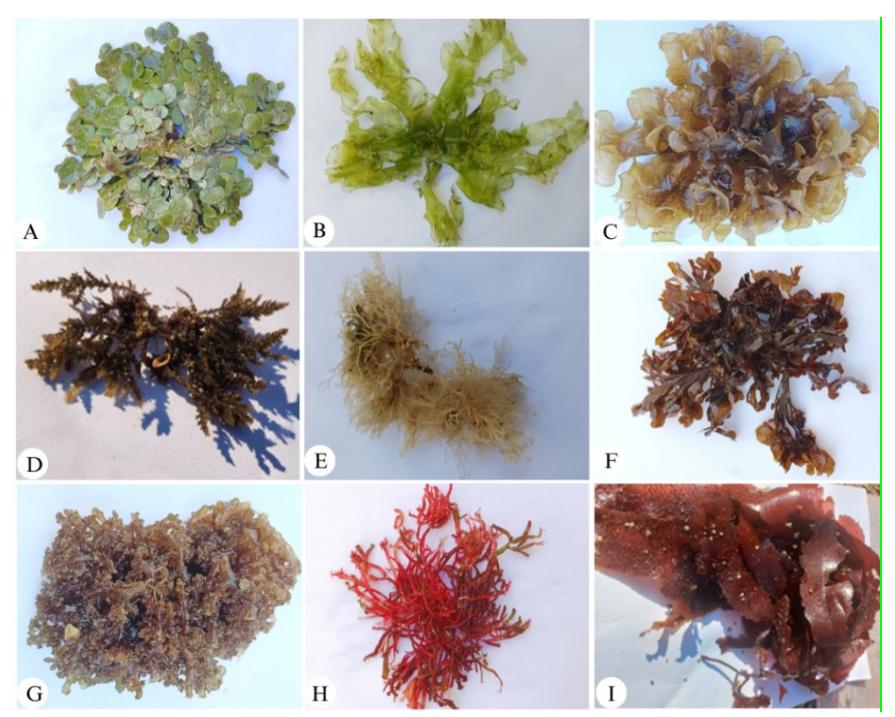
Figure 1. A. Halimeda macroloba,B. Ulva lactuca,C.Padina gymnospora, D.Acanthophora spicifera,E. Hypnea valentiae, F.Gigartina papillata, G.Kappaphycusstriatus, H. Galaxaura rugosa,I.Palmaria palmata
Hypnea valentiae
Hypnea valentiae is a seaweed that is shaped like a root but compared to Eucheama and Laurencia the branching of this type is much more and more pointed like a needle. The texture of this seaweed is thinner and brittle so that it is easily cut off at each branching [21]. The body structure is a dense talus with irregular branching. The stipe is about 4.0 cm long and 0.1 cm wide. Around the talus are short branches resembling spines, which in herbarium form look like fine hairs. This organism lives on sandy substrates [1]. Hypnea valentiae has the opportunity to become an additional ingredient in supplements or health products to increase benefits for the body because it has antioxidant and antimicrobial properties [22].
Gigartina papillata
Gigartina papillata is characterized by a red-brown color with a thin, membrane-like talus structure. It measures about 6 cm long and 5 cm wide. The body consists of blades and mounts, the blades are flat ribbon-shaped with a rough surface and dotted with small pustules. This alga attaches to the substrate using unicellular roots (unicellular rhizoids). The branching pattern is very numerous and varied (polymorphic), so the morphology of Gigartina papillata looks very distinctive and easily recognizable [23]. G. papillata has benefits in biotechnology and the food industry, mainly due to its carrageenan content which functions as a thickener, stabilizer, and gelling agent in various products [24].
Kappaphycus striatus
Kappaphycus striatus is a type of red seaweed that has high commercial value and grows in tropical and subtropical waters. This seaweed is known globally for its carrageenan content, which is widely utilized in various food and non-food products as a thickener, gelling agent, and emulsifier. This seaweed also contains 78.94% dietary fiber, vitamin A, beta carotene; B1, B2, B6, B12, vitamin C, niacin, and important minerals, such as calcium and iron [25]. Polysaccharides obtained from Kappaphycus striatus have potential as antioxidants. These substances are able to counteract free radicals, although their effectiveness is still lower than some other algae, such as Padina gymnospora [26].
Galaxaura rugosa
Galaxaura rugosa is a member of the Rhodophyta division (red algae), has morphological characteristics namely cylindrical talus with short books (about 1-1.5 cm). Irregular dichotomous branching forms lush clumps at the top. The tip of the talus is blunt and slightly hollow. Clumps can reach about 5-7 cm in height. The color of the talus is blond. Grows attached to rocks on the inside and outside of the reef flat [13]. Galaxaura rugosa is a red seaweed that has enormous antioxidant activity, because it contains secondary metabolite compounds such as alkaloids, flavonoids, saponins, steroids and polyphenols [27].
Palmaria palmata
Palmaria palmata is a member of the Rhodophyta division which is found attached to a rock substrate. Palmaria palmata talus has the characteristics of a dark red color slightly brownish. Flat and slippery, on the back of the talus there are small white spots arranged spread along the talus, and has a talus length that can reach 12 cm to 40 cm with dichotomous branching. Morphologically, Palmaria palmata talus is composed of blades in the form of flat sheets resembling leaves that float on the surface of the water to absorb sunlight as a source of energy in the photosynthesis process, reddishbrown stipe, and holdfast which has a root-like function [28]. Palmaria palmata has potential as an antioxidant that can protect cells from damage and support healthy digestion and metabolism [29].
Abiotic Conditions at Kondang Merak Beach
Abiotic components are the non-living elements that make up the ecosystem. The environment will consist of physical and chemical factors. The survival of biotic components in an ecosystem is strongly influenced by the surrounding environment. Water flow, salt content, temperature, and sunlight are environmental elements that have a considerable influence on coastal ecosystems [30]. For this reason, it is necessary to measure abiotic factors to determine the effect of water temperature, dissolved oxygen (DO), turbidity or water turbidity, pH, total dissolved solids (TDS), salinity, wind speed and light intensity on the presence of macroalgae on Kondang Merak Beach. Measurement of abiotic factors is carried out in the intertidal zone of the beach near the mainland with a water depth of approximately 5 to 20 cm. The results of abiotic factor measurements can be seen in Table 2.
Temperature affects the growth of macroalgae, especially in terms of photosynthesis. Photosynthetic activity will be inhibited or even stop at high temperatures [31]. The temperature at the research site was around 25°C which indicates that macroalgae can grow well, because the usual temperature range for macroalgae growth ranges from 25°C to 35°C [32].
The physiology and photosynthetic rate of macroalgae are triggered by salinity [33]. Macroalgae growth requires relatively high salinity, including the macroalgae Halimeda, Padina, Sargassum, and Turbinaria. If salinity is too low, growth will be disrupted, and the colour of the talus will become pale brown [34]. Salinity at the research site is 43 ‰ which is classified as high.
Sunlight entering the water greatly affects the brightness and light intensity of the water. The higher the intensity of sunlight that penetrates the water, the brighter the waters. Macroalgae need sunlight to carry out photosynthesis [32]. Observations at the research site showed a brightness level of 63372 lux, with sunlight intensity reaching the bottom of the water. These conditions are very supportive of macroalgae
growth.
One indication of seawater quality is its acidity (pH). Based on the Decree of the Minister of Environment (2004) on seawater quality standards for marine biota, which is in the range of pH 7.0-8.5. pH of Indonesian waters generally ranges from 7.0 to 8.5 [35]. Seaweed can grow at an optimum pH between 6.8 to 8.2 [36]. So, the pH value at the research site with a value of 7.67 is still within safe limits and allows for the life of marine biota. Water conditions that are too alkaline or acidic are harmful to the existence of organisms by disrupting metabolic and respiratory processes [37].
All living things require dissolved oxygen to breathe, perform various metabolic functions, exchange chemicals that provide energy for development and reproduction. In aerobic processes, oxygen is required for the oxidation of organic and inorganic components. Diffusion from free air and photosynthetic products by aquatic organisms are the main sources of oxygen in the sea [38]. A number of variables, including water turbidity, temperature, salinity, and airflow and water masses such as tides, waves and currents, affect how quickly oxygen diffuses from the atmosphere. Under normal circumstances, the minimum dissolved oxygen (DO) value is 2 ppm and is not polluted by harmful substances. This minimum dissolved oxygen level is sufficient to sustain life [39]. For eight hours, the dissolved oxygen content should ideally be at least 70% saturated and not less than 1.7 ppm [39]. Dissolved oxygen is involved in the oxidation and reduction processes of organic and inorganic elements, thus making it important for water quality indicators. According to the Minister of Environment 2004 and Government Regulation 2021, the quality standard of dissolved oxygen levels for marine biota is more than 5 mg/L, while the results of measuring the level of dissolved oxygen in the water at Kondang Merak Beach obtained a value of 7 mg/L or equivalent to 7 ppm which indicates that this value is still good and allows macroalgae to live and develop.
Total dissolved solids (TDS) refers to the amount of inorganic and organic elements dissolved in water. Total dissolved solids are used to determine the purity of water containing very small solids. Excessive dissolved minerals in natural waters can increase turbidity and hinder the penetration of sunlight, thus affecting photosynthesis [40]. The measurement results of Total Dissolved Solids (TDS) in seawater at Kondang Merak Beach were 14.6 mg/L. Based on the Decree of the Minister of Environment Number 51 of 2004 in [41], related to the quality standards of Total Dissolved Solids (TDS) for marine biota a maximum of 2000 mg/L. Thus the level of Total Dissolved Solids (TDS) of water in Kondang Merak Beach is still classified as good for marine biota.
Based on Government Regulation of the Republic of Indonesia Number 22 of 2021, the quality standard set for turbidity value is 5 NTU for marine biota. Meanwhile, the
| Abiotic Measurement | Fluctuation | Mean | Normality | ||
|---|---|---|---|---|---|
| Adiotic Measurement | 1 | 2 | 3 | Ivican | Shapiro Wilk |
| Water temperature | 25,0 °C | 29,2 °C | 28,9 °C | 27,7 °C | 0,122 |
| DO | 7 ppm | 6.1 ppm | 5.2 ppm | 6,1 ppm | 1,000 |
| Turbidity | 34 NTU | 30,3 NTU | 33 NTU | 32,4 NTU | 0,505 |
| рН | 7,67 | 7,69 | 7,70 | 7,68 | 0,637 |
| TDS | 14,6 mg/L | 34,0 mg/L | 34,8 mg/L | 27,8 mg/L | 0,067 |
| Salinity | 43 ‰ | 40 ‰ | 41 ‰ | 41,3 ‰ | 0,637 |
| Wide speed | 1 m/s | 6 m/s | 3 m/s | 3,3 m/s | 0,780 |
| Light intensity | 63372 lux | 63354 lux | 63341 lux | 63355 lux | 0,823 |
| Normal |
Table 2. Measurement results of abiotic factors
value obtained in the measurements at the Kondang Merak Beach exceeds the predetermined quality standard, which is 34 NTU. Turbidity can be triggered by suspended elements such as colloids and fine particles (TSS and TDS), as well as microbes and water colour [42]. Turbidity levels in Kondang Merak Waters reach their peak during high tide due to complex hydro-oseanografi phenomena. Turbidity can be triggered by ocean currents as they move or disperse suspended particles from one location to another. Strong currents can increase turbidity by stirring up mud from the seabed, while gentle currents reduce turbidity by allowing particles to settle [42]. To maintain the health of biotic and abiotic ecosystems in Kondang Merak Beach, conservation efforts involving all parties are needed. Protection and conservation of the coastal marine environment is an important step in preserving biodiversity, which includes species, genes, and ecosystem variations. Conservation areas aim to limit human activities in order to protect coastal and marine ecological resources [43].
4. Conclusion
Based on the results of the study, nine species of macroalgae were found in the Kondang Merak Beach area, Malang Regency. These species consist of Halimeda macroloba and Ulva lactuca which are included in the Chlorophyta or green algae phylum; Padina gymnospora which is included in the Ochrophyta or brown algae phylum; and six other species namely Acanthophora spicifera, Hypnea valentiae, Gigartina papillata, Kappaphycus striatus, Galaxaura rugosa, and Palmaria palmata which belong to the Rhodophyta or red algae phylum. The presence of these species is supported by measured abiotic environmental conditions, namely seawater temperature of 25.0°C, salinity of 43‰, brightness of 63,372 lux, pH 7.67, dissolved oxygen levels of 7 ppm, and total dissolved solids of 14.6 mg/L. These parameter values indicate that the waters of Kondang Merak Beach are in optimal conditions to support the growth and survival of macroalgae. This research is expected to make efforts to conserve coastal ecosystems, especially through monitoring environmental quality based on macroalgae indicators, as well as a reference in planning protection zoning, habitat restoration, and sustainable coastal resource management in the future. The limitations of this research are as follows: 1). Implementation of research only on a descriptive approach with a free-range scale and using observation methods. 2). Sampling was only one replicate, including abiotic measurements. 3). The data obtained is only limited to inventory studies, not yet leading to complete morphological anatomy and diversity found at Kondang Merak Beach.
Acknowledgements
We would like to thank the management of Kondang Merak Beach and the founder of the Sahabat Alam Indonesia (SALAM) Institute, Mr Andik Syaifudin, for giving permission to conduct macroalgae research at the location and to all parties involved during this research so that the process of preparing this article can run smoothly. The authors would also like to thank the reviewers and editors who have provided input into the manuscript so that it becomes better and the authors declare that there is no conflict of interest in the preparation of this article.