

1. Introduction
The earth surface is composed of various ecosystem, both naturally formed and made by human. Those various types of ecosystems have different have different characteristics and functions, but one of the most important ecosystems for life on earth is fresh water. Although freshwater only covers 0.01% of the world's water reserves and makes up only about 0.8% of the earth's surface, freshwater ecosystems are a place for many species of living organisms, such as fish, amphibians, reptiles, and mammals to depend on for their lives [1].
In Indonesia, freshwater areas are estimated to cover 13.85 million hectares, consisting of 12 million hectares of rivers and floodplains, 1.8 million hectares of natural lakes, and 0.05 million hectares of artificial lakes or reservoirs [2, 3]. These waters have a high diversity of fish species, making them one of the world's megabiodiversities, where according to FAO there are more than 2000 species of fish plus unidentified fish
species that can be found in Indonesian freshwater. Freshwater can also be utilized by human for various purposes, such as fisheries agriculture, forestry, irrigation, power generation, mining, to industry and households. Considering the importance of the role and function of freshwater, maintaining the health of the ecosystem is very crucial for the sustainability of human life and the environment.
Assessing the health of a freshwater ecosystem can be seen through its biodiversity and balance of species composition according to their trophic status [4]. In freshwater ecosystems, fish are very important species regarding to its geomorphological and ecological changes because they can create temporal and spatial variations in aquatic habitats [5]. These changes can also negatively impact on the health of aquatic ecosystem if there is a population imbalance within a community of species in that ecosystem. The presence of species overpopulation and introduction of certain alien fish species can cause changes in interactions in within the aquatic ecosystems and affect the lives of native aquatic species [6]. Therefore, in order to maintain the health of aquatic ecosystem, an effort is needed to monitor and study the community structure and diversity of fish populations in aquatic ecosystem.
Saguling Reservoir is one of the water infrastructure in Indonesia that has a vital role in supporting the lives of the people in West Java, such as for irrigation, hydroelectric power plants, fisheries, recreation, and flood control [7]. In supporting the sustainability efforts of the Saguling Hydroelectric Power Plant (PLTA), Bandung Barat Regency, an attempt is needed to determine the health of its aquatic ecosystem, one of which is by conducting a study on biodiversity. Considering the significant role of fish in the balance of aquatic ecosystems, research that examine the condition of these animals in the Saguling Power Plant area is very necessary. This is also supported by the lack of references related to the latest data on fish found in the Saguling reservoir area that are available to the public, where the last research that examined this [8] was conducted in 1989, so this creates a gap for study related. Therefore, this study is conducted in purpose to understand the diversity and community structure of the fish in Saguling Hydroelectric Power Plant (PLTA) area in 2024. The output of this study is expected to be able to help and serve as a basis for developing effective population control, habitat protection, and conservation strategies in maintaining the sustainability of the aquatic ecosystem in the area and its surroundings.
2. Methodology
2.1 Study Period and Location
The study was conducted from July – September 2024. Sampling location were carried out at 6 stations within the
Saguling Hydroelectric Power Plant (PLTA): including Cisameng Flow, Rajamandala Kulon, 6°51'33.04"S and107°20'52.68"E (Station 1); Powerhouse, Cihea, 6°51'26.98"S and 107°20'17.29"E (Station 2); Dam Control center, Intake Saguling, 6°54'44.58"S and 107°22'14.21"E (Station 3); Saguling Park View, Baranangsiang, 6°54'54.57"S and 107°22'6.76"E (Station 4); Patin Nursery, Baranangsiang, 6°55'15.12"S and 107°22'13.92"E (Station 5); and Cicangkang Hilir 6°57'15.28"S an 107°24'28.21"E (Station 6). Locations of data collection in this study can be seen in Figure 1.
2.2. Environmental Data Collection
Environmental data collection was carried out from several abiotic parameters at around 10.00 – 11.00 AM local time with several tools including: secchi disc (Zhouzhi 30M) to measure brightness, thermometer (Pyrex -10+110°C) to measure temperature, DO meter (DO9100) to measure dissolved oxygen, TDS meter (TDS-3) to measure dissolved solids, and pH meter (ATC PH-009(I)A) to measure pH. The data was used to determine the condition and water quality from each data collection station. The quality standards used as a comparison include Indonesian Government Regulations No. 22 of 2021 concerning the Implementation of Environmental Protection and Management and No. 82 of 2001 concerning Water Quality Management and Water Pollution Control. Data interpretation from the environmental quality of each station was then tested using multiple linear regression to determine the effect of measured environmental variables on the community structure and diversity of fish in the Saguling Hydroelectric Power Plant (PLTA) area, Bandung Barat Regency.
Figure 1.Data collection locations of thisstudy in the area of SagulingHydroelectric Power Plant (PLTA)
2.3. Fish Data Collection
Fish data collection was carried out using the active method through direct capture with cast nets and scoop nets, as well as with VES (Visual Encounter Survey) method. While data collection through the passive method was carried out using gill nets and pot traps (bubu). In addition, data collection was also carried out through fish catches obtained by fishermen or local residents who were fishing in the study area location. The fish caught were then documented using a digital camera and Android cellphone, then identified and their invasive category was determined using identification books such as Freshwater Fishes of Western Indonesia and Sulawesi [9] and the website www.fishbase.org.
2.4. Data Analysis
Data analysis on fish diversity was carried out quantitatively by calculating the Shannon-Wiener diversity index (H'), Pielou evenness index (E), and Margalef species richness index (Dmg), as follows:
Shannon-Wiener diversity index (H'), is divided into three categories: low (H' < 1,0); medium (1,0 ≤ H' ≤ 3); and high (H' > 3), and has following formula [10]:
\[H' = -\sum \frac{ni}{N} ln \frac{ni}{N}\]
Where: H' : Shannon-Wiener diversity index
N : Total of all individuals ni : Total individuals ofspecies-i ln : Logarithm with base e
Pielou evenness index (E), is divided into three categories: low (E < 0,33); medium (0,33 ≤ E ≤ 0,67); and high (0,67 ≤ E ≤ 1), and has following formula [11]:
\[E = \frac{H'}{\ln(S)}\]
Where: E : Pielou evennessindex S : Total species count ln : Logarithm with base e
Margalef species richness index (Dmg), is divided into three categories: low (Dmg < 2,5); medium (2,5 < Dmg < 4), and high (Dmg > 4), and has following formula [12]:
\[Dmg = \frac{S - 1}{\ln N}\]
Where: D : Margalef speciesrichnessindex
N : Total of all individuals S : Total species count ln : Logarithm with base e
3. Result and Discussion
In this study, the total number of fish species found was 22 species from 15 different families, including: Anabantidae, Aplocheilidae, Bagridae, Channidae, Cichlidae, Clariidae, Cyprinidae, Eleotridae, Leioghnatidae, Loricariidae, Osphronemidae, Pangasiidae, Poeciliidae, Zenarchopteridae, and Synbranchidae. The most dominant fish family is Cichlidae, where 4 species of members of the family were found at the data collection location. The diversity of fish species obtained in this study can be seen in Table 1.
Based on data obtained, there were a total of 570 individual of fish that found in six stations established in Saguling Hydroelectric Power Plant (PLTA) area. The fish species recorded are mostly common species that found in freshwater areas of Indonesia. In this study, the most frequently found in order were guppy (P. reticulata), pepetek (L. equulus), and red devil fish (A. labiatus). Meanwhile, the species with the most even distribution was guppy (P. reticulata) which was the only one species that can be found at all six stations. The dominance of guppy in the waters of Saguling Hydroelectric Power Plant (PLTA) can be caused by several factors, such as its characters that able to survive in various water conditions, tolerant of changes in pH and temperature, has rapid reproduction, and spread widely in Indonesia [13]. Based on interviews conducted with local residents, guppy is a type of fish that is less popular with anglers, unlike other fish with larger sizes and are usually caught for consumption. In addition, the existence of guppy in the waters of the Saguling Reservoir can also be viewed from a historical aspect, where it was first introduced by the Dutch in the 1920s in the majority of the ponds, ditches, rivers, and lakes in West Java before finally spread widely in Indonesian waters [14]. Nevertheless, guppy is considered as one of the species that do not pose a direct thread to the native or local freshwater species [15].
The pepetek fish (L. equulus) is a species of fish with a distribution in Indonesian waters to the Western Pacific waters. It is a species that commony found in shallow waters, river mouths, estuarine areas, and typically lives on the seabed with water temperatures between 25-29°C [10]. In addition to being found in various types of waters, pepetek fish naturally has a relatively high growth and rejuvenation rate [16]. Meanwhile, the red devil fish (A. labiatus) is one of the introduced fish originating from Central America. Initially, this fish was an ornamental fish that accidentally entered Indonesian freshwaters through fish juvenile released in floating net cages as cultivated fish and accidental release by ornamental fish enthusiasts [17]. The relatively high population of red devil fish in Saguling Reservoir waters can be linked to its character as an invasive species, such as having a high survival rate, being able to adapt to a wide range of environments, high growth and reproduction rates, and having a diverse diet [18].
Table1.FishdiversityinSagulingPowerPlant(PLTA) area2024
| Family | Scientific Name | Local Name | Total Individual Count | Conservation Status (IUCN) | |
|---|---|---|---|---|---|
| Anabantidae | Anabas testudineus | Ikan betik | 21 | LC | |
| Aplocheilidae | Aplocheilus panchax | Ikan kepala timah | 27 | LC | |
| Bagridae | Hemibagrus nemurus | Ikan baung | 11 | LC | |
| Channidae | Channa micropeltes | Ikan toman | 1 | LC | |
| Channa striata | Ikan gabus | 11 | LC | ||
| Cichlidae | Hemichromis elongatus | Ikan golsom | 5 | LC | |
| Amphilophus labiatus | Ikan red devil | 62 | NE | ||
| Oreochromis mossambicus | Ikan mujair | 5 | VU | ||
| Oreochromis niloticus | Ikan nila | 78 | LC | ||
| Clariidae | Clarias gariepinus | Ikan lele dumbo | 5 | LC | |
| Clarias batrachus | Ikan lele lokal | 3 | LC | ||
| Cyprinidae | Barbodes binotatus | Ikan wader | 17 | LC | |
| Cyprinus carpio | Ikan mas | 18 | LC | ||
| Hampala macrolepidota | Ikan hampala | 2 | LC | ||
| Eleotridae | Oxyeleotris marmorata | Ikan betutu | 13 | LC | |
| Leioghnatidae | Leiognathus equulus | Ikan pepetek | 80 | LC | |
| Loricariidae | Pterygoplichthys pardalis | Ikan sapu-sapu | 39 | LC | |
| Osphronemidae | Trichopodus trichopterus | Ikan sepat sawah | 11 | LC | |
| Pangasiidae | Pangasius djambal | Ikan patin | 3 | LC | |
| Poeciliidae | Poecilia reticulata | Ikan guppy | 96 | LC | |
| Zenarchopteridae | Dermogenys pusilla | Ikan julung-julung | 61 | DD | |
| Synbranchidae | Monopterus albus | Belut sawah | 1 | LC | |
Table2.Abioticparametersmeasurementresult
| Data Collection Stations | Overall | ||||||
|---|---|---|---|---|---|---|---|
| Parameters | 1 | 2 | 3 | 4 | 5 | 6 | Average |
| Brightness (cm) | 114 | 30 | 153 | 130 | 110 | 112 | 108.17 |
| Water Temperature (°C) | 27.2 | 26.9 | 28.1 | 32 | 29.8 | 26.8 | 28.5 |
| Air Temperature (°C) | 29.5 | 29.5 | 30 | 32.5 | 31 | 29 | 30.25 |
| Dissolved Oxygen (ppm) | 7 | 7.2 | 7.3 | 7.1 | 6.4 | 1.6 | 6.1 |
| Dissolved Solids (mg/L) | 131 | 129 | 145 | 129 | 132 | 294 | 160 |
| pH | 7.3 | 7.5 | 7.5 | 8.2 | 7.9 | 6.7 | 7.52 |
Meanwhile, there is one fish species with a high conservation status according to IUCN, namely mujair or mozambique tilapia (O. mossambicus) with a conservation status of VU (Vulnerable). Regardless of its conservation status, mozambique tilapia is one of the introduced fish species that has invasive trait. This fish was originally not a native fish of Indonesia and was introduced in the 1970s as a leading fish to increase water productivity. However, this fish now is considered as a native fish of Indonesia [19]. The invasive fish category is assigned to this species because its introduction has always been successful in various waters due to its short generation cycle, rapid growth rate, tolerance
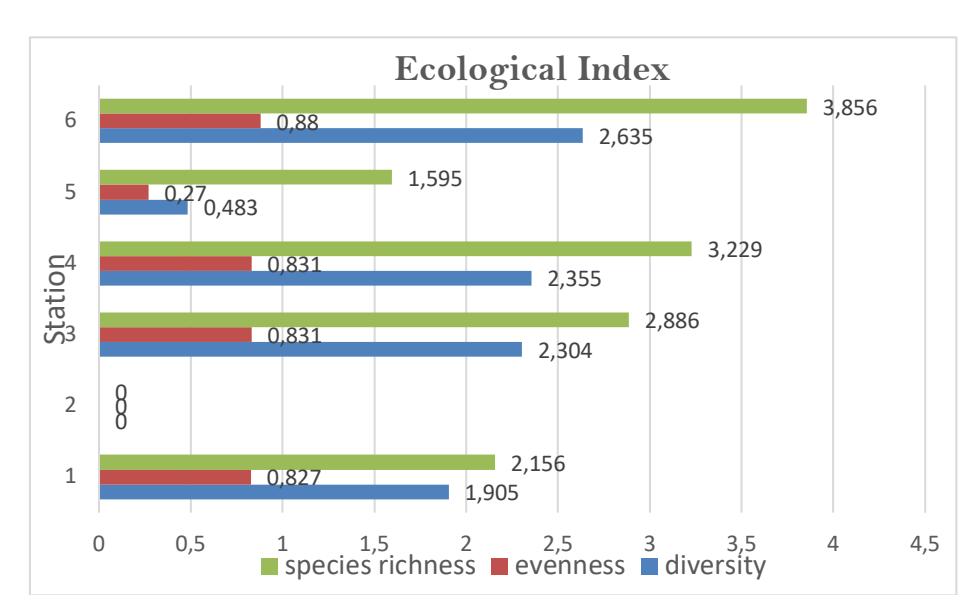
Figure 2. Ecological index comparison of each station
to various environmental conditions, aggressive behavior, and omnivorous nature. The introduction of mozambique tilapia can threaten the habitat of endemic fish species on those waters [20, 21]. Therefore, particular monitoring and population control are crucial to prevent ecological damage and maintain ecosystem sustainability [22]
Based on abiotic parameters measurement results, study area location in general has good circumstances of water quality for fisheries activity regarding to water quality standard, which classified as class 2 to class 3. This finding is in line with the observation results around Saguling Reservoir area, where besides fishes can be found in open access area, it can also found in floating net cages that cultivated by local resident. Apart from being an indicator of water quality, abiotic parameters can be a factor that supports the density and diversity of fish on water because it can influence various aspects, such as impose an environmental stress, supporting the presence of food, and affecting natural growth [23]. The results of abiotic parameters measurement on study area location can be seen in Table 2.
Although the environment conditions and abiotic parameters of the six sampling stations are relatively same, there are certain stations with abiotic parameters that appear different compared to others. Station 2 has lower brightness because it is related to shallower depth. while station 6 has lower dissolved oxygen and higher dissolved solids compared to other stations. According to Lestari [24], suspended materials in waters can originate from soil erosion and fishery waste, which can inhibit the photosynthesis process, thereby reducing the supply of dissolved oxygen in water. This is in line with observation findings where station 5 is located close to the floating net cages fisheries area. Almost half of fish community at station 6 consists of invasive species, and nearly all types of invasive fish species obtained in this study can be found at station 6, such as C. striata, A. labiatus, O. mossambicus, O. niloticus, C. garepinus, C. carpio, P. pardalis, and P. reticulata. This also proves that invasive fish have better resilience to environmental stress compared to endemic fish species in Saguling Reservoir.
Based on ecological index calculation results, overall study area location has a medium diversity with a score of 2.548, high evenness with a score of 0.813, and medium species richness with a score of 3.464. Comparison of ecological index obtained from each station can be seen in Figure 2. Station 6 (Cicangkang hilir) has the highest ecological index score among other stations regarding to its diversity with a score of 2.635 which classified as medium, evenness with a score of 0.88 which classified as high, and species richness with a score of 3.856 which classified as medium. While on station 2, only one species (D. pussila) can be found, so the index calculation result scores 0. Station 6 has the highest TDS compared to other stations, but the numbers are still on the water quality standard threshold to support to support fish life. According to Hao et al. [25], environmental factors such as ammonia nitrogen, phosphate, nitrite, pH, dissolved oxygen, and chemical oxygen demand are essential nutrients for the growth of aquatic plants and algae, which directly influencing the distribution of plant-eating and filter-feeding fish. However, excessive nutrient accumulation can lead to eutrophication and detriment to fish survival.
4. Conclusion
In this study, a total of 570 fish from 22 species and 15 different families are found, including Anabantidae, Aplocheilidae, Bagridae, Channidae, Cichlidae, Clariidae, Cyprinidae, Eleotridae, Leioghnatidae, Loricariidae, Osphronemidae, Pangasiidae, Poeciliidae, Zenarchopteridae, and Synbranchidae. The most dominant fish species in order were guppy (P. reticulata), pepetek (L. equulus), and red devil fish (A. labiatus). Meanwhile, the species with the most even distribution was guppy (P. reticulata). Based on abiotic parameters measurement results, study area location in general has good circumstances of water quality for fisheries activity according to water quality standard, which is classified as class 2 to class 3. Based on ecological index calculation, overall study area location has a medium diversity with a score of 2.548, high evenness with a score of 0.813, and medium species richness with a score of 3.464. Station 6 (Cicangkang Hilir) has the overall highest index compared to other stations, while at station 2, only one species (D. pussila) can be found, so the index calculation result scores 0.
Acknowledgements
The author express gratitude towards all people that involved and support the progress of this study, especially to PT PLN Indonesia Power UBP Saguling which has given funding and permission, and the community around Saguling Reservoir who have been willing to share information.