

1. Introduction
According to the World Health Organization (WHO) in 2023, there are 3.5 billion people affected by oral diseases globally, including 2 billion cases of dental caries. Dental caries, also known as tooth decay or cavities, is a common chronic infectious disease that result in tooth damage [1]. It is caused by various microorganisms, including Streptococcus mutans, Candida albicans, and Enterococcus faecalis [2]. S. mutans is an etiological agent of dental caries affecting tooth enamel. E. faecalis is commonly found in root canal systems, contributing to chronic apical periodontitis. C. albicans can adhere to tooth surfaces and produce acid which demineralizes teeth. This condition is associated with S. mutans and E. faecalis in biofilm formation [3-5].
One way to inhibit growth and biofilm formation on tooth surfaces is by using commercial products such as toothpaste and mouthwash products containing surfactant as one of their active components. Adding surfactants to the formulation can act as foaming, antibacterial, and antibiofilm agents, also emulsifiers. Therefore, the type and concentration of surfactants during toothpaste and mouthwash products formulation are essential. Insufficient surfactant concentration can reduce product effectiveness, while excessive surfactant concentration can cause irritation, discomfort, and oral toxicity [6-7]. Sodium lauryl sulfate (SLS), an anionic surfactant used at 0.5%-2% concentrations can exhibit antibacterial activity by increasing cell membrane permeability and causing cell lysis [6]. However, SLS is also known for its toxic effects, including burning oral sensations, oral toxicity, irritation reactions, and mucosal inflammation [7].
According to Elshikh et al. [8], microbial biosurfactants possess antimicrobial properties, stable emulsification capacity, the ability to enhance the bioavailability of compounds, low toxicity, and an environmentally friendly nature, making them suitable for use in oral health products. These attributes highlight their potential as alternatives to SLS. Another alternative to replace the use of SLS as an antimicrobial agent is cinnamon essential oil (Cinnamomum burmannii). C. burmannii essential oil consists of cinnamaldehyde (68.3%-82%), cinnamyl acetate (2.5%- 16%), cinnamyl alcohol (2.25%-4.6%), and cinnamic acid
cid (3%-8%) [9]. Cinnamaldehyde exhibits antibacterial and antibiofilm activities against various bacteria. For S. mutans, the Minimum Inhibitory Concentration (MIC) value of cinnamaldehyde is 1000 µg/mL, and the Minimum Bactericidal Concentration (MBC) is 2000 µg/mL. Concentrations ranging from 125 to 500 µg/mL of this compound are effective in reducing biomass and metabolic activity of S. mutans biofilm after 24 hours incubation [10]. For E. faecalis, the MIC value of cinnamaldehyde is 250 µg/mL and the MBC is 1000 µg/ mL [11]. Concentrations from 312.5 to 5000 µg/mL of this compound are effective in reducing biomass and metabolic activity of E. faecalis biofilm after 72 hoursincubation [12]. For C. albicans, the MIC value is 1000 μg/mL and the Minimum Fungicidal Concentration (MFC) value is 2000 μg/mL. It is found that the concentration of 200 to 4000 μg/mL are effective in reducing C. albicans biofilm after 24 hoursincubation [13].
Cinnamon essential oil (CEO) is notoriously difficult to dissolve in water. However, by reducing its particle size up to the nano level, its stability and solubility can be enhanced in water, thereby increasing its effectiveness as an antimicrobial agent [14]. Fattahi et al. [15] discovered that the combination of CEO and Tween 80 nanoemulsion-based exhibited better antifungal properties compared to macroemulsion against Aspergillus niger and Mucor racemosus. The sizes of the macroemulsion and nanoemulsion obtained were 242–362 nm and 59–80 nm, respectively. Da Silva et al. [16] states that Origanum vulgare essential oil combined with Tween 80 nanoemulsion-based showed better antimicrobial properties against Escherichia coli, Salmonella enteritidis, Staphylococcus aureus, and Listeria monocytogenes compared to the emulsion. The size of the nanoemulsion obtained was 54.47 nm, however, the size of the emulsion was not mentioned. Pontes et al [17] reported that geraniol nanoemulsion was more effective as an antifungal for C. albicans compared to macroemulsion. The MIC and MFC value of geraniol macroemulsion was 300 μg/mL and 600 μg/mL, respectively, whereas the MIC value of geraniol nanoemulsion was 18.75 μg/mL and MFC was 37.5 μg/mL. This study used polyoxyethylene (20) cetyl ether and soy phosphatidylcholine surfactant with 2:1 ratio and the sizes of geraniol nanoemulsion were 232.2 nm.
Microbial biosurfactants and CEO present promising alternatives due to their natural origins and antimicrobial properties. Previous studies have demonstrated the antimicrobial efficacy of these compounds individually. First, this study explores their combined effect in nanoemulsion form, which is a relatively unexplored area. Nanoemulsions can enhance the stability and solubility of hydrophobic compounds like CEO, potentially increasing their antimicrobial effectiveness. Second, this study evaluates the antimicrobial properties of microbial biosurfactants against common oral pathogens. Lastly, this study investigates the potential of nanoemulsions combining cinnamon essential oil and microbial biosurfactants to suppress oral pathogen.
2. Methodology
2.1. Materials
This study utilized five bacterial isolates obtained from the Jatibarang oil well in West Java, designated as DS4, DS14, DS16, DS30, and DS33, as biosurfactant-producing isolates. The oral pathogens used in this study were Streptococcus mutans ATCC 25175, Enterococcusfaecalis ATCC 29212, and Candida albicans ATCC 10231. The following medium were used: Nutrient Agar (NA) Oxoid medium, Nutrient Broth (NB) Oxoid medium, Potato Dextrose Broth (PDB) Oxoid medium, Potato Dextrose Agar (PDA) Oxoid medium, Tryptic Soy Broth (TSB) Himedia medium, Brain Heart Infusion Broth (BHI) Oxoid medium, cinnamon essential oil (CEO) (100% v/v), and production medium SMSSe (Stone mineral salt solution) consisting of 0.5 grams CaCO3; 2.5 grams NH4NO3; 1 gram Na2HPO4,7H2O; 0.5 grams KH2PO4; 0.5 grams MgSO4.7H2O; 0.2 grams MnCl2.7H2O supplemented with 2.12% (w/v) molasses, 0.01% (w/v) KH2PO4, and 0.41% (w/v) urea [18].
2.2. Characterization and Identification of Biosurfactant-Producing Bacteria
Characterization of the bacteria was performed by observing their morphology, including size, shape, edge, elevation, color, and optical properties [19]. Microscopic characterization was carried out using Gram staining [19] and observed under a light microscope at 1000x magnification with immersion oil. Bacterial identification was conducted using the 16S rRNA gene marker with forward primer 785F 5' GGATTAGATACCCTGGTA '3 and reverse primer 907R 5' CCGTCAATTCMTTTRAGTTT '3. The sequencing result in contig sequence was compared with the GeneBank database (NCBI) using Blastn algorithm. Phylogenetic tree was constructed using MEGA XI software with Neighbor-Joining method and 1000x bootstrap.
2.3. Production and Extraction Microbial Biosurfactant
The biosurfactant-producing bacterial cultures were initially activated in NB medium for 24 hours at room temperature, followed by a second activation in NB medium for 12 hours. After the second activation, the cultures were transferred to production medium and incubated for 72 hours on a shaker at 150 rpm and 50°C. Biosurfactant extraction was performed using an acid extraction method with chloroform:methanol (2:1), followed by evaporation and purification using deionized water [20].
2.4. Minimum Inhibitory Concentration (MIC)
Screening of microbial biosurfactants, CEO, and nanoemulsion was conducted using a serial dilution method against three oral pathogens (S. mutans, E. faecalis, and C. albicans) [21]. The concentration of biosurfactant tested against C. albicans was 5000 ppm, 2500 ppm, 1.250 ppm, 625 ppm, 312.5 ppm, 156.25 ppm and 78.125 ppm, while for S. mutans and E. faecalis, the concentrations was 1000 ppm, 500 ppm, 250 ppm, 125 ppm, 62.5 ppm, 31.25 ppm, and 15.62 ppm. The concentrations of CEO used against all three oral pathogens were 15.600 ppm, 7800 ppm, 3900 ppm, 1950 ppm, 975 ppm, 487.5 ppm, 243.75 ppm, 121.87 ppm, 60.93 ppm, 30.46 ppm, 15.23 ppm, and 7.61 ppm. The concentrations nanoemulsion used against all three oral pathogens were 100 ppm BS + 5600 ppm CEO and diluted to a concentration 50 ppm BS + 2800 ppm CEO; 25 ppm BS + 1400 ppm CEO; 12.5 ppm BS + 700 ppm CEO; 6.25 ppm BS + 350 ppm CEO; 3.125 ppm BS + 175 ppm CEO; 1.562 ppm BS + 87.5 ppm CEO; and 0.781 ppm biosurfactant + 43.74 ppm CEO. The microbial test cultures were adjusted to 105 CFU/mL for both bacteria and yeast, incubated at 37°C under anaerobic conditions, and observed after 12-hour. MIC results for biosurfactants were measured by absorbance at 600 nm wavelength and the growth inhibition percentages at different biosurfactant concentrations for each pathogenic strain were calculated as:
% Growth Inhibition = \[[1 - (AC/AO)] \times 100\] (1)
AC represents the well absorbance with biosurfactant and AO is the absorbance of the control well (without biosurfactant) [20]. MIC result for CEO and nanoemulsion after incubation were measured by treating the remaining samples in the well with 0.3% resazurin (30 \(\mu\)L) and reincubating them for 2-4 hours before checking for color changes. In the resazurin test, the observed color change was from blue to pink [21].
2.5. Fractional Inhibitory Concentration (FIC)
This test was conducted to determine the interaction properties of biosurfactants and CEO, assessing their combined
effects to be classified as synergistic, antagonistic, additive, or indifferent. The Fractional Inhibitory Concentration Index (FICI) was calculated using the equation [22]:
\[FICI = (MICAB/MICA) + (MICBA/MICB)\] (2)
MICAB is the minimum inhibitory concentration (MIC) of BS tested in combination with CEO, MICA is the MIC of BS only, MICBA is the MIC of CEO tested in combination with BS and MICB is the MIC of CEO only. Synergy was defined as FICI \(\leq\)0.5, while indifference was defined as FICI between >0.5 and 4 and antagonism as FICI > 4 [22].
2.6. Production and Characterization Nanoemulsion
Nanoemulsion was prepared using biosurfactant at 2000 ppm (NE1), 1000 ppm (NE2), 500 ppm (NE3), and 100 ppm (NE4) concentrations, which then combined with 47,600 ppm cinnamon essential oil. This formula was then processed into nanoemulsion using low-energy nanoemulsion (NEL) by vortexing for 5 minutes, and high-energy nanoemulsion (NEH) by vortexing for 5 minutes followed by sonication using an ultrasonicator (Omniruptor Sonicator) at 50 Hz intensity for 20 minutes [23]. The nanoemulsion formula is then selected based on visualization and the presence or absence of phase separation. The selected nanoemulsion formula was then characterized by particle size measurement using PSA and zeta potential analysis (Nano-Particle Size Analyzer Horiba SZ-100).
2.7. Statistical Analysis
The result of MIC biosurfactant are provided as the average of four experiments and error bars showed the standard errors of the deviations. A p-value of less than 0.05 is considered statistically significant.
Table 1. Characteristics of five isolates of biosurfactant-producing bacteria
| Macroscopic characteristic | Microscopic characteristic | ||||||||
|---|---|---|---|---|---|---|---|---|---|
| Isolate | Size | Shape | Margin | Elevation | Optical property | Color | Gram | Form | |
| DS 4 | Moderate | Curled | Flat | Cream | |||||
| DS 14 | Small | Curled | Raised | White | |||||
| DS 16 | Moderate | Circular | Entire | Flat | Opaque | White | + | Bacilli | |
| DS 30 | Moderate | Entire | Flat | Cream | |||||
| DS 33 | Moderate | Curled | Umbonate | White | |||||
3. Result and Discussion
The results of this study highlight the potential of microbial biosurfactants produced by various Bacillus species and cinnamon essential oil (CEO) as effective antimicrobial agents against common oral pathogens. These findings provide insights into the development of safer alternatives to synthetic chemical agents like SLS in dental and oral care products.
3.1. Characterization and Identification of Biosurfactant-Producing Bacteria
Based on the macroscopic characterization results shown in Table 1, the bacterial isolates shared similarities in shape and optical properties but differed in size, elevation, edge, and color. Microscopic observations revealed that all five isolates were Gram-positive bacilli. Identification using the 16S rRNA gene marker indicated that these bacteria belong to the genus Bacillus. Phylogenetic analysis in Figure 1 identified the isolates DS4, DS14, DS16, DS30, and DS33 as B. altitudinis, B. siamensis, B. licheniformis, B. subtilis, and B. veleznesis respectively. This diversity in speciessuggests a wide range of potential biosurfactant-producing capabilities within the genus, which could be exploited for various antimicrobial applications.
3.2. Minimum Inhibitory Concentration (MIC) of Biosurfactant and CEO
Based on the C. albicans growth inhibition percentage shown in Figure 2(a), biosurfactants produced by Bacillus altitudinis exhibited the highest inhibition at 48% with a biosurfactant concentration of 5000 ppm. The minimum concentration of biosurfactant inhibited C. albicans growth was 312.5 ppm, resulting in a 3% inhibition. For E. faecalis and S. mutans, as shown in Figures 2(b) and 2(c), the biosurfactant produced by B. siamensis exhibited the highest inhibition at 1000 ppm, with 80% inhibition for S. mutans and 50% for E. faecalis. The minimum biosurfactant concentration inhibited the growth of both bacteria was 15.62 ppm, with 15% inhibition percentage of for S. mutans and 5% for E. faecalis.
Microbial biosurfactants are surface-active compounds synthesized by microorganisms, characterized by their amphiphilic structure comprising hydrophilic (polar) and hydrophobic (nonpolar) groups [24]. This structure enables biosurfactants to interact with microbial cell membrane components, disrupting cell structure and metabolism [25]. The genus Bacillus is known for producing biosurfactants with significant antimicrobial properties. Specifically, B. altitudinis produces lipopeptide biosurfactants
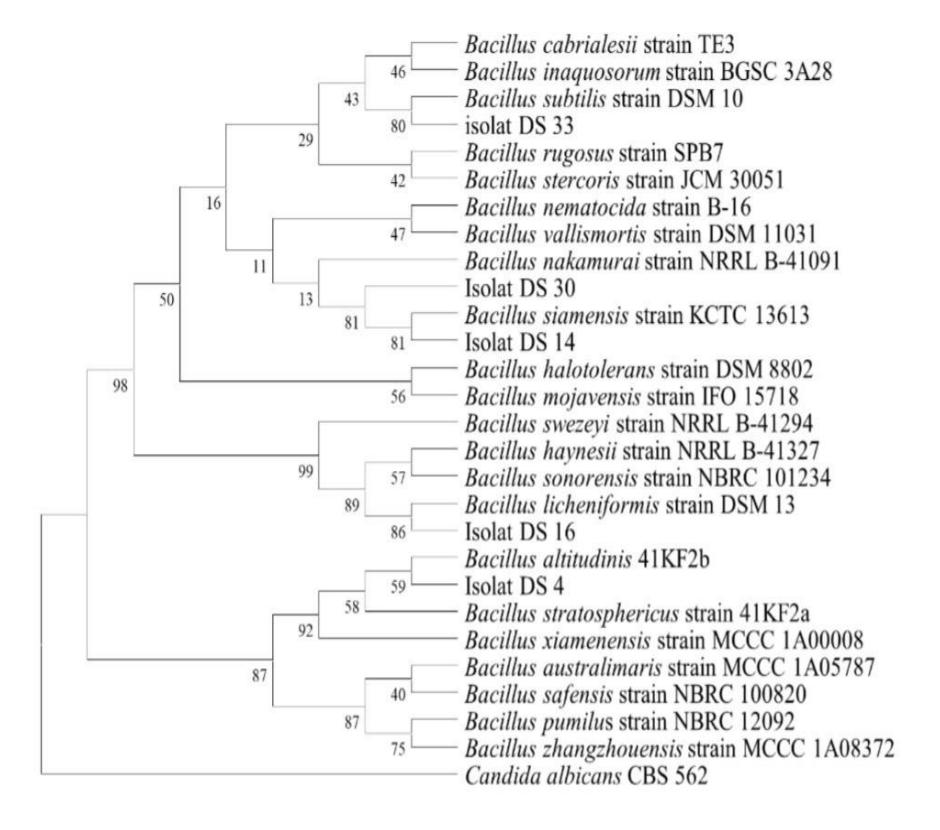
Figure 1.Phylogenetics analysis offive isolates of biosurfactant-producing bacteria usingMEGAXIsoftwarewithNeighbourJoining method and 1000x bootstrap.
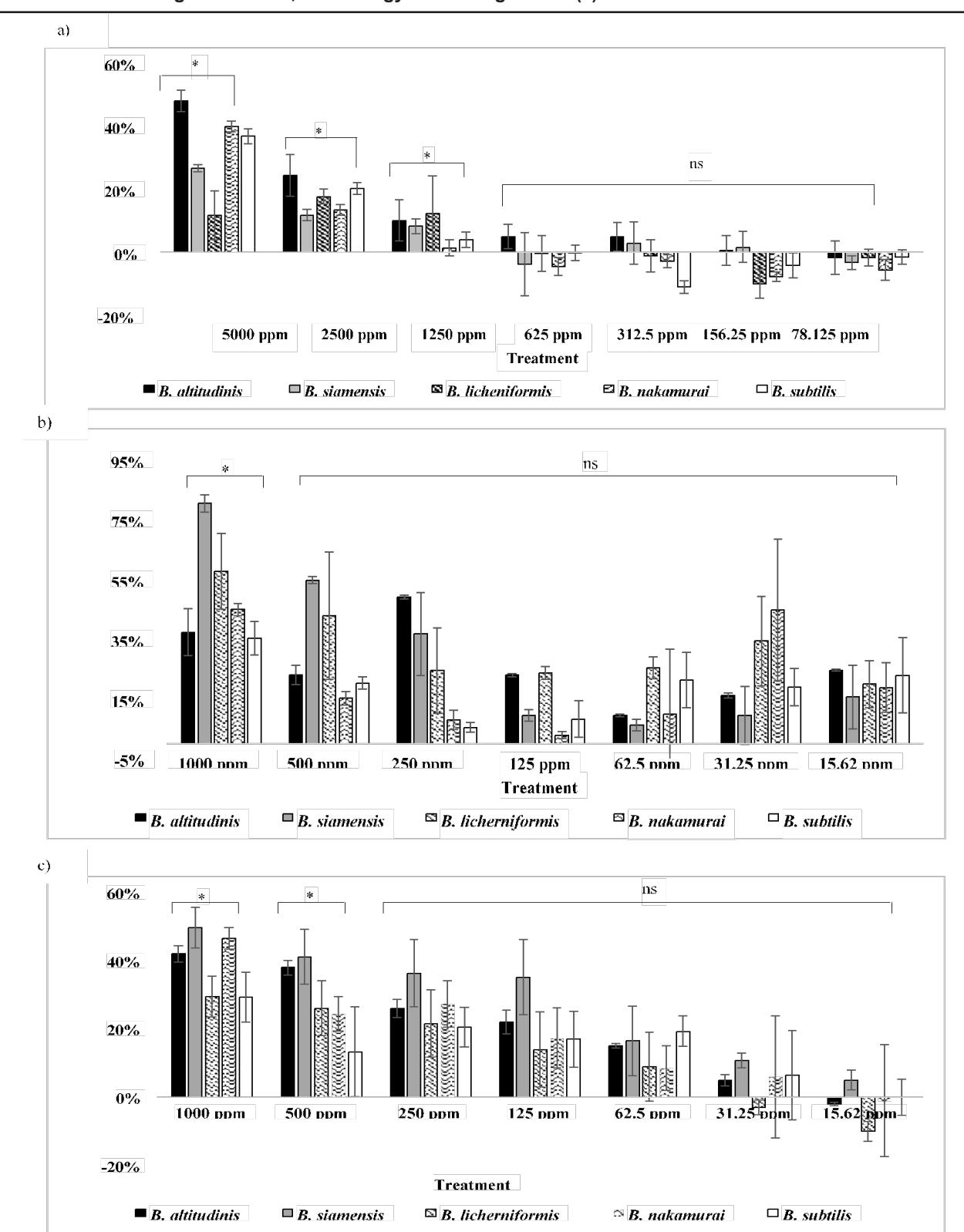
Figure 2.Percentage ofinhibition of oral pathogens by biosurfactantsfromB. altitudinis,B.siamensis,B.licheniformis,B. nakamurai, and B.subtilisusingtheMinimumInhibitoryConcentration(MIC)method.(a)Candida albicans,(b) Streptococcusmutans, (c)Enterococcus faecalis;(*)indicatessignificantdifferenceswithp-value<0.05;(ns)indicatesinsignificantdifferencewithp-value>0.05.
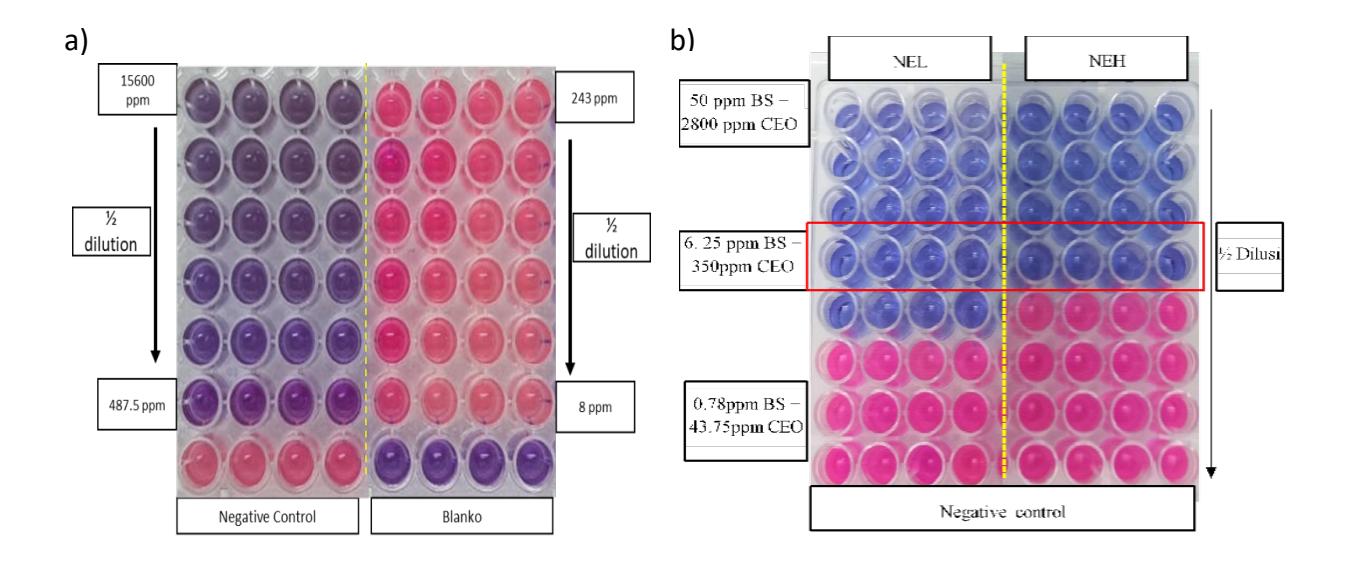
Figure 3.(a)CinnamonEssentialOil(CEO)MICtest onS.mutans using resazurin as colorindicator,with the highest concentration of 1500ppmanddilutedtothe lowest concentrationof8ppm,withmediumaddedwithculture as anegative control andthemediumonlyas a blanko.(b)MICtest ofNELandNEHinhibitedC. albicans using resazurin as colorindicator at concentration 100 ppmBS+5600 ppm CEOand diluted to lowest concentration of 0.78 ppmBS+43.75 ppmCEO.WithBS(Biosurfactant);CEO(Cinnamon essential oil);NEL (Nanoemulsionlowenergymethod);NEH(Nanoemulsionhighenergymethod)
with antifungal properties [26-27], as evidence by the inhibition of C. albicans growth at a concentration of 2500 μg/mL [28]. Similarly, B. siamensis produces a lipopeptide biosurfactant, that exhibits antimicrobial activity against oral pathogenssuch as S. mutans and E. faecalis[29-31]. MIC tests were also conducted on cinnamon essential oil (CEO) results were observed based on the color change using resazurin as indicator. As shown in Figure 3(a), color change from blue to pink indicates microbial growth, while no color change indicates inhibition of microbial activity. Based on MIC testing of CEO, the minimum concentrations inhibited the growth of C. albicans was 1900 ppm, while for S. mutans and E. faecalis, the concentration was 490 ppm for both.
Cinnamon essential oil (CEO), primarily composed of cinnamaldehyde, exhibits strong antibacterial and antifungal activity by disrupting cell wall and membrane integrity [32]. Previous research has shown that CEO can inhibit the growth of C. albicans at concentrations <0.03% (v/v) [33] and effectively inhibit the growth of S. mutans and Enterococcus, both are pathogens responsible for dental caries and other oral infections [34]. The hydrophobic nature of CEO, however, limits its solubility in water, reducing its effectiveness [35]. By using biosurfactants to emulsify the CEO, it can be easily solubilized in water-based systems, enhancing its biological availability [35-36]. Both organic
compounds can be mixed into nanoemulsions to increase the potency of CEO and biosurfactant as antimicrobials.
3.3. Fractional Inhibitory Concentration (FIC)
The Fractional Inhibitory Concentration (FIC) analysis indicates the interaction between biosurfactants and CEO. The calculation was derived from MIC of biosurfactants, CEO, and their combination as shown in Table 2. Based on Table 2, the FIC values for biosurfactant and CEO against C. albicans and E. faecalis were 0.1 and 0.3697 respectively, indicating a synergistic relationship since both FIC values are ≤ 0.5. Meanwhile, the FIC value for S. mutans was 1.01, indicating no interaction or an indifference between the two compounds, asthe FICvalue falls within the range of 1 – 4 [22].
The FIC analysis revealed a synergistic relationship between biosurfactants and CEO against C. albicans and E. faecalis, with FIC values of 0.1 and 0.3697, respectively. This synergy suggests that the combination of these agents could enhance their antimicrobial effectiveness, potentially allowing for lower concentrations of each to be used in formulations [37-38]. Meanwhile the FIC value for S. mutans was 1.01, indicating an indifferent relationship. This suggests that while biosurfactants and CEO are effective individually, their combination does not significantly enhance their inhibitory effects against S. mutans [39].
| Microbes | MIC BS | MIC CEO | MIC BS + CEO | FIC BS | FIC CEO | FICI | Identified [22] |
|---|---|---|---|---|---|---|---|
| C. albicans | 312.5 | 1900 | 3.125 BS + 175 CEO | 0.01 | 0.092 | 0.1 | Synergistic |
| S. mutans | 15.625 | 490 | 7.82 BS + 250 CEO | 0.50048 | 0.51020 | 1.01068 | Indifferent |
| E. faecalis | 15.625 | 490 | 1.95 BS + 120 CEO | 0.1248 | 0.2449 | 0.3697 | Synergistic |
Table 2. The result of Minimum Inhibitory Concentration (MIC) and Fractional Inhibitory Concentration (FIC) biosurfactant and CEO
Notes: BS (Biosurfactant); CEO (Cinnamon essential oil; NEL (Nanoemulsion low energy method); NEH (Nanoemulsion high energy method)
3.4. Production and Characterization of Nanoemulsion
The nanoemulsion results showed a distinctive difference in color formation between NEH and NEL. NEL at concentrations NE1 to NE4 displayed a yellow color change and rapid phase separation, while NEH changed to a milky white color. NEH at concentrations NE1-NE3 showed residual CEO that was not well emulsified, leaving oil on the walls and in the bottom of the falcon tube. In contrast, NEH concentration NE4 showed good emulsification with minimal residual oil compared to the other nanoemulsion concentrations (Figure 4).
The final biosurfactant concentration selected was 100 ppm (NE4), which was then formulated with 5600 ppm CEO. The concentration of CEO is selected based on the range concentration of MIC value inhibited the growth of the three oral pathogens and is the best concentration which completely emulsified with no residual oil. Table 3 shows the NEH particle size measurement was 218.2 nm, smaller than the NEL size of 405.02 nm. The zeta potential test results for both were \(\geq\) -30 mV, indicating sufficient stability for both formulas. However, NEL had a polydispersity index (PI) \(\geq\) 0.5, indicating a non-homogeneous particle dispersion, while NEH had a PI \(\leq\) 0.5, indicating a homogeneous particle dispersion.
Antimicrobial nanoemulsions are emulsified mixtures of detergent, oil, and water with particle sizes ranging from 100 to 800 nm. These mixtures have demonstrated broad antimicrobial activity against bacteria, enveloped viruses, and fungi at concentrations that are nontoxic to animals [40]. Despite the wide range of sizes, smaller droplets are generally more effective against microorganisms due to their higher surface area-to-volume ratio, which enhances their antimicrobial activity [41]. Smaller droplets are also more stable and less prone to coalescence, ensuring consistent antimicrobial activity over time [42]. Therefore, the preparation method is crucial to achieve the smallest possible nanoemulsion droplet size.
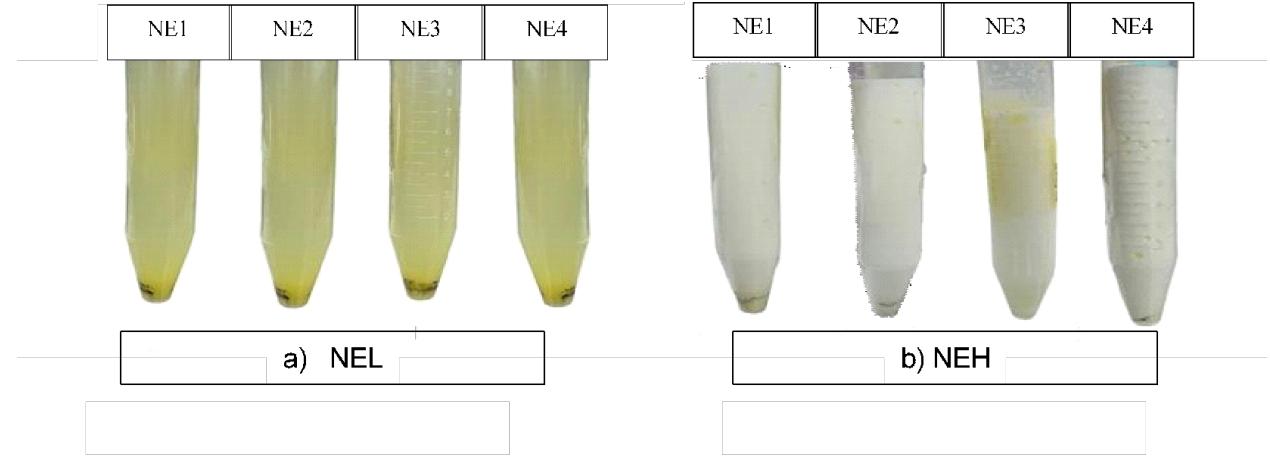
Figure 4. (a) Visualization of nanoemulsion low energy (NEL) after vortex for 5 minutes, (b) Visualization of nanoemulsion high energy (NEH) after vortex 5 minutes followed by sonication for 20 minutes. With NEL (Nanoemulsion low energy method); NEH (Nanoemulsion high energy method). NE1 (2000 ppm BS + 47.600 ppm CEO); NE2 (1000 ppm BS + 47.600 CEO); NE3 (500 ppm BS + 47.600 CEO); NE4 (100 ppm BS + 47.600 CEO); BS (Biosurfactant); CEO (Cinnamon Essential Oil)
| Table 3.Result of particle size analyzer and zeta potential of nanoemulsion | ||||
|---|---|---|---|---|
| Formulation | Treatment | PSA (nm) | Zeta Potential (mV) | PI |
|---|---|---|---|---|
| NEL | 405.02 ± 25.73 | -37.02 ± 0.47 | 0.698 ± 0.007 | |
| 100 ppm BS + 5600 ppm CEO | NEH | 218.2 ± 5.73 | -40.76 ± 1.70 | 0.216 ± 0.003 |
Notes:BS(Biosurfactant); CEO(Cinnamon essential oil; NEL(Nanoemulsion lowenergy method);NEH(Nanoemulsion high energy method)
The nanoemulsion method is differentiated based on the energy used during its formation, which can be either high energy or low energy. The high-energy method involves the input of significant energy such as ultrasonication and high-shear stirring to create nanosized droplets.In contrast, the low-energy method relies on internal chemical or temperature changes to form nanoparticles without the need of external pressure [43].
This study employs both low-energy and highenergy methods for the formation of emulsions. In spontaneous emulsification, the organic phase, consisting of oil, surfactant, and cosurfactant, is simply added to the aqueous phase with gentle stirring. The surfactant in the organic phase has a high affinity for the continuous phase. Therefore, when two phases (the organic or dispersed phase and the aqueous or continuous phase) are mixed, turbulence forms, and the surfactant quickly diffuses into the aqueous phase, forming a layer or film around the dispersed oil droplets. This reduces the interfacial tension, resulting in the spontaneous formation of an emulsion system [44]. The emulsification formed between biosurfactants and CEO is classified as spontaneous emulsification with a particle size of 405.02±25.73 nm. However, this emulsion is short-lived due to rapid phase separation. This instability occurs due to several factors such as rapid stirring using a vortex, which can cause turbulence leading to nonhomogeneous dispersion of globules and resulting in larger particle size [45]. On the other hand, too slow stirring can prevent the nanoemulsion from becoming homogenous [45]. In addition, inappropriate biosurfactant concentration can also lead to phase separation and it is related to hydrophilic- lipophilic balance (HLB) value, which indicates the strength and proportion of the hydrophilic and lipophilic portions of the biosurfactant molecules [46]. HLB plays a crucial role because it stabilizes nanoemulsions by enhancing the affinity between interacting molecules and reducing the interfacial tension between water and oil phase [47]. A higher HLB values can enhance result in smaller and more homogenous particle size because it can
assist in reducing particle aggregation and producing more uniform particles [47].
The nanoemulsion method using high-energy techniques includes ultrasonication, which enhances acoustic cavitation. This process leads to the formation and collapse of microbubbles due to pressure fluctuations from a sound wave. These localized shock waves ultimately produce micro-explosions that cause larger droplets to break down into sub-micron sizes [48]. The particle size of nanoemulsion produced in this study using ultrasonication is 218.2 ± 5.73 nm. It is larger compared to the nanoemulsion size obtained using the surfactants Tween 80 and Span 80, which has the particle size of 90 ± 2.49 nm with cinnamon essential oil is [49]. The use of nanoemulsions as antimicrobial agents is an emerging innovation in the healthcare field.
3.5. Minimum Inhibitory Concentration (MIC) Nanoemulsion
Figure 4(b) shows the comparison of MIC test results between NEL and NEH in inhibiting the growth of C. albicans. The concentration used was 100 ppm biosurfactant + 5600 ppm CEO, diluted down to the lowest concentration of 0.781 ppm biosurfactant + 43.75 ppm CEO. Based on the changes of color, the minimum NEL concentration inhibited the growth of C. albicans was 3.125 ppm biosurfactant + 175 ppm CEO, lower than the NEH, which required 6.25 ppm BS + 350 ppm CEO. For S. mutans and E. faecalis, the minimum NEL concentrationsinhibited their growth were 7.82 ppm BS + 120 ppm CEO and 1.95 ppm BS + 120 ppm CEO, respectively. For S. mutans and E. faecalis the minimum concentration of NEH inhibited their growth was 3.125 ppm BS + 175 ppm CEO.
Nanoemulsions do not cause the development of resistant strains because of their mechanism, which involves a non- specific disruption of bacterial cell membranes. Additionally, nanoemulsions exhibit long-term storage stability, they can maintain their effectiveness for up to two years [50]. For instance, a nanoemulsion with Triton-X100, having an average particle diameter of 308 nm, has shown remarkable inhibitory
effects against the growth of cariogenic S. mutans even at an extremely high dilution. This nanoemulsion effectively preventsthe adhesion of S. mutans to glass surfaces and inhibits biofilm formation [50]. A biosurfactant-based nanoemulsion with a size of 218.2 ± 5.73 nm can inhibit the growth of S. mutans and E. faecalis at a minimum concentration of 3.12 ppm BS + 175 ppm MA. Ciprofloxacin HCl (CPX NE) nanoemulsion can inhibit the biofilm formation of E. faecalis, enhancing the effectiveness of CPX immersion against Enterococcus. A water-in-oil (w/o) type of nanoemulsion was prepared using the high-shear ultrasonication method involving oleic acid, Span 80, and Transcutol P. Thermodynamic and rheological parameters indicated the formation of the w/o nanoemulsion. In vitro applications were conducted in phosphate buffer solution and artificial saliva. Fluorescence mapping showed that the nanoemulsion could inhibit or remove E. faecalis biofilm both before and after treatment [51]. Lin et al.[52] reported that cinnamon essential oil-based nanoemulsion supplemented with Tween-80 inhibited the growth of C. albicans at a concentration of 1 mg/mL. Meanwhile, research by Juniatik et al.[53] indicated that nanoemulsion mouthwash formulations containing lemongrass and keffir lime oils, supplemented with Tween-80 and PEG, were more effective in inhibiting C. albicans growth compared to single or combined oils without nanoemulsion.
4. Conclusion
The study demonstrates that microbial biosurfactants combined with CEO in nanoemulsions are effective in inhibiting the growth of common oral pathogens. The low toxicity and natural origin of these compounds present them as promising alternatives to SLS in dental and oral care products. The use of these nanoemulsions offers a novel approach to enhance the solubility and bioavailability of hydrophobic antimicrobial agents like CEO. Further research could explore on formulations optimization for commercial applications and evaluating their long-term efficacy and safety in clinical settings.
Acknowledgements
The authors would like to express their sincere gratitude to Lembaga Pengelola Dana Pendidikan (LPDP) for financial support.