

1. Introduction
Strategic alliances have become a critical organizational strategy for navigating complex innovation landscapes, particularly in knowledge-intensive sectors such as biotechnology [1]. In contrast to traditional market-based transactions, alliances enable firms to share complementary assets, access new technological capabilities, and mitigate the risks associated with uncertain R&D environments [2–4]. Within the biotechnology industry, the high cost of drug development, stringent regulatory pathways, and rapidly evolving scientific knowledge have further intensified the reliance on strategic alliances as vehicles for competitive advantage and organizational learning [5–7].
Over the past two decades, scholarly attention to biotechnology alliances has evolved from foundational studies of partner selection and contractual governance [8,9], toward more nuanced examinations of alliance portfolio configurations, absorptive capacity, and knowledge
recombination [10,11]. More recent research has emphasized how digital technologies, artificial intelligence (AI), and platform-based business models are reshaping alliance structures in life sciences, fostering modular innovation and accelerating time-to-market [12]. These developments reflect a paradigmatic shift in how firms co-create value across organizational boundaries, leveraging dynamic capabilities in the face of technological and institutional volatility [8,9,13].
Despite the increasing volume of research on strategic alliances in biotechnology, existing studies remain fragmented across diverse conceptual lenses, geographical contexts, and methodological approaches [8,14]. Prior reviews have often focused narrowly on pharmaceutical licensing or R&D alliances without offering an integrated, longitudinal view of the intellectual structure, thematic evolution, and scholarly impact of the field. Moreover, the growing importance of sustainability, inclusive innovation, and global health equity presents new alliance imperatives that remain underexplored in the literature [15,16]. A comprehensive synthesis is therefore needed to map the drivers, outcomes, and future research directions within this dynamic research stream.
This systematic literature review addresses this gap by analyzing 161 peer-reviewed articles published between 1985 and 2025, with the aim of consolidating fragmented knowledge and identifying emerging research frontiers. Drawing upon bibliometric and thematic analyses, the review contributes to both academic and managerial discourse by elucidating the intellectual foundations, sectoral patterns, and evolving priorities of strategic alliances in the biotechnology industry. In doing so, it responds to recent calls for meta-level synthesis in the strategic management of innovation [17,18], while also offering practical insights for firms seeking to navigate the complexities of alliance formation, governance, and performance in an era of digital and biological convergence.
2. Methodology
This study adopts a systematic literature review (SLR) methodology to synthesize the body of scholarly knowledge on strategic alliances within the biotechnology industry. The SLR follows the established guidelines of Tranfield et al. [19], as well as the PRISMA (Preferred Reporting Items for Systematic Reviews and Meta-Analyses) framework, ensuring transparency, replicability, and rigor in the review process. The methodological steps include planning the review, identifying and selecting relevant literature, extracting and analyzing data, and reporting the findings.
We strongly recommend you to create Equations using either the Microsoft Equation Editor or the MathType add-on. Equations should be editable by the editorial teams (for layout purposes), and therefore not in a picture format. The data collection process began with a comprehensive search of peerreviewed articles from Scopus and Web of Science databases, which are widely recognized for indexing high-impact publications. The search was conducted using a combination of keywords such as "strategic alliance", "biotechnology industry", "collaboration", "R&D partnerships", "innovation networks", and related terms. To ensure relevance and quality, we applied the following inclusion criteria: (1) articles published in peer-reviewed journals indexed in Scopus Q1 or Q2 between 1985 and 2025, (2) studies written in English, (3) empirical or conceptual articles that explicitly address strategic alliances within the biotechnology context. Articles focused solely on pharmaceutical marketing, clinical trials, or unrelated industries were excluded.
In conducting this review, we limited the database search to Scopus-indexed Q1 and Q2 journals. This decision was made to ensure methodological rigor, theoretical relevance, and consistency with established practices in systematic reviews and bibliometric studies [20]. Articles published in Q3/Q4 journals and conference proceedings were excluded because such outlets often apply less stringent peer review standards and may present preliminary findings that lack robustness. Including them would risk introducing noise into the bibliometric mapping and reduce the validity of thematic structures derived from the analysis. Focusing on Q1/Q2 journals therefore guarantees that the review captures the most influential, high-quality, and state-of-the-art contributions to the scholarly discourse on strategic alliances in biotechnology [21].
The initial search yielded 438 documents, which were screened based on titles and abstracts, resulting in 192 potentially relevant articles. After full-text assessment, 161 articles met the inclusion criteria and were selected for the final analysis. Bibliometric information was extracted using Biblioshiny and Bibliometrix [22] to identify citation patterns, co-authorship networks, thematic clusters, and keyword trends. A combination of performance analysis and science mapping techniques was employed to assess the intellectual structure, conceptual evolution, and thematic development of the field. The detailed screening and selection process is summarized in the PRISMA Flowchart (Figure 1), while Table 1 provides a descriptive overview of the bibliometric dataset, including the number of documents, sources, citations, and author characteristics.
Finally, the review applied both qualitative content analysis and quantitative bibliometric indicators (e.g., citation counts, h-index, co-occurrence frequencies) to interpret the findings. The triangulation of bibliometric and thematic insights enabled a robust examination of the key drivers, outcomes, and research gaps in the strategic alliance literature specific to biotechnology. This integrative approach contributes not only to theoretical advancement but also to practical decisionmaking for firms and policymakers engaging in alliance-based innovation strategies.
In preparing this manuscript, generative artificial intelligence (AI) tools were used only for language refinement, grammar correction, and stylistic clarity. No AI tools were employed for generating research ideas, data analysis, or interpretation. All conceptual development, methodological design, and analytical conclusions are the sole responsibility of the authors.
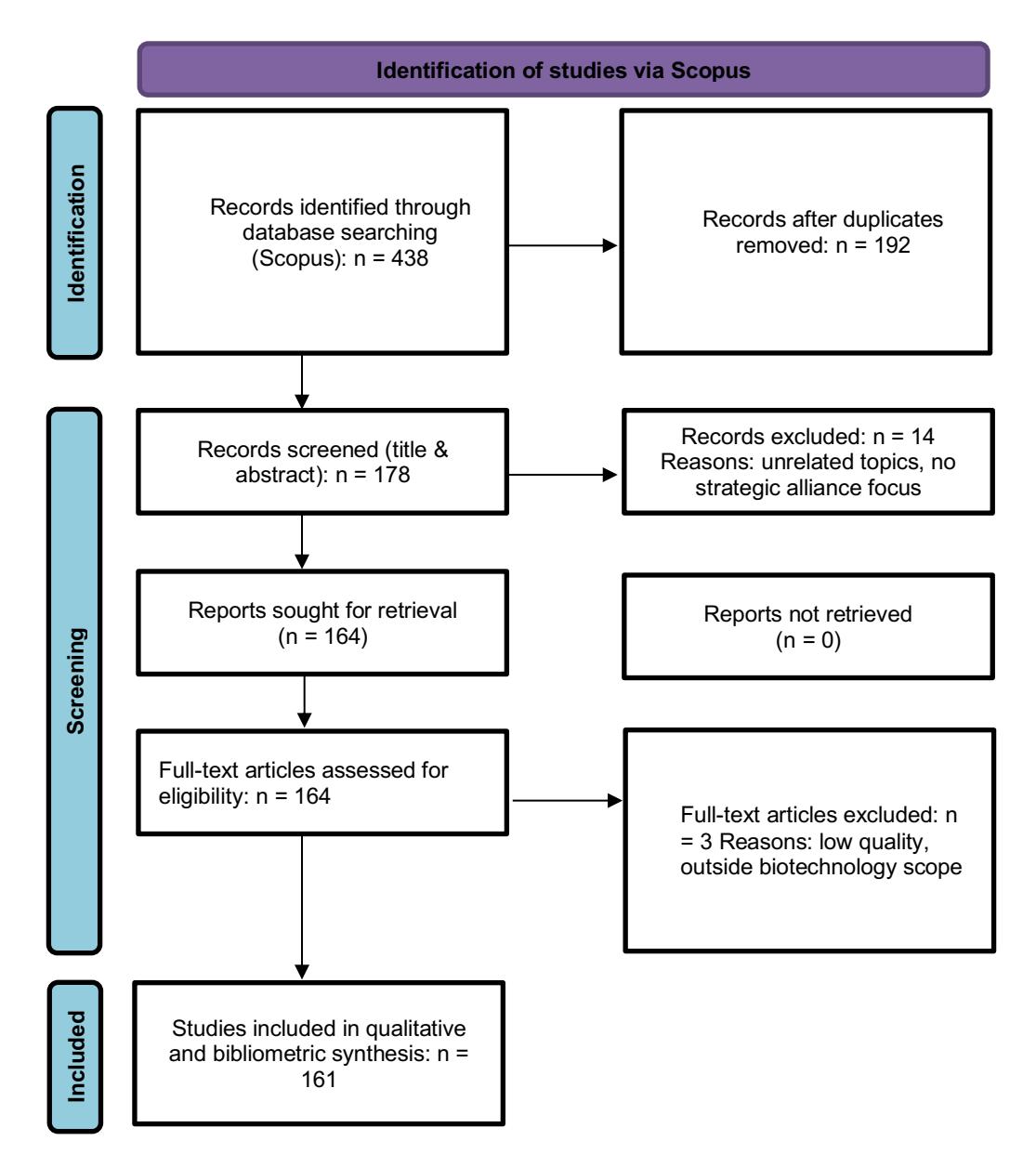
Figure 1.PRISMAFlowchart
Table1. DataDescription
| Description | Result |
|---|---|
| Timespan | 1985–2025 |
| Number of document | 161 |
| Sources | 80 |
| Average citation per document | 87 |
| Total references | 8 |
| Document average age | 16 |
| Authors | 275 |
| Co-authors per document | 2 |
| International co-authorship | 20 |
| Keywords Plus / Author's Keywords | 405/403 |
Source:Author's analysis based onScopus data (1985–2025), processed usingBibliometrixR-package andBiblioshiny interface. Note:Totalreferenceswere roundedforsimplicity.
3. Result and Discussion
3.1. Descriptive Analysis
This systematic literature review draws upon a curated bibliometric dataset comprising 161 peer-reviewed articles on strategic alliances, published over a four-decade span from 1985 to 2025 across 80 distinct scholarly sources. The average age of the documents is 16.1 years, reflecting both historical depth and enduring scholarly relevance. On average, the sample documents received approximately 87 citations per document, underscoring the topic's substantial academic impact and citation traction within the broader management and international business literature. The authorship distribution includes 275 unique contributors, among whom 38 authored single-authored publications, and 46 documents were produced independently. The field demonstrates a moderate degree of scholarly collaboration, with a co-authorship average of 2 authors per paper and an international co-authorship rate of 20%, indicative of a globally networked research community. Moreover, the dataset encompasses 405 Keywords Plus and 403 author-supplied keywords, suggesting a high degree of lexical diversity and thematic richness. These descriptive parameters collectively provide a foundational overview of the intellectual structure of the field, thereby informing subsequent performance, thematic, and conceptual analyses.
3.2. Sources
The dissemination of research across 80 distinct publication outlets underscores the field's interdisciplinary nature, with a notable concentration in high-impact journals. The most frequent contributors, such as the Journal of High Technology Management Research and Strategic Management Journal (each contributing 9 articles) highlight the dominant role of strategic and technological innovation discourses. This aligns with prior bibliometric mappings in the innovation domain (e.g., [23]). In addition, niche journals like the International Journal of Biotechnology and Journal of Commercial Biotechnology suggest a cross-pollination between management research and applied biosciences, reflecting the domain's thematic heterogeneity and sectoral relevance. As presented i n Table 2 , the top ten journals collectively account for a substantial portion of the total publications, indicating that a core set of journals anchors much of the discourse on strategic alliances. This concentration suggests a stable and recognized scholarly platform for advancing theoretical
Table2.NumberofJournal
| Journal | Number of Article Published |
|---|---|
| Journal of High Technology Management Research | 9 |
| Strategic Management Journal | 9 |
| International Journal of Biotechnology | 8 |
| Journal of Commercial Biotechnology | 7 |
| Research Policy | 7 |
| Technology Analysis and Strategic Management | 6 |
| Technovation | 6 |
| Journal of Business Venturing | 5 |
| Organization Science | 5 |
| Journal of Business Research | 4 |
Source:Authors'analysis based on Scopus database (1985–2025) using Bibliometrix and Biblioshiny and empirical contributions in the field. Moreover, the presence of both general management and technologyfocused outlets highlights the integrative nature of the topic.
3.3. Authors
The bibliometric analysis of high-impact publications revealsthat the foundational work by Baum and Silverman [24] in Strategic Management Journal stands out with 1,885 citations and a normalized total citation (TC) score of 5.21, indicating its enduring influence in strategic alliance and biotechnology research. Similarly, Rothaermel's [25] contribution exhibits substantial academic impact with 1,395 citations and the highest normalized TC of 6.79, highlighting the relevance of technological discontinuities in firm performance. Other seminal works, such as those by Zollo and Winter [26] and Gulati [27], also maintain consistent academic traction with normalized citation rates of 2.35 and 2.55 respectively, reflecting the sustained relevance of knowledge codification and network embeddedness theories. The normalized TC metric further underscores the temporal robustness of these studies by adjusting for publication year effects, thus offering a more accurate measure of longitudinal academic impact. These findings collectively suggest that strategic management literature remains highly influenced by early
2000s scholarship, particularly in the domains of innovation, alliance capabilities, and absorptive capacity frameworks.
As illustrated in the Table 3, seminal works by Baum & Silverman [24] and Rothaermel [25] demonstrate exceptionally high impact, both in terms of total citations and normalized citation rates, signifying their foundational role in shaping strategic management scholarship. The article by Baum & Silverman, for instance, not only boasts the highest total citations (1,885) but also maintains a consistent influence over time, as reflected in its high average citation per year (85.68). Notably, Rothaermel's 2004 publication records the highest normalized total citation (6.79), indicating that relative to other publications in the same year, it achieved superior academic recognition. Meanwhile, Zollo & Winter's [26] contribution, while slightly lower in normalized terms, remains a cornerstone in organizational learning theory, reinforcing its theoretical depth. These findings suggest a convergence in scholarly attention toward works that offer integrative frameworks, robust empirical grounding, and novel theoretical contributions, particularly in the domains of dynamic capabilities, alliance strategies, and innovation management. Such publications not only advance theoretical discourse but also set benchmarks for future research trajectories in the field.
Table 3. Number of Authors Citation
| No. | Author(s) | Year | Journal Title | TC | TC/Year |
|---|---|---|---|---|---|
| 1 | Baum & Silverman | 2000 | Strategic Management Journal | 1885 | |
| 2 | Rothaermel | 2004 | Strategic Management Journal | 1395 | |
| 3 | Zollo & Winter | 2002 | Organization Science | 1252 | |
| 4 | Gulati | 2003 | Strategic Management Journal | 1002 | |
| 5 | Chesbrough | 2003 | Research Policy | 870 |
Source: Authors' analysis based on Scopus citation data (1985–2025) processed using Bibliometrix and Biblioshiny
3.4. Keyword Analysis
The word frequency analysis and corresponding word cloud visualization reveal that "biotechnology" emerges as the dominant thematic nucleus within the reviewed literature, appearing 68 times significantly higher than any other term. This indicates a strong concentration of scholarly attention on this domain, likely driven by its high relevance across both academic and industrial contexts. Other prominent terms such as "strategic alliance" (17), "strategic planning" (17), "innovation" (14), and "strategic alliances" (12) reflect the strategic management perspective applied to biotechnology, suggesting a growing interdisciplinary interest that blends technological advancement with organizational strategy. The frequent occurrence of "technology transfer," "mergers and acquisitions," and "pharmaceutical industry" further highlights the dynamic nature of collaboration and commercialization processes in biotech contexts. Additionally, terms like "research and development management" and "product development" underscore the operational and innovation-centric focus prevalent in this body of research. The presence of geographical and institutional keywords (e.g., "Germany", "United States", "Canada", "biotechnology firms") points to the international and institutional dimensions of the field. Collectively, this term mapping not only reinforces biotechnology as the core thematic axis but also suggests that scholarly efforts increasingly intersect with strategic decision-making, inter-organizational partnerships, and global knowledge transfer in high-technology sectors. As visualized in Figure 2, the word cloud highlights the relative frequency and prominence of key
terms extracted from the reviewed literature. The larger font size of "biotechnology," "strategic alliance," and "innovation" indicates their central role in the field, while smaller yet emerging terms such as "digitalization" and "sustainability" signal new directions in the discourse. This visualization supports the textual analysis by illustrating how the thematic core of the literature has evolved toward integrative, technology-driven collaboration frameworks.
3.5. Countries
The distribution of scientific production by country demonstrates a pronounced dominance of the United States (USA), contributing 127 publications far exceeding any other country in the dataset. As shown in Table 4, this pattern underscores the USA's central role in driving scholarly output in the field, which is likely attributed to its robust research infrastructure, funding mechanisms, and institutional networks. Following the USA, a relatively moderate level of contribution is observed from Canada (21), Germany (20), and Spain (20), indicating a tier of active contributors predominantly located in developed economies with strong innovation ecosystems. The United Kingdom (UK), and South Korea also exhibit significant output, reinforcing the global dispersion of research capabilities. France, Singapore, and Italy round out the top contributors, each playing a notable yet smaller role. This geographical distribution highlights a concentration of knowledge production within high-income nations, suggesting both a capacity gap and an opportunity for increased international collaboration to promote research inclusivity and knowledge sharing across regions.
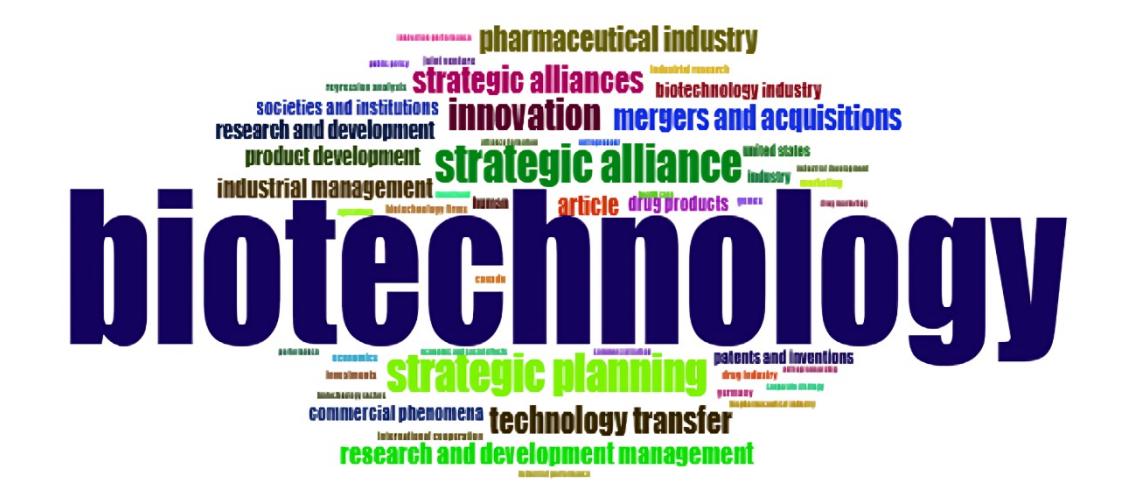
Figure 2.SourceCloud
Source:Author's visualization based on Scopus dataset(1985-2025) using Bibliometrix and Biblioshiny
The prominence of countries such as the USA, Canada, Germany, and China in scientific production related to strategic alliances in the biotechnology industry can be attributed to their strong research and development (R&D) capabilities, proactive government policies, and extensive international collaborations. Nations with high R&D investments and innovation-driven agendas, such as China and the USA, have created favorable ecosystems for scientific advancement, enabling firms and academic
institutions to engage in knowledge-sharing networks and strategic partnerships. Moreover, as noted by Carvajal-Camperos et al. [8], strategic alliances in biotechnology are instrumental for enhancing innovation, mitigating investment risks, and accelerating technological learning. The increasing involvement of these countries in cross-border collaborations—supported by national strategies and funding frameworks—has significantly contributed to their scientific output and global leadership in biotechnology research [14,28].
Table 4.Countries Article Production
| No. | Countries | Frequency |
|---|---|---|
| 1 | United States | 127 |
| 2 | Canada | 21 |
| 3 | Germany | 20 |
| 4 | Spain | 20 |
| 5 | United Kingdom | 19 |
| 6 | Australia | 15 |
| 7 | South Korea | 14 |
| 8 | France | 13 |
| 9 | Singapore | 10 |
| 10 | Italy | 9 |
Source: Authors' analysis based on Scopus database (1985–2025) using Bibliometrix and Biblioshiny
3.6. Trend and Thematic Maps
Thematic mapping highlights the rise of new research priorities in biotechnology alliances, particularly those linked to digital transformation, sustainability, and agricultural biotechnology. Recent studies show how digital technologies, artificial intelligence, and platform-based models are reshaping alliance structures, enabling modular collaboration and accelerating time-to-market [13,18] (see Table 5). As depicted in Figure 3, the thematic landscape provides a visual synthesis of research clusters derived from co-word analysis and bibliometric mapping. Each cluster represents a distinct knowledge domain positioned according to its centrality (relevance to the broader field) and density (degree of internal development). Core and well-developed themessuch asinnovation management and knowledge transfer occupy the upper-right quadrant, while emerging or declining topics like agricultural biotechnology and sustainability appear in the lower quadrants. This spatial configuration illustrates the intellectual evolution of alliance scholarship in biotechnology, reflecting a transition from transaction-based perspectives
toward capability- and ecosystem-oriented approaches. This spatial configuration illustrates the intellectual evolution of alliance scholarship in biotechnology, shifting from transaction-based perspectives toward capabilityand ecosystem-oriented approaches.as alliances are leveraged to address environmental transitions, resource efficiency, and global health challenges [8]. Agricultural biotechnology, once peripheral, is also emerging as a critical frontier, particularly through public–private partnerships aimed at food security and climate resilience [29] (see Table 5). Together, these themes suggest that strategic alliances are no longer confined to efficiency and governance issues but are evolving into vehicles for tackling complex technological and societal transformations.
In contrast, certain traditional research streams are losing prominence. Concepts rooted in transaction cost economics, contractual safeguards, and basic managerial planning once dominant in alliance scholarship are increasingly viewed as insufficient to explain alliance performance in turbulent environments [9]. Licensing
agreements and level collaboration [18,29]. This decline does not imply obsolescence but reflects a paradigmatic reorientation of the field: from static models of cost
minimization toward more adaptive frameworks that prioritize value co-creation, resilience, and innovation outcomes in biotechnology alliances.
Table 5.Topic Trend in Strategic Alliance and Biotechnology Industry
| Term | Frequency | Year (Q1) | Year (Median) | Year (Q3) |
|---|---|---|---|---|
| Strategic planning | 17 | 2001 | 2003 | 2006 |
| Industrial management | 9 | 2001 | 2003 | 2007 |
| Research and development management | 10 | 2003 | 2004 | 2006 |
| Strategic alliance | 12 | 2004 | 2005 | 2006 |
| Product development | 8 | 2003 | 2005 | 2015 |
| Drugs product | 7 | 2002 | 2006 | 2006 |
| Societies and institutions | 7 | 2004 | 2006 | 2007 |
| Biotechnology | 68 | 2003 | 2007 | 2014 |
| Mergers and Acquisition | 11 | 2006 | 2007 | 2014 |
Source:Authors' analysis based on Scopus dataset (1985–2025) using Bibliometrix and Biblioshiny
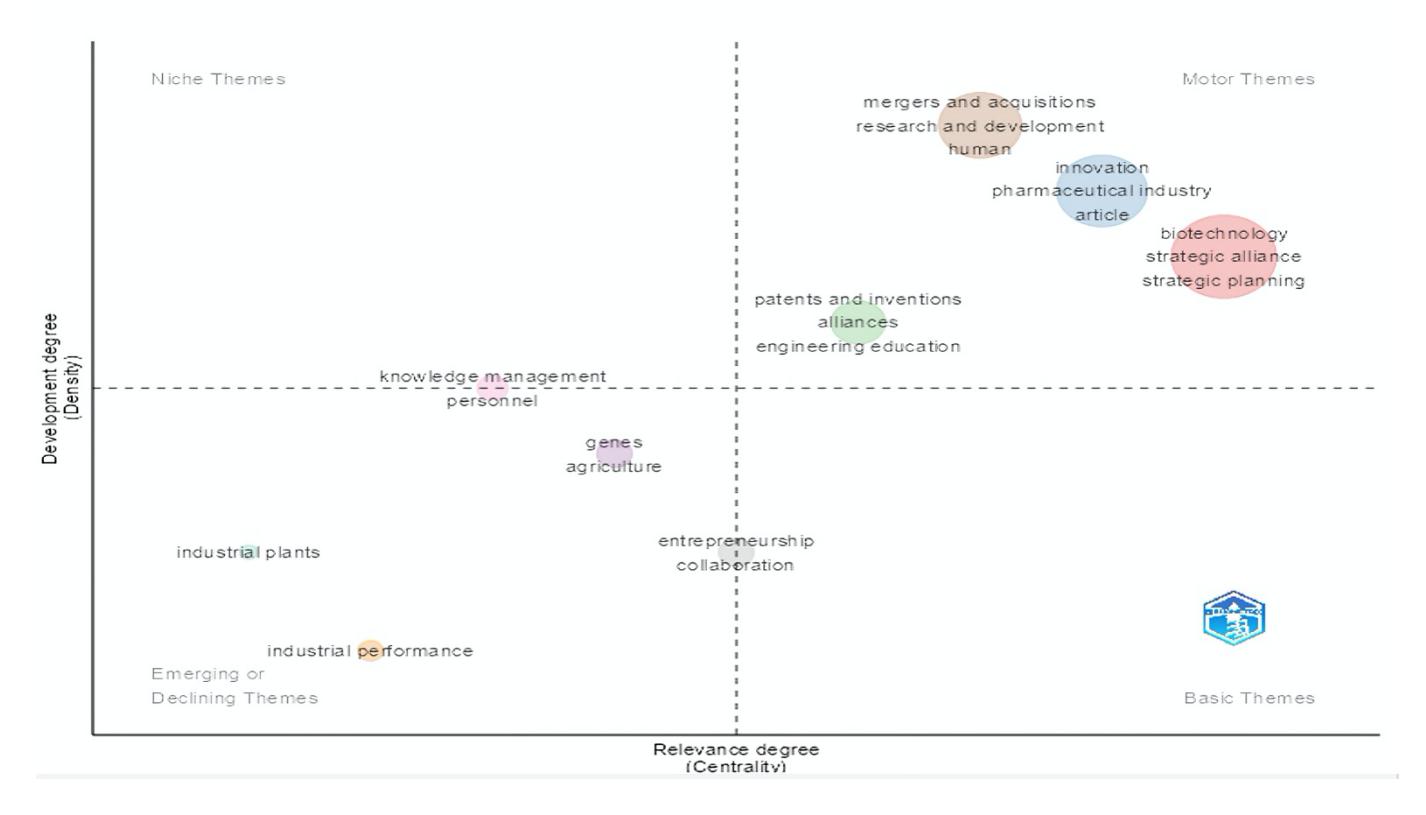
Figure 3.Thematic Map Source:Author's visualization based on Scopus dataset(1985-2025) using Bibliometrix and Biblioshiny
4. Conclusion
This study has systematically synthesized the intellectual structure, thematic evolution, and research frontiers of strategic alliances in the biotechnology industry by analyzing 161 peer-reviewed articles published between 1985 and 2025. The findings reveal a field that has matured around robust core themes such as biotechnology, strategic alliances, and innovation while also displaying diversification into emerging areas shaped by digital transformation, sustainability concerns, and global health imperatives. Through the integration of bibliometric and thematic mapping, the review uncovers both the centrality and fragmentation of existing knowledge, highlighting key areas where theoretical refinement and empirical expansion are warranted.
The thematic map identifies four distinct quadrants of inquiry, each pointing to future research directions with significant potential. Core themes require deeper engagement with digital technologies and inclusive innovation strategies, while basic themes such as entrepreneurship and education offer opportunities to bridge conceptual gaps between institutional development and individual capabilities. Niche themes, including mergers, acquisitions, and human capital, invite integrative frameworks connecting organizational learning with alliance performance. Meanwhile, emerging themes related to agriculture and industrial transformation suggest the need for interdisciplinary models that align strategic alliances with sustainability and bioeconomy goals.
In addition to extending theoretical understanding, this study offers practical insights for managers and policymakers. Strategic alliances remain vital vehicles for capability development, risk sharing, and innovation acceleration in biotechnology. As the sector confronts increasingly complex global challenges from pandemics to climate change alliances must evolve toward more agile, inclusive, and purpose-driven forms. Future research should thus adopt multilevel, crosssectoral, and longitudinal approaches to capture the dynamic interplay between strategy, structure, and societal impact. By doing so, scholars can contribute to a more resilient and equitable model of innovation in the biotechnology industry and beyond.
In conclusion, this review effectively addresses its three guiding research questions. First, it identifies that the primary drivers of strategic alliances in biotechnology lie in firms' pursuit of innovation, access to complementary knowledge, and mitigation of R&D risks under conditions of high uncertainty. Second, the review reveals that the outcomes of such alliances extend beyond innovation performance to include capability development, organizational learning, and enhanced resilience through networked collaboration. Third, by mapping the intellectual and thematic evolution of the field, it delineates future research directions centered on digital transformation, sustainability-driven partnerships, and inclusive innovation ecosystems.
Together, these findings close the analytical loop between the study's objectives and results, reinforcing the theoretical and practical significance of strategic alliances as engines of value creation in the biotechnology sector.
Acknowledgements
I would like to express my heartfelt gratitude to Wiwik Ariska not only for her intellectual insights, but also for her constant encouragement, patience, and warmth throughout this academic journey. Her presence made the challenging moments lighter and the meaningful ones even more memorable.