

1. Introduction
Caulerpa racemosa is a type of seaweed that contains chlorophyll and is known as sea grapes or, among the people, called "latoh". C. racemosa is edible as a vegetable or salad food. Seaweed type C. racemosa is classified into the group of green algae (Chlorophyta), which is one of the economically valuable resources. Compared to otherseaweeds, C.racemosa has higher nutritional content and antioxidant activity, including carbohydrates, crude fiber, protein, and minerals, but is low in fat [1-3]. As a raw material, C. racemosa has a higher phenol content, antioxidant activity, and broader therapeutic potential, including as a cosmetic ingredient, anticancer agent, diabetes therapy, and immunomodulator. In addition, C. racemosa also has three pigment contents: carotenoids, chlorophyll, and phycocyanin [4-6]. The chlorophyll pigment in C. racemosa makes it green and is used in photosynthesis. Chlorophyll is widely used in the household industry as a natural coloring agent for food and beverages, as a medicinal ingredient, as a sensitizing agent (for cancer therapy), as a bioinsecticide, and as a natural dye. It can be an antioxidant, antibacterial, and anti-mutagenic [7- 9].
Ocean acidification is a phenomenon in which the acidity
level of seawater changes below normal. The leading cause is global warming. According to the IPCC [10], the burning of fossil fuels will continue in the next 100 years, which can cause an ocean pH decrease to 7.5. Ocean acidification has a negative impact of 67% on marine biota, one of which is seaweed's growth and biological activity [11-13].
pH is one of the factors that causes the loss of chlorophyll a. Chlorophyll, as a pigment responsible for the formation of green pigment, is unstable to exposure to heat, acid, light, pH, and oxygen [14]. Acidification (ocean acidification) has an impact on the loss of magnesium (Mg), so that there will be a change in color in seagrass leaves [15]. Excessive or insufficient pH content inhibits the growth of seaweed [16]. Chlorophyll is readily degraded by enzymatic reactions, acidic conditions, and the presence of oxygen [17-18]. Therefore, it is necessary to research the effect of water pH and HCl addition on the growth and chlorophyll a content of latoh (C. racemosa).
Research related to acidification using HCl (Hydrogen Chloride) has been conducted by Rifandi et al. [19] on brown seaweed Sargassum sp. and Ansar et al. [20] on red seaweed Gracilaria changii. However, research on the difference in pH on the growth and chlorophyll a content of C. racemosa using
HCl has never been conducted, so it is necessary to research the effect of water pH with the addition of HCl on the growth and chlorophyll a content of C. racemosa.
2. Methodology
2.1 Materials
Twelve 15-L containers; 15-cm glass dropper pipettes (VMA-70001-01238) for HCl application; pH meter; DO meter; refractometer; lux meter; UV-Vis spectrophotometer (UV-1800) with quartz cuvettes. C. racemosa thalli sourced from BBPBAP Jepara (total 600 g; 50 g per container) [21]; hydrochloric acid (HCl, 37%, 1 L) for pH adjustment; dissolved inorganic nutrients with N:P = 6:1 used as fertilizer [22]; sandy-mud substrate [23].
2.2. Experimental design
A completely randomized design (CRD) with four pH treatments and three replicates was used over 43 days. Target pH levels followed IPCC guidance [10]: P0, ambient pH 9.0–9.3 (field condition); P1, pH 8.25; P2, pH 8.00; P3, pH 7.75.
2.3. Cultivation of the seagrapes
Seedstock, containers, and media were prepared; sandy mud was the substrate [23]. Salinity, light intensity, and dissolved oxygen (DO) were measured daily; temperature and DO were measured in the morning and afternoon. pH was checked three times daily (morning, midday, evening) and adjusted by dripping HCl to maintain targets. Nitrate and phosphate were measured at the end of the experiment.
2.4. Parameters
2.4.1 Morphology
Morphology of C. racemosa (thallus and ramuli) was recorded at day 0 and day 43 by visual assessment of thallus shape/texture and ramuli color. Ramuli color was quantified as Hue using the HSV (hue–saturation–value) color model [24–27].
2.4.2 Absolute Growth
Absolute Growth: The absolute growth of seaweed measured at the beginning and end of the study can be calculated using the following formula, according to Zonneveld [28]:
\[\Delta W = Wt - W0\]
Note: \(\Delta W\) : Absolute growth in weight (g)
Wt : Weight at the time of measurement (g)
W0 : Initial weight (g)
2.4.3 Specific Growth Rate
The specific growth rate of seaweed is calculated using the following formula [29]:
\[SGR = \frac{(lnWt - lnW0)}{t} \times 100\%\]
Where: SGR : Specific Growth Rate (% day-1)
W0 : Initial seaweed weight (g) Wt : Final seaweed weight (g) t : Maintenance Time (days)
2.4.4 Chlorophyll a content
Chlorophyll a was determined spectrophotometrically [30-31]. Absorbance of the extract was read at 663 and 645 nm, and chlorophyll a (Ca in mg g<sup>-1</sup> FW) computed by Arnon's equation [32]:
Ca = \[[12.7 \times A663 - 2.69 \times A645]x \frac{V}{1000} x \frac{1}{W}\]
Where: V: extract volume (mL) W: sample mass (g)
2.4.5 Water Quality
Daily measurements: salinity (refractometer), light intensity (lux meter), pH (pH meter; morning and afternoon), DO, and temperature (DO meter; morning and afternoon). Nitrate and phosphate were analyzed at the end by spectrophotometry following SNI 19-6964.7:2003; results expressed as mg \(L^{-1}\) [33].
2.5 Data Analysis
One-way ANOVA analyzed data; when significant, Duncan's multiple range test was applied (\(\alpha\) = 0.05). Analyses were performed in SPSS v21.0. Morphology and water-quality data were summarized descriptively against seaweed-culture suitability criteria.
3. Result and Discussion
3.1 Morphology Test
The results of the observations are presented in changes in the thallus's shape, color, and texture at the beginning and end of the observation. The results of morphological observations are shown in Table 1.
After 43 days of maintenance, C. racemosa under different pH treatments did not show morphological changes in shape or texture, as shown in Table 1. All treatments showed morphology, namely ramuli in the form of small circles, tightly packed and regularly covering the stolon branches; between fronds, spaced and longer. In the treatment in this study, the texture became brittle, which is thought to be due to continuous dripping of HCl. Fronds are part of the C. racemosa seaweed plant in the form of small green round stems with a soft to hard texture [34]. Seaweed stolons become longer than before the maintenance period, a phenomenon influenced by age and water quality [35].
| Table 1.MorphologyofC.racemosa | |||||||||
|---|---|---|---|---|---|---|---|---|---|
| Treatment (pH) | Initial Observation | End of Observation | |||||||
| P0 | S: Fronds are clustered and short H(f): 90 ° H(s): 92 ° T: Chewy and dense | S: Fronds are spaced and long H(f): 74° H(s): 91 ° T: Chewy and dense | |||||||
| P1 | S: Fronds are clustered and short H(f): 92 ° H(s): 90 ° T: Chewy and dense | S: Fronds are spaced and long H(f): 72° H(s): 92 ° T: Chewy and dense | |||||||
| P2 | S: Fronds are clustered and short H(f): 91 ° H(s): 91 ° T: Chewy and soft | S: Fronds are spaced and long H(f): 71° H(s): 91 ° T: Chewy and dense | |||||||
| P3 | S: Fronds are clustered and short H(f): 90 ° H(s): 91 ° | S: Fronds are spaced and long H(f): 69° H(s): 93 ° | |||||||
| T: Chewy and dense | Q: Many parts are fragile | ||||||||
S:Shapeofthefronds,H(f):Hueofthefronds,H(s):Hueofthestolon,T:Textureofthe stolon
The difference in pH in this study resulted in morphological changes in the color of C. racemosa ramuli, the color of the ramuli in each treatment was greenish yellow. Naturally, C. racemosa seaweed ranges from light green to dark green. The color of the Caulerpa sp thallus is green like green leaves, so it is grouped into green algae (Chlorophyceae). Caulerpa sp. contains chlorophyll a and b pigments, like those in plants' green leaves, which cause C. racemosa seaweed to be green [1]. Based on the Hue value at the beginning of the observation of C. racemosa, it was between 90° - 92°. This value indicates that C. racemosa is green. Epifania and Eko [36] stated that a Hue value of 75°-105° indicates a yellowish-green color.
Based on Table 1, a comparison of Hue values was made in each treatment. The Hue color value in the ramuli section in each treatment decreased (turned yellow) along with the low pH. The Hue value results in the P0 treatment (natural pH) showed the highest Hue value of 74°. Followed by P1 (pH 8), which is 72°, and P2 (pH 8.25) has a Hue value of 71°. P3 (pH 7.75) has the lowest Hue value of 69°. The ramuli in the P3 treatment (pH 7.75) are white from the tips to the middle of the fronds. Yellow is the type of colour at a degree of 60° - 90° [36]. This shows that lower water pH causes morphological changes in C. racemosa, especially in the color of the ramuli, which bleach. The color change is thought to be due to the chlorophyll a content in C.racemosa being degraded by a decreased pH. Chlorophyll is very susceptible to degradation by various external factors [37].
3.2 Absolute Growth
Absolute growth differed among pH treatments (Fig. 1). The highest biomass gain occurred at pH 8.25 (P1: 133.47 g), followed by pH 8.00 (P2: 109.7±3.7 g) and ambient pH ~9.0–9.3 (P0: 81.4 ± 5.4 g). The lowest growth was at pH
7.75 (P3: 57.17±2.7 g). Thus, growth peaked at moderately alkaline conditions (P1), consistent with reports that Caulerpa grows best at seawater pH ~8.0–8.7 [38,39].
In P3 (pH 7.75), early mortality occurred during the first week, and surviving thalli showed pronounced stolon elongation and sparse ramuli, likely reducing biomass accumulation [40,41]. Prior studies similarly report reduced growth of Caulerpa spp. at lower pH [16,42].
3.3 Specific Growth Rate (SGR)
Treatment of C. racemosa at different pH levels in treatments P1 and P2) yielded a reasonable specific growth rate compared to treatments P0 and P3. Based on Figure 2, the value of the specific growth rate of C. racemosa, the treatment with the highest growth occurred in P1 with pH 8.25 (3.02 ± 0.1% / day) followed by treatment P2 with pH 8 (2.70 ± 0.05% / day), treatment P0 with natural pH (2.25 ± 0.1% / day), then the lowest growth occurred in treatment P3 pH 7.75 (1.77% ± 0.06% / day).
The results of the Anova statistical analysis show that different pH treatments in C. racemosa cultivation affect the specific growth rate of C. racemosa seaweed (P <0.05). The specific growth rate in treatments P0-P2 ranged from 2.25 to 3.02%/day. These results indicate an optimal specific growth rate, supported by Damayanti et al. [43], who state that daily growth rates exceeding 2% / day are considered feasible in seaweed cultivation. Meanwhile, in treatment P3, growth is not optimal because the specific growth rate does not reach 2%, which is only 1.77% day-1 .
The low growth of C. racemosa seaweed in the P3 treatment is thought to be because C. racemosa cannot adapt to an environment with a lower pH (pH 7.75), which inhibits the growth of seaweed. During the maintenance period, the death
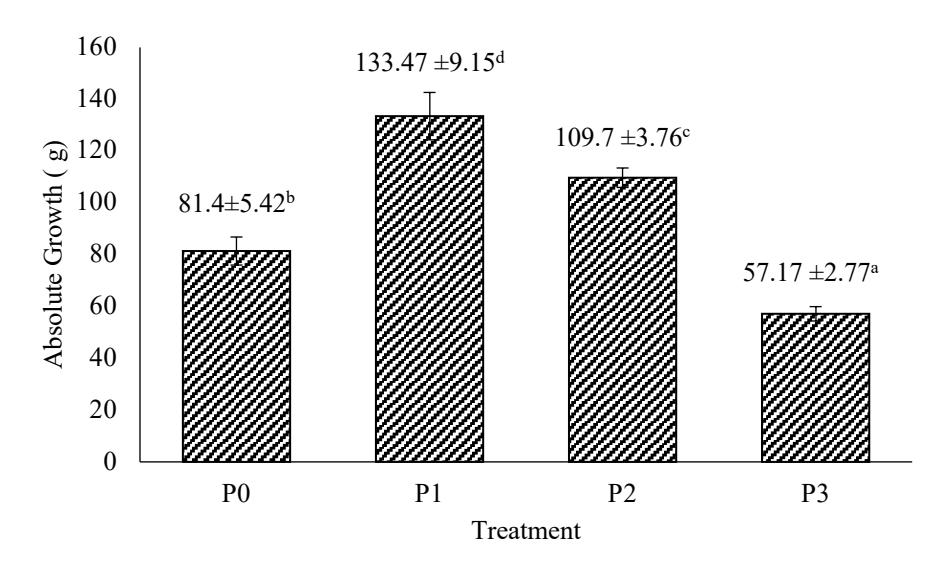
Figure 1.Absolute growth ofC.racemosa under different acidity conditions
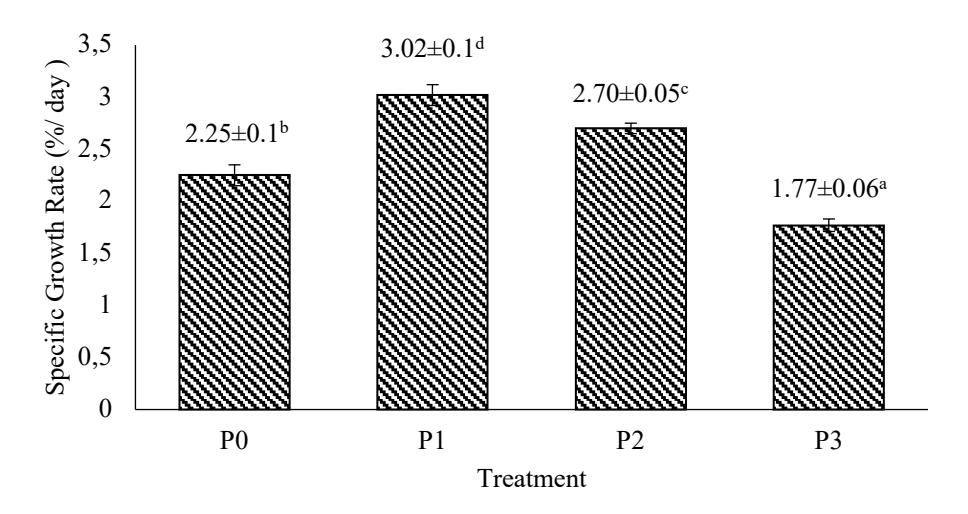
Figure 2.Specific growth rate ofC. racemosa under different acidity
of C. racemosa at the beginning of maintenance was higher than its growth. According to Rendiansyah et al. [44], one cause of seaweed growth decline is that the process of acclimating seaweed to a controlled environment is not optimal, leading to seaweed death at the beginning of the study and reduced growth.
3.4 Chlorophyll a content
ANOVA showed a significant effect of pH on chlorophyll a in C. racemosa (ANOVA, P < 0.05; Fig. 3). Mean (± SD) chlorophyll-a by treatment was: P0, ambient pH 9.0–9.3 = 303.61 ± 5.56 mg L- ¹; P1, pH 8.25 = 262.54 ± 15.84 mg L- ¹; P2, pH 8.00 = 246.67 ± 16.57 mg L- ¹; P3, pH 7.75 = 248.11 ± 18.56 mg L- ¹. Overall, chlorophyll a decreased as pH declined (P0 > P1 > P2 ≈ P3; Duncan, α = 0.05).
The decrease in chlorophyll a content is thought to be due to stress induced by changes in environmental pH. Low pH decreases chlorophyll a content, allegedly because chlorophyll is readily degraded at low pH. According to Andika [15], acidification increases the loss of magnesium (Mg), leading to changes in seagrass leaf colour. Chlorophyll a is a natural chemical compound that has a structure with a Magnesium (Mg) atomic nucleus [45].
Although P0 had the highest chlorophyll a, the most significant biomass gain occurred at P1 (pH 8.25), indicating that chlorophyll a alone did not dictate growth under these conditions. Lower pH is consistent with reduced chlorophyll stability and content in green macroalgae, contributing to the yellowing/bleaching of ramuli observed at lower pH. The solution's acidity significantly affects chlorophyll values
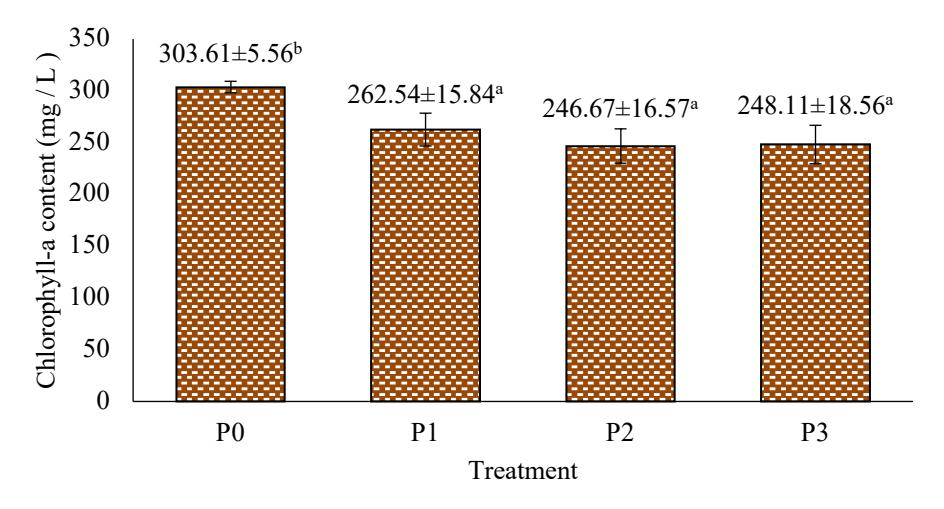
Figure 3.Chlorophyll a content ofC. racemosa under different acidity conditions
content. However, the lowest pH in this study (pH 7.75) did not cause chlorophyll a degradation to be damaged because it only decreased by 14-19%. In the study of Puspita et al. [37], chlorophyll degradation can reduce the percentage of chlorophyll content by 40-80% due to external factors, so that the chlorophyll a content in this study is still optimal to support growth with the least damage.
3.5 Water Quality
Water quality measurements were carried out daily, with parameters including salinity, light intensity, pH, DO, temperature, nitrate, and phosphate. Overall, it can be concluded that the water quality during the study was within a range that C. racemosa could still tolerate. Complete data are presented in Table 2.
In this study, the temperature range obtained showed an average result of 28.9–31 °C, which is still in a good range for growth; however, daily temperature fluctuations may affect the growth rate. Supported by SNI data [48], the range of water temperatures for cultivating lawi-lawi seaweed (Caulerpa spp.) is 26 – 33 °C. This means that the water temperature in the maintenance medium is still within the range suitable for the growth of C. racemosa seaweed. The results of DO or dissolved oxygen measurements in all treatments ranged from 4. 9 to 6.9 mg/L. These results indicate a good range to support the growth of C. racemosa seaweed. This is in accordance with the procedure for cultivating lawi-lawi seaweed (Caulerpa spp.) in ponds > 3 mg/L [48].
The pH treatment levels in this study can still be tolerated by seaweed according to the statement that the pH suitable for seaweed growth is 6-9 [49]. Based on absolute growth measurements and specific growth rates, the best growth results were obtained in treatment P1 (pH 8.25). Treatments P0, P2 and P3 continued to experience growth of up to 2.25%, 2.70% and 1.77% because C. racemosa seaweed adapted to these pH conditions. Marine biota can tolerate a decrease in pH of 0.5 to 1.0 units; in lower pH, it interferes with photosynthesis, reduces coral calcification, and inhibits the growth of organisms [15]. The results of salinity measurements measured every day in the morning and evening ranged from 30-34 ppt in all treatments. The salinity range during the study period was still within the range that could be tolerated by C. racemosa seaweed, so that it could support the life of the seaweed. This is in accordance with the opinion of Pereira et al. [50], stating that seaweed generally lives in a salinity range of 25 - 40 ppt. Salinity for cultivating lawi-lawi seaweed (Caulerpa spp.) in ponds is 28 - 34 ppt [48].
The results of light intensity measurements were 402 - 2,861 lux. This indicates that the light intensity conditions in the maintenance of C. racemosa seaweed are still good for growth, as stated by Darmawati [41], that the range of light intensity values still suitable for seaweed growth is 133 - 3,253 lux. The results of nitrate measurements at the end of the study in all treatments ranged from (<0.001 - 0.032) mg /
L. Meanwhile, based on the results of monitoring the source at BBPBAP Jepara in November 2024, the nitrate content value was 0.127 mg / L. The nitrate value tends to decrease compared to the nitrate content in BBPBAP Jepara waters. This happens because seaweed can absorb nutrients (nitrate) very optimally. The decrease in nitrate and phosphate at the cultivation location was because seaweed absorbed nitrate and phosphate to support seaweed growth. Orthophosphate measurements show results ranging from <0.001 – 0.032 mg/L. The phosphate content in the study was low because the measurements were carried out at the end of maintenance. Based on the results of monitoring the source water and wastewater of BBPBAP Jepara in November 2024, the phosphate content in Jepara waters ranged from 0.023–0.086 mg/L. The decrease in phosphate content in the waters is thought to be due to it having been utilized by seaweed as an essential nutrient that plays a role in the photosynthesis process [51].
Table2.WaterQualityMeasurement
| Water Quality | |||||||||
|---|---|---|---|---|---|---|---|---|---|
| Treatment | pH | DO (mg/L) | Temperature (℃) | Salinity (ppt) | Light Intensity ( Lux ) | Nitrate* (mg/L) | Phosphate* (mg/L) | ||
| P0 | 9 – 9.3 | 4.9–6.9 | 28.9–31 | 30 | 470–2636 | 0.032 | 0.016 | ||
| P1 | 8.25 | 5.1–6.9 | 28.9–31 | 30–34 | 468–2595 | <0.001 | <0.001 | ||
| P2 | 8 | 4.8–6.8 | 28.9–31 | 30–34 | 420–2861 | 0.005 | <0.001 | ||
| P3 | 7.75 | 5.7–6.5 | 28.9–31 | 30–34 | 402–2753 | 0.005 | 0.032 | ||
| Optimal | 6.5-9 (a) | >3 (b) | 26–32 (a) | 28 – 34 (b) | 132–3252 (c) | 0.9 - 5 (b) | 0.2 – 0.9 (b) | ||
(a) SNI [47]; (b) SNI [48]; (c) Darmawati [41]. (*) Measurements were taken at the end of the study
4. Conclusion
Seawater pH significantly affected growth and chlorophyll a of C. racemosa (ANOVA, P < 0.05). Growth was highest at pH 8.25 (P1), with ΔW = 133.47 ± 9.10 g and SGR = 3.02 ± 0.10% day- ¹ , whereas chlorophyll-a was greatest at ambient pH 9.0–9.3 (P0: 303.61 ± 5.56 mg L- ¹). Thus, moderately alkaline conditions (~8.25) optimize biomass accumulation, while ambient field pH maximizes chlorophyll a.